Contract Selection Criteria for Top Cremation Equipment Manufacturers
Discover contract manufacturing equipment selection criteria for cremation equipment manufacturers, focusing on operator training and thermal best practices.
The Operator-Centric Approach to Thermal Equipment Procurement
Selecting heavy thermal equipment for a modern crematory facility is a high-stakes capital expenditure. When facility directors and operations managers partner with cremation equipment manufacturers for the contract manufacturing of custom retort lines, the evaluation process often fixates on throughput metrics and baseline emissions compliance. However, from an operational and safety standpoint, the true return on investment is dictated by operator safety, Human-Machine Interface (HMI) intuitiveness, and the depth of the manufacturer's training Service Level Agreement (SLA).
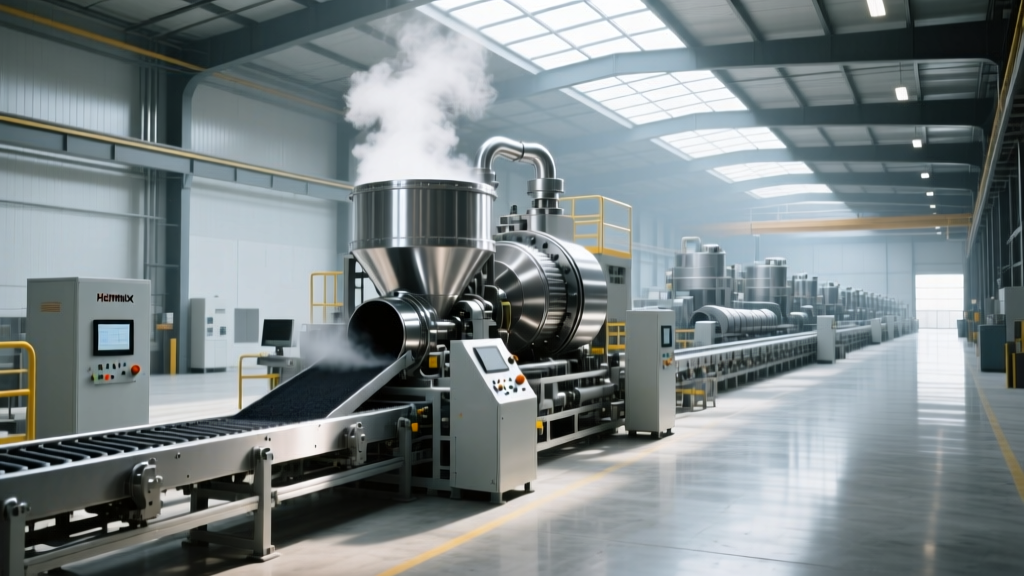
Contract manufacturing in this sector involves fabricating custom-configured primary chambers, secondary afterburners, and material handling systems to exact facility specifications. If the selected equipment lacks standardized programmable logic controllers (PLCs) or comprehensive operator onboarding protocols, facilities face increased refractory degradation, thermal runaway risks, and severe compliance violations. This guide outlines the strict selection criteria facility managers must enforce when evaluating manufacturers, ensuring the delivered equipment prioritizes operator control and long-term maintainability.
The Operator-Centric Selection Matrix
Not all OEMs approach operator training and control architecture with the same rigor. The following matrix evaluates the standard operational offerings from top-tier manufacturers in the industry. Use this framework during the RFP (Request for Proposal) stage to demand parity or superior specifications from your chosen contract manufacturing partner.
| Manufacturer Profile | Standard HMI / PLC Platform | Operator Certification Included | Refractory Maintenance Training |
|---|---|---|---|
| Tier 1 (e.g., Matthews Environmental Solutions) | Allen-Bradley PanelView / CompactLogix | CANA-aligned 5-day on-site | Advanced thermal shock & patching |
| Tier 2 (e.g., B&L Cremation Systems) | Siemens Comfort Panel / S7-1200 | Standard 3-day operational | Basic visual inspection & curing |
| Tier 3 (Generic / Import Contract OEMs) | Proprietary / Black-box logic | Remote video modules only | None (requires 3rd party contractor) |
Demanding Open-Architecture Control Systems
The most critical selection criterion for contract-manufactured cremation equipment is the control architecture. The primary chamber operates between 1,400°F and 1,800°F, while the secondary chamber (afterburner) must maintain 1,600°F to 2,000°F to ensure complete particulate and volatile organic compound (VOC) destruction. Managing these dual thermal zones requires precise ramp-rate controls.
Standardization on Allen-Bradley or Siemens
Require your manufacturer to build the control panel using industry-standard components, specifically Allen-Bradley (Rockwell Automation) or Siemens platforms. These ecosystems offer several operational advantages:
- Local Troubleshooting: Standardized fault-code libraries allow facility maintenance teams to diagnose sensor failures (e.g., a blown Type-K thermocouple) without OEM intervention.
- Component Availability: Replacement relays, contactors, and HMI screens can be sourced from local industrial suppliers within 24 hours, minimizing facility downtime.
- Integration: Open-architecture PLCs allow the retort's Modbus or Ethernet/IP data to integrate seamlessly with the facility's broader SCADA or emission monitoring systems.
Refractory Lifecycle and Thermal Shock Training
The refractory lining—typically composed of 60% alumina brick in the primary chamber and castable calcium aluminate cement in the secondary chamber—is the most expensive consumable in a crematory. Improper operator practices, specifically aggressive cool-down cycles, cause thermal shock spalling, reducing a lining's lifespan from 10 years to under 4 years.
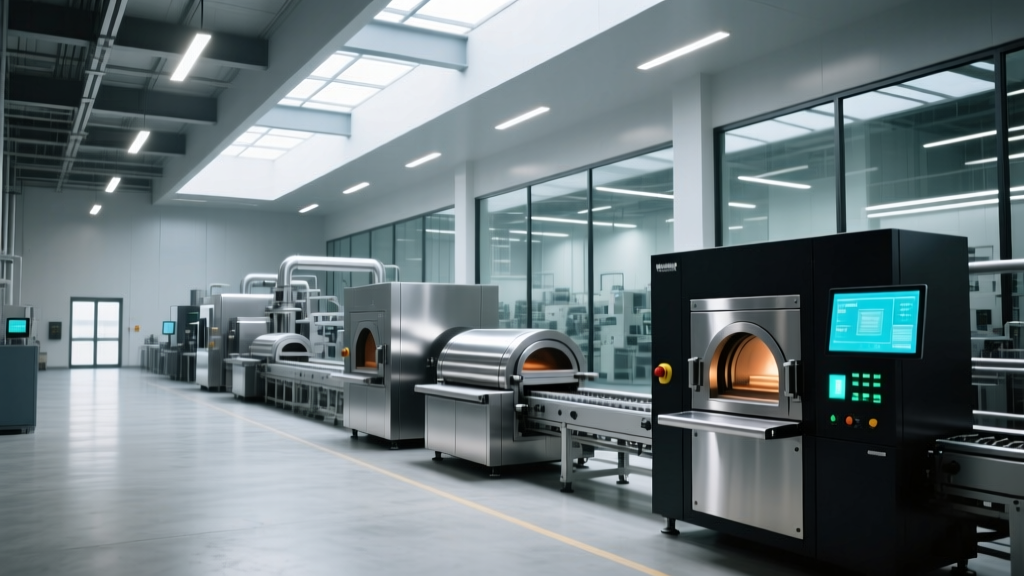
When evaluating a manufacturer's training SLA, verify that their curriculum explicitly covers thermal profiling and ramp-rate calibration. Operators must be trained on the specific cool-down curves required by the OEM. For instance, forcing a primary chamber from 1,600°F to ambient temperature in under 12 hours by opening the charge door will induce micro-fractures in the castable refractory. The manufacturer must provide customized cool-down logic programmed directly into the HMI, preventing operators from manually overriding the exhaust dampers during the cooling phase.
Capital Cost and Training SLA Breakdown
Understanding the financial allocation for operator training within the broader contract manufacturing budget is essential for facility planners. Below is the current capital expenditure breakdown for a standard, mid-to-high-volume contract-manufactured crematory line, including the necessary training investments.
- Base Retort (Contract Manufactured, Heavy-Duty): $85,000 – $135,000
- Secondary Chamber / Afterburner Integration: $35,000 – $55,000
- Emission Control System (Wet Scrubber / Mercury Abatement): $60,000 – $110,000
- OEM On-Site Operator Training (5-Day Intensive): $4,500 – $8,000
- Annual PLC Logic & HMI Remote Support SLA: $2,500 / year
'The complexity of modern emission control systems means that the cremator operator is no longer just managing fire; they are managing a chemical scrubbing process. Training must bridge the gap between thermal dynamics and fluid chemistry.' — Industry guidelines from the Cremation Association of North America (CANA) regarding modern operator certification standards.
Step-by-Step Operator Commissioning Flow
When the contract-manufactured equipment arrives on-site, the OEM should execute a structured commissioning and training flow. Do not accept a 'show and tell' demonstration. Demand the following phased onboarding protocol for your lead operators:
- Phase 1: Cold-Start & PLC Interlock Verification (Day 1)
- Operators manually trigger safety interlocks (e.g., opening the charge door mid-cycle) to verify the PLC instantly cuts the gas train and shuts the combustion air blowers.
- Review of OSHA Lockout/Tagout (LOTO) procedures specific to the retort's main gas valve and electrical panel.
- Phase 2: Thermal Profiling & Ramp-Rate Calibration (Day 2-3)
- Executing the initial refractory cure cycle (a slow, multi-day temperature ramp to boil out moisture from the castable cement).
- Training operators on reading the HMI trend graphs to identify 'flat spots' in the temperature curve, which indicate failing burner nozzles or blocked gas orifices.
- Phase 3: Emission Control System (ECS) Management (Day 4)
- Wet scrubber operation: Training operators to monitor and maintain the scrubber water pH between 7.5 and 8.5 using automated reagent dosing pumps.
- Verifying the differential pressure across the mist eliminators to prevent particulate carryover into the exhaust stack.
- Phase 4: Ash Processing & Emergency Protocols (Day 5)
- Safe extraction techniques using specialized cooling trays to prevent combustible dust ignition.
- Simulated power-failure protocols: Training operators on the manual operation of the UPS-backed exhaust dampers to safely vent residual heat during a grid outage.
Ensuring Compliance with Thermal Safety Standards
Contract-manufactured cremation equipment must strictly adhere to NFPA 86: Standard for Ovens and Furnaces. This standard dictates the requirements for safety interlocks, purge cycles, and flame supervision systems. During the selection process, require the manufacturer to provide a third-party engineering stamp verifying that the gas train and combustion safety logic meet NFPA 86 specifications.
Furthermore, ensure the manufacturer's training program prepares your operators for the rigorous Cremator Operator Certification (COC) administered by CANA. Equipment that features intuitive, data-logging HMIs drastically reduces the administrative burden on operators when compiling the mandatory emission and cycle-time logs required for state and local environmental compliance.
Finalizing the Contract Manufacturing Agreement
Selecting the right partner among cremation equipment manufacturers requires looking past the stainless steel and heavy-duty blowers. The true value of a contract-manufactured retort line lies in the software architecture, the accessibility of the control components, and the rigor of the operator training SLA. By mandating open-architecture PLCs, enforcing strict refractory cool-down logic, and requiring comprehensive, multi-phase commissioning protocols, facility managers can secure thermal equipment that operates safely, efficiently, and profitably for decades.