Vetting Manufacturing Equipment Suppliers for Operator Training
Discover how contract manufacturers evaluate manufacturing equipment suppliers based on operator training programs, certification, and shop floor best practices.
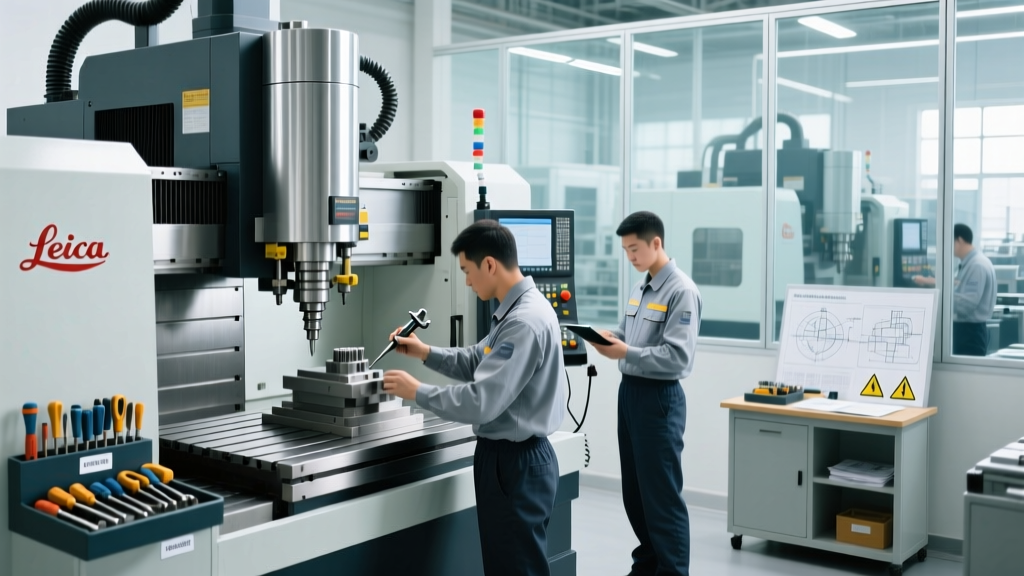
Contract manufacturing (CM) operates on razor-thin margins where machine utilization and setup speed dictate profitability. When sourcing new CNC mills, multi-axis lathes, or automated assembly cells, the hardware specifications—spindle speed, rapid traverse rates, and torque curves—are only half the procurement equation. The other half is human capital. Evaluating manufacturing equipment suppliers through the lens of operator training, knowledge transfer, and shop floor best practices is a critical selection criterion that directly impacts your return on investment.
⚠️ The Hidden Cost of Poor Onboarding: A $250,000 5-axis machining center running at 40% utilization due to operator hesitation and setup errors costs a contract manufacturer roughly $65,000 annually in lost billable capacity. The supplier's training ecosystem is your first line of defense against this margin erosion.The "High-Mix" Training Challenge in Contract Manufacturing
Unlike dedicated Original Equipment Manufacturers (OEMs) that may run the same part family for six months, contract manufacturers thrive on high-mix, low-to-medium volume production. A typical CM shop floor might see 50+ unique SKUs change over in a single week. This environment places a massive cognitive load on machine operators.
When an operator must constantly switch between different fixtures, tooling arrays, and G-code structures, the intuitiveness of the machine's Human-Machine Interface (HMI) and the depth of the supplier's training program become paramount. If the supplier only offers a generic, two-day "button-pushing" onboarding course, your operators will lack the advanced troubleshooting and macro-programming skills required to minimize non-cut time in a high-mix environment.
5 Critical Training Criteria When Vetting Suppliers
When issuing an RFP to manufacturing equipment suppliers, include the following training and support criteria in your scoring matrix:
1. Tiered Certification Pathways
Reject suppliers that offer a flat, one-and-done training module. Top-tier suppliers provide a tiered certification ecosystem. Level 1 should cover basic operation and safety; Level 2 must dive into conversational programming, toolpath optimization, and probe routines; Level 3 should focus on advanced macro variables, parametric programming, and preventative maintenance. This ensures your lead operators can continually upskill without waiting for external consultants.
2. Conversational HMI and Guided Workflows
Hardware is useless if the software requires a PhD to navigate. Evaluate the supplier's native control system. For example, Mazak’s MAZATROL SmoothAi allows operators to program complex parts at the control using conversational prompts, drastically reducing the Mean Time To Proficiency (MTTP) compared to traditional G-code memorization. Suppliers that integrate AI-driven toolpath suggestions and visual collision detection into their baseline training deliver operators who are autonomous from week one.
3. Digital Twin and Offline Simulation Access
In a high-mix CM environment, crashing a machine during a first-article setup is a catastrophic event. Evaluate whether the supplier includes offline simulation software (like a native Digital Twin or integration with VERICUT) in their training package. Operators must be trained to run virtual proofs of complex 5-axis toolpaths before the spindle ever turns on the physical asset.
4. Localized "Train-the-Trainer" (TTT) Support
Paying a supplier's field service engineer $1,800 to $2,500 per day for recurring on-site training is financially unsustainable. Your selection criteria must mandate a comprehensive Train-the-Trainer program. The supplier should certify your internal shift leads to teach Level 1 and Level 2 courses, complete with access to the supplier’s proprietary LMS (Learning Management System) and slide decks.
5. Augmented Reality (AR) Maintenance Overlays
Forward-thinking suppliers are now integrating AR into their advanced training. Using headsets like RealWear, operators can receive live, remote visual assistance from the supplier’s technical support team, with digital annotations overlaid directly onto the machine's spindle or tool changer. Ask suppliers for a live demonstration of their remote AR troubleshooting capabilities during the vetting process.
Supplier Training Matrix: Comparing the Industry Leaders
The following matrix compares the training ecosystems of three dominant CNC equipment suppliers, highlighting their specific approaches to operator education and proficiency timelines.
| Supplier | Primary Control / HMI | Training Hub Name | Avg. MTTP (Basic) | Est. On-Site Daily Rate |
|---|---|---|---|---|
| Haas Automation | Next Generation Control (NGC) | Haas Education Centers (HEC) | 24-32 Hours | $1,200 - $1,500 |
| Mazak | MAZATROL SmoothAi | Mazak University | 16-24 Hours | $1,600 - $1,900 |
| DMG MORI | CELOS / MAPPS | DMG MORI Academy | 32-40 Hours | $2,000 - $2,400 |
"The shift from G-code memorization to conversational, AI-assisted HMIs has reduced the baseline training time for new operators by nearly 40%. However, this only yields ROI if the supplier's training program actually focuses on advanced workflow optimization, not just basic button navigation." — Workforce Development Insights, NIST Manufacturing Extension Partnership (MEP)
Calculating the ROI of Supplier-Led Training
Procurement teams often push back on the upfront costs of premium training packages. To counter this, CM plant managers must present a data-driven ROI framework based on the machine's burden rate.
The Training ROI Formula
Cost of Poor Training (Annual) = [(Setup Time Delta × Hourly Burden Rate) + (Scrap Rate Delta × Material Cost)] × 50 Weeks
Example Scenario: A 5-axis mill has a fully burdened hourly rate of $160. If a poorly trained operator takes 45 minutes longer per setup than a certified operator, and the shop runs 4 setups a day, that is 3 hours of lost capacity daily.
Annual Loss: 3 hours × $160 × 250 working days = $120,000 per machine, per year. Investing $15,000 in a premium supplier training and certification package yields an 8x return in the first 12 months.
Evaluating the Supplier's Post-Training Support SLA
Training does not end when the supplier's technician flies home. Your selection criteria must include a rigorous Service Level Agreement (SLA) for post-training support. Evaluate the following:
- 24/7 Remote HMI Access: Can the supplier's support team remotely log into the machine's control to diagnose a macro error or guide an operator through a complex tool-offset adjustment at 2:00 AM on a Sunday?
- Video Knowledge Base: Does the supplier provide an indexed, searchable library of micro-learning videos (3-5 minutes each) specific to your exact machine model and control version? Operators will not read a 400-page PDF manual on the shop floor.
- Annual Refresher Audits: Premium suppliers will include an annual virtual or on-site "skills audit" to identify knowledge decay and provide targeted micro-training to your shift leads.
Best Practices for Integrating Supplier Training into Shop Floor SOPs
Once you have selected a supplier with a robust training ecosystem, the responsibility shifts to the contract manufacturer to embed that knowledge into daily operations. Implement these best practices immediately post-installation:
- Create Machine-Specific "Cheat Sheets": Distill the supplier’s 200-page training manual into laminated, 11x17 visual guides. Mount these directly on the machine enclosure. Include exact button sequences for the top 5 most common setups and tool-breakage recovery protocols.
- Implement a "Buddy System" for Spindle-On Time: Require that any operator who has not logged at least 50 hours of supervised "spindle-on" time on the specific machine model must run first-article setups with a Level-2 certified lead operator standing by.
- Leverage Tool Life Management Data: Use the machine’s native tool life tracking to audit operator setup accuracy. If inserts are consistently wearing out 20% faster than the supplier's baseline metrics, it indicates incorrect offset entries or poor coolant nozzle positioning—signaling a need for a targeted refresher training session.
- Standardize the "Crash Recovery" Protocol: Train every operator on the exact, supplier-approved sequence for recovering from a spindle crash. This includes checking spindle runout with a dial indicator, re-verifying the tool length offsets, and running a dry-run at 50% rapid override before resuming production.
Final Procurement Takeaway
In the high-stakes environment of contract manufacturing, the machine tool is only as capable as the operator running it. By shifting your procurement focus to rigorously evaluate how manufacturing equipment suppliers structure, deliver, and support operator training, you transform a capital expenditure into a sustainable competitive advantage. Demand tiered certifications, conversational HMI training, and robust post-installation SLAs to ensure your shop floor runs at peak utilization from day one.