Selecting a Cleanroom Equipment Manufacturer for Startup Scale-Up
How medtech startups can partner with a specialized cleanroom equipment manufacturer to scale small-batch production, featuring ISO 7 cost breakdowns.
The Startup Dilemma: Lab Bench vs. ISO-Certified Production
Transitioning from a university lab or a shared incubator space to a dedicated, controlled manufacturing environment is the most capital-intensive hurdle for early-stage medtech and biotech startups. When producing in-vitro diagnostics (IVDs), microfluidic cassettes, or small-batch sterile injectables, standard laboratory furniture and HVAC systems are insufficient. You must comply with stringent particulate and microbial limits. Selecting the right cleanroom equipment manufacturer is often the difference between a successful Series A scale-up and a stalled regulatory audit.
Warning: The 'Lab-Grade' TrapMany startups attempt to save capital by purchasing standard laboratory-grade stainless steel tables and commercial HEPA air purifiers. Commercial air purifiers do not provide the unidirectional laminar airflow required by ISO 14644-1, and standard lab tables often feature crevices that harbor microbial growth. Always specify cleanroom-rated equipment with electro-polished finishes and sealed joints.
Case Study: Scaling a Microfluidics Startup to ISO Class 7
The Challenge: 50 to 500 Units Per Month
A Series A microfluidics startup based in the Research Triangle Park needed to scale production of their polymer-based diagnostic cassettes from 50 units per month (prototyping phase) to 500 units per month (commercial pilot phase). Their existing benchtop assembly in a standard HVAC environment yielded a 14% rejection rate due to particulate contamination clogging the 50-micron microchannels.
The Solution: Direct-from-Manufacturer Procurement
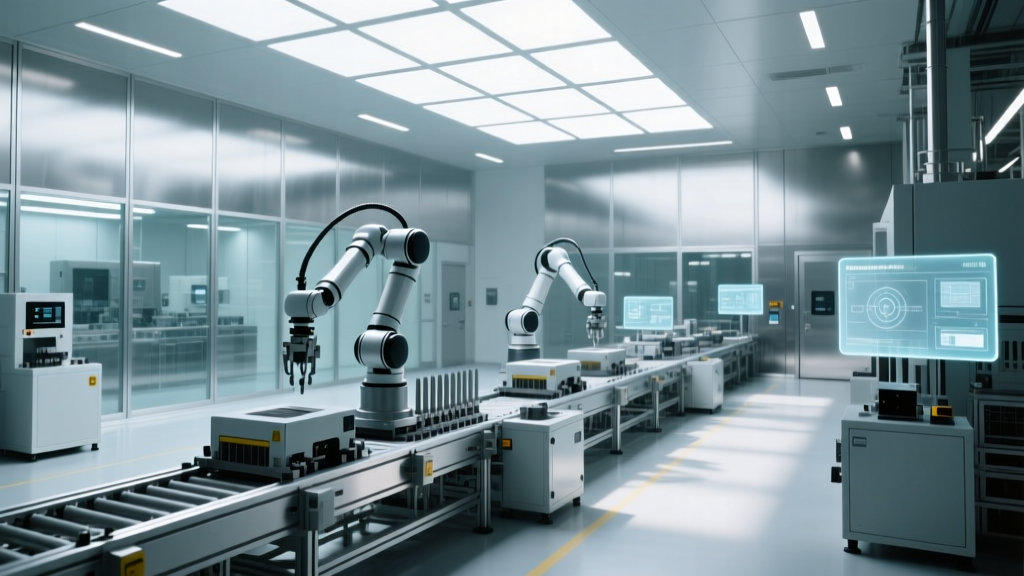
Rather than hiring a general contractor to build a traditional stick-built cleanroom—which would have cost upwards of $120,000 and taken six months—the founders partnered directly with a specialized modular cleanroom equipment manufacturer. They deployed an 8' x 12' hardwall modular cleanroom rated for ISO Class 7 (Class 10,000). By purchasing the enclosure, Fan Filter Units (FFUs), and internal furnishings as a single integrated package, they reduced lead times to five weeks and cut capital expenditure by 42%.
Small-Scale Cleanroom CapEx: 2026 Startup Budget Matrix
As of early 2026, supply chain lead times for modular HEPA systems and specialized cleanroom furnishings have stabilized. Below is a realistic capital expenditure breakdown for a startup building a small-footprint (under 150 sq. ft.) ISO Class 7 or 8 assembly room.
| Equipment Category | Specifications | Est. Cost Range | Lead Time |
|---|---|---|---|
| Modular Hardwall Enclosure | 8'x12'x8', T-grid ceiling, flush-mounted windows | $24,000 - $32,000 | 4-6 weeks |
| HEPA Fan Filter Units (FFUs) | 2x4 ft, U15 grade, 99.99% @ 0.3µm (Qty: 4) | $3,800 - $4,800 | 2-3 weeks |
| Interlocking Pass-Through | 316L SS, UV sterilization, HEPA filtered | $2,800 - $3,500 | 3-5 weeks |
| Cleanroom Workstations | Type 304 SS, electro-polished, ESD casters (Qty: 3) | $4,500 - $6,000 | 2-4 weeks |
| Environmental Monitor (EMS) | Particle counter + temp/RH, 21 CFR Part 11 compliant | $6,500 - $9,000 | 1-2 weeks |
Evaluating a Cleanroom Equipment Manufacturer: The Startup Matrix
Not all manufacturers cater to the unique constraints of early-stage companies. Enterprise suppliers often demand minimum order values (MOVs) that price out startups, while generic industrial suppliers lack the regulatory documentation required for FDA or CE audits. Use the following criteria to vet potential partners:
- Modularity and Relocatability: Startups frequently move facilities as they scale. Ensure the manufacturer designs hardwall or softwall systems that can be disassembled, moved, and re-certified without destroying the primary structural integrity. Look for extruded aluminum framing systems with spline-lock panels rather than glued or permanently sealed drywall equivalents.
- Validation Documentation Packages: A reputable cleanroom equipment manufacturer will provide Factory Acceptance Testing (FAT) and Site Acceptance Testing (SAT) protocols. For automated equipment like environmental monitoring systems, they must supply IQ/OQ (Installation and Operational Qualification) templates mapped to FDA guidelines on aseptic processing and 21 CFR Part 11 electronic records compliance.
- Application Engineering Support: Startups rarely have in-house HVAC engineers. The manufacturer must offer computational fluid dynamics (CFD) modeling to calculate the exact number of Air Changes per Hour (ACH) required. ISO Class 7 requires a minimum of 30 to 60 ACH, whereas ISO Class 8 requires 15 to 25 ACH. The vendor should guarantee these metrics based on your specific room geometry and equipment heat loads.
- Lead Time Transparency: In 2026, high-grade HEPA media and specialized 316L stainless steel remain subject to market fluctuations. Require a binding Gantt chart at the time of purchase order that clearly delineates manufacturing, freight, and on-site commissioning phases.
Essential Small-Scale Equipment Specs to Demand
When requesting quotes, vague descriptions lead to change orders. Specify these exact parameters to your vendor:
- HEPA Filters: Demand U15 grade filters tested to IEST-RP-CC001.6 standards, complete with individual scan-test certificates for each unit.
- Pass-Through Chambers: Specify 316L stainless steel for the interior (for harsh chemical wipe-downs like VHP or bleach), with electronic interlocks and a minimum 15-minute UV-C sterilization cycle timer.
- Gowning Room Anterooms: Require a step-over bench design with a built-in HEPA-filtered shoe cleaner and differential pressure monitoring to ensure positive cascade airflow from the primary cleanroom to the anteroom.
Navigating IQ/OQ/PQ Validation on a Shoestring Budget
Procuring the equipment is only half the battle; validating it for regulatory compliance is where many startups burn through their remaining runway. According to the WHO Good Manufacturing Practices for sterile pharmaceutical products, environmental control and monitoring systems must be rigorously qualified.
"Startups often mistakenly believe that buying an ISO-certified cleanroom from a manufacturer means the room itself is validated for their specific process. The manufacturer validates the enclosure's ability to hold a classification. The startup must still execute Performance Qualification (PQ) to prove that their specific personnel movements, gowning protocols, and machinery heat loads do not compromise the ISO class during dynamic operations."
To minimize validation costs, negotiate a "Validation Support Add-On" with your cleanroom equipment manufacturer. For an additional 8% to 12% of the total CapEx, top-tier manufacturers will send a commissioning engineer to perform the initial baseline particle counts, smoke studies (to verify unidirectional airflow), and HEPA filter integrity tests (DOP/PAO testing). This provides you with the foundational OQ data needed to draft your final PQ protocols, saving approximately $15,000 to $20,000 in third-party validation consultant fees.
Final Procurement Checklist for Founders
Before signing a purchase order with any cleanroom equipment manufacturer, ensure the following deliverables are explicitly written into the contract:
- [ ] Itemized list of all HEPA filter scan-test certificates.
- [ ] CFD airflow modeling report specific to your facility's floor plan.
- [ ] IQ/OQ documentation templates for all active electrical components (FFUs, EMS, Pass-throughs).
- [ ] Warranty terms covering the HEPA media (not just the blower motors) for a minimum of 3 years.
- [ ] On-site commissioning and baseline ISO 14644-1 particle counting included in the base price.
By treating your cleanroom equipment manufacturer as a strategic regulatory partner rather than a simple furniture vendor, startups can achieve commercial-grade compliance without exhausting their seed capital.