Cleanroom Requirements: Wastewater Equipment Manufacturer Guide
Explore how a wastewater equipment manufacturer meets strict cleanroom requirements with ZLD, UPW reclaim, and AI-driven dosing technologies.
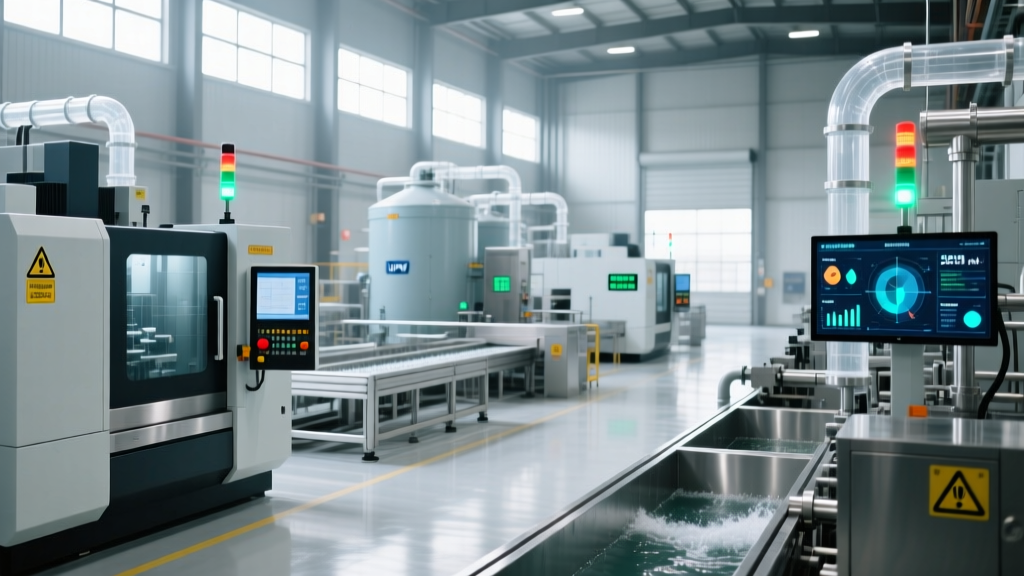
Modern semiconductor, biopharmaceutical, and advanced optics cleanrooms operate under stringent ISO 14644 classifications, demanding absolute control over airborne particulates and microbial contamination. However, the manufacturing processes that maintain these environments—such as chemical mechanical planarization (CMP), wet etching, and ultra-pure water (UPW) rinsing—generate highly complex, toxic, and heavily segregated wastewater streams. For a specialized wastewater equipment manufacturer, meeting modern cleanroom manufacturing equipment requirements means moving beyond traditional biological treatment and deploying advanced, closed-loop reclamation and zero liquid discharge (ZLD) architectures.
The Cleanroom Water ParadoxA standard 300mm semiconductor fabrication plant (fab) consumes between 2 to 4 million gallons of municipal water daily to produce UPW. Because UPW generation typically yields only 1 gallon of product water for every 1.5 to 2 gallons of feed water, the reject stream alone is massive. Meeting current cleanroom manufacturing equipment requirements mandates water reclamation rates exceeding 85%, forcing equipment manufacturers to integrate high-recovery membrane systems directly into the fab's central wastewater routing.
Segregated Effluent Profiles in ISO Class 3-7 Environments
Cleanroom wastewater cannot be treated as a single homogenous stream. Cross-contamination of effluents (e.g., mixing ammonia-bearing CMP slurry with hydrofluoric acid etch waste) creates catastrophic safety hazards and renders reclamation impossible. A competent wastewater equipment manufacturer designs collection and treatment skids tailored to specific node profiles.
| Process Node | Primary Contaminants | Required Equipment Architecture |
|---|---|---|
| UPW Reject & Rinse | Trace TOC, dissolved oxygen, silica | UV-TOC destruction, Mixed Bed Polishers, Reverse Osmosis (RO) |
| CMP Slurry (Oxide/Metal) | Silica/Ceria nanoparticles (10-100nm), Cu, W | Hydrocyclones, Cross-flow microfiltration, Electrocoagulation |
| Wet Etch & Strip | Hydrofluoric acid (HF), TMAH, Phosphoric acid | Fluidized bed reactors, Biological AOP, Calcium chloride precipitation |
| Solvent & Photoresist | NMP, Acetone, PGMEA, high COD/BOD | Distillation recovery, Membrane Bioreactors (MBR), Carbon adsorption |
Core Cleanroom Manufacturing Equipment Requirements for Liquid Processing
Ultra-Pure Water (UPW) Reclaim Architecture
Reclaiming UPW from tool rinses requires equipment that can handle sudden spikes in Total Organic Carbon (TOC) without fouling downstream polishing resins. Modern reclaim systems utilize Polyamide Thin-Film Composite (TFC) membranes operating at 150-200 psi. However, to meet the strictest cleanroom manufacturing equipment requirements, manufacturers are now integrating Electro-Deionization (EDI) modules post-RO. EDI continuously regenerates ion-exchange resins using an electrical current, eliminating the need for hazardous acid/caustic chemical regeneration and reducing the facility's secondary chemical footprint.
Chemical Mechanical Planarization (CMP) Nanoparticle Separation
CMP effluent contains abrasive nanoparticles that rapidly foul standard filter media. Traditional dead-end filtration requires cartridge changes every 48 hours, driving massive operational expenditure (OpEx). Advanced equipment manufacturers now deploy ceramic cross-flow microfiltration (CFMF) systems with 0.1-micron pore sizes. These systems operate on a continuous back-pulse cycle, extending membrane life to over 5 years while achieving >95% solids separation. The recovered silica slurry can often be reconcentrated and sold back to slurry suppliers, creating a circular economy loop.
2026 Technology Trends from a Wastewater Equipment Manufacturer
Forward Osmosis (FO) for High-Salinity Brines
As cleanrooms push toward Zero Liquid Discharge (ZLD) to comply with local EPA Effluent Guidelines and municipal restrictions, managing the concentrated brine from RO systems is the primary bottleneck. Traditional thermal evaporators require immense energy (up to 60 kWh per cubic meter of treated water). In 2026, leading manufacturers are deploying Forward Osmosis (FO) as a low-energy pre-concentration step. By utilizing a high-osmotic-pressure draw solution, FO passively pulls water across a semi-permeable membrane without hydraulic pressure, reducing the volume of brine entering the thermal crystallizer by 40% and cutting ZLD energy costs by approximately $0.85 per gallon treated.
AI-Driven Predictive Coagulation Dosing
Dosing coagulants (like PAC or Ferric Chloride) into fluctuating cleanroom waste streams is notoriously difficult; under-dosing leads to effluent violations, while over-dosing causes membrane fouling and excessive sludge generation. Modern wastewater equipment now features inline UV-Vis spectrophotometers paired with machine learning algorithms. These systems analyze real-time absorbance spectra to predict contaminant loads 15 minutes ahead of the mixing tank, adjusting dosing pumps dynamically. Facilities utilizing this technology report a 22% reduction in chemical consumption and a 30% decrease in dewatered sludge volume.
"The transition from linear water consumption to closed-loop reclamation is no longer optional for semiconductor and biopharma fabs. Equipment manufacturers who fail to integrate AI-driven predictive maintenance and low-energy membrane technologies will be locked out of Tier-1 fab supply chains by 2027."
— Director of Facilities Engineering, Semiconductor Industry Association (SIA) Task Force on Sustainability
CapEx and OpEx Decision Matrix for Fab Water Systems
Procurement teams evaluating cleanroom wastewater equipment must weigh initial capital expenditure against long-term operational savings, particularly regarding chemical disposal and municipal sewer surcharges.
| System Architecture | Estimated CapEx (500 GPM) | Annual OpEx | ROI Timeline |
|---|---|---|---|
| Conventional Clarification + Sand Filter | $850,000 | $420,000 (High sludge disposal) | N/A (Baseline) |
| Ceramic CFMF + EDI Reclaim | $2,400,000 | $180,000 (Low chemical use) | 2.5 - 3 Years |
| Full ZLD (FO + Mechanical Vapor Recompression) | $6,500,000 | $310,000 (Energy intensive) | 4 - 6 Years |
Navigating Regulatory and Compliance Frameworks
Equipment deployed in cleanroom environments must satisfy dual compliance mandates: environmental discharge limits and internal cleanroom safety protocols. All wetted materials in the treatment skids must be constructed from high-purity PVDF (Polyvinylidene Fluoride) or 316L electropolished stainless steel to prevent metallic leaching that could ruin downstream UPW polishing beds. Furthermore, the physical equipment layout must adhere to SEMI S2 environmental, health, and safety guidelines, which dictate strict interlocks for chemical containment, automated leak detection, and seismic bracing for regions prone to tectonic activity.
For facilities discharging to municipal sewers, the equipment must reliably maintain fluoride levels below 15 mg/L and heavy metals (like copper and tungsten from CMP) below 1.0 mg/L. Utilizing automated fluidized bed reactors for HF neutralization ensures the generation of high-purity calcium fluoride (CaF2) precipitate, which can be filtered via membrane filter presses and sold to the steel and glass manufacturing industries, transforming a hazardous waste liability into a recoverable revenue stream.
Strategic Procurement Takeaways
- Demand Modular Skids: Cleanroom footprints are expensive. Require equipment manufacturers to deliver fully integrated, factory-acceptance-tested (FAT) modular skids to minimize hot-work and particulate generation during installation.
- Specify AI Readiness: Ensure all PLCs and SCADA systems feature open API architectures (OPC-UA or MQTT) to allow seamless integration with the fab's central AI predictive maintenance platforms.
- Audit Material Certifications: Require full traceability and USP Class VI certification for all polymeric membranes and gaskets to guarantee zero leaching in biopharma and semiconductor reclamation loops.