Bowling Alley Equipment Manufacturers: Automated Line Integration
Evaluate bowling alley equipment manufacturers by automated production line integration. Discover CNC routing, robotic assembly, and USBC compliance metrics.
The Shift Toward Automated Manufacturing in Bowling Equipment
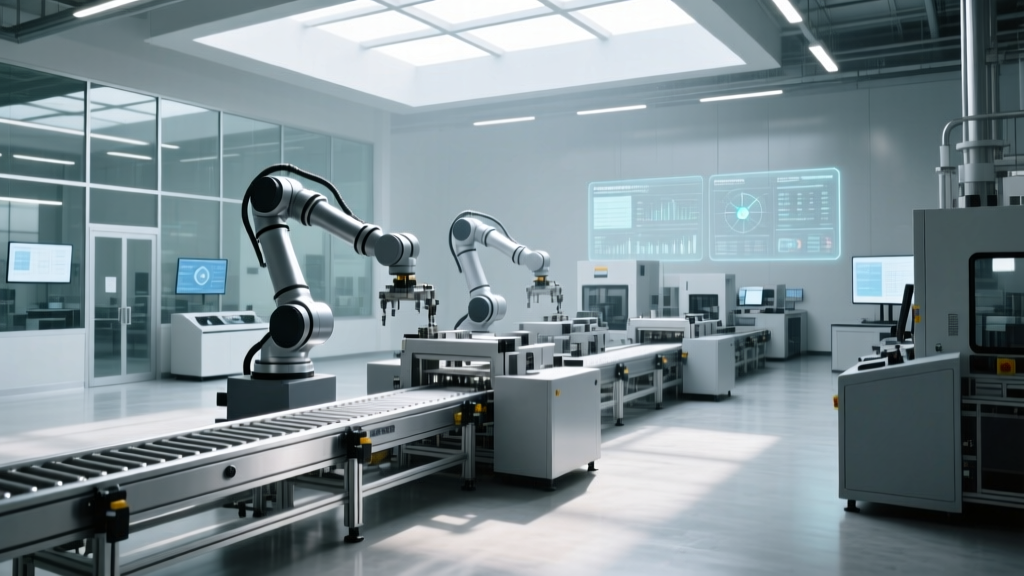
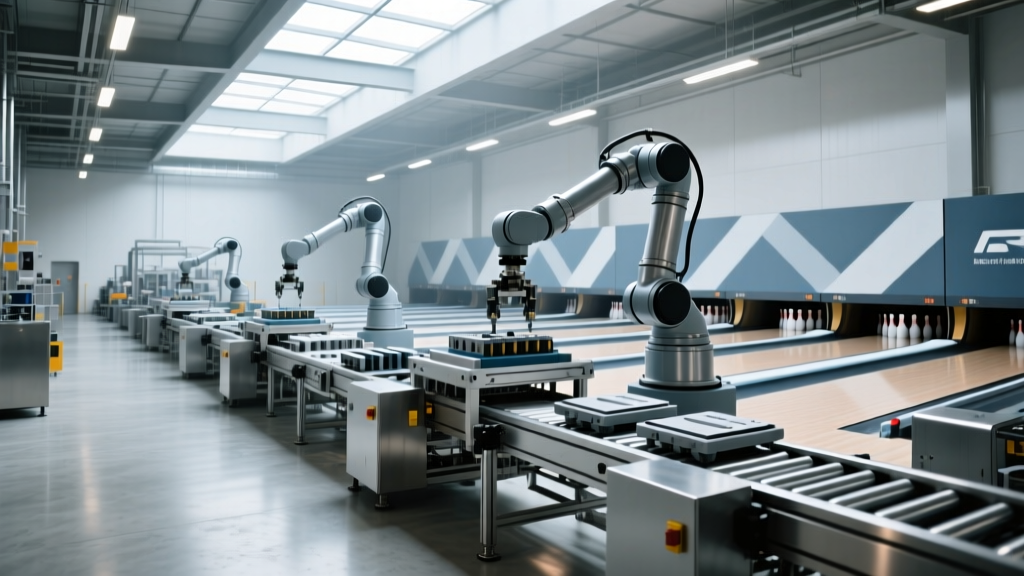
The global bowling equipment manufacturing sector has transitioned from manual fabrication to highly automated production line equipment integration. For B2B buyers, facility developers, and investors, evaluating bowling alley equipment manufacturers requires looking past the final product to the automated assembly lines that produce them. Manufacturers producing next-generation string pinsetters and synthetic lane systems rely on precise CNC routing, robotic welding, and automated material handling to maintain the tight tolerances required for professional play.
When sourcing equipment for a new 40-lane center or retrofitting an existing facility, the manufacturing process directly impacts product longevity, maintenance frequency, and operational downtime. A manufacturer utilizing legacy manual jigs will inevitably produce pinsetters with higher variance in drop-cycle times and synthetic lanes with micro-deviations in topography. This guide provides a technical framework for evaluating the automated production capabilities of modern bowling equipment manufacturers.
Core Automated Production Systems in Bowling Equipment
Tier-1 bowling alley equipment manufacturers deploy three primary automated systems to ensure precision and scale. Understanding these systems allows buyers to ask the right questions during factory audits or vendor selection processes.
1. 5-Axis CNC Routing for Synthetic Lanes
Synthetic bowling lanes, typically constructed from high-pressure laminate (HPL) over a high-density particleboard or MDF core, require absolute flatness. According to the United States Bowling Congress (USBC), synthetic lane surfaces must maintain strict topographical tolerances to ensure consistent ball reaction. Leading manufacturers utilize large-format 5-axis CNC routers (such as the Biesse Rover A or SCM Tech Z5 series) to mill lane panels. These automated cells machine the tongue-and-groove locking mechanisms with a positional accuracy of ±0.05 mm, ensuring seamless panel mating during installation and preventing the 'seam lifting' that plagues poorly manufactured lanes.
2. Robotic Welding Cells for Pinsetter Chassis
The chassis of a modern free-fall or string pinsetter must withstand continuous high-impact shocks from 3.5-pound bowling balls traveling at up to 20 mph. Manual welding introduces heat distortion and inconsistent penetration. Top manufacturers integrate robotic welding cells, typically utilizing Fanuc ARC Mate or Yaskawa Motoman series arms, to fabricate 10-gauge steel chassis components. These cells execute 3/16-inch fillet welds with 0.5mm positional accuracy, ensuring the structural rigidity required to maintain pin-deck alignment over millions of cycles.
3. Automated PLC Testing and End-of-Line QA
Before shipping, pinsetter logic boards and motor controllers undergo automated end-of-line (EOL) testing. Manufacturers integrate Siemens S7-1500 or Allen-Bradley ControlLogix PLCs into testing rigs that simulate 10,000 consecutive pinsetter cycles in a matter of hours. These rigs use SICK photoelectric sensors and torque transducers to verify that the sweep bar, pin elevator, and distributor operate within exact millisecond timing windows.
Production Equipment Integration Matrix
The following table outlines the standard automated equipment utilized by top-tier bowling alley equipment manufacturers and the specific manufacturing outcomes they guarantee.
| Automated System | Primary Application | Standard Cycle Time / Output | Critical Tolerance Achieved |
|---|---|---|---|
| 5-Axis CNC Router Cell | Synthetic lane panel milling & joint routing | 45 panels per 8-hour shift | ±0.015 inches flatness over 42-inch width |
| 6-Axis Robotic Welder | Pinsetter main chassis & elevator frame | 12 chassis assemblies per hour | 0.5mm positional accuracy; zero heat warp |
| Automated UV Coating Line | Lane surface finishing & scratch resistance | 120 linear feet per hour | Uniform 2.5-mil coating thickness |
| EOL PLC Testing Rig | Pinsetter logic board & motor verification | 14-minute simulated stress test per unit | ±2ms timing accuracy on sweep/elevator relays |
Evaluating a Manufacturer's Automation Maturity
When issuing an RFP or conducting a vendor audit, do not rely solely on marketing brochures. Request specific data points regarding their production line integration. Use the following decision framework to assess a manufacturer's automation maturity.
Buyer's Evaluation Checklist
- Overall Equipment Effectiveness (OEE): Ask for their automated line OEE. A mature, well-integrated production line should sustain an OEE of 82% to 88%. Anything below 75% indicates frequent unplanned downtime or bottlenecks in the automated material handling.
- Changeover Time: If the manufacturer produces multiple lane widths or pinsetter models (e.g., standard vs. string), ask for the automated changeover time. Advanced CNC cells with automated tool changers and pallet systems should achieve changeovers in under 15 minutes.
- Scrap and Rework Rates: Automated optical inspection (AOI) systems on the assembly line should keep final assembly scrap rates below 1.5%. Manual lines typically run at 4% to 7%.
- Traceability: Verify if their PLCs integrate with an MES (Manufacturing Execution System) to provide laser-etched QR traceability on every welded chassis and routed lane panel.
Capital Expenditure and Integration Timelines
Understanding the capital expenditure (CapEx) your manufacturer has invested in their facility provides insight into their long-term viability and commitment to quality. A fully automated production line for a Tier-1 pinsetter assembly facility requires a CapEx investment between $4.5 million and $8.2 million. This includes the robotic cells, AGV (Automated Guided Vehicle) material transport, and MES software integration.
For synthetic lane manufacturing, a continuous automated UV coating and CNC routing line costs approximately $2.8 million to $3.5 million. Manufacturers who have made these investments within the last 3 to 5 years are highly likely to deliver consistent, high-yield products. Conversely, manufacturers operating on depreciated, 15-year-old manual equipment may offer lower upfront unit costs, but the total cost of ownership (TCO) for the bowling center will be significantly higher due to increased maintenance, lane re-leveling, and pinsetter jamming.
Compliance and Safety Standards in Automated Facilities
Automated production lines must adhere to strict international safety and quality standards. When auditing a manufacturer, verify their compliance with the following:
- ISO 10218-1 (Robots and Robotic Devices Safety): Robotic welding and assembly cells must comply with ISO 10218-1 safety standards to ensure proper light-curtain integration, emergency stop logic, and collaborative robot (cobot) speed limiting where human operators interact with the line.
- USBC Equipment Specifications: The manufacturer's automated QA rigs must be calibrated to USBC specifications. Request documentation showing that their EOL testing sensors are calibrated annually by an ISO 17025 accredited laboratory.
- CE Marking / UL 508A: The electrical control panels powering the automated production lines (and the final bowling equipment itself) should be built to UL 508A standards for industrial control panels, ensuring fire safety and electrical reliability.
Red Flags in Legacy Manufacturing Processes
Critical Warning: Signs of Under-Automation
Walk away from manufacturers exhibiting the following legacy production traits:
- Manual TIG Welding on Chassis: If the pinsetter mainframe is manually welded, expect structural fatigue and alignment drift after 500,000 cycles.
- Hand-Sanded Lane Seams: Synthetic lanes requiring manual edge sanding indicate poorly calibrated CNC routers, leading to visible seams and inconsistent ball tracking.
- Paper-Based QA Logs: If end-of-line testing is recorded on clipboards rather than digitally logged via PLC to a centralized database, the manufacturer lacks the data infrastructure to trace and resolve field failures.
Strategic Sourcing Summary
Selecting the right partner requires verifying their manufacturing infrastructure. By prioritizing bowling alley equipment manufacturers that have fully embraced automated production line equipment integration, facility owners secure a critical advantage. Automated CNC routing guarantees lane topography, robotic welding ensures chassis survival, and PLC-driven EOL testing eliminates out-of-the-box failures. Demand OEE data, verify ISO and USBC compliance, and align your capital investments with manufacturers who have modernized their factory floors to meet the precision demands of the modern bowling industry.