Manufacturing Equipment Leasing for Automated Line Integration
Discover how manufacturing equipment leasing funds automated production line integration, balancing cash flow with Industry 4.0 technology upgrades.
The Financial Bottleneck in Automated Line Integration
Transitioning from manual assembly to a fully automated production line requires a massive injection of capital. While plant managers often focus on the sticker price of robotic arms and CNC machines, the true cost of automation lies in integration. System engineering, PLC programming, safety fencing, and SCADA network configuration routinely double the baseline hardware costs. For mid-market manufacturers, this creates a severe cash flow bottleneck. This is where manufacturing equipment leasing becomes a strategic operational tool rather than just a financing afterthought.
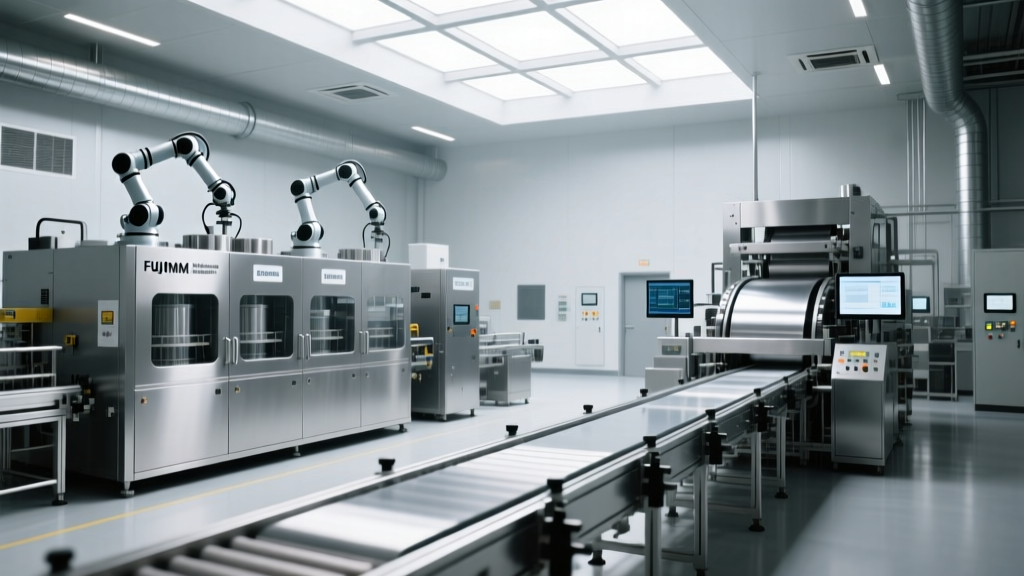
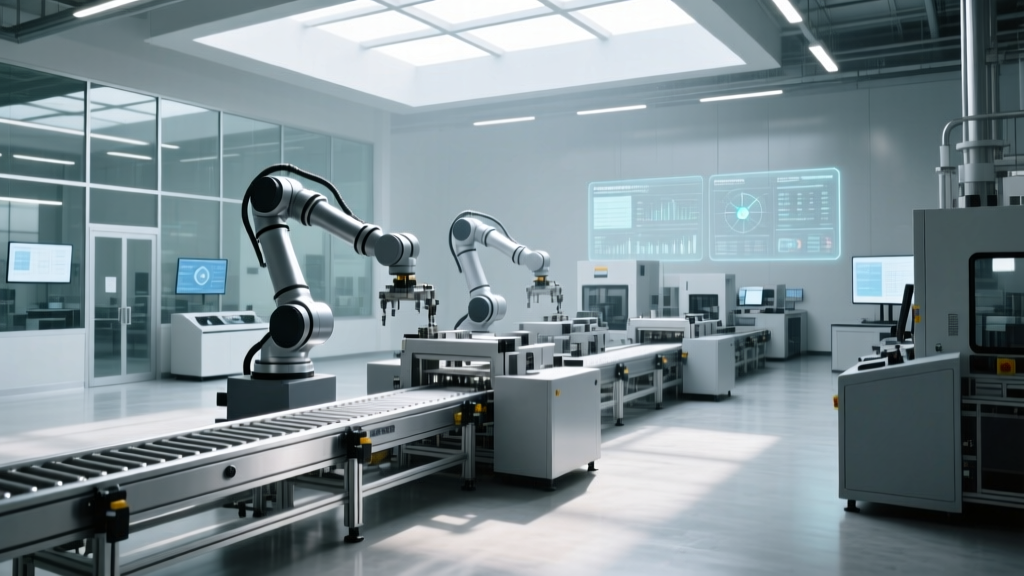
Unlike traditional bank loans that require blanket liens on corporate assets, equipment leases are structured around the specific automation assets and their integration services. By leveraging specialized leasing structures, manufacturers can deploy advanced Industry 4.0 workcells—featuring collaborative robots, machine vision, and synchronized conveyors—while preserving working capital for raw materials and payroll.
Key Insight: Bundling Soft Costs
Most manufacturers do not realize that system integrator labor, custom end-of-arm tooling (EOAT) design, and software licensing (e.g., Rockwell Automation FactoryTalk or Siemens TIA Portal seats) can be bundled into the master equipment lease. This prevents the need to fund integration engineering out-of-pocket while the hardware is financed.
Cost Breakdown: Hardware vs. Integration Engineering
To understand how manufacturing equipment leasing optimizes capital deployment, consider a realistic mid-scale automated palletizing and inspection cell. The following breakdown illustrates a typical 2026 project scope, highlighting how integration costs rival hardware expenses.
| Component Category | Specific Equipment / Service | Estimated Cost |
|---|---|---|
| Robotics Hardware | 2x FANUC CRX-25iA Collaborative Robots | $74,000 |
| Vision & Inspection | Cognex In-Sight 2800 Vision System + Lenses | $12,500 |
| Control Architecture | Siemens Simatic S7-1500 PLC + HMI Panels | $18,000 |
| Material Handling | Custom Dorner 2200 Series Conveyor Loop | $24,000 |
| Safety Infrastructure | SICK MicroScan3 Laser Scanners + Fencing | $9,500 |
| Integration Labor | Mechanical Assembly, PLC Logic, OPC UA Setup | $85,000 |
| Total Project CapEx | Hardware + Soft Costs | $223,000 |
Financing the entire $223,000 via a 60-month fair market value (FMV) lease at a standard commercial rate factor of 0.0215 results in a monthly payment of approximately $4,794. This monthly obligation is frequently offset entirely by the labor savings and throughput gains of the automated cell within the first 90 days of operation.
Matching Lease Structures to Technology Lifecycles
Automated production lines consist of components with vastly different technological lifespans. A heavy-duty conveyor system may operate for 20 years, while a machine vision camera or AGV navigation LiDAR might become obsolete in five. Structuring your manufacturing equipment leasing agreement requires matching the lease type to the asset's depreciation curve.
Fair Market Value (FMV) vs. $1 Buyout Leases
- $1 Buyout (Capital) Leases: Best for heavy, long-lasting infrastructure like conveyor framing, CNC machine bases, and industrial air compressors. You own the asset at the end of the term, and it remains on your balance sheet.
- FMV (Operating) Leases: Ideal for fast-depreciating technology like cobots, 3D machine vision systems, and automated guided vehicles (AGVs). At the end of the term, you return the equipment and upgrade to the latest models, avoiding the burden of disposing of obsolete tech.
Warning: The "Hell or High Water" Clause
Standard equipment leases contain a "Hell or High Water" clause, meaning you must make lease payments regardless of whether the equipment functions. In automation integration, hardware delivery is only step one. If your system integrator fails to properly program the PLC or the robots cannot achieve the required cycle times, you are still legally obligated to pay the lessor. Always negotiate a certificate of delivery and acceptance that is contingent upon successful Site Acceptance Testing (SAT) and verified cycle-time metrics before the lease funding is released to the vendor.
OEM Captive Financing vs. Independent Lessors
When sourcing automated line equipment, manufacturers must choose between captive finance arms (e.g., Siemens Financial Services, FANUC Financial) and independent equipment lessors.
"Captive financing is excellent for single-brand hardware acquisitions, often offering subsidized interest rates to move inventory. However, true automated line integration is rarely single-brand. A modern workcell might pair Universal Robots with a Rockwell Automation PLC and SICK safety sensors. Independent lessors provide the flexibility to bundle multi-vendor hardware and third-party system integration labor into a single master lease facility."
— Senior Equipment Finance Analyst, Equipment Leasing and Finance Association (ELFA)
Decision Matrix: Choosing Your Finance Partner
| Criteria | OEM Captive Finance | Independent Equipment Lessor |
|---|---|---|
| Multi-Vendor Hardware | Poor (Restricted to parent brand) | Excellent (Agnostic) |
| Integration Labor Bundling | Rarely permitted | Standard practice (up to 25-30% soft costs) |
| Interest Rates | Often subsidized (lower) | Market rate (slightly higher) |
| End-of-Term Flexibility | Limited to parent brand upgrades | Highly flexible FMV return options |
The 4-Step Integration & Procurement Workflow
To successfully execute manufacturing equipment leasing for a complex integration project, follow this sequential workflow to protect your capital and ensure technical compliance.
- Draft the Functional Design Specification (FDS): Before approaching a lessor, define exact cycle times, payload requirements, and communication protocols (e.g., MQTT, OPC UA). The lessor will require a detailed equipment schedule and scope of work to underwrite the integration labor.
- Secure the Master Lease Agreement (MLA): Establish a master facility with an independent lessor. This allows you to draw down funds in tranches as the integration project hits specific milestones (e.g., 30% at hardware order, 40% at FAT, 30% at SAT).
- Execute Site Acceptance Testing (SAT) with Financial Holdbacks: Never sign the final lease acceptance certificate until the integrated line runs at the specified Overall Equipment Effectiveness (OEE) for a continuous 48-hour period. Structure vendor contracts with a 10% retainage tied to this SAT.
- Leverage Tax Incentives: Consult with your CPA regarding current IRS Section 179 deductions and bonus depreciation rules. Depending on the lease structure (Capital vs. Operating), you may be able to deduct the entire cost of the automation cell in the first year or deduct the lease payments as an operating expense.
Future-Proofing Your Automated Assets
The landscape of industrial automation is shifting toward modular, software-defined manufacturing. When negotiating your manufacturing equipment leasing terms, ensure the agreement includes provisions for mid-term technology refreshes. If a new generation of machine vision AI processing units becomes available in year three of a five-year lease, an FMV structure with a mid-term upgrade clause allows you to swap out the obsolete vision hardware without penalizing the remainder of the master facility. By treating automation integration as a dynamic, financed service rather than a static capital purchase, manufacturers maintain the agility required to compete in high-mix, low-volume production environments.