Automating the Park Gym Equipment Manufacturer Line
A technical buying guide for a park gym equipment manufacturer integrating automated tube cutting, robotic welding, and powder coating systems.
The 2026 Landscape for Outdoor Fitness Fabrication
Scaling production as a modern park gym equipment manufacturer requires moving beyond manual tube notching and stick welding. The surge in municipal and commercial outdoor fitness installations demands equipment that complies with rigorous durability standards, specifically ASTM International F3101 specifications for outdoor fitness equipment. To achieve the required structural integrity and vandal resistance while maintaining competitive unit economics, mid-tier manufacturers are integrating fully automated structural tube fabrication lines.
This guide details the exact hardware, control architectures, and integration frameworks required to automate the production of heavy-gauge steel pull-up rigs, elliptical frames, and dip stations. We bypass generic automation theory to focus strictly on the metallurgical and geometric realities of outdoor gym apparatus manufacturing.
Core Automated Cells: Hardware and Specifications
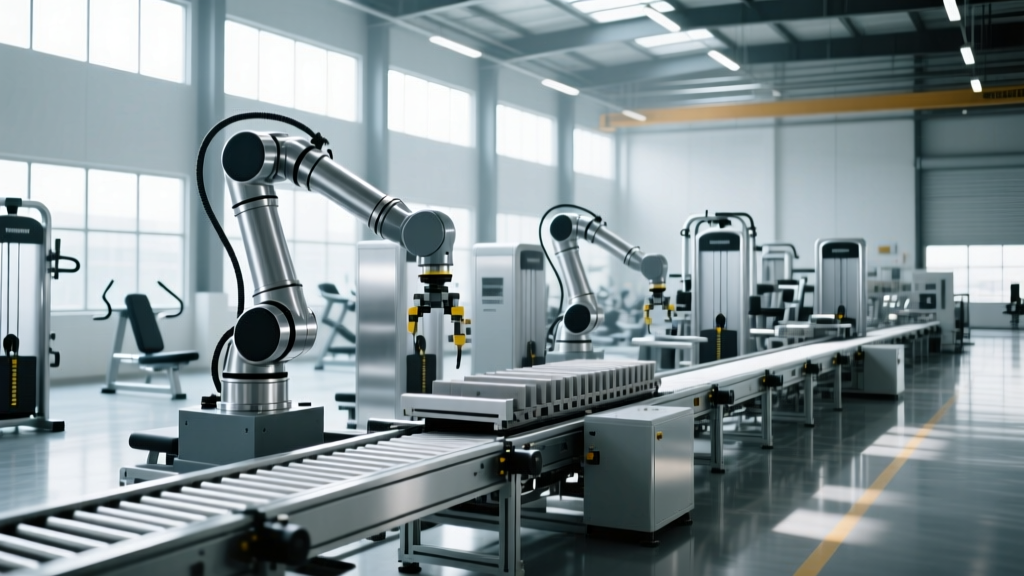
An integrated line for park gym apparatuses typically processes 50mm x 50mm and 75mm x 75mm square tubing with wall thicknesses ranging from 3mm to 6mm (S355J2 structural steel or galvanized equivalents). The line is divided into three primary automated cells.
1. Fiber Laser Tube Cutting and Bevelling
Manual band sawing introduces kerf variations that destroy downstream robotic weld repeatability. The current industry standard for high-mix tube processing is the BLM LS8 or Trumpf TruLaser Tube 5000 fiber. For a park gym equipment manufacturer producing complex intersecting joints (e.g., multi-angle pull-up bar nodes), 3D bevelling heads are mandatory. A 4kW fiber laser cutting 3mm S355 steel achieves feed rates up to 45 meters per minute, while simultaneously cutting tab-and-slot features that act as self-fixturing mechanisms during the welding stage.
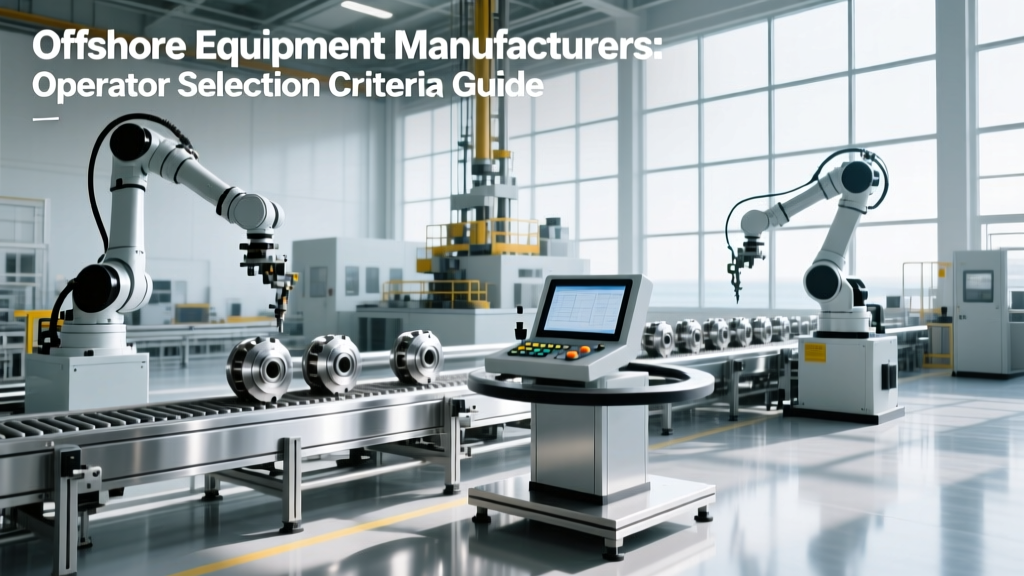
2. Robotic Arc Welding Workcells
Park gym frames endure high dynamic cyclic loading. Weld penetration and throat thickness are critical. The Yaskawa Motoman AR2010 series, paired with a Fronius CMT (Cold Metal Transfer) Advanced power source, provides the necessary arc stability. The CMT process mechanically retracts the wire during short-circuiting, drastically reducing heat input. This is vital when welding galvanized tubing, as it minimizes zinc vaporization and subsequent weld porosity.
3. Automated Powder Coating Conveyor
Outdoor fitness equipment requires a minimum 2.5 mil (63 micron) coating thickness of TGIC-free polyester to survive 3,000+ hours of ASTM B117 salt-spray testing. Automated reciprocating gun arrays (e.g., Gema or Wagner) equipped with laser-contouring scanners adjust nozzle distance in real-time to maintain uniform mil thickness on complex geometries like monkey bar rungs.
Line Synchronization Metric: To prevent bottlenecking, the tube laser must output cut parts at a rate 15% faster than the robotic welding cell's consumption rate, utilizing an automated buffer rack system with RFID-tagged cassettes to feed the weld positioners.Control Layer Integration: MTConnect and OPC UA
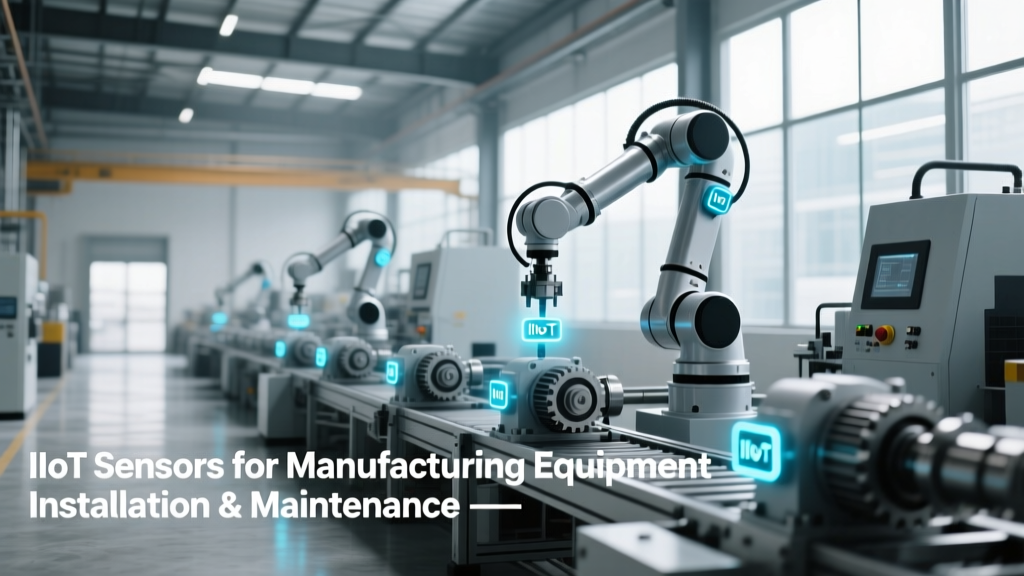
Hardware isolation is the primary cause of OEE (Overall Equipment Effectiveness) loss in fabrication plants. A park gym equipment manufacturer must unify the laser cutter, welding positioner, and curing oven into a single Manufacturing Execution System (MES).
The MTConnect Institute standard is utilized for machine monitoring—pulling spindle load, laser gas pressure, and robot joint torque data into a centralized dashboard. However, for deterministic machine-to-machine handshakes (e.g., signaling the conveyor to stop precisely when the welding robot completes a seam), OPC UA over TSN (Time-Sensitive Networking) is required. This guarantees latency under 1 millisecond, preventing the conveyor from shifting the workpiece while the robot is depositing the root pass.
'Legacy PLCs relying on Modbus TCP often introduce polling delays of 50-100ms. In high-speed automated tube handling, this delay results in misaligned pick-and-place operations, dropping heavy steel cassettes and damaging end-effectors.' - Systems Integration Best Practices, Association for Advancing Automation (A3).
Overcoming Specific Failure Modes in Park Gym Fabrication
Automating outdoor fitness equipment production introduces unique edge cases that standard automotive or general fabrication playbooks fail to address.
Failure Mode 1: Zinc Outgassing Porosity in Weldments
The Problem: Many municipalities mandate hot-dip galvanized or pre-galvanized tubing for park gyms to prevent rust. When the robotic MIG torch hits the joint, zinc vaporizes at 907°C (well below steel's melting point), trapping gas in the weld pool and causing severe porosity.
The Integration Fix: Program the Fronius CMT power source to use a specialized 'low-heat' pulse waveform. Additionally, integrate a laser-seam-tracking sensor (e.g., Scansonic ALO) that identifies the joint gap and dynamically adjusts the robot's weave width and travel speed, allowing zinc vapor to escape the puddle before it freezes.
Failure Mode 2: Faraday Cage Effects in Powder Coating
The Problem: Complex pull-up rigs with tight, enclosed box structures create Faraday cages. Electrostatic powder particles are repelled from the inner corners, resulting in sub-1.0 mil coverage that fails salt-spray tests within months.
The Integration Fix: Implement automated tribo-charging optimization in the spray booth. The PLC must automatically reduce the electrostatic voltage (from 90kV down to 45kV) and increase the fluidizing air pressure when the contour scanner detects the gun entering an enclosed box structure, allowing the powder to penetrate deep into the cavity via aerodynamic force rather than electrostatic attraction.
CapEx Budgeting and ROI Timelines for 2026
Transitioning from manual fabrication to an integrated automated line requires significant capital. Below is a realistic CapEx framework for a Tier-2 park gym equipment manufacturer aiming for a throughput of 50 complete multi-station rigs per week.
| System Component | Specific Hardware / Software | Estimated 2026 CapEx (USD) | Integration Lead Time |
|---|---|---|---|
| Tube Laser Cell | BLM LS8 with 3D Bevel & Loader | $680,000 - $740,000 | 14 - 18 Weeks |
| Robotic Welding Cell | 2x Yaskawa Motoman AR2010 + Fronius CMT | $410,000 - $460,000 | 12 - 16 Weeks |
| Automated Coating Line | Wagner Reciprocators + 60m Curing Oven | $850,000 - $1,100,000 | 20 - 24 Weeks |
| MES & Control Layer | OPC UA Servers, MTConnect Licenses, PLC | $120,000 - $150,000 | 8 - 10 Weeks |
| Total Line Integration | Turnkey Commissioning & Safety Fencing | $2,060,000 - $2,450,000 | 6 - 9 Months |
ROI Calculation: By eliminating manual fixturing, reducing weld rework from 12% to under 2%, and cutting powder coating material waste by 30%, a mid-volume manufacturer typically achieves payback within 28 to 34 months, factoring in current 2026 industrial labor rates and material costs.
Vendor Selection Matrix for the Integrator
Do not purchase machines in isolation. The park gym equipment manufacturer must hire a Tier-1 systems integrator capable of managing the mechanical, electrical, and software handshakes between disparate OEMs. Evaluate potential integrators against these strict criteria:
- Tube Fabrication Pedigree: The integrator must demonstrate prior deployment of tab-and-slot self-fixturing logic in their offline programming (OLP) software (e.g., Octopuz or RoboDK). If they rely on manual teach-pendant programming, reject them.
- Galvanized Welding Expertise: Require a physical weld coupon test using your exact 3mm galvanized S355 tube, cross-sectioned and etched to verify the absence of zinc-induced porosity.
- Coating Contour Logic: The integrator must provide a simulation showing how their chosen reciprocator handles the Faraday cage effect on a standard 6-way pull-up node without manual intervention.
Automating the production of outdoor fitness equipment is not merely about replacing human labor with robots; it is about enforcing the metallurgical and geometric consistency required to ensure public safety and long-term asset survival in harsh environments. By specifying the correct laser bevelling, CMT welding waveforms, and dynamic coating voltages, manufacturers can dominate the municipal bid market with superior quality and tighter margins.