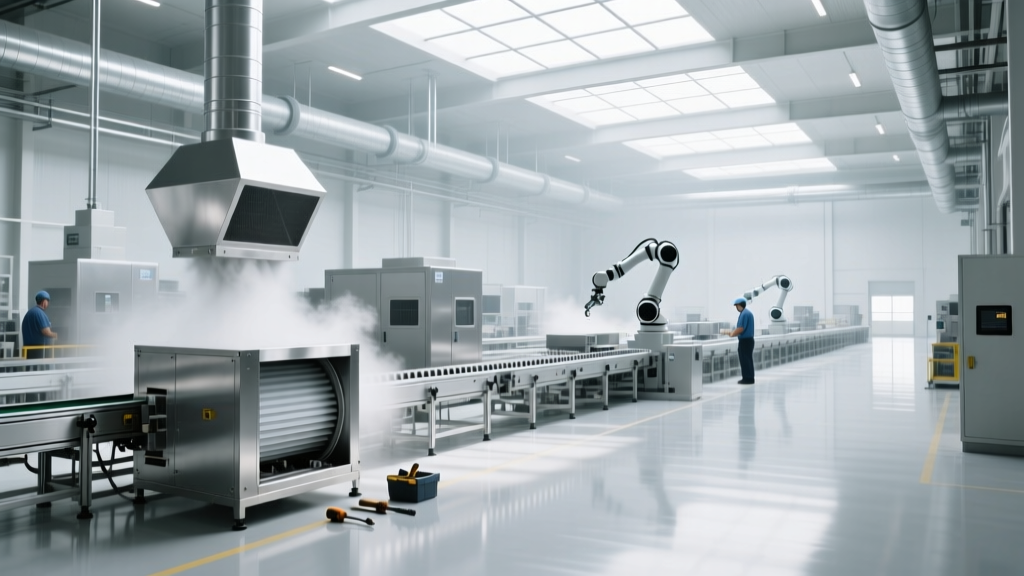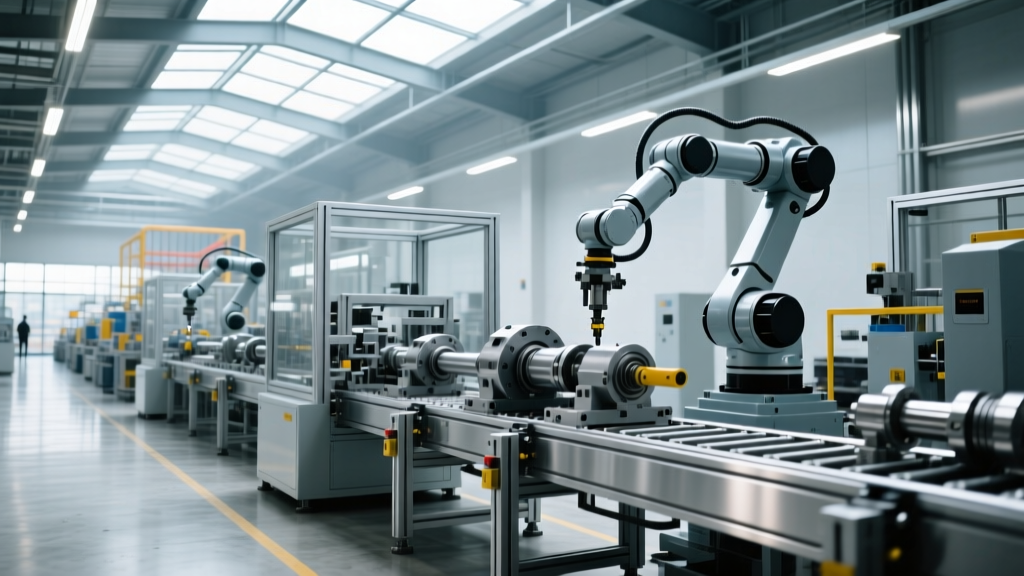
Amusement Park Equipment Manufacturers: Small-Scale Safety Machinery
Startup guide for amusement park equipment manufacturers: selecting small-scale CNC, welding, and NDT machinery to meet ASTM F24 safety compliance.
The ASTM F24 Hurdle for Boutique Ride Startups
Entering the boutique ride fabrication market requires navigating a labyrinth of engineering and regulatory mandates. For startups positioning themselves as specialized amusement park equipment manufacturers, the primary barrier to entry is not capital, but compliance with the ASTM F24 Committee on Amusement Rides and Devices. Specifically, ASTM F1193 (Standard Practice for Quality, Manufacture, and Construction of Amusement Rides and Devices) dictates strict tolerances, material traceability, and weld verification protocols.
Startups cannot rely on manual, uncalibrated fabrication tools. Producing family entertainment center (FEC) rides, animatronics, or small-scale carnival equipment demands small-scale manufacturing machinery that inherently supports digital traceability and metallurgical precision. This guide details the exact small-footprint machinery, welding parameters, and non-destructive testing (NDT) equipment required to achieve ASTM compliance without the overhead of a 50,000-square-foot factory.
⚠️ COMPLIANCE WARNING: Under ASTM F1193, if a startup cannot produce a Material Test Report (MTR) mapped to a specific serial-numbered ride component during a third-party NAARSO inspection, the entire ride assembly can be condemned. Traceability is not optional.Precision CNC Milling for Ride-Critical Linkages
Amusement ride restraint systems—such as lap-bar locking mechanisms and ratchet pawls—require high-yield steel alloys, typically 4140 pre-hardened steel or 17-4 PH stainless. Machining these materials on manual mills introduces unacceptable human error in tolerances. ASTM F2291 (Design of Amusement Rides) often mandates tolerance bands of ±0.001 inches for load-bearing pins and latch interfaces.
The Tormach 1500MX: A Startup Workhorse
For small-scale manufacturers, the Tormach 1500MX (priced around $48,000 in 2026) offers the necessary rigidity and 4-axis capability to machine complex ride nodes. Unlike cheaper hobbyist routers, the 1500MX features a BT30 spindle and linear guideways capable of maintaining tight tolerances during the heavy interrupted cuts required when milling square stock into cylindrical ride pins.
- Tooling Requirement: Use 4-flute AlTiN-coated carbide endmills for 4140 steel to prevent edge chipping.
- Coolant Protocol: Flood coolant is mandatory. ASTM auditors will check for thermal burn marks on machined surfaces, which indicate improper cooling and localized annealing (softening) of the steel.
- Inspection: Pair the CNC with a Mitutoyo Digimatic micrometer and a digital height gauge to generate the CMM (Coordinate Measuring Machine) equivalent reports required for your manufacturing dossier.
Pulsed MIG Welding for DOM Tubular Chassis
Ride chassis and support columns are predominantly fabricated from A513 Type 5 Drawn Over Mandrel (DOM) tubing, usually in 1020/1026 carbon steel grades. DOM tubing offers superior yield strength compared to ERW (Electric Resistance Welded) tubing, but it is highly sensitive to heat input. Excessive heat during welding alters the grain structure in the Heat Affected Zone (HAZ), creating brittle failure points that will fail ultrasonic or magnetic particle inspections.
Miller Multimatic 255 with Synergic Pulsed MIG
Startups should bypass traditional short-circuit MIG welding for ride chassis. The Miller Multimatic 255 (approx. $6,200) provides synergic pulsed MIG capabilities in a portable footprint. Pulsed MIG alternates between a high peak current (to detach the droplet) and a low background current (to cool the weld pool). This drastically reduces overall heat input, preserving the structural integrity of the DOM tubing.
💡 WELDING PARAMETER CHEAT SHEET:• Wire: ER70S-6 (0.035 inch diameter)
• Shielding Gas: 90% Argon / 10% CO2 (C25 is too 'hot' and causes excessive spatter on DOM)
• Technique: Push angle (10-15 degrees) to ensure gas coverage and prevent porosity in the weld root.
Startup Welding & NDT Equipment Matrix
| Equipment Category | Recommended Model (2026) | Est. Cost | ASTM / AWS Compliance Application |
|---|---|---|---|
| CNC Milling (4-Axis) | Tormach 1500MX | $48,500 | ASTM F2291: Tolerance holding for restraint linkages. |
| Pulsed MIG Welder | Miller Multimatic 255 | $6,200 | AWS D1.1 / ASTM F1193: Low-heat DOM tubing chassis joining. |
| Magnetic Yoke (NDT) | Magnaflux Y-8 | $850 | ASTM E1444: Surface crack detection on critical weld joints. |
| Weld Inspection Gauge | WAG-2 Cambridge Gauge | $280 | AWS D1.1: Measuring undercut, fillet size, and concavity. |
| MRP / Traceability | Katana MRP (Cloud) | $350/mo | ASTM F1193: Mapping MTRs to specific ride serial numbers. |
Budget Non-Destructive Testing (NDT) for Startups
Amusement park equipment manufacturers must verify weld integrity before a ride leaves the factory. While large manufacturers use automated phased-array ultrasonic testing (PAUT), startups can achieve full compliance using Magnetic Particle Inspection (MPI) for surface and near-surface defects on ferromagnetic ride components.
The Magnaflux Y-8 Electromagnetic Yoke
The Magnaflux Y-8 is the industry standard for portable MPI. However, simply owning the tool does not guarantee compliance. According to AWS structural welding codes and ASTM E1444, the yoke must possess a minimum lifting force of 10 pounds (4.5 kg) for AC current.
- The Pie Gauge Test: Before every shift, the operator must perform a 10-lb steel block lift test and document it in the daily quality log.
- Application: Apply Magnaflux 8A dry powder or 7HF fluorescent wet particles while the yoke is energized.
- Inspection Zone: Inspect a minimum of 2 inches beyond the toe of every weld on load-bearing chassis nodes.
'Third-party ride inspectors like NAARSO or Amusement Safety LLC will immediately ask for your NDT technician's certification logs and your yoke's daily lift-test records. If you cannot produce the daily 10-lb lift log, they will reject the welds regardless of their visual appearance.' — Senior QA Auditor, Boutique Ride Fabrication
Digital Traceability: The Hidden Compliance Requirement
The most common reason startups fail their first ASTM F1193 manufacturing audit is poor paperwork, not poor welding. When you purchase a bundle of 1026 DOM tubing or a block of 4140 steel, the supplier provides a Material Test Report (MTR) detailing the exact chemical composition and yield strength of that specific heat lot.
You must map that MTR to the specific serial number of the ride component you machined from it. Cloud-based MRP systems like Katana MRP or JobBOSS² allow small manufacturers to scan barcode labels on raw material drops and link them directly to digital work orders. When an IAAPA safety auditor requests the material pedigree for 'Ride Vehicle 04, Lap Bar Latch Pin B', your MRP system must generate that report in seconds.
Frequently Asked Compliance Questions
Do small-scale amusement park equipment manufacturers need ISO 9001 certification?
ISO 9001 is not strictly mandated by the ASTM F24 committee, but it is highly recommended. Many major theme parks and FEC operators require ISO 9001 certification in their vendor procurement contracts before they will purchase boutique rides from a startup. Implementing ISO 9001 early forces the discipline required for ASTM F1193 compliance.
Can we outsource NDT testing to save on equipment costs?
Yes, startups can hire independent Level II NDT technicians to perform magnetic particle or ultrasonic testing on a per-project basis. However, relying on outsourced NDT often creates production bottlenecks, as you must wait for the inspector's availability before moving the chassis to the painting and assembly phases. Purchasing a Magnaflux Y-8 and having an in-house employee achieve Level II MPI certification (approx. $2,500 for training and exam) yields a faster ROI for high-volume boutique manufacturers.
What is the liability if a startup ignores ASTM F2291 design tolerances?
Ignoring design and manufacturing tolerances exposes the manufacturer to catastrophic product liability. In the event of a ride malfunction resulting in injury, plaintiff attorneys will subpoena your manufacturing dossiers. If the records show deviation from ASTM F2291 or missing MTR traceability, the manufacturer's liability insurance will likely void the claim, leaving the startup financially ruined. Strict adherence to small-scale precision machinery protocols is your primary legal shield.
Related reading
Scalable Water Purification Equipment Rental for Manufacturing vs. Permanent Lean Workstations
Contract Mfg Equipment & Original Equipment Manufacturer Components