Budgeting Washdown Fleets: Reviews of Auction Platforms for Forklift and Material Handling Equipment in Food & Pharma
Compare costs and read reviews of auction platforms for forklift and material handling equipment tailored to food and pharma washdown environments.
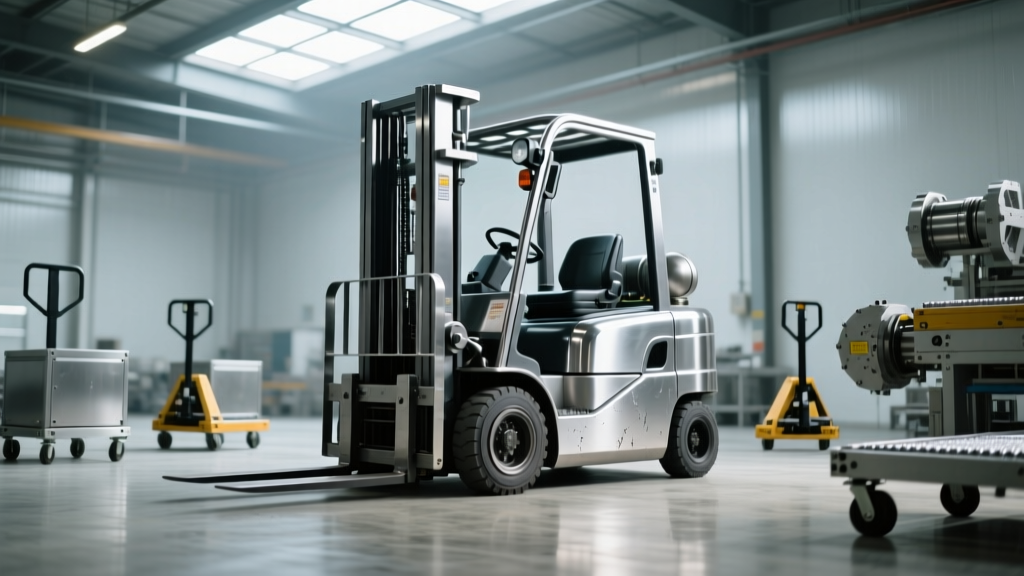
Procuring material handling assets for food processing and pharmaceutical manufacturing requires navigating strict sanitary design mandates. Standard warehouse equipment fails rapidly in high-moisture, caustic washdown environments, leading to product contamination and severe regulatory penalties. As of 2026, the capital expenditure for IP69K-rated, 316L stainless steel, or hot-dipped galvanized forklifts and pallet jacks remains substantially higher than standard fleet equivalents. Consequently, procurement teams are increasingly turning to secondary markets to offset these premiums.
WARNING: The Hidden Cost of Standard Fleet SubstitutionDeploying standard painted forklifts in USDA or FDA-regulated zones results in paint flaking into product lines and rapid chassis corrosion from quaternary ammonium sanitizers. Replacing a standard $30,000 electric forklift every 18 months due to washdown degradation costs 300% more over a five-year period than investing in a $75,000 purpose-built sanitary model.
The True Cost Delta: Standard vs. Sanitary Material Handling
Before evaluating secondary markets, budget planners must understand the baseline pricing for sanitary-compliant equipment. Compliance with FDA's Sanitary Transportation Rule and 3-A Sanitary Standards dictates specific material and design requirements, such as sealed electrical compartments, food-grade H1 hydraulic fluids, and crevice-free welds.
| Equipment Type | Standard Model (2026 Avg) | Washdown/Sanitary Model | Cost Premium |
|---|---|---|---|
| 5,000 lb Electric Forklift (e.g., Toyota 8FBE18U variant) | $32,000 - $38,000 | $78,000 - $95,000 (Galvanized/Stainless) | +145% |
| Electric Pallet Jack (e.g., Crown WP 3000 series) | $3,500 - $4,500 | $11,000 - $15,500 (Stainless/IP69K) | +244% |
| Automated Guided Vehicle (AGV) Pallet Mover | $45,000 - $60,000 | $110,000 - $135,000 (Sealed/Washdown) | +125% |
Reviews of Auction Platforms for Forklift and Material Handling Equipment
Sourcing these highly specialized assets at a discount requires knowing which auction platforms actually host food and pharmaceutical plant liquidations. Generalist heavy equipment sites rarely feature true sanitary fleet vehicles. Below are targeted reviews of auction platforms for forklift and material handling equipment specifically evaluated for food and pharma procurement.
1. Liquidity Services (GoIndustry DoveBid)
Best For: Complete pharmaceutical and food processing facility closures.
Cost Savings Potential: 40% - 65% off new sanitary equipment.
When major pharma companies consolidate or upgrade facilities, Liquidity Services often secures the exclusive contract to liquidate the entire material handling fleet. This is the premier platform for finding lightly used, strictly maintained stainless steel forklifts and AGVs. The platform provides detailed asset condition reports, including maintenance logs which are critical for proving OSHA compliance and traceability.
- Pros: High concentration of true food-grade assets; detailed maintenance history available; bulk lot bidding for entire fleets.
- Cons: High buyer's premiums (often 15-18%); assets are frequently sold "as-is, where-is" requiring expensive specialized rigging to remove from cleanrooms.
2. BidSpotter (Industrial & Food Processing Liquidations)
Best For: Mid-sized food packaging and meat processing plant liquidations.
Cost Savings Potential: 30% - 50% off retail.
BidSpotter aggregates auctions from regional industrial auctioneers. It is highly effective for finding galvanized reach trucks and washdown pallet jacks from bankrupt or relocating mid-market food producers. Search filters allow buyers to isolate lots by specific sanitary keywords, though manual verification of the equipment's actual IP rating is required.
- Pros: Lower buyer premiums than major global houses; frequent local auctions reduce shipping costs for heavy equipment.
- Cons: Photo documentation is often poor; auctioneers may lack the technical knowledge to differentiate between standard painted equipment and specialized epoxy-coated sanitary models.
3. Ritchie Bros. / IronPlanet
Best For: General warehouse equipment that can be retrofitted.
Cost Savings Potential: 50% - 70% off retail.
While not specialized in food-grade equipment, Ritchie Bros. is useful for budget planners looking to purchase standard heavy-duty electric forklifts at steep discounts to fund third-party sanitary retrofitting. Purchasing a low-hour standard Crown or Raymond forklift and sending it to a specialized coater for hot-dip galvanizing and IP67 electrical sealing can sometimes yield a lower total cost than buying factory-sanitary models at auction.
- Pros: Massive inventory; rigorous 27-point inspection reports on IronPlanet; transparent bidding.
- Cons: Almost zero native inventory of true food/pharma washdown equipment; retrofitting voids OEM warranties.
Budget Planning Framework for Sanitary Fleet Acquisition
When allocating capital for food and pharma material handling, budget planners must look beyond the hammer price at auction. Use the following framework to calculate the true acquisition cost:
- Base Hammer Price: The winning bid amount.
- Buyer's Premium & Taxes: Add 12% to 18% depending on the platform.
- Sanitary Decontamination & Inspection: Budget $1,500 to $3,000 per unit for ATP swab testing, deep chemical decontamination, and third-party mechanical inspection prior to removal from the seller's facility.
- Fluid & Lubricant Swap: Auctioned equipment may contain standard hydraulic fluid. Flushing and replacing with NSF H1 registered food-grade hydraulic fluid costs approximately $45 to $60 per gallon, requiring 10-15 gallons for a standard forklift. Add $600 to $1,000 per unit.
- Specialized Transport: Moving equipment from a closed pharma cleanroom often requires non-marking tires and specialized rigging. Budget $2,500 to $5,000 for complex extractions.
Edge Cases and Failure Modes in Auction Purchases
The most common failure mode when buying washdown equipment at auction is purchasing a unit that has suffered "crevice corrosion." Even 304 stainless steel will pit and corrode if exposed to high-chloride sanitizers without proper daily rinsing. When reviewing auction photos, zoom in on the weld joints of the mast and the battery compartment floor. If you see brown weeping or pitting in these areas, the structural integrity is compromised, and the unit will fail USDA audits.
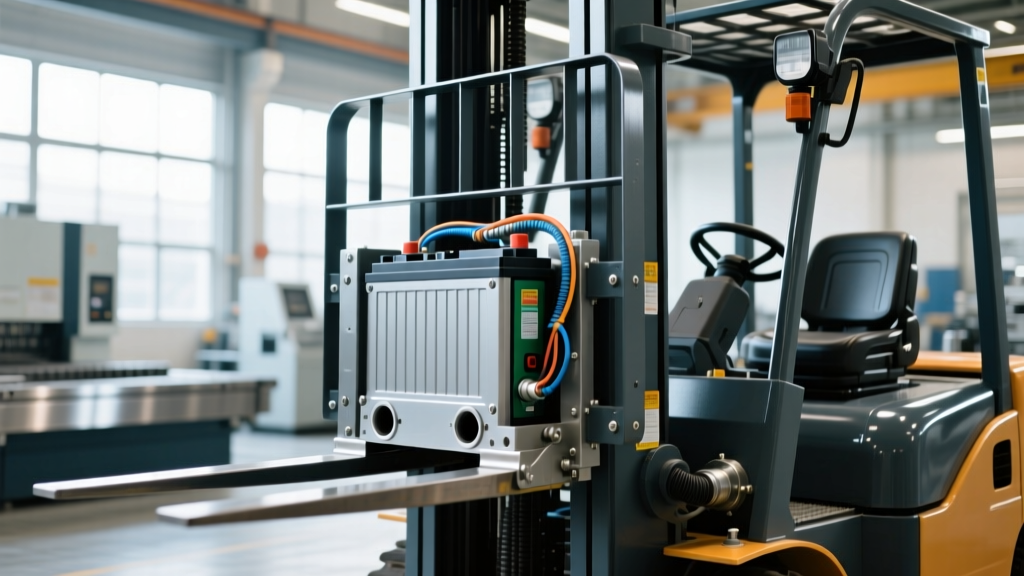
Additionally, verify the battery type. Many older washdown forklifts use sealed gel batteries to prevent acid spills in food zones. If the auction listing shows standard flooded lead-acid batteries, budget an immediate $4,000 to $6,000 to swap them for lithium-ion or sealed gel alternatives to maintain sanitary compliance.
"In pharmaceutical logistics, the provenance of the equipment is just as critical as its physical condition. An auctioned forklift without verifiable maintenance logs proving it was never used in a non-controlled, high-pathogen environment is essentially unsalvageable for GMP (Good Manufacturing Practice) facilities, regardless of the discount."
Total Cost of Ownership (TCO) Calculations for 2026
When comparing an auctioned washdown forklift against a new factory-direct model, apply a 7-year TCO model. A new $85,000 stainless steel forklift depreciates at roughly 15% annually. An auctioned equivalent purchased for $40,000 will require higher maintenance. Expect to spend $3,500 annually on replacing IP67-rated wiring harnesses and sealed switches, which fail faster on used equipment that has endured years of high-pressure, high-temperature washdowns. Factor in a 20% contingency fund for electrical component replacements in years 2 through 5 of an auctioned asset's lifecycle to ensure your budget remains accurate.