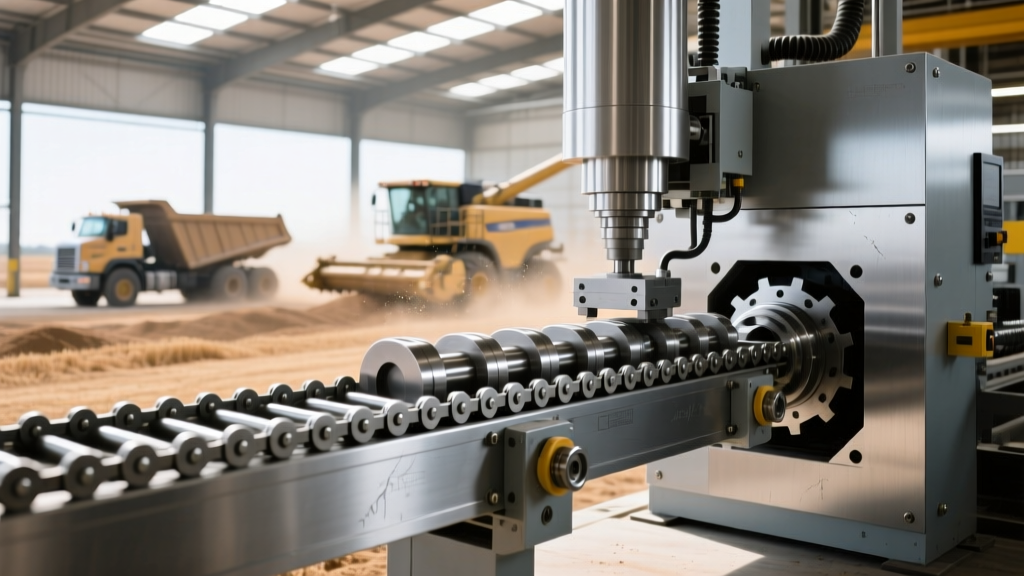
Buying Specialty Material Handling Equipment for Mining & Agriculture
Expert guide to selecting specialty material handling equipment for mining and agriculture. Compare drag chains, bucket elevators, and belt systems.
The Hidden Costs of Misapplied Bulk Handling Systems
Deploying standard CEMA B or C rated conveyors in mining and agricultural environments is a guaranteed path to catastrophic failure. Standard warehouse equipment is engineered for uniform, dry, and relatively lightweight boxed goods. Bulk mining materials (iron ore, copper, coal) and agricultural products (potash, raw grain, seed) introduce extreme abrasion, high impact forces, severe corrosion, and combustible dust. Procuring the right specialty material handling equipment requires moving beyond basic throughput calculations and engineering for the specific failure modes of your raw material.
This guide breaks down the exact specifications, material grades, and capital expenditure metrics required to select bulk handling systems that survive the harsh realities of extraction and harvest processing in 2026.
Mining Applications: Surviving Extreme Abrasion and Impact
Mining environments demand equipment that can withstand high-impact loading and continuous abrasion. The two dominant systems in this sector are heavy-duty troughed belt conveyors and en-masse drag chain conveyors.
Heavy-Duty Troughed Belt Conveyors (CEMA E and F)
For moving high-tonnage ores over long distances, CEMA E and F rated belt conveyors are mandatory. The critical specification here is the belt carcass and cover grade. Standard 2-ply belts will delaminate under the impact of 6-inch iron ore lumps dropping from a chute.
- Carcass Specification: Specify 3-ply or 4-ply EP (Ep Polyester) fabric rated for a minimum of 400 PIW (pounds per inch of width) for standard mining, scaling up to 600 PIW for steep-incline or high-tension overland routes.
- Cover Grade: Use a 1/4-inch top cover and 1/16-inch bottom cover made from AR (Abrasion Resistant) rubber compounds. For highly abrasive materials like taconite, specify cut-and-gouge resistant rubber.
- Impact Protection: Never rely solely on standard steel idlers at the load zone. Install engineered impact beds (such as those from Martin Engineering) featuring UHMW-PE top covers and rubber shock absorbers to dissipate kinetic energy and prevent belt cupping.
Drag Chain Conveyors for High-Temp and Fines
When handling hot materials (sinter, hot clinker) or highly abrasive fines that would slip on a belt, heavy-duty drag chain conveyors are required. The failure mode to engineer against here is sprocket tooth hooking and chain elongation.
Engineering Warning: Do not accept standard A36 steel for drag chain troughs in mining. Specify AR400 or AR500 (Abrasion Resistant) steel liners for the bottom and sides of the trough. While AR500 increases initial capital costs by roughly 18%, it extends trough life from 14 months to over 5 years in copper or iron ore applications.Agricultural Applications: Managing Fragility, Corrosion, and Combustibility
Agricultural bulk handling presents a completely different set of physics and chemistry. You are managing biological fragility, chemical corrosion, and explosive atmospheres.
Bucket Elevators and Tubular Drag Systems
For vertical lifting of grain, continuous-discharge bucket elevators remain the industry standard. However, for fragile seeds (canola, sunflower, soybeans) where maintaining the seed coat is critical for market grade, tubular drag conveyors are the superior choice.
"Seed degradation in high-speed bucket elevators can reduce market grade by 10-15%. Tubular drag systems operating below 100 FPM virtually eliminate seed coat cracking, preserving the economic value of the harvest." — Agricultural Processing Engineering Review, 2025
Corrosion and Fertilizer Handling
Potash, urea, and ammonium nitrate are highly hygroscopic and corrosive. Standard painted carbon steel will rust through in a single season. For fertilizer handling, your specialty material handling equipment must specify:
- Material: 304 or 316L stainless steel for all product contact surfaces.
- Alternative Coatings: If stainless steel exceeds the budget, specify a minimum 20-mil thick plasma-applied ceramic or epoxy coating (e.g., Plasmatite) on carbon steel housings.
- Seals: IP66-rated labyrinth seals on all bearings to prevent phosphate dust ingress, which causes rapid bearing seizure when combined with ambient humidity.
Bulk Equipment Selection Matrix
Use this decision matrix to align your material characteristics with the correct conveyor technology.
| Equipment Type | Ideal Material Profile | Max Capacity (TPH) | Degradation Risk | Primary Failure Mode |
|---|---|---|---|---|
| Troughed Belt (CEMA F) | High-tonnage, large lump mining ores | 5,000 - 10,000+ | Low | Belt ripping, splice failure |
| En-Masse Drag Chain | Hot, abrasive, or dusty mining fines | 500 - 1,500 | Medium | Chain elongation, sprocket wear |
| Continuous Bucket Elevator | Free-flowing grain, bulk fertilizers | 10,000 - 20,000 bu/hr | High (for fragile seeds) | Belt mistracking, dust ignition |
| Tubular Drag Conveyor | Fragile seeds, food-grade powders | 10 - 40 | Very Low | Cable/Puck wear, tension loss |
2026 Capital Expenditure Guide: Pricing and ROI Metrics
Budgeting for specialty bulk handling systems requires understanding the current pricing landscape. Based on Q1 2026 industrial fabrication rates, expect the following capital expenditure ranges:
- Heavy-Duty Mining Belt Conveyors: $1,800 to $3,200 per linear foot, fully installed. This includes CEMA F idlers, vulcanized splicing, and heavy-duty impact beds. Mechanical fasteners are cheaper upfront ($400 per splice) but reduce belt life by 30% in high-tension mining applications.
- Agricultural Bucket Elevators: $65,000 to $140,000 per unit for a standard 100-foot lift, 10,000 bushel-per-hour capacity. Upgrading to 304 stainless steel for fertilizer applications adds a 35-45% premium over galvanized carbon steel.
- Tubular Drag Conveyors: $900 to $1,600 per linear foot. While the footprint cost is higher than a standard auger, the ROI is realized in the preservation of fragile seed grades and the elimination of dust emissions.
For comprehensive safety and maintenance planning in extraction environments, always cross-reference your equipment specs with MSHA Accident Prevention guidelines regarding conveyor guarding and fire suppression integration.
Critical Spec Sheet Checklist Before You Sign the PO
Before finalizing any purchase order for specialty material handling equipment, verify these exact line items on the manufacturer's engineering drawings:
- Splice Method: Confirm vulcanized splicing for all mining belts operating above 300 PIW. Reject mechanical fastener specs for high-tension inclines.
- Motor Hazard Rating: Verify that all motors and VFDs in grain handling zones carry the exact UL/CSA listing for Class II, Division 1, Group G (agricultural dust).
- Bearing Isolation: Ensure all external bearings specify non-contact labyrinth seals (e.g., Inpro/Seal) rather than standard lip seals, which fail within months in phosphate or silica dust environments.
- Inspection Doors: Require full-length, hinged inspection doors with quick-release latches on all drag chain and bucket elevator housings to facilitate safe, OSHA-compliant maintenance and cleaning.
Selecting the right bulk handling system is not about finding the lowest bid; it is about engineering the system to survive the specific chemical and physical hostility of your material. Specify the correct alloys, seal types, and safety ratings upfront to avoid six-figure downtime costs in the first year of operation.
Related reading
Bridge Crane Checks Before Using Material Handling Equipment to Move Ammunition
Auction Platforms for Forklift and Material Handling Equipment Reviews: Dock Levelers