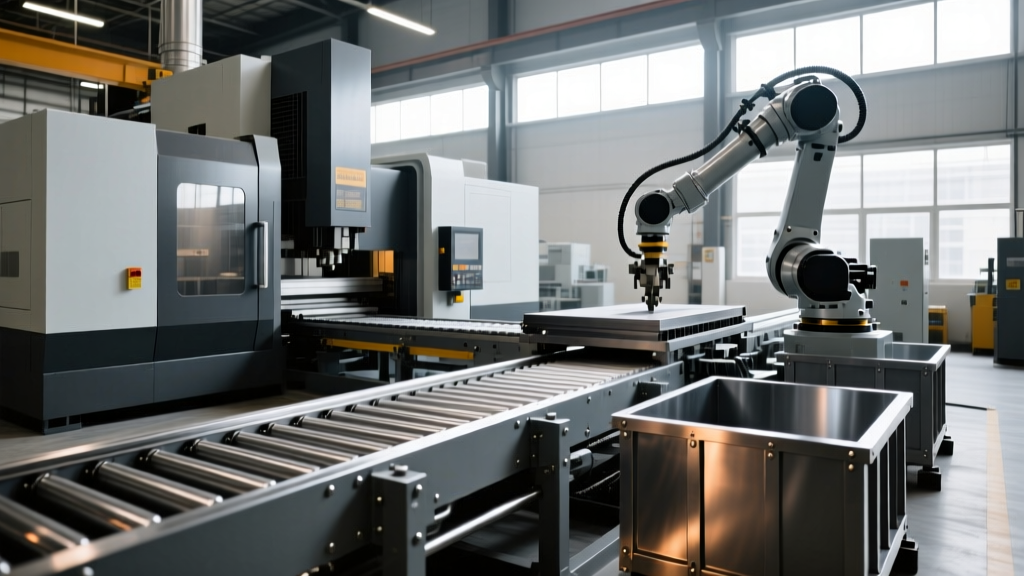
Sortation: Carbon Steel Material Handling Equipment Fabrication Care
Learn how carbon steel material handling equipment fabrication impacts sortation system maintenance, weld fatigue, and PM schedules in e-commerce.
E-commerce fulfillment centers processing upwards of 20,000 parcels per hour rely heavily on high-speed sortation infrastructure. While facility managers routinely calibrate PLCs, replace divert shoes, and service drive motors, the structural backbone of these systems is frequently overlooked. The precision of carbon steel material handling equipment fabrication directly dictates the lifecycle, vibration dampening, and ultimate maintenance schedule of cross-belt, sliding shoe, and tilt-tray sorters. When a sorter operates continuously at 400 to 500 feet per minute (FPM), harmonic vibrations systematically exploit any compromises in the steel frame, weld joints, and chute transitions. Understanding the metallurgical and fabrication realities of these systems is mandatory for designing an effective preventative maintenance (PM) program.
Metallurgical Baselines: ASTM A36 vs. A500 Structural Tubing
The foundation of any heavy-duty sortation system begins with the raw material specifications chosen during the initial carbon steel material handling equipment fabrication phase. Engineers typically specify either ASTM A36 hot-rolled carbon steel for flat plate gussets and base plates, or ASTM A500 Grade B structural tubing for the main truss legs and cross-members.
💡 Engineering Insight: A500 Grade B tubing offers a minimum yield strength of 42,000 psi, significantly outperforming the 36,000 psi yield of standard A36 steel. However, A500 tubing is highly susceptible to internal corrosion if the fabrication shop fails to seal the tube ends or apply an internal rust-inhibitive primer. During annual PMs, inspectors must use ultrasonic thickness gauges on sealed tubular legs to detect internal wall thinning that external visual inspections will miss.For high-wear zones, such as the impact points beneath sliding shoe sorter divert spurs, fabrication shops must integrate AR400 (Abrasion Resistant) steel wear liners. If a facility accepts a sorter fabricated entirely with mild A36 steel in these high-impact zones, the maintenance team will face premature chute burn-through, requiring costly hot-work repairs every 12 to 18 months.
Harmonic Vibration and Weld Fatigue in High-Speed Sorters
A 400-foot sliding shoe sorter generates continuous harmonic vibrations. If the carbon steel material handling equipment fabrication relies on intermittent 'stitch' welds rather than continuous fillet welds on non-critical guardrails and sensor mounts, these vibrations will induce micro-cracking. Over a 24/7 operational cycle, a 3-millimeter micro-crack in a stitch weld can propagate into a catastrophic structural failure within 14 months.
According to guidelines established by the Conveyor Equipment Manufacturers Association (CEMA), structural joints in high-speed conveying and sortation equipment must adhere to strict deflection limits. Excessive frame deflection alters the tracking of the sorter carriage, leading to premature wear on the polyurethane guide wheels and linear bearings.
Preventative Maintenance Matrix for Fabricated Sortation Components
| Sorter Component | Fabrication Spec | Common Failure Mode | PM Interval | Diagnostic Method |
|---|---|---|---|---|
| Main Truss Splice Plates | 1/2" A36 Steel, CNC Plasma Cut | Bolt shear / Hole elongation | Quarterly | Torque wrench (120 ft-lbs) & caliper measurement |
| Diverter Spur Chutes | 14-Gauge HRPO w/ AR400 Liner | Liner delamination / Base metal wear | Bi-Annually | Visual inspection & ultrasonic thickness testing |
| Motor Mount Bases | 3/8" A500 Tubing, Continuous Weld | Weld toe cracking from torsion | Monthly | Magnetic Particle Inspection (MPI) |
| Guardrail Stanchions | 2x2 A500 Tubing, Stitch Weld | Resonance fatigue / Fastener back-out | Annually | Visual weld check & hardware verification |
Weld Inspection Protocols: Identifying Fabrication Defects Early
The quality of the welding performed during carbon steel material handling equipment fabrication determines the structural integrity of the sorter. Maintenance teams must be trained to identify specific weld defects that accelerate under dynamic sorting loads.
- Undercutting: A groove melted into the base metal adjacent to the weld toe. In sorter cross-members, undercutting creates a severe stress concentration point. Any undercut exceeding 1/32" on a load-bearing sorter joint must be ground out and re-welded immediately.
- Porosity: Caused by inadequate shielding gas during the MIG welding process. While surface porosity on non-structural brackets is cosmetic, subsurface porosity in truss gusset plates compromises sheer strength. Facilities should mandate that fabrication partners provide AWS D1.1 compliant weld maps for all primary load paths.
- Slag Inclusions: Trapped non-metallic solid material in the weld metal. Common in flux-cored arc welding (FCAW) used for thick base plates. Slag inclusions act as internal wedges that propagate cracks when subjected to the cyclical impact of heavy parcel totes.
Step-by-Step: Inspecting Fabricated Chute Transitions
Chute transitions are where fabricated steel meets high-velocity parcel flow. Misalignment here causes package jams and severe abrasion. Follow this protocol during monthly downtime windows:
- Verify Flange Coplanarity: Place a 48-inch machined straightedge across the bolted flange connection between the sorter bed and the fabricated steel chute. Measure the gap with a feeler gauge. Gaps exceeding 0.062" indicate frame sag or truss deflection.
- Inspect Fastener Integrity: Sortation vibrations routinely back out standard hex nuts. Ensure all fabricated flange connections utilize Nord-Lock washers or prevailing torque nuts. Replace any standard split lock washers found during the audit, as they are ineffective against high-frequency harmonic vibration.
- Measure Wear Liner Step-Offs: Where an AR400 wear liner meets standard carbon steel, a 'step-off' or lip will form as the softer steel wears away. If this lip exceeds 1/8", it will catch poly-mailers and thin corrugated boxes, causing catastrophic line stoppages. Schedule a grind-down or liner replacement.
Retrofitting and Re-Fabrication Tolerances
When sortation layouts change to accommodate new product profiles, facilities often commission secondary carbon steel material handling equipment fabrication for new spur lines or merge conveyors. The integration of new fabricated steel with existing, potentially settled infrastructure requires strict tolerance management.
According to industry benchmarks tracked by Material Handling Industry (MHI), the integration of new sortation spurs is a leading cause of micro-jams if elevation tolerances are ignored. Existing sorter trusses often deflect up to 1/4" under full operational load compared to their unloaded state. When fabricating and installing new steel merge beds, engineering teams must pre-camber the new carbon steel frames to match the dynamic deflection profile of the main sorter loop, rather than leveling them to a static laser line.
Financial Impact: Proactive Upkeep vs. Reactive Replacement
The financial disparity between maintaining fabricated steel components and replacing them is stark. Re-fabricating and installing a custom 30-foot carbon steel diverter chute, complete with AR400 liners and integration labor, typically costs between $8,500 and $14,000, exclusive of the revenue lost during the 12-hour installation window.
Conversely, implementing a rigorous PM schedule focused on fastener torque verification, ultrasonic wear-liner mapping, and targeted weld inspections costs approximately $1,200 per sorter line annually. By shifting the maintenance paradigm from reactive component swapping to proactive metallurgical monitoring, fulfillment centers can extend the operational life of their carbon steel sortation infrastructure well past the standard 15-year depreciation cycle, ensuring maximum ROI on their initial capital expenditure.
Related reading
Budgeting Washdown Fleets: Reviews of Auction Platforms for Forklift and Material Handling Equipment in Food & Pharma
Sortation Operator Training: Material Handling Equipment Fabrication