Robotic Palletizers: Advanced Types of Material Handling Equipment
Explore real-world case studies of robotic palletizing systems, comparing them to traditional types of material handling equipment for 2026 warehouse ROI.
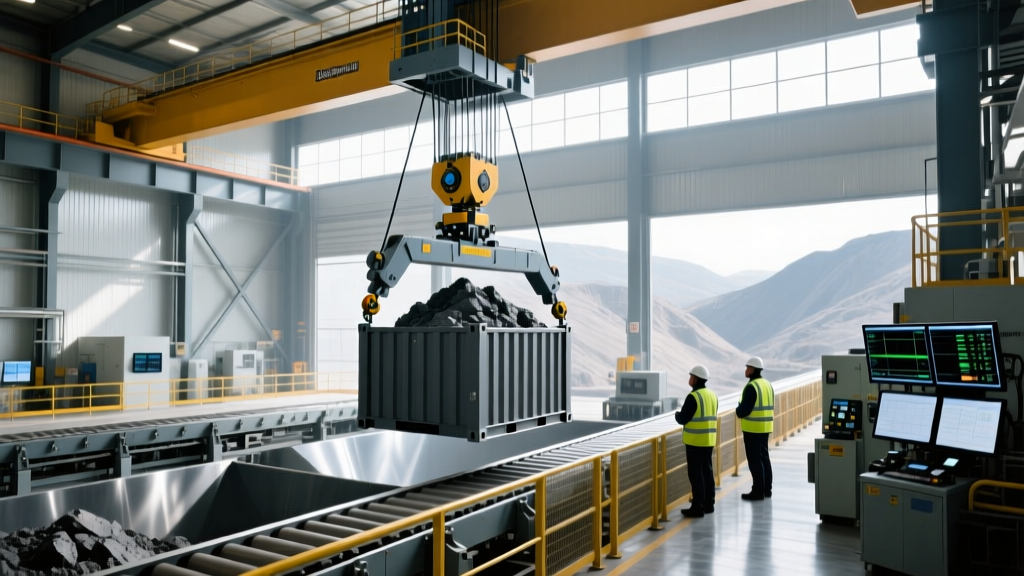
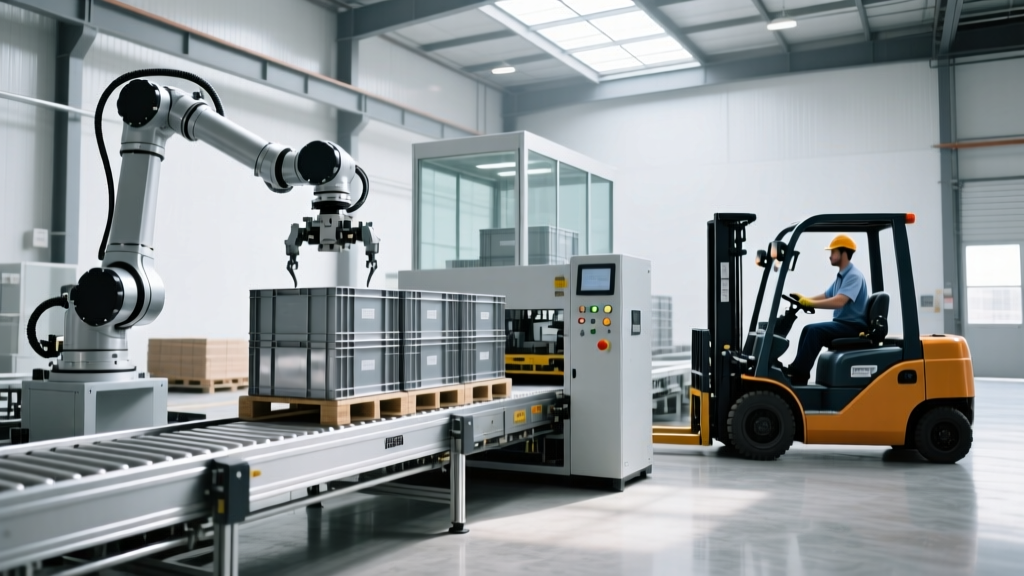
End-of-line packaging bottlenecks cost high-volume manufacturing facilities up to 14% in lost throughput annually. While conventional layer palletizers and manual labor have historically dominated this space, robotic palletizing and depalletizing systems have evolved from niche luxuries into foundational types of material handling equipment. By integrating 6-axis articulation, AI-driven 3D vision, and specialized end-of-arm tooling (EOAT), modern robotic cells now handle mixed-SKU depalletizing and high-speed case packing with sub-millimeter precision.
This analysis examines two distinct 2026 industry applications, breaking down the exact hardware configurations, environmental failure modes, and total cost of ownership (TCO) metrics required to justify the capital expenditure.
Positioning Robotic Systems Among Types of Material Handling Equipment
When evaluating types of material handling equipment for end-of-line operations, facility managers typically choose between conventional mechanical palletizers, collaborative robots (cobots), and traditional industrial robotic arms. Each architecture serves a distinct throughput and footprint requirement.
| Equipment Type | Max Payload | Typical Speed (CPM) | Footprint | Best Application |
|---|---|---|---|---|
| Conventional Layer Palletizer | Full Layer (1000+ lbs) | 40 - 120 CPM | Large (400+ sq ft) | High-speed, single-SKU beverage cans |
| Industrial 6-Axis Robot (e.g., FANUC M-410iC) | 110 - 220 kg | 12 - 25 CPM | Medium (150 sq ft) | Mixed-SKU, heavy bags, corrugated cases |
| Cobot Palletizer (e.g., Robotiq Pally) | 8 - 20 kg | 6 - 10 CPM | Small (60 sq ft) | Low-speed, tight-space end-of-line packaging |
According to the Material Handling Industry (MHI), the shift toward industrial 6-axis robots is driven by their ability to adapt to varying case dimensions without the mechanical changeovers required by conventional layer machines.
Case Study 1: High-Speed Beverage Depalletizing with Mixed SKUs
A mid-western beverage distributor faced a critical bottleneck in 2025: receiving mixed-SKU pallets from regional craft breweries. Manual depalletizing resulted in high turnover rates and repetitive strain injuries. The facility deployed a FANUC M-410iC/185 robotic depalletizing cell equipped with a SICK Ranger3 3D LiDAR vision system.
The Technical Configuration
- Robot Model: FANUC M-410iC/185 (185 kg payload capacity, 3.1-meter reach).
- Vision System: SICK Ranger3 R3076 3D camera, mounted on the ceiling, scanning the pallet topography before each cycle.
- EOAT: Custom 3D-printed vacuum array with Piab piGRIP® cups, specifically tuned for porous corrugated cardboard.
Overcoming the Corrugated Dust Failure Mode
The primary failure mode in corrugated depalletizing is vacuum loss caused by cardboard dust clogging the vacuum generator filters. In this installation, the initial vacuum pumps failed after 72 hours of continuous operation. The engineering team resolved this by bypassing standard venturi generators and installing Piab piPREMATIC vacuum pumps with integrated cyclonic dust separators. This modification increased the mean time between failures (MTBF) for the vacuum system from 3 days to over 14 months.
⚠️ Maintenance Gotcha: When depalletizing slip sheets (thin plastic or corrugated dividers), static cling frequently causes two sheets to stick together, jamming the dispensing magazine. Grounding the slip-sheet magazine with copper ionizing bars (costing approximately $450) eliminates static buildup and reduces slip-sheet jams by 98%.Case Study 2: Cement Bag Palletizing in High-Dust Environments
Palletizing 50 lb (22.6 kg) cement bags presents a unique challenge: the environment is saturated with abrasive particulate matter that destroys standard robotic joints and optical sensors. A building materials manufacturer in Nevada replaced four manual palletizing stations with two KUKA KR 180 PA (Palletizing Architecture) robots.
Hardware Hardening and IP Ratings
Standard industrial robots feature IP65 protection, which is insufficient for cement dust. The facility specified the KUKA KR 180 PA with the optional IP67 foundry package. This package includes pressurized internal cavities to prevent dust ingress and specialized bellows covers on all six axes.
Mechanical Clamping vs. Vacuum EOAT
Vacuum EOAT is entirely unviable in cement packaging due to immediate filter blinding. Instead, the system utilizes a mechanical side-clamp gripper with serrated polyurethane contact pads.
Calibration Insight: The clamping pressure must be precisely regulated via proportional pneumatic valves. If the pressure exceeds 4.5 bar, the gripper crushes the bag, causing micro-tears and product loss. If it drops below 3.2 bar, the bag slips during the 180-degree orientation twist. The PLC controls the pressure dynamically based on the specific bag SKU selected in the HMI.
"Manual material handling of 50-pound bags at a rate of 12 per minute exceeds ergonomic safety thresholds by over 300%, directly correlating with lumbar injury claims. Automation in these specific environments is not just a throughput upgrade; it is a critical risk mitigation strategy." — OSHA Ergonomics Guidelines for Manual Handling
Cost Analysis & ROI Framework for 2026
Capital expenditure for robotic palletizing cells has stabilized, but integration costs vary wildly based on upstream conveyor synchronization and safety fencing requirements. Below is a realistic TCO breakdown for a standard 20 CPM industrial robotic cell.
| Cost Category | Estimated Range (USD) | Notes |
|---|---|---|
| 6-Axis Robot Arm (e.g., ABB IRB 460) | $65,000 - $85,000 | Includes controller and teach pendant |
| Custom EOAT & Tool Changer | $12,000 - $25,000 | ATI tool changers add ~$4k but reduce maintenance downtime |
| Safety Fencing & Light Curtains | $8,000 - $14,000 | SICK microScan3 safety scanners required for floor-level entry |
| Integration, PLC Programming & Commissioning | $45,000 - $75,000 | Highly dependent on existing MES/WMS integration complexity |
| Total Installed Cost | $130,000 - $199,000 | Typical ROI achieved in 18-26 months via labor reallocation |
For facilities operating three shifts, the ROI is accelerated by eliminating manual palletizing labor (typically 3-4 FTEs per line) and reducing product damage claims by an average of 2.4%.
EOAT Selection Decision Matrix
Selecting the wrong End-of-Arm Tooling is the leading cause of robotic palletizing failure. Use this framework to specify the correct gripper technology based on your primary packaging type:
- Sealed Corrugated Cases (RSC or HSC): Use Zone-controlled vacuum arrays. Ensure the vacuum cups are spaced to avoid case seams and tape lines.
- Shrink-Wrapped Trays (e.g., canned beverages): Use Hybrid Vacuum/Mechanical clamps. Vacuum lifts the tray, while side clamps secure it during high-acceleration movements to prevent the shrink wrap from tearing.
- Poly-Woven Bags (Grain, Resin, Cement): Use Bottom-support scoop grippers with top-press plates. Never rely on side-clamping alone for granular bags, as the contents will shift, altering the center of gravity mid-cycle.
- Irregular/Mixed SKUs (Depalletizing): Use FOUP (Foxconn Universal Picker) style multi-zone vacuum sponges paired with 3D LiDAR to map the top layer and activate only the suction cups making direct contact with the product.
Final Integration Considerations
When integrating these advanced types of material handling equipment into an existing facility, do not overlook the pallet dispensing mechanism. A robotic arm capable of 20 CPM will be starved and forced into idle cycles if the downstream empty pallet dispenser only indexes at 12 CPM. Specify a dual-magazine chain-driven pallet dispenser to ensure the robot never waits for a wooden skid, maintaining continuous line flow and protecting your calculated ROI.