Hoist Maintenance: Storeroom Integrated Material Handling Equipment Installations San Jose
Expert hoist maintenance schedules for storeroom integrated material handling equipment installations in San Jose. Covers chain vs wire rope PM & seismic codes.
Unique Demands of Bay Area MRO Storerooms
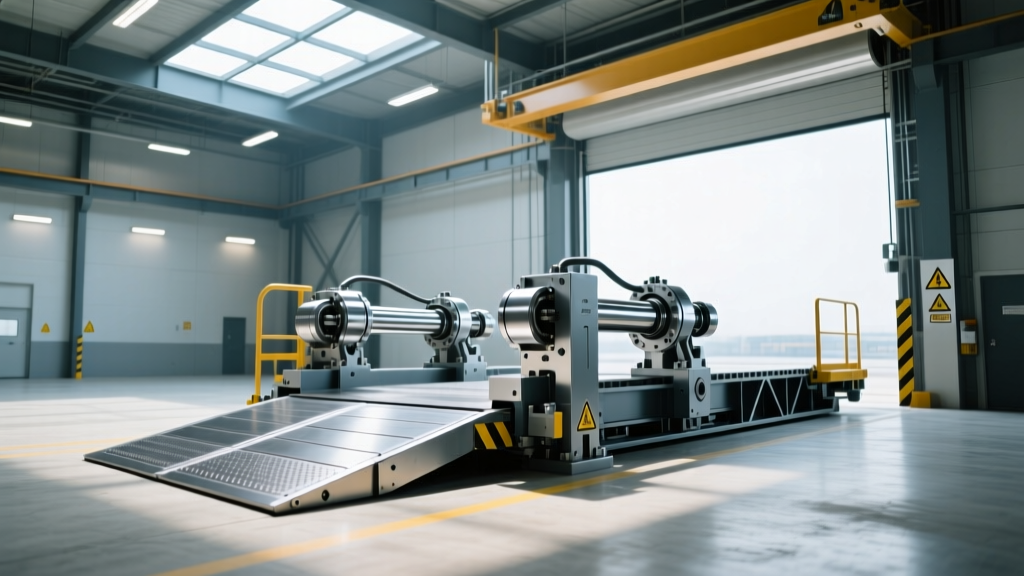
Maintenance, Repair, and Operations (MRO) storerooms in the Silicon Valley corridor serve as the backbone for semiconductor fabs, data centers, and advanced manufacturing facilities. When evaluating storeroom integrated material handling equipment installations, San Jose facility managers must account for highly specific environmental and regulatory variables. Unlike standard warehouse environments, these storerooms frequently handle sensitive, high-value assets—ranging from 400-pound vacuum pumps to multi-thousand-dollar server chassis—requiring overhead hoists and jib cranes to operate with zero-defect reliability.
Furthermore, California's strict building codes and the presence of Electrostatic Discharge (ESD) sensitive zones dictate that integrated hoist systems require specialized maintenance protocols. A failure in a vertical transport system within an MRO storeroom doesn't just delay a shipment; it can halt a multi-million-dollar production line. This guide details the exact maintenance schedules, wear tolerances, and troubleshooting frameworks required to keep integrated hoist systems operational in 2026.
⚠️ Critical Alert: Seismic & ESD Compliance
Under California Title 24 and local San Jose building codes, all overhead and cantilevered hoist installations in Zone 4 seismic areas must undergo annual structural bracing inspections. Additionally, hoists operating in ESD-safe MRO storerooms must be checked quarterly for grounded carbon brush wear and ESD-safe polyurethane trolley wheel degradation to prevent static arcing that can destroy sensitive microelectronics.
Daily & Weekly Operator Inspections (ASME B30.16)
The ASME B30 Series Safety Standards mandate that operators perform visual and functional checks at the start of each shift. For integrated storeroom hoists, these checks take less than five minutes but prevent 80% of catastrophic load-drop incidents.
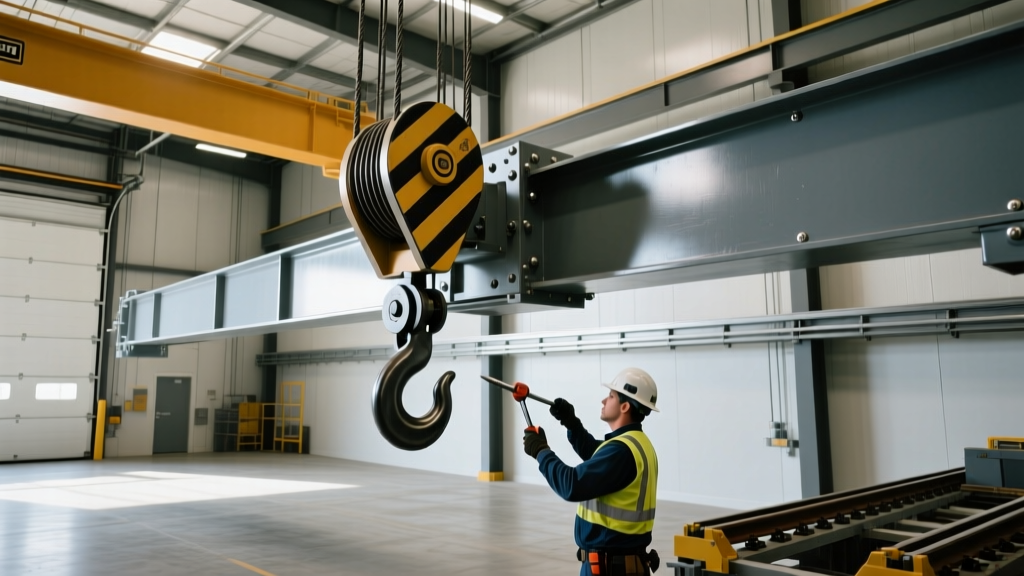
- Hook Throat Measurement: Using a calibrated caliper, measure the hook throat opening. If the opening has expanded by more than 15% compared to the manufacturer's baseline (e.g., a Crosby Group A-351 hook), the hook must be discarded immediately. Never attempt to weld or bend a deformed hook back into shape.
- Limit Switch Verification: Run the hoist block empty to the upper limit. The primary limit switch must cut power before the block contacts the drum or housing. If your system features a secondary (backup) limit switch, test it weekly by manually bypassing the primary switch.
- Chain/Rope Visual Scan: Look for 'birdcaging' in wire ropes or gouging in load chains. Listen for abnormal clicking from the chain sprocket during operation, which indicates pitch elongation.
- Pendant/Remote Response: Check for sticky buttons on the radio remote or pendant. In high-traffic storerooms, dropped pendants frequently cause internal PCB micro-fractures, leading to delayed stop commands.
Quarterly Preventative Maintenance Matrix
Quarterly PMs should be executed by a certified technician. The exact procedures diverge significantly depending on whether your integrated system utilizes a chain hoist (e.g., Columbus McKinnon Lodestar) or a wire rope hoist (e.g., Yale ER2 or Harrington NER series).
| Component | Chain Hoist PM Action | Wire Rope Hoist PM Action | Est. Time |
|---|---|---|---|
| Lifting Medium | Check 10-link pitch; replace if elongated >3%. Clean and re-lubricate with ISO VG 68 gear oil. | Inspect for 6 broken wires in one lay. Apply NLGI #2 lithium complex grease to the rope core. | 20 mins |
| Brake System | Inspect DC disc brake friction material. Measure air gap (target: 0.5mm - 0.8mm). | Check Weston-style mechanical brake cone wear. Verify spring tension. | 15 mins |
| Gearbox | Check oil level via sight glass. Look for metallic particulates indicating planetary gear wear. | Sample gear oil for spectrometric analysis if operating >2000 hours/year. | 10 mins |
| Trolley & Festoon | Inspect flange wear on beam trolley wheels. Check festoon cable tracking. | Verify trolley side rollers are not binding on the I-beam flange. | 15 mins |
Annual Deep-Dive: Load Testing & Electrical Diagnostics
According to OSHA 1910.179 regulations for overhead and gantry cranes, any hoist system that has undergone structural repair, or is newly installed, must be load tested to 125% of its rated capacity. For existing storeroom hoists, an annual operational load test at 100% to 110% capacity is the industry standard to verify brake holding torque.
VFD and Contactor Diagnostics
Modern integrated hoists utilize Variable Frequency Drives (VFDs) for precision load spotting, crucial when lowering delicate semiconductor equipment. During the annual PM, technicians must:
- Thermographic Scan: Use an infrared camera to scan the mainline contactor and VFD IGBT modules under load. Hotspots exceeding 65°C (149°F) indicate failing connections or degrading silicon.
- Brake Rectifier Check: Measure the DC voltage output of the brake rectifier. A drop of more than 10% from the rated DC output (usually 90VDC to 190VDC) will cause the brake to drag, leading to motor burnout.
- Parameter Backup: Extract and archive the VFD parameter set via Bluetooth or USB. In the event of a drive failure, having the exact acceleration/deceleration ramp profiles saved reduces downtime from days to hours.
Troubleshooting Common Integrated Hoist Faults
Storeroom environments present unique operational patterns, such as high-frequency, short-travel lifts. This duty cycle (often classified as H4 or Class D by the Crane Manufacturers Association of America (CMAA)) accelerates specific wear patterns.
💡 Pro Tip: Diagnosing 'Slipping' Brakes
If a hoist creeps downward when holding a static load, operators often assume the friction disc is worn. However, in 40% of cases involving integrated VFD hoists, the issue is 'dynamic braking overlap.' If the VFD release delay is set too short, the mechanical brake opens before the motor has generated sufficient holding torque. Adjusting the VFD brake release delay parameter by just 150 milliseconds can eliminate the creep without replacing hardware.
2026 Service Costs & Sourcing in Silicon Valley
Budgeting for hoist maintenance in the Bay Area requires accounting for premium labor rates and strict compliance documentation. As of 2026, facility managers overseeing storeroom integrated material handling equipment installations in San Jose should expect the following pricing structures from certified rigging and crane service providers:
| Service Type | 2026 Bay Area Cost Range | Frequency |
|---|---|---|
| Quarterly PM (per hoist) | $350 - $550 | Every 3 Months |
| Annual Load Test & Certification | $650 - $900 | Annually |
| Emergency Call-Out Rate | $185 - $245 / hour | As Needed |
| Seismic Bracing Engineering Sign-off | $1,200 - $2,500 | Post-Installation / Post-Quake |
When contracting service providers, demand proof of CMAA-certified technician status and verify that their load test weights are calibrated and certified to NIST standards. For MRO storerooms handling sensitive tech components, ensure the contractor utilizes cleanroom-compatible lubricants and lint-free rags to prevent particulate contamination during gearbox and chain servicing. By adhering to these rigorous, data-driven maintenance schedules, facility managers can extend the operational lifecycle of their vertical transport assets by up to 40%, ensuring uninterrupted support for critical manufacturing operations.