Selecting Manufacturing Material Handling Equipment for Food & Pharma
Expert buying guide for manufacturing material handling equipment in food and pharma. Covers IP69K, 3-A standards, and 316L stainless specs.
Selecting the correct manufacturing material handling equipment for food processing and pharmaceutical facilities requires navigating a complex matrix of sanitary design principles, strict regulatory compliance, and harsh operational environments. Unlike standard dry-warehouse logistics, food and pharma environments demand equipment that withstands daily caustic washdowns, prevents microbial harborage, and operates within strict cleanroom classifications. A single design flaw—such as a standard bearing seal or a hollow structural tube—can lead to biofilm formation, product contamination, and catastrophic FDA or EMA compliance failures.
Compliance Warning: According to FDA FSMA Preventive Controls, equipment design must actively prevent allergen cross-contact and microbial contamination. Non-compliant material handling assets are a primary vector for Listeria and Salmonella harborage in high-care zones.Sanitary Zoning and Regulatory Frameworks
Before specifying equipment, facility managers must map their sanitary zones. Equipment requirements shift drastically from Zone 4 (low-risk dry storage) to Zone 1 (high-care open-product areas). In Zone 1 and Zone 2, all manufacturing material handling equipment must adhere to 3-A Sanitary Standards (specifically 3-A SSI 141-01 for conveyors) and EHEDG guidelines.
The core tenets of hygienic design include:
- Hermetically Sealed & Hollow-Free: No blind holes, unsealed threads, or hollow structural members where moisture can pool.
- Self-Draining Geometry: All horizontal surfaces must be angled at a minimum of 3 degrees to prevent water accumulation.
- Surface Finish: Product-contact surfaces must achieve a maximum roughness (Ra) of 0.8 µm (32 µin) to prevent bacterial adhesion.
- IP69K Ingress Protection: Motors and electrical enclosures must withstand high-pressure (1450 PSI), high-temperature (145°F/63°C) washdowns.
Hygienic Conveyor Systems: Specifications and Selection
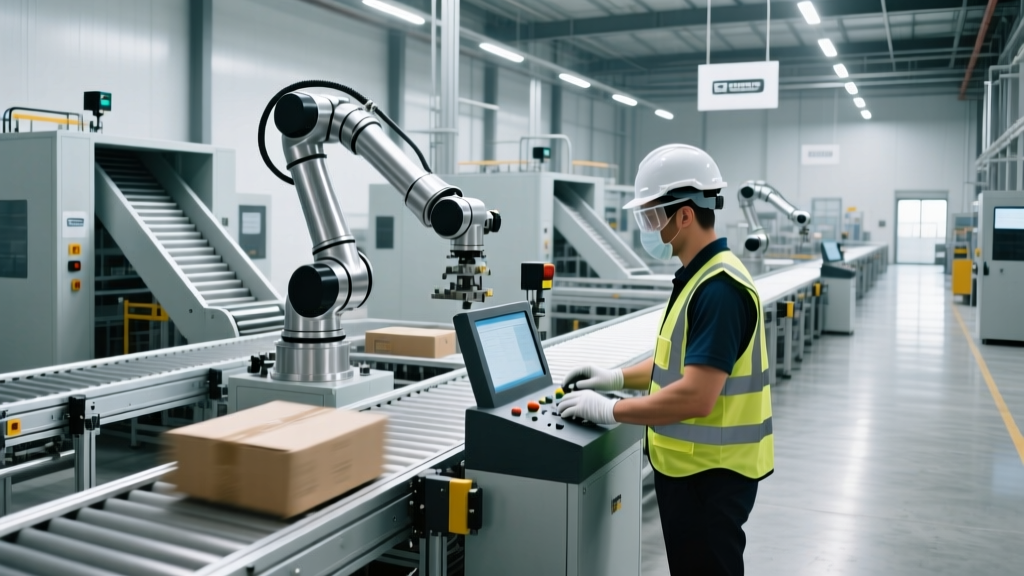
Conveyors represent the highest contamination risk in food and pharma material handling due to their extensive surface area and continuous movement. Standard industrial conveyors with painted mild steel frames and fabric belts will fail rapidly in washdown environments, suffering from frame oxidation and belt delamination.
Frame and Belt Material Requirements
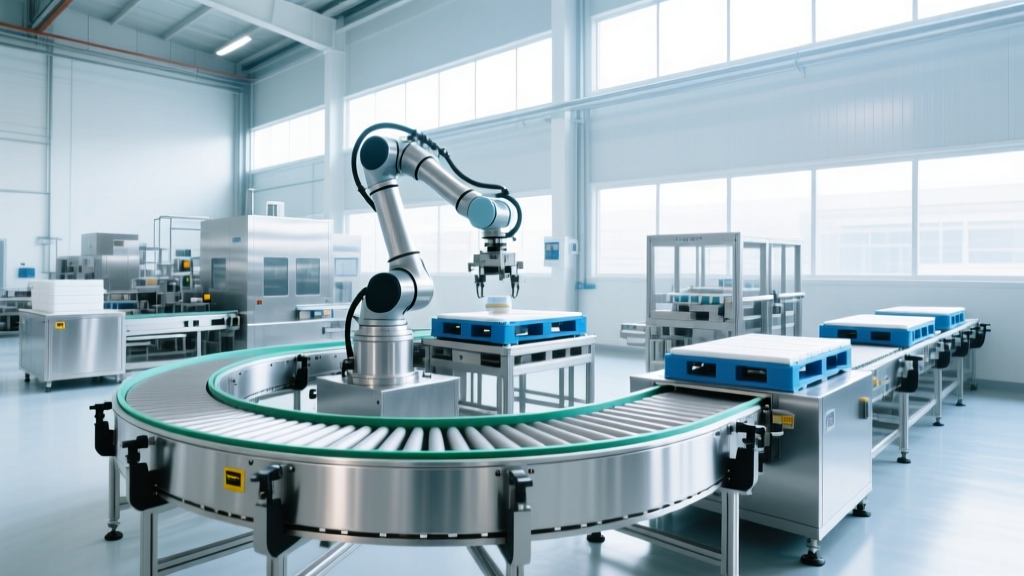
For high-care zones, specify 316L stainless steel frames. While 304 stainless steel is sufficient for low-moisture environments, 316L contains 2-3% molybdenum, providing critical resistance to pitting and crevice corrosion caused by chloride-based sanitizers (e.g., quaternary ammonium compounds and bleach). For the belting surface, avoid fabric-backed PVC. Instead, specify homogeneous Thermoplastic Polyurethane (TPU) belts, such as Intralox ThermoDrive. These belts resist hydrolysis, lipid absorption, and microbial penetration, and can be easily lifted for deep-cleaning without tools.
Model Spotlight: Dorner 2200 Series Hygienic
The Dorner 2200 Series with USDA/FDA-accepted belting is a benchmark in this category. Featuring a 316L stainless steel frame, IP69K-rated gearmotors, and tool-less belt removal, it addresses the primary failure modes of hygienic conveying. Expect capital expenditures between $14,000 and $24,000 per unit depending on length and drive configuration. Procurement Tip: Ensure the quote specifies double-lipped Viton or Hytrel IP69K shaft seals; standard labyrinth seals will suffer bearing washout within 90 days under high-pressure caustic foaming.
Washdown Pallet Jacks and Forklifts
Manual and electric pallet jacks are notorious vectors for cross-contamination, often traveling from raw material receiving (Zone 4) directly into processing areas (Zone 2). Standard zinc-plated or painted pallet jacks will develop surface rust within six months in a meat or dairy processing environment, creating physical contamination hazards.
For high-care areas, invest in fully stainless-steel electric pallet jacks, such as the Bishamon ES-20-SS. Priced between $7,500 and $9,200, these units feature 304/316 stainless steel chassis, IP65-rated drive motors, and polyurethane load wheels that resist chemical degradation. While the upfront cost is roughly 300% higher than a standard warehouse jack, the total cost of ownership is lower due to the elimination of premature rust-outs and the reduction in deep-cleaning labor required to sanitize porous, rusted surfaces.
Cleanroom AGVs and AMRs in Pharma
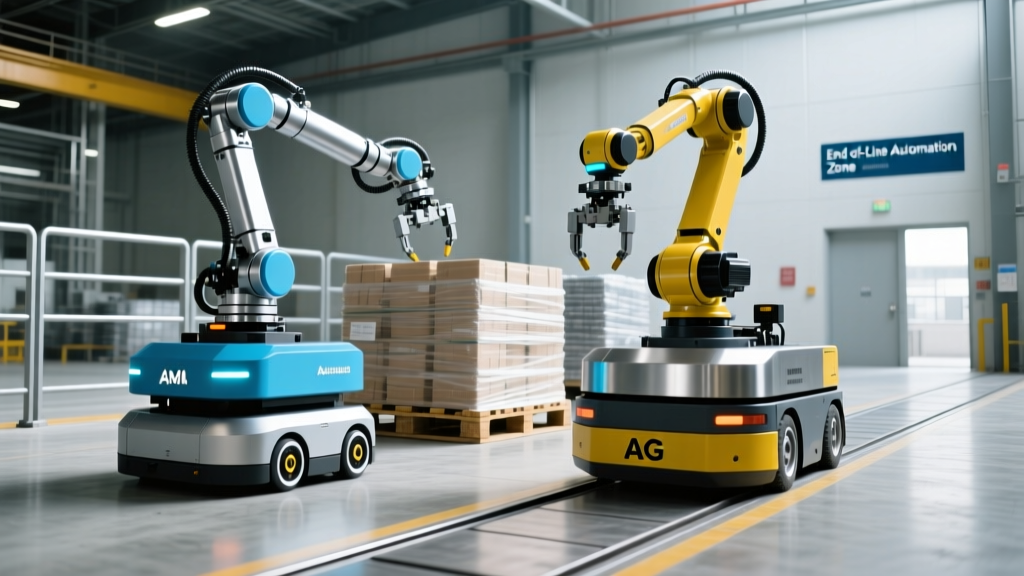
In pharmaceutical manufacturing, automated guided vehicles (AGVs) and autonomous mobile robots (AMRs) must operate without shedding particulates that violate ISO 14644-1 cleanroom classifications. Standard warehouse AMRs generate micro-particulates from wheel friction and standard cooling fans.
When sourcing AMRs for pharma, look for units like the MiR250 equipped with a specialized cleanroom top module, or KUKA’s KMR iisy series. These units feature specialized HEPA filtration on their internal cooling systems, low-shedding polyurethane wheels, and sealed chassis designs. Expect pricing to start at $38,000 for the base AMR, with an additional $8,000 to $12,000 for cleanroom certification and stainless-steel cladding upgrades.
Material Comparison: 304 vs. 316L Stainless Steel
Choosing the wrong alloy is the most common capital expenditure error in food manufacturing material handling. Use the matrix below to guide your RFQ specifications.
| Property | 304 Stainless Steel | 316L Stainless Steel |
|---|---|---|
| Molybdenum Content | None | 2.0% - 3.0% |
| Chloride Resistance | Low (Prone to pitting) | High (Ideal for harsh sanitizers) |
| Best Application Zone | Zone 3 & 4 (Dry/Packaging) | Zone 1 & 2 (Open Product/Washdown) |
| Relative Equipment Cost | Baseline (1x) | Premium (1.3x - 1.5x) |
Lubrication and Maintenance Realities
Even perfectly designed hygienic equipment will fail if maintained with standard industrial lubricants. All bearings, chains, and gearboxes in food and pharma handling equipment must be serviced with H1-registered food-grade lubricants (e.g., Klüber NH1 series). H1 lubricants are formulated to be safe for incidental food contact (up to 10 parts per million). Furthermore, maintenance teams must abandon standard grease guns in favor of single-use, color-coded cartridges to prevent cross-contamination between allergen and non-allergen production lines.
'The most frequent point of failure in hygienic conveyors is not the motor, but the tensioning mechanism. If the take-up shaft relies on standard threaded rods with exposed nuts, sanitation crews cannot clean the threads, leading to rapid biofilm buildup. Always specify hygienic, enclosed tensioning cassettes.' — Sanitary Design Engineering Best Practices
Buyer’s Checklist for RFQs
Before signing a purchase order for manufacturing material handling equipment in regulated environments, verify the following with the OEM:
- Are all horizontal surfaces sloped at ≥ 3 degrees?
- Are fasteners limited to Torx or hex-head designs (no Phillips/slotted screws)?
- Are all welds continuous, ground smooth, and free of crevices?
- Do electrical enclosures carry a verifiable IP69K rating certificate?
- Is the belting material FDA 21 CFR 177.2600 and EU 10/2011 compliant?
Frequently Asked Questions
Can I use standard painted conveyors in dry pharmaceutical packaging?
Yes, in Zone 4 (secondary packaging and palletizing), standard painted carbon steel conveyors are acceptable and cost-effective. However, any equipment entering the primary packaging or cleanroom ante-rooms must feature stainless steel or specialized powder-coated hygienic finishes.
How often should IP69K bearings be replaced in a daily washdown environment?
Even with IP69K ratings, the extreme thermal shock of daily 145°F washdowns followed by 65°F ambient cooling causes internal condensation. Expect to replace hygienic bearings every 18 to 24 months as a preventive maintenance baseline, utilizing H1 food-grade grease during the interim.