Integrating Conveyor Material Handling Equipment with AS/RS Racking
Guide to integrating conveyor material handling equipment with AS/RS and pallet racking. Covers CDLR vs MDR, dimensional tolerances, and cost analysis.
The Physical Handoff: Engineering the AS/RS and Conveyor Interface
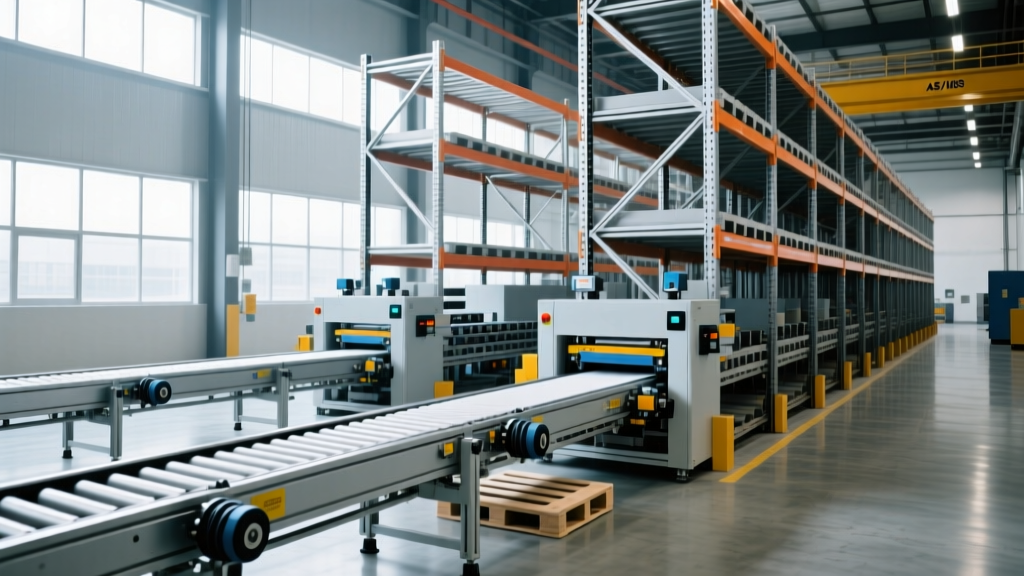
Designing a hybrid warehouse requires seamless physical and digital integration between automated storage and retrieval systems (AS/RS) and traditional storage. The most critical failure point in these hybrid facilities is the physical handoff zone where the AS/RS crane deposits or retrieves unit loads onto the staging lines. Selecting the right conveyor material handling equipment for this interface dictates the overall throughput ceiling of the facility.
Unit-load AS/RS cranes typically operate at travel speeds up to 600 feet per minute (fpm) with lift speeds of 150 fpm. However, the crane is bottlenecked if the staging conveyor cannot accept or deliver a standard 48x40 inch GMA pallet within the required cycle time. For high-throughput environments targeting 40 to 60 pallets per hour per aisle, the staging conveyor must operate at minimum speeds of 60 fpm and utilize precise accumulation logic to prevent pallet-to-pallet crushing.
Critical Edge Case: Pallet Sag and OverhangAS/RS optical sensors will reject a pallet if the load profile exceeds the designated envelope. When integrating conveyor material handling equipment, specify 2.5-inch diameter rollers with a maximum 3-inch roller pitch. This tight pitch prevents bottom deck boards from sagging between rollers, which frequently triggers false 'over-height' or 'broken pallet' photo-eye faults at the crane transfer station.
Selecting Conveyor Material Handling Equipment for Staging Zones
Not all conveyors are rated for the dynamic impact loads of a 2,500-pound pallet being deposited by a shuttle or crane. The selection matrix below outlines the optimal conveyor types for AS/RS staging and manual pick-face replenishment.
| Conveyor Type | Max Load Capacity | Speed Range | Cost per Linear Foot (2026) | Best Application in AS/RS |
|---|---|---|---|---|
| Chain Driven Live Roller (CDLR) | 4,000 lbs | 30 - 75 fpm | $350 - $500 | Main staging lines, heavy unit-load crane handoff |
| Chain Transfer (Pop-Up) | 3,000 lbs | N/A (Divert only) | $4,500 - $6,000 (per unit) | 90-degree redirects into manual racking aisles |
| Motorized Drive Roller (MDR) | 1,200 lbs | 40 - 120 fpm | $200 - $300 | Empty pallet return, tote handling at pick stations |
| Gravity Roller (Heavy Duty) | 2,500 lbs | Variable (Decline) | $80 - $120 | Manual staging spurs, low-volume overflow lanes |
For the primary AS/RS handoff, CDLR is the mandatory standard. Specify 480V/3-phase AC motors paired with variable frequency drives (VFDs). The VFD should be programmed to ramp up acceleration over 1.5 to 2.0 seconds. Hard-starting motors will snap the drive chains and cause poorly stretch-wrapped loads to shift, resulting in catastrophic jams at the crane mast.
Pallet Racking Configurations for Hybrid Replenishment Zones
While the AS/RS handles deep storage, the perimeter of the system typically features selective or double-deep pallet racking for manual order picking and rapid replenishment. According to guidelines from the Rack Manufacturers Institute (RMI), the structural integrity of this racking must account for the dynamic loading patterns introduced by nearby conveyor vibrations and forklift traffic.
Structural vs. Roll-Formed Steel in High-Traffic Aisles
In hybrid zones where forklifts are pulling pallets from conveyor spurs to load manual racking, roll-formed teardrop racking is highly susceptible to impact damage. Specify structural steel racking (minimum 12-gauge uprights and 10-gauge beams) for the bays directly adjacent to the conveyor lines. While structural racking costs approximately 30% to 40% more upfront than roll-formed alternatives (averaging $95 per pallet position vs. $65), the reduction in upright guard replacements and rack collapse risks yields a positive ROI within 24 months in high-traffic environments.
Beam Deflection Limits
When designing the manual pick faces fed by the conveyor system, adhere to strict beam deflection limits. The industry standard dictates that beams should not deflect more than 1/180th of the span length under maximum uniformly distributed load. For a standard 96-inch beam rated at 5,000 lbs, maximum allowable deflection is 0.53 inches. Exceeding this causes pallets to bind when forklifts attempt to withdraw them, increasing cycle times and equipment wear.
Digital Integration: WCS Handshakes and Photo-Eye Logic
Physical equipment is only half the integration challenge. The Warehouse Control System (WCS) must orchestrate the handoff between the conveyor PLCs and the AS/RS crane controller.
- Profile Checking: Install a multi-beam photo-eye array (minimum 4 beams vertically, 2 horizontally) at the conveyor entrance to the AS/RS tunnel. This checks for broken pallet boards, leaning loads, and stretched wrap.
- Weight Verification: Integrate in-motion conveyor scales rated for 5,000 lbs with an accuracy of +/- 0.5%. The WCS must reject loads that deviate from the WMS expected weight by more than 5%, preventing overloads on the AS/RS crane carriage.
- Centering Stations: Implement mechanical centering devices on the CDLR lines. If a forklift places a pallet 3 inches off-center on the staging conveyor, the centering station uses pneumatic paddles to square the pallet before the crane attempts retrieval, preventing mast collisions.
Cost Analysis and Procurement Timelines
Budgeting for a hybrid AS/RS and conveyor integration requires understanding the distinct cost centers. Below is a baseline procurement model for a single-aisle unit-load AS/RS integrated with a 100-foot CDLR staging loop and a 500-pallet position structural racking perimeter.
Estimated Capital Expenditure (2026 Baseline):- Single-Aisle Unit-Load AS/RS Crane & Rack Structure: $1.8M - $2.4M
- 100ft CDLR Conveyor Staging Loop (incl. VFDs, transfers, controls): $65,000 - $85,000
- 500-Position Structural Selective Racking (incl. decking, guards): $47,500 - $55,000
- WCS Integration & PLC Programming: $120,000 - $180,000
- Total System Integration Cost: $2.03M - $2.72M
Lead times for AS/RS cranes and specialized heavy-duty CDLR components currently range from 28 to 36 weeks. Procurement teams must finalize conveyor routing and racking footprints before pouring the facility slab, as AS/RS systems require floor flatness tolerances of FF 50 / FL 35 (Superflat) to prevent crane mast sway at full extension heights of up to 80 feet.
Safety Compliance and Guarding Requirements
Integrating automated cranes with manual conveyor zones introduces severe pinch-point and crush hazards. The Occupational Safety and Health Administration (OSHA) mandates strict guarding for all conveyor material handling equipment operating near pedestrian zones. Furthermore, the Conveyor Industry Group (CIG) provides specific standards for AS/RS perimeter guarding.
- Perimeter Fencing: Install minimum 8-foot high woven wire mesh fencing (maximum 1-inch openings) around the entire AS/RS tunnel and crane transfer stations.
- Light Curtains and Interlocks: Every personnel access door into the conveyor staging zone must feature a hardwired safety interlock that immediately drops power to the CDLR drive motors and triggers the AS/RS crane emergency stop (E-stop).
- Lockout/Tagout (LOTO): Design the conveyor control panels with localized disconnect switches. Maintenance technicians clearing a jammed pallet at the crane handoff must be able to isolate power within 10 feet of the hazard zone without relying solely on software-based stops.
Frequently Asked Questions
Can I use standard gravity rollers for the AS/RS return line?
No. While gravity rollers are cheaper, AS/RS operations require precise pallet positioning. A pallet rolling backward on a gravity decline can block the crane's photo-eyes, causing a system-wide fault. Use CDLR or MDR conveyors with zero-pressure accumulation (ZPA) logic to hold pallets in exact staged positions.
How do I handle CHEP vs. proprietary pallets in a hybrid system?
CHEP (48x40) and standard GMA pallets often have different bottom deck board configurations. Ensure your CDLR conveyor rollers are set at a 3-inch pitch maximum, and your AS/RS carriage forks are designed with a 42-inch span to accommodate both standard block pallets and stringer pallets without dropping them during the transfer.
What is the maintenance schedule for the handoff transfer cars?
Transfer cars that move pallets between the conveyor and the crane require weekly inspection of the polyurethane drive wheels and monthly laser alignment checks. Misalignment as small as 1/8th of an inch will cause premature wear on the pallet bottom boards and increase the risk of the load snagging on the AS/RS upright guides.