Food & Pharma Automation Costs: Advice from Storeroom Fully Automated Material Handling Equipment Experts
Analyze CapEx and OpEx for food and pharma automation. Learn budgeting strategies for IP69K AMRs, cleanroom conveyors, and FDA compliance from experts.
The True Cost of Sanitary and Cleanroom Automation
Automating material handling in food processing and pharmaceutical manufacturing requires navigating a minefield of regulatory, environmental, and mechanical constraints. Standard warehouse autonomous mobile robots (AMRs) and conveyor systems fail rapidly in high-pressure washdown environments or shed particulates that violate ISO cleanroom standards. When facility planners consult with storeroom fully automated material handling equipment experts, the immediate realization is that specialized sanitary automation commands a significant premium over standard industrial equipment.
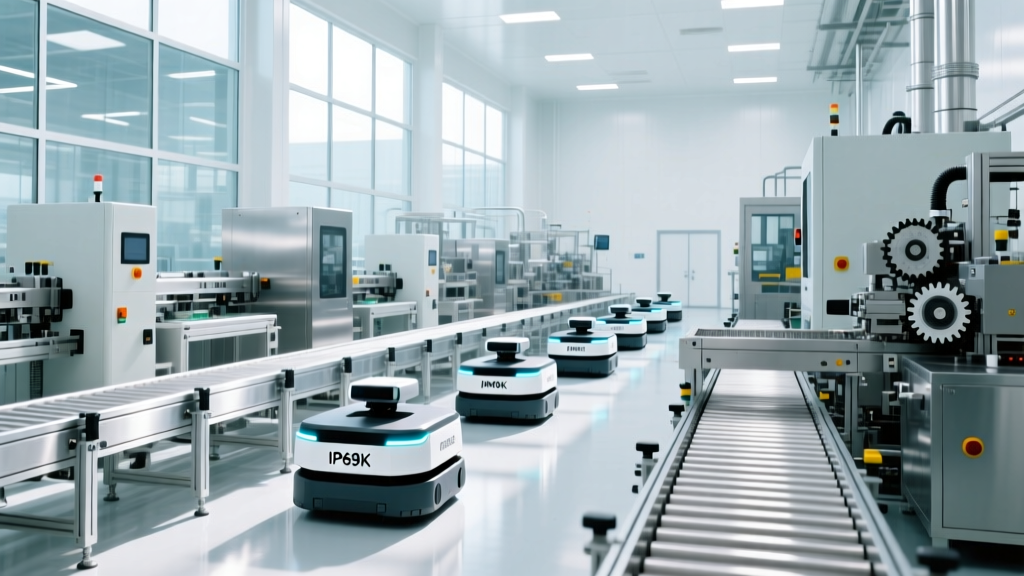
In 2026, the baseline cost for a standard heavy-payload AMR (such as a 600kg capacity pallet mover) hovers around $45,000 to $55,000. However, engineering that same platform to meet 3-A Sanitary Standards or FDA requirements for pharmaceutical cleanrooms pushes the capital expenditure (CapEx) well past $120,000 per unit. This price delta is driven by the necessity for 316L stainless steel chassis construction, IP69K-rated sealed enclosures, HEPA-filtered exhaust systems, and specialized polyurethane wheels that do not degrade under harsh caustic cleaning agents.
CapEx vs. OpEx: 5-Year Total Cost of Ownership (TCO)
Budgeting for regulated environments requires looking beyond the initial purchase price. Maintenance, sanitation downtime, and validation costs drastically alter the financial landscape. Below is a comparative TCO analysis for three distinct automated material handling profiles commonly deployed in food and pharma facilities.
| Cost Category | Standard Warehouse AMR (Baseline) | IP69K Food-Grade AMR (Meat/Dairy) | ISO Class 7 Cleanroom AGV (Pharma) |
|---|---|---|---|
| Initial Hardware CapEx | $50,000 | $115,000 | $145,000 |
| Software & Fleet Licensing (5 Yrs) | $12,000 | $15,000 | $22,000 |
| IQ/OQ/PQ Validation | $0 | $25,000 | $65,000 |
| Preventative Maintenance (5 Yrs) | $8,500 | $22,000 | $35,000 |
| Sanitation/Cleaning Downtime Cost | N/A | $18,000 | $12,000 |
| Estimated 5-Year TCO | $70,500 | $195,000 | $279,000 |
Breaking Down the Validation Premium
The most frequently underestimated line item in pharma automation budgets is the validation process. Under FDA guidelines, any automated system that impacts product quality or safety must undergo rigorous Installation Qualification (IQ), Operational Qualification (OQ), and Performance Qualification (PQ). For a cleanroom AGV transporting active pharmaceutical ingredients (APIs), third-party validation engineers typically charge $150 to $225 per hour. A comprehensive validation protocol for a single automated transport cell easily consumes 200 to 300 engineering hours, adding $45,000 to $65,000 to the project budget before the system ever moves a single pallet.
Hidden Budget Traps in Regulated Material Handling
Storeroom fully automated material handling equipment experts consistently warn against three hidden cost drivers that derail food and pharma automation projects:
- 316L vs. 304 Stainless Steel Miscalculations: While 304 stainless steel is sufficient for dry food environments (like bakery or snack packaging), high-chloride environments such as meat processing, seafood, and dairy require 316L stainless steel to prevent pitting corrosion from harsh quaternary ammonium and chlorine-based sanitizers. Specifying 304 SS in a wet environment will result in catastrophic chassis failure within 18 months, voiding warranties and forcing premature CapEx replacement.
- 21 CFR Part 11 Software Integration: In pharmaceutical storerooms, automated equipment must comply with FDA 21 CFR Part 11 regarding electronic records and signatures. Standard fleet management software rarely includes the immutable audit trails, user-access tiering, and encrypted data logging required for compliance. Upgrading to a Part 11-compliant Warehouse Execution System (WES) integration typically adds $40,000 to $80,000 in custom API development and cybersecurity auditing.
- Cleanroom Particulate Shedding and HEPA Exhaust: Standard AMR motors and gearboxes generate microscopic metallic and carbon particulates. In an ISO Class 7 or Class 8 cleanroom, this violates preventive controls for human food and drug safety. Pharma-grade AGVs require internal HEPA filtration and positive-pressure enclosures to ensure that any air exhausted from the vehicle's cooling system is scrubbed of particulates, adding roughly $15,000 to the hardware cost per unit.
Decision Framework: When to Automate vs. Semi-Automate
Automate Fully (High CapEx Justified): Cold storage environments (-20°C to -30°C) where human labor turnover is exceptionally high and ergonomic risks are severe. Also justified in sterile fill-finish pharma suites where human presence introduces unacceptable bioburden risks.
Semi-Automate (Cobots/Automated Pallet Jacks): Secondary packaging zones in food facilities where washdown requirements are less severe (IP54 rated) and product SKUs change frequently, making rigid, fully automated conveyor matrices too inflexible and costly to reprogram.
Navigating Safety Standards and Facility Infrastructure
Deploying heavy automated equipment in food and pharma facilities introduces unique infrastructure costs. Unlike standard dry warehouses, food processing floors are often sloped for drainage (up to a 2% grade) and feature trench drains. Standard AMRs struggle with continuous slope navigation and can bottom out on trench grates. Specifying vehicles with high ground clearance and advanced incline-compensation algorithms is mandatory.
Furthermore, safety compliance is non-negotiable. According to OSHA guidelines on industrial robotics and automated systems, facilities must implement rigorous safeguarding measures. In wet food environments, standard LiDAR sensors used for obstacle detection frequently fail due to water droplets, steam, and condensation on the sensor lenses. Budgeting for specialized hydrophobic lens coatings, ultrasonic sensor redundancy, and heated sensor housings adds approximately $4,500 per vehicle. Failing to budget for these environmental adaptations results in frequent phantom-stops, destroying the throughput ROI of the automation investment.
Strategic Budget Allocation Framework for 2026
To prevent budget overruns, facility directors should adopt the following capital allocation model when planning a fully automated material handling rollout in regulated environments:
- Hardware & Mechanical Adaptation (40%): Base vehicles, IP69K/316L upgrades, custom sanitary top-modules (e.g., sanitary roller conveyors or cleanroom lift tables).
- Software, WES, & Compliance (25%): Fleet management, 21 CFR Part 11 audit trail integration, ERP/WMS API development, and cybersecurity hardening.
- Validation & Quality Assurance (20%): Third-party IQ/OQ/PQ execution, FAT/SAT (Factory/Site Acceptance Testing), and FDA documentation generation.
- Infrastructure & Facility Prep (10%): Floor leveling, trench drain grate reinforcement for heavy axle loads, and installation of sanitary-rated charging stations with integrated washdown shields.
- Contingency & Change Orders (5%): Reserved for unforeseen integration friction, particularly regarding legacy PLC communication protocols in older pharma manufacturing wings.
'The most expensive mistake in pharma automation is treating a cleanroom like a standard warehouse. The hardware is only 40% of the battle; the remaining 60% is proving to regulators that the hardware will never compromise the product.' — Industry Consensus on Regulated Automation Deployment
Final Considerations for Procurement
When issuing RFPs for food and pharma material handling automation, demand that vendors provide explicit MTBF (Mean Time Between Failures) data specifically for IP69K washdown cycles, not just standard dry-warehouse operating hours. Require detailed breakdowns of their validation support packages. By aligning your budget with the rigorous realities of sanitary and cleanroom engineering, you ensure that your automated storeroom delivers both operational efficiency and uncompromised regulatory compliance.