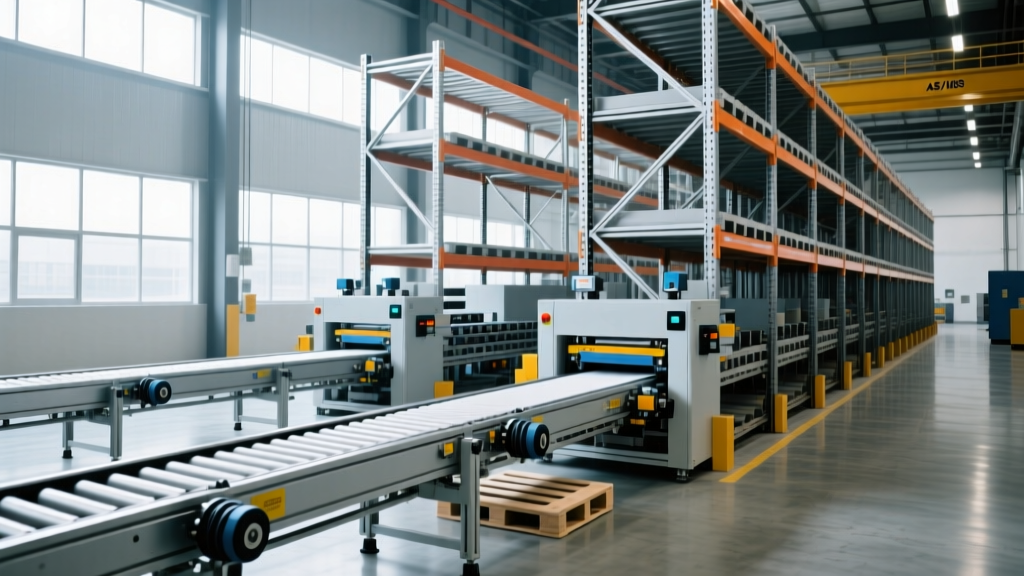
Bulk Materials Handling Equipment: Robotic Palletizer Safety
Ensure compliance for bulk materials handling equipment. A deep dive into robotic palletizer safety standards, ISO 13849-1, and perimeter guarding.
The Regulatory Framework for Automated Bulk Handling
Integrating robotic palletizing and depalletizing systems into bulk materials handling equipment operations introduces complex kinetic and environmental hazards. Facilities processing bagged cement, chemical powders, agricultural grains, and mineral aggregates utilize high-payload articulated robots (typically 120 kg to 300 kg capacity) operating at cycle times exceeding 15 bags per minute. Compliance in these environments extends beyond standard machine guarding; it requires addressing particulate ingress, dropped-load physics, and advanced optical sensor degradation.
The foundational safety architecture for these systems in 2026 is governed by a convergence of international and regional standards. According to the Association for Advancing Automation (A3), adherence to ANSI/RIA R15.06 and ISO 10218-1/2 is mandatory for industrial robot integration. Furthermore, the NIOSH Robotics Safety guidelines emphasize the critical nature of risk assessments tailored to the specific end-of-arm tooling (EOAT) and environmental conditions present in bulk handling.
| Standard | Scope | Application in Bulk Palletizing |
|---|---|---|
| ISO 10218-1/2 | Robot and Robot System Safety | Dictates collaborative vs. caged operation limits, payload kinetic energy thresholds, and E-stop wiring. |
| ISO 13857 | Safety Distances (Reach-Through) | Defines minimum fence distances from the robot's maximum reach envelope to prevent operator reach-through hazards. |
| ISO 13849-1 | Control System Reliability | Requires Performance Level d (PLd), Category 3 architecture for safety PLCs monitoring palletizer zones. |
| OSHA 1910.212 | General Machine Guarding | Mandates physical barriers preventing contact with the EOAT and moving bulk material conveyors. |
Perimeter Guarding in High-Particulate Environments
Standard perimeter guarding fails in bulk materials handling equipment environments due to airborne particulates. Dust accumulation on polycarbonate shields obscures camera-based safety systems, while fine powders (like silica or flour) can coat optical sensor lenses, leading to either nuisance trips or catastrophic failure to detect an intrusion.
Optical Sensor Degradation and Muting Strategies
Light curtains, traditionally used for pallet entry/exit muting, are highly susceptible to dust interference. In bulk handling facilities, safety engineers are increasingly migrating to heavy-duty laser area scanners, such as the SICK microScan3 Pro. These devices utilize safe HDFM (High Definition Field Monitoring) technology, which differentiates between transient dust clouds and solid human intrusion based on echo pulse width and contour analysis.
Engineering Tip: When configuring laser scanners for bulk depalletizing zones, enable the 'dust suppression' filter in the safety configuration software. Set the multiple sampling threshold to a minimum of 3 consecutive scans before triggering a safe state, effectively filtering out airborne particulate bursts from dropped bags without compromising the 14mm resolution required for limb detection.Physical fencing must comply with ISO 13857 reach-through tables. For a robotic palletizer with a maximum reach of 2.5 meters, the perimeter fence must be positioned at least 1.2 meters from the nearest moving part if the fence height is 1.4 meters. However, to prevent operators from climbing or reaching over, a 2.2-meter high fence with 50mm x 50mm mesh is the industry standard for heavy bulk handling. The mesh size is critical: larger weaves allow operators to insert fingers or hands to manually clear jammed bulk bags, bypassing the safety system.
End-of-Arm Tooling (EOAT) and Dropped Load Hazards
The most severe, yet frequently underestimated, hazard in robotic palletizing is the dropped load. Bulk bags (FIBCs) or multi-wall paper sacks weighing 25 kg to 50 kg possess immense kinetic energy if released from a height of 1.8 meters during a palletizing cycle.
Vacuum vs. Mechanical Gripping Safety
Vacuum-based EOAT, such as the Schmalz FXCB large-area grippers, are standard for uniform bulk bags. However, an instantaneous loss of facility compressed air or an emergency E-stop triggers a vacuum dump, causing the payload to drop immediately. To comply with ISO 10218-2 dropped-object hazard requirements, vacuum systems must incorporate pilot-operated check valves and localized vacuum reservoirs that maintain grip pressure for a minimum of 3 seconds after a total pressure loss, allowing the robot to execute a controlled descent to the floor.
For irregular bulk materials, mechanical clamp EOAT is preferred. Safety compliance demands the inclusion of spring-loaded, fail-safe mechanical fingers. In the event of a pneumatic failure, the springs force the grippers to remain closed. Integrating a proximity sensor (e.g., IFM IN5221) on the clamp cylinder provides closed-loop verification to the safety PLC that the load is physically secured before the robot accelerates out of the pickup zone.
Control System Architecture: Achieving ISO 13849-1 PLd
According to safety automation experts at Pilz, a robotic palletizer in a high-risk bulk environment must achieve a minimum of Performance Level d (PLd) and Category 3 architecture under ISO 13849-1. This dictates that a single fault in the safety circuit must not lead to a loss of the safety function, and the fault must be detected at or before the next demand upon the safety system.
- Safety PLC Integration: Utilizing a dedicated safety controller (e.g., Allen-Bradley GuardLogix 5580 or Siemens S7-1500F) rather than relying on standard PLC logic or hardwired safety relays. This allows for partial system muting and zone-based safe speed monitoring (SSM).
- Safe Torque Off (STO): The robot's servo drives must be wired via STO circuits (SIL 3 / PLe). When a perimeter breach occurs, the safety PLC triggers the STO, cutting power to the motors while maintaining the mechanical brakes, preventing the heavy EOAT from sagging.
- Dual-Channel E-Stops: All E-stop buttons on the teach pendant and perimeter gates must be wired in dual-channel configuration with cross-fault detection. A short between the two channels must immediately trigger a Category 0 stop.
Step-by-Step Commissioning Validation Protocol
Validation is where compliance is proven. Before a bulk materials handling robotic cell is handed over to production, the integration team must execute the following protocol:
- Dust Ingress Stress Test: Operate the system while artificially introducing the specific bulk particulate into the air near the optical sensors. Verify that the safety scanner's dust suppression filters prevent nuisance trips while maintaining human detection.
- Dropped Load Simulation: Execute a simulated catastrophic air-pressure loss at the maximum Z-axis height. Measure the drop distance of the EOAT. It must not exceed the mechanical limits defined in the risk assessment (typically requiring the bag to remain secured or drop less than 100mm).
- Reach-Through Verification: Use standardized ISO test probes (upper arm, finger, and hand probes) at all fence joints, gate gaps, and conveyor entry/exit tunnels to ensure no human limb can access the robot's operating envelope.
- Stop Time Measurement: Use a calibrated stop-time measurement device to calculate the exact time it takes for the robot to halt from maximum velocity. Use this data to calculate the minimum safety distance for the light curtains or laser scanners using the formula: S = (K x T) + C.
Frequently Asked Questions
Can collaborative robots (cobots) be used for bulk materials palletizing without fencing?
While cobots like the FANUC CRX-25iA are rated for collaborative operation, ISO 10218-2 requires a full risk assessment of the *entire* application, not just the robot arm. In bulk materials handling, the kinetic energy of a 25 kg bag moving at 1.5 meters per second, combined with the sharp edges of mechanical grippers or the crushing hazard of the bag against the pallet, exceeds the allowable biomechanical limits for human contact. Therefore, physical perimeter guarding is almost always required for bulk palletizing, regardless of the robot type.
How often should safety laser scanners be cleaned in a dusty bulk facility?
Cleaning intervals must be defined by the facility's safety validation report. In heavy particulate environments (e.g., cement or carbon black), scanner lenses may require automated air-purge systems or manual cleaning every 48 to 72 hours. If the scanner's diagnostic feedback indicates a warning-level signal attenuation due to dust buildup, the safety PLC should be programmed to initiate a controlled, safe shutdown of the cell before the lens becomes entirely blinded.
What is the safest conveyor muting method for pallet exit zones?
The safest and most compliant method in 2026 is 'smart muting' using a combination of inductive proximity sensors and photoelectric retro-reflective sensors arranged in an 'L' or 'cross' pattern. This ensures that only a solid, opaque object of the correct dimensions (the loaded pallet) can trigger the muting sequence, preventing operators from walking through the exit tunnel holding a piece of cardboard or a bulk bag to defeat the light curtain.
Related reading
Troubleshooting Forklift Attachments for Storeroom Bulk Material Handling Equipment Installations in California
Ergonomics of Material Handling Equipment: Food & Pharma Cost Guide