AI-Driven Maintenance Services for Industrial Equipment: 2026 Guide
Discover how AI, digital twins, and IoT sensors are transforming maintenance services for industrial equipment in 2026. Compare costs, ROI, and tech stacks.
The Shift from Calendar to Algorithmic Upkeep
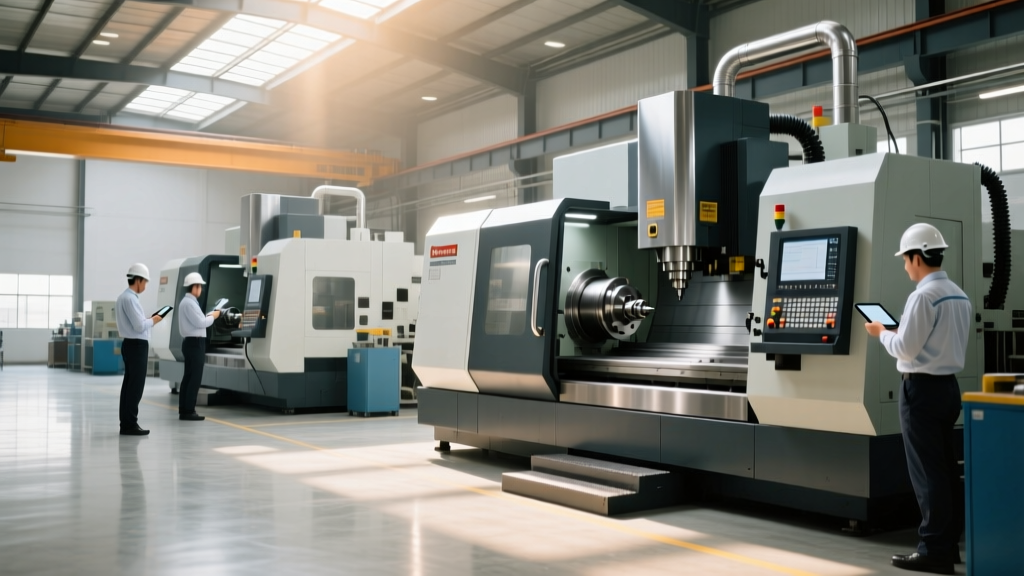
The landscape of equipment upkeep has fundamentally shifted. By 2026, calendar-based preventive schedules are being rapidly replaced by algorithmic precision. When evaluating maintenance services for industrial equipment, facility managers are no longer just buying wrench time; they are purchasing data-driven uptime guarantees. The integration of edge AI, digital twins, and high-frequency IoT telemetry has transformed third-party service contracts from reactive cost centers into proactive revenue protectors.
Modern service providers do not merely dispatch technicians when a machine faults. Instead, they deploy continuous monitoring architectures that predict bearing degradation, spindle runout, and hydraulic cavitation weeks before catastrophic failure occurs. This evolution demands a new framework for vetting, contracting, and integrating external maintenance partners.
2026 Market Insight: According to recent manufacturing analyses, facilities utilizing AI-backed maintenance services for industrial equipment report a 24% reduction in unplanned downtime and a 19% decrease in overall maintenance spend compared to traditional time-based models. The ROI on predictive service contracts typically breaks even within 8 to 14 months.The Core Technology Stack Powering Modern Services
Top-tier maintenance providers now operate as much like software companies as mechanical repair shops. The underlying architecture of premium maintenance services for industrial equipment relies on three distinct technological pillars.
1. High-Frequency Edge Telemetry
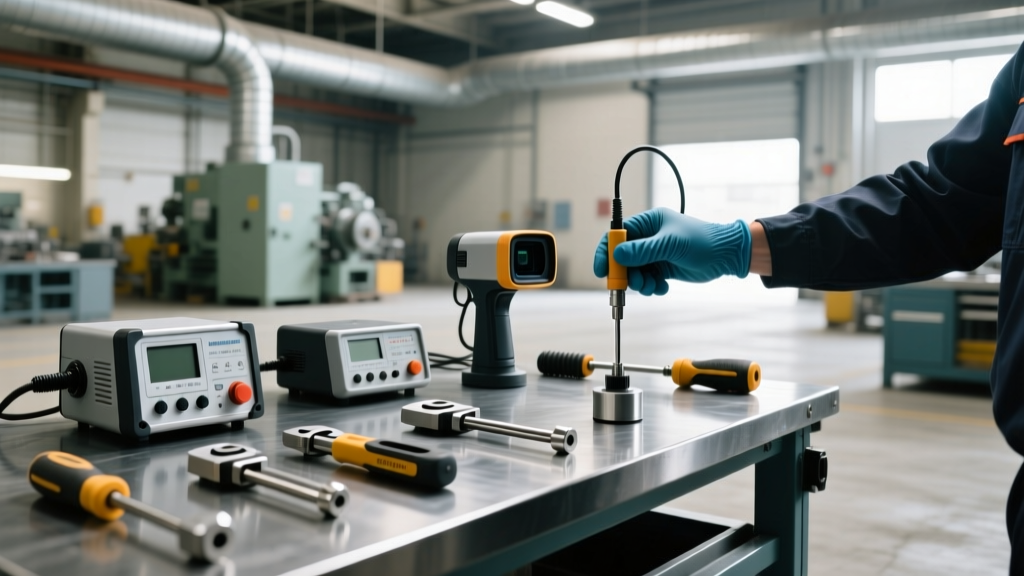
Legacy condition monitoring relied on handheld data collectors used once a month. Today's services utilize permanently mounted tri-axial accelerometers and acoustic emission (AE) sensors sampling at 10kHz to 50kHz. Providers like SKF Predictive Maintenance Services deploy edge-computing nodes directly onto the machine cabinet. These nodes process Fast Fourier Transform (FFT) vibration spectra locally, sending only anomaly alerts to the cloud via MQTT protocols, drastically reducing bandwidth costs and latency.
2. Digital Twin Synchronization
Advanced service contracts now include the creation of a kinematic digital twin for critical assets like 5-axis CNC mills or large-scale stamping presses. By feeding real-time torque, temperature, and vibration data into a physics-based simulation model, service algorithms can calculate the exact remaining useful life (RUL) of a ball screw or gearbox, scheduling part replacements during planned changeovers rather than mid-production.
3. Automated Work Order Generation
Integration with enterprise CMMS (Computerized Maintenance Management Systems) via REST APIs allows the AI to automatically generate work orders, reserve replacement parts from inventory, and schedule technician dispatch based on the predicted failure window.
Cost Matrix: Traditional vs. AI-Powered Service Contracts
Understanding the financial architecture of modern maintenance services for industrial equipment requires looking beyond the monthly retainer. The table below contrasts traditional preventive models with AI-driven predictive contracts for a standard 5-machine CNC cell.
| Service Model | Avg. Annual Cost | Hardware Req. | Downtime Reduction | Spindle Crash Risk |
|---|---|---|---|---|
| Traditional Preventive (Calendar) | $38,000 | None (Manual checks) | Baseline | High (12% annual rate) |
| Condition-Based (Threshold) | $52,000 | Basic vibration switches | 10-15% | Moderate (6% annual rate) |
| AI-Predictive (Edge + Digital Twin) | $74,500 | IoT Gateways, AE Sensors | 25-35% | Minimal (<1% annual rate) |
While the AI-predictive model carries a higher upfront retainer, the avoidance of a single catastrophic spindle crash—which can cost upwards of $45,000 in parts and scrap alone—immediately justifies the premium. Furthermore, the U.S. Department of Energy Advanced Manufacturing Office notes that optimized, condition-based equipment upkeep significantly reduces energy waste caused by mechanical friction and misalignment.
Retrofitting Legacy Iron: A Practical Framework
A common misconception is that AI-driven maintenance services for industrial equipment require brand-new, smart-enabled machinery. In reality, the highest ROI often comes from retrofitting legacy assets from the late 1990s and early 2000s. Here is the standard deployment framework utilized by top-tier integration teams:
- Baseline Telemetry Mapping: Technicians perform a 48-hour dynamic baseline capture on the machine (e.g., a 1998 Cincinnati Milacron Sabre 500) across all standard cutting cycles to establish the 'healthy' vibration and current draw signatures.
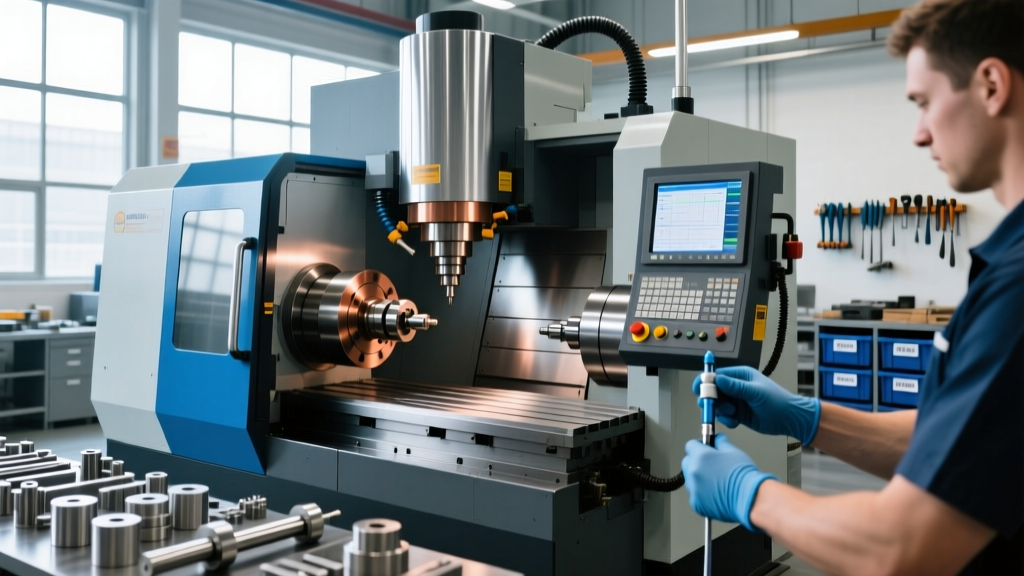
- Non-Invasive Sensor Deployment: Instead of drilling into castings, providers use heavy-duty magnetic-mount tri-axial accelerometers (such as the PCB Piezotronics 603C01, costing approximately $380 per unit) placed on the spindle housing, X/Y axis ball screw supports, and hydraulic pump.
- Protocol Translation: Legacy PLCs (like older Fanuc or Allen-Bradley controls) often lack native MQTT support. Service providers install edge gateways (e.g., Moxa NPort or Siemens Industrial Edge) that read MTConnect or OPC-UA data streams, merging PLC logic with physical sensor data.
- Cloud Ingestion & Model Training: Data is pushed to the provider's secure cloud environment where machine learning models, specifically trained on the acoustic signatures of aging ball bearings and way covers, begin tracking degradation curves.
Expert Caveat: When retrofitting legacy CNCs for predictive maintenance services, ensure the edge gateway is configured to sample at a minimum of 20kHz for spindle bearings. Lower sampling rates will alias the high-frequency acoustic emissions that indicate early-stage lubrication failure, rendering the predictive model useless.
Vetting Third-Party Providers in 2026
Not all companies offering 'predictive' services possess the underlying data science capabilities to deliver on the promise. When issuing an RFP for maintenance services for industrial equipment, evaluate vendors against the following technical criteria:
- Algorithmic Transparency: Does the provider offer a 'glass-box' AI model where your reliability engineers can see the specific FFT harmonics triggering an alert, or is it a 'black-box' system that simply outputs a red/yellow/green status? Top-tier providers offer full spectral transparency.
- Domain-Specific Training Data: An AI model trained on wind turbine gearboxes will fail to accurately predict faults in a high-speed CNC spindle. Verify that the vendor's machine learning models are trained on the specific kinematics and fault frequencies of your exact machine class.
- SLA Guarantees on False Positives: Alert fatigue is the primary reason predictive maintenance programs fail. Demand contractual SLAs that cap false-positive alerts at less than 5%, with financial penalties for unwarranted machine shutdowns.
- Cybersecurity Posture: Connecting industrial control systems to external cloud servers introduces severe OT (Operational Technology) security risks. Require vendors to comply with IEC 62443 standards and utilize unidirectional gateways or strictly whitelisted IP tunneling.
The NIST Smart Connected Systems Division provides extensive frameworks for securing IoT-connected manufacturing assets, which should serve as the baseline for any vendor cybersecurity audit.
Frequently Asked Questions
What is the typical payback period for AI maintenance services?
For high-value assets like 5-axis machining centers, large extrusion presses, or automated welding cells, the payback period is typically 8 to 14 months. This is calculated against the avoided costs of unplanned downtime, expedited shipping for emergency parts, and scrap generation during undetected tool or fixture failures.
Can we use our existing OEM for these advanced services?
Many major OEMs (such as Haas, Mazak, and DMG MORI) now offer their own proprietary predictive maintenance subscriptions. However, independent third-party providers often offer a more agnostic, unified dashboard that aggregates data across a mixed-fleet environment (e.g., combining Fanuc, Siemens, and Heidenhain controls into a single pane of glass), which OEM-specific solutions typically cannot do.
How much bandwidth do these IoT sensors consume?
Modern edge-computing architectures process the heavy 50kHz vibration data locally on the machine cabinet. Only the processed metadata, FFT summaries, and anomaly alerts are transmitted to the cloud. Consequently, a 50-machine cell typically requires less than 2 Mbps of continuous upstream bandwidth, easily handled by standard industrial LTE/5G routers or existing facility ethernet.