Safety Compliance Standards for 5 Axis CNC Machine Manufacturers
Explore how top 5 axis CNC machine manufacturers engineer ISO 16090 and CE compliance, including enclosure specs, safety PLCs, and 2026 integration costs.
The 2026 Regulatory Matrix: ISO, ANSI, and the New EU Mandate
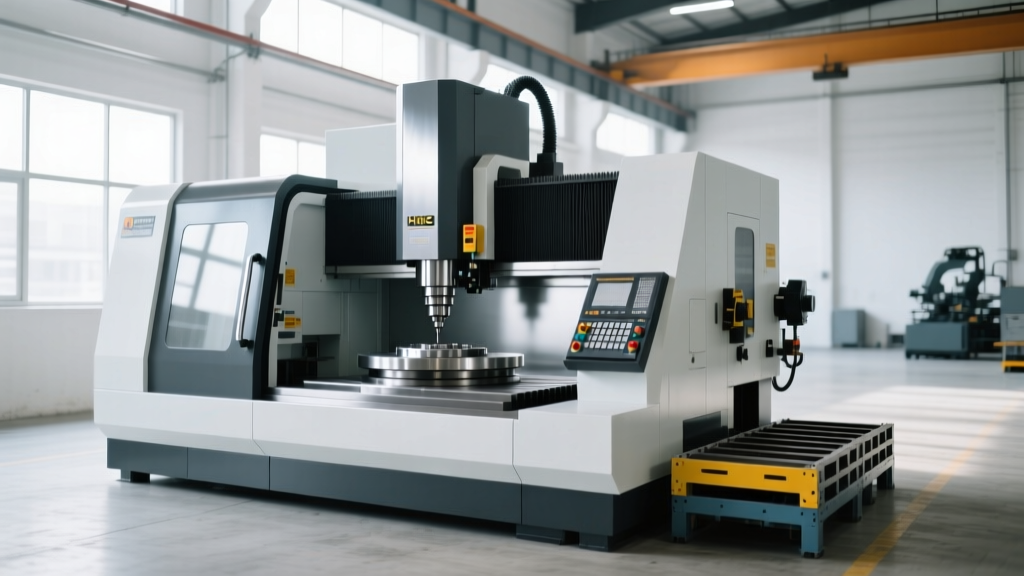
Procuring a multi-axis machining center requires navigating a dense matrix of international safety directives. For 5 axis CNC machine manufacturers, compliance is no longer limited to physical guarding; it now encompasses functional safety logic, cybersecurity, and advanced kinematic monitoring. As the industry transitions toward the full enforcement of the EU Machinery Regulation 2023/1230 in early 2027, builders are currently overhauling their safety architectures to meet stricter Performance Level (PL) and Safety Integrity Level (SIL) requirements.
According to the OSHA Machine Guarding guidelines, the primary cause of catastrophic injuries in multi-axis machining involves unexpected kinematic movement during setup and high-pressure coolant injection failures. To mitigate this, tier-1 builders like DMG MORI, Mazak, and Hermle engineer their platforms around three core global standards.
| Standard | Region | Primary Focus for 5-Axis Centers | 2026 Compliance Status |
|---|---|---|---|
| ISO 16090:2019 | Global / EU | Safety of metalworking machines; enclosure impact resistance and interlock logic. | Mandatory baseline for CE marking. |
| ANSI B11.8-2018 | North America | Drilling, milling, and boring; specific focus on operator access and LOTO integration. | Required for UL/CSA listing. |
| ISO 13849-1 | Global | Functional safety of control systems; mandates PL d (Category 3) for spindle interlocks. | Heavily audited under new EU Regulation. |
Under updated interpretations of the ISO 16090:2019 standard, manufacturers must now provide documented replacement schedules for polycarbonate viewing windows. Synthetic coolants degrade polycarbonate molecular bonds over time, reducing impact resistance by up to 40% within 18 months. Top-tier manufacturers now ship machines with date-stamped safety glass or specialized Makroclear panels equipped with RFID tags that alert the CNC controller when the material's certified lifespan expires.
Kinematic Safeguards: Taming 5-Axis Simultaneous Motion
In 3-axis machining, the kinematic envelope is relatively static. In 5-axis simultaneous machining, the tool vector and table tilt (A/C or B/C axes) create a dynamic, unpredictable envelope. If an operator initiates a manual jog or tool probe cycle, the risk of a rapid traverse collision is exceptionally high.
Siemens SINUMERIK ONE vs. FANUC Series 31i-B5
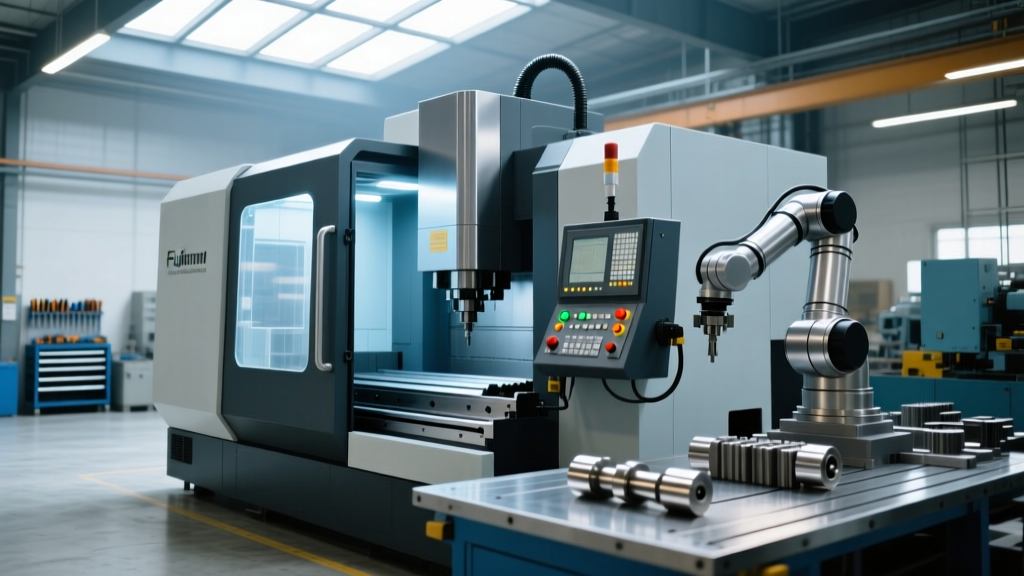
Leading 5 axis CNC machine manufacturers integrate hardware-redundant safety PLCs directly into the drive architecture to manage these risks. The two dominant paradigms in 2026 are:
- Siemens Safety Integrated (SINUMERIK ONE): Utilizes a single-chip architecture where standard and safety logic share the same processor but are strictly separated via certified firmware. Key functions include Safely Limited Speed (SLS) for setup modes (capping feed rates to 2,000 mm/min when the door interlock is bypassed via a hold-to-run button) and Safely Limited Position (SLP) to prevent the trunnion table from tilting into the operator door zone.
- FANUC Dual Check Safety (DCS): Employs a dual-CPU cross-checking system. FANUC's DCS is highly regarded for its Safe Tool Retraction feature. If a light curtain is breached during a 5-axis contouring cycle, the machine doesn't just halt; it calculates the safest vector to retract the spindle 50mm away from the workpiece before cutting drive power, preventing tool breakage and secondary shrapnel hazards.
For an in-depth look at how drive-level safety reduces reaction times from 150ms to under 15ms, refer to the Siemens Safety Integrated architecture documentation.
High-Pressure Coolant and Enclosure Integrity
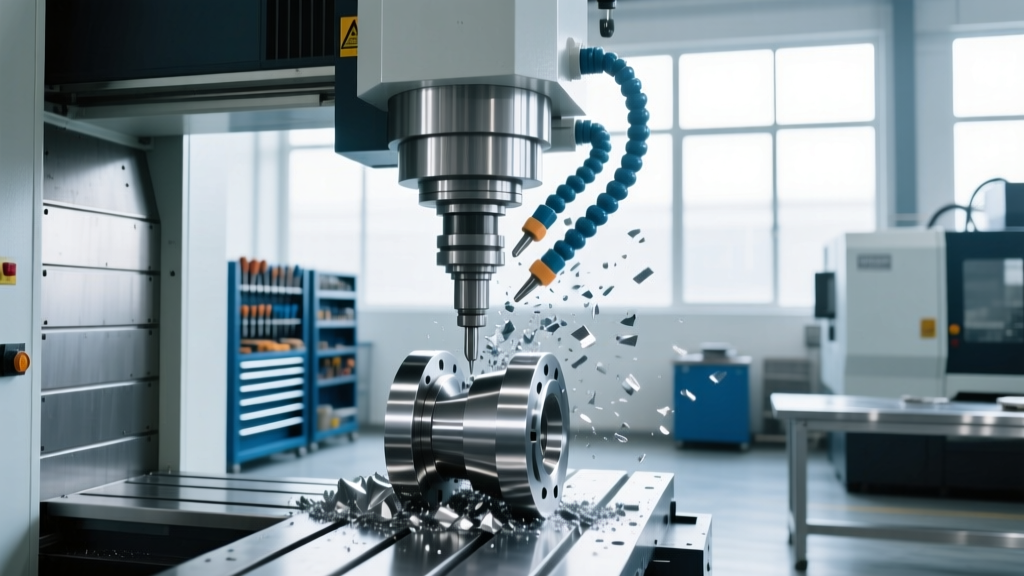
Aerospace and medical 5-axis applications heavily rely on Through-Spindle Coolant (TSC) systems operating between 70 and 150 bar (1,000 to 2,175 psi). A hose rupture or nozzle failure inside the enclosure at 150 bar generates a cutting force capable of penetrating standard sheet metal and 6mm polycarbonate.
To comply with ANSI B11.8 pressure-containment clauses, premium manufacturers are altering their enclosure designs:
- Hermle (C 250 / C 400 series): Utilizes 12mm laminated safety glass for primary viewing areas and 3mm stainless steel inner splash guards with specialized flow-channeling geometry to dissipate coolant kinetic energy before it strikes the outer enclosure.
- Mazak (VARIAXIS i-600): Features a monolithic, welded base enclosure with pressure-rated labyrinth seals on the X/Y/Z axis waycovers, preventing 150-bar mist from migrating into the ball screw housings or the operator environment.
The True Cost of Safety Compliance in 5-Axis Procurement
Facility managers often underestimate the cost of optional safety packages required to meet specific local or corporate EHS (Environment, Health, and Safety) mandates. While the base machine price for a standard 5-axis VMC ranges from $180,000 to $350,000, upgrading the safety architecture to SIL 2 / PL e standards adds significant capital expenditure.
| Safety Upgrade Option | Hardware / Integration | Estimated 2026 Cost (USD) | Regulatory Driver |
|---|---|---|---|
| Automated Roof Enclosure | Motorized sliding roof with Pilz PSENmlock interlocks for crane loading. | $6,500 - $8,200 | Ergonomic LOTO reduction; ISO 16090 |
| Rear Access Light Curtains | SICK C4000 Type 4 muting light curtains for conveyor integration. | $4,100 - $5,500 | ANSI B11.19; OSHA 1910.212 |
| Enhanced Safety PLC Logic | Pilz PNOZmulti 2 expansion modules for zone-specific E-stop mapping. | $3,200 - $4,800 | ISO 13849-1 (PL e requirement) |
| Acoustic Damping Package | Mass-loaded vinyl and constrained-layer damping on enclosure panels. | $5,000 - $7,500 | ISO 11202 (Noise emission < 80 dB) |
Never accept a generic CE or UL certificate for a 5-axis machine. Require the manufacturer to provide the specific Safety Matrix Document. This engineering file maps every physical interlock, light curtain, and E-stop to its exact logical input on the safety PLC, complete with the calculated MTTFd (Mean Time To Dangerous Failure) and DC (Diagnostic Coverage) values required to prove ISO 13849-1 compliance.
Facility Integration: The Receiving Audit Protocol
Manufacturer compliance only covers the machine as it leaves the factory. Once integrated into your facility's power and air systems, the safety burden shifts. Execute this non-negotiable audit protocol upon commissioning a new 5-axis center:
- Verify Interlock Defeat Mechanisms: Ensure the physical key required to bypass the door interlock for setup mode is strictly controlled. Test the Hold-to-Run pendant; releasing the button must trigger an immediate Category 0 or Category 1 stop (depending on spindle mass).
- Audit the Pneumatic Exhaust Valves: 5-axis machines use pneumatic clamps for tombstones and trunnion fixtures. Verify that triggering the main E-stop dumps the air pressure safely without causing the workholding to release the part. Look for Pilz PVEL or equivalent safe exhaust valves.
- Test the Spindle Orientation Lock: For manual tool changes, the spindle must orient and lock mechanically or via servo-holding. Verify that the servo-holding torque cannot be overridden by hand, preventing the spindle from rotating if an operator snags a tool.
- Measure Mist Extraction负压 (Negative Pressure): High-speed 5-axis machining of titanium or Inconel generates combustible dust and mist. Ensure the enclosure maintains a minimum negative pressure of 0.2 inches of water gauge to prevent mist egress when the door seal is slightly compromised.
By demanding rigorous adherence to ISO 16090 and ANSI B11.8 from your equipment suppliers, and verifying the functional safety logic upon installation, machining facilities can eliminate the most severe hazards inherent in complex, multi-axis part production.