Multi Axis CNC Machine Maintenance: The Ultimate Service Schedule
Maximize uptime with our comprehensive multi axis CNC machine maintenance schedule. Learn daily, weekly, and annual service intervals for 5-axis mills.
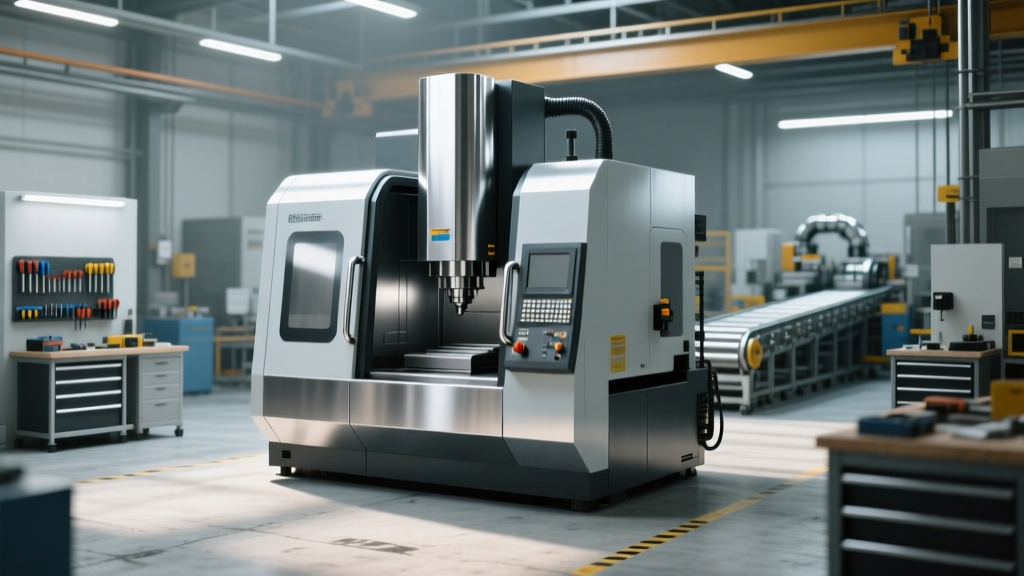
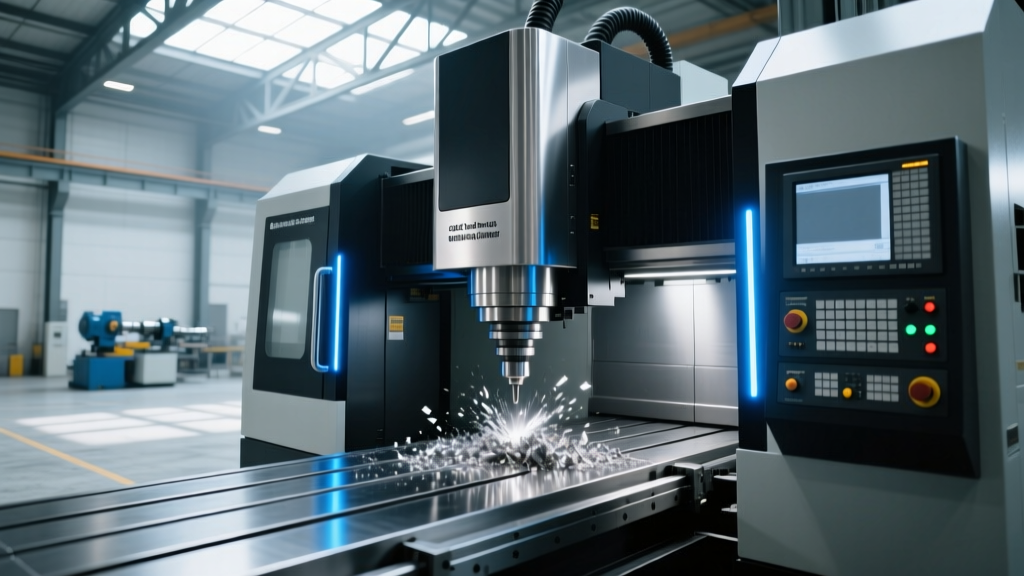
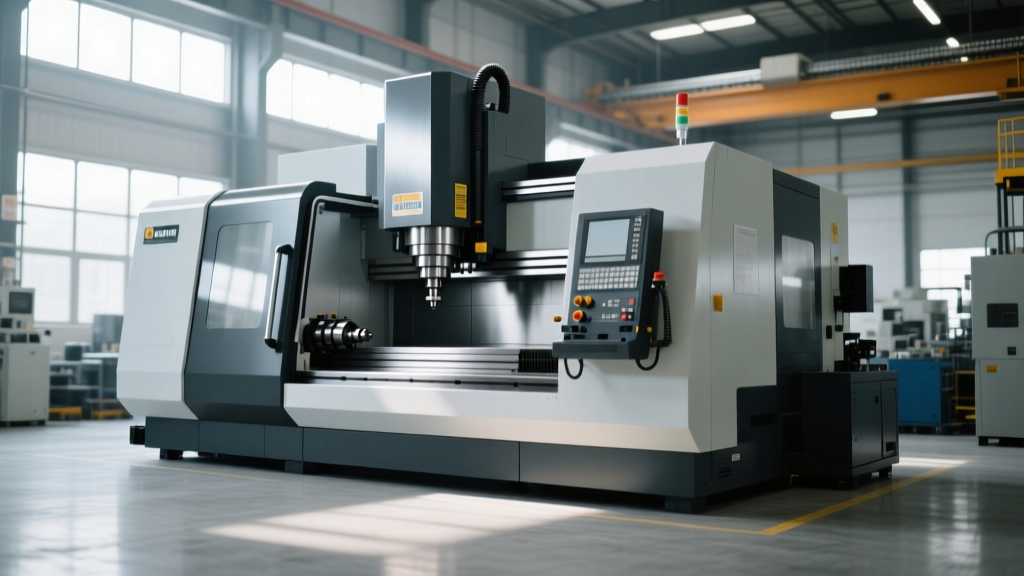
A dropped spindle on a $450,000 5-axis mill costs upwards of $18,000 in replacement parts and 12 weeks of lead time. When you operate a multi axis CNC machine, the complexity of simultaneous linear and rotary movements exponentially increases the mechanical stress on the system. Unlike standard 3-axis vertical machining centers (VMCs), 5-axis configurations introduce trunnion tables, harmonic drives, and complex rotary unions that demand rigorous, highly specific preventative maintenance.
According to the National Institute of Standards and Technology (NIST), volumetric accuracy degradation in multi-axis systems is most frequently traced back to deferred maintenance on rotary axis bearings and thermal misalignment. This guide provides an actionable, deep-dive service schedule tailored specifically for modern multi axis CNC machine platforms like the Haas UMC-750SS, DMG MORI DMU 50 3rd Gen, and Mazak Variaxis i-800.
WARNING: The Trunnion TrapThe most common catastrophic failure on tilt-rotary tables is the seizure of the B-axis trunnion bearings. This occurs when operators rely solely on the machine's automatic way lube system, failing to realize that many trunnion bearings require manual application of specific synthetic greases (like Kluber Isoflex NBU 15) that are not supplied by the central lube pump.
Daily Operator Checks: The First 15 Minutes
Thermal growth is the enemy of 5-axis precision. A multi axis CNC machine must be thermally stabilized before cutting tight-tolerance aerospace or medical parts. Do not skip the morning warmup macro.
- Spindle Warmup Macro: Run the OEM spindle warmup program. This typically cycles the spindle at 2,000, 4,000, and 8,000 RPM for 5 minutes each. This distributes the spindle bearing grease evenly and stabilizes the thermal expansion of the spindle housing.
- Rotary Axis Sweep: Command the B and C axes to move through their full range of motion (e.g., B from -35 to +110 degrees, C from 0 to 360 degrees) at 25% rapid rate. This purges condensed moisture from the axis seals and ensures the brake mechanisms disengage smoothly.
- Pneumatic System Verification: Check the main air pressure gauge. Multi-axis tool release mechanisms and rotary union air purges require a strict minimum of 110 PSI. If pressure drops below 95 PSI, the rotary union seal will allow coolant to migrate into the air purge lines, destroying the union from the inside out.
- Way Lube Level Check: Verify the reservoir level. Modern machines use ISO 68 way lube (e.g., Mobil Vactra Oil No. 2). A drop of more than 1 inch per week indicates a leak in the distribution block or a sheared line on the moving saddle.
Weekly and Monthly Preventative Intervals
Weekly and monthly tasks focus on fluid chemistry and physical filtration. Coolant degradation directly impacts tool life and surface finish, particularly when machining difficult alloys like Inconel 718 or Titanium Ti-6Al-4V on a 5-axis mill.
Fluid Management Matrix
| Fluid Type | Specification / Brand | Target Metric | Interval |
|---|---|---|---|
| Cutting Fluid | TRIM MicroSol 585XT | 8.0% - 10.0% Concentration | Weekly (Refractometer) |
| Way Lube | Mobil Vactra No. 2 (ISO 68) | Reservoir Level & Sight Glass | Daily / Top-off |
| Hydraulic Oil | Mobil DTE 25 (ISO 46) | Clean, no milky emulsion | Monthly Inspection |
| Spindle Chiller | 50/50 Distilled Water & Glycol | Flow rate > 4 L/min | Monthly |
Monthly Mechanical Inspections
- Way Wipers and Scrapers: Inspect the polyurethane way wipers on the X, Y, and Z axes. If chips are embedding into the way covers, the wipers are compromised. Replace them immediately to prevent scoring of the precision ground linear guides.
- Tool Magazine Cam Box: Open the tool changer cam box and check the grease level. Use the exact OEM-specified grease (often a lithium-complex NLGI #2). Over-greasing here is just as dangerous as under-greasing, as excess grease will attract metallic dust from the tool holders.
- Hydraulic Unit Filter: Check the vacuum gauge on the hydraulic return line filter. If the gauge is in the red zone, replace the 10-micron filter element. A clogged filter will cause the hydraulic pump to cavitate, leading to sluggish tool clamping and potential spindle damage.
The 500-Hour Trunnion and Rotary Axis Service
The rotary axes (B and C) are the defining feature of any multi axis CNC machine. They endure immense cutting forces, particularly during heavy roughing operations. While linear axes rely on a continuous oil mist or flood, rotary tables often utilize sealed bearings packed with high-performance synthetic grease.
Every 500 operating hours, or roughly every three months in a two-shift environment, you must manually service the trunnion bearings. Consult your specific OEM service manual for the exact grease zerks locations. For most direct-drive and worm-gear trunnions, Kluber Isoflex NBU 15 or SKF LGMT 3 is required. Apply exactly 3 to 5 grams per zerk point. Pumping too much grease will blow out the rotary axis seals, allowing coolant to contaminate the bearing raceways.
'In 5-axis machining, a mere 0.0005 inches of backlash in the B-axis will result in visible witness lines on complex contoured surfaces. Manual trunnion greasing is the cheapest insurance policy against a $25,000 harmonic drive replacement.'
— Lead Applications Engineer, Aerospace Tier 1 Supplier
Annual Calibration and Ballbar Testing
Once a year, or after any significant crash, the volumetric accuracy of the machine must be verified. This is done using a telescoping ballbar system, such as the Renishaw QC20-W. The ballbar test measures the circular interpolation of the machine across different planes, identifying geometric errors like squareness, backlash, and servo mismatch.
For a multi axis CNC machine, you must perform ballbar tests not only on the standard XY, XZ, and YZ planes but also utilizing the rotary axes to map the kinematic center point. If the center of rotation shifts due to thermal expansion or mechanical wear, the CNC controller's kinematic compensation parameters (like G43.4 or TCP - Tool Center Point control) must be updated. Expect to pay between $1,200 and $2,500 for a certified third-party metrology technician to perform a full 5-axis kinematic tuning and ballbar certification.
Troubleshooting Common Multi-Axis Failures
When maintenance is deferred, specific failure modes emerge. Use this decision tree to diagnose common issues:
- Symptom: Heavy chatter only when the B-axis is tilted past 45 degrees.
Cause: Worn trunnion support bearings or loose gib adjustment on the tilt saddle.
Fix: Lock the B-axis brake and attempt to move the axis via handwheel. If movement is detected, adjust the gib or schedule a bearing preload reset. - Symptom: Coolant dripping from the spindle nose when the C-axis rotates.
Cause: Failed rotary union seal or blocked air purge line.
Fix: Disconnect the air purge line at the union. If coolant flows out, the internal seal is blown. Replace the rotary union cartridge (Approx. cost: $800 - $1,400). - Symptom: TCP (Tool Center Point) errors exceeding 0.001 inches during 5-axis contouring.
Cause: Kinematic data corruption or thermal shift in the Z-axis ballscrew.
Fix: Run a cold-machine ballbar test, then run a test after a 2-hour warmup. If the Z-axis growth exceeds 0.0008 inches, enable the machine's thermal compensation macro or recalibrate the kinematic pivot points.
Frequently Asked Questions
Can I automate the trunnion bearing lubrication?
Some newer multi axis CNC machine models feature automatic grease pumps specifically for the rotary axes. However, these systems require monthly verification of the grease cartridge levels and annual flushing of the micro-tubes. If your machine relies on manual zerks, do not attempt to retrofit an auto-lube system without OEM approval, as incorrect grease volume will destroy the seals.
Does using third-party way lube void my warranty?
Using a chemically equivalent ISO 68 way lube (like Mobil Vactra No. 2) will not void your warranty under the Magnuson-Moss Warranty Act. However, if a spindle or way failure occurs, the OEM will demand oil analysis proving the fluid met the exact anti-wear and tackiness additive specifications of their branded fluid. Stick to the recommended fluid to avoid liability disputes.
How often should I replace the spindle chiller coolant?
The spindle chiller uses a closed-loop system, but the glycol mixture degrades and becomes acidic over time, corroding the internal aluminum cooling jackets. Flush and replace the 50/50 distilled water and propylene glycol mixture every 24 months. Never use tap water, as mineral scaling will restrict flow and cause spindle overheating.