Budgeting for CNC Vertical Machining Centers: 2026 Cost Guide
Discover the true cost of CNC vertical machining centers in 2026. Analyze CapEx, OpEx, hidden facility fees, and ROI frameworks for VMC investments.
The True Capital Expenditure (CapEx) Breakdown
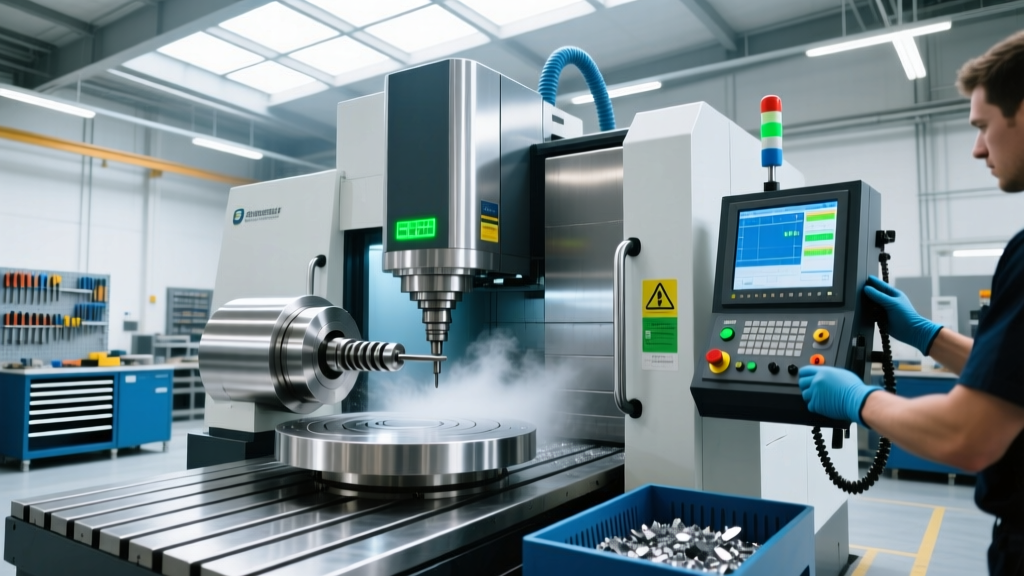
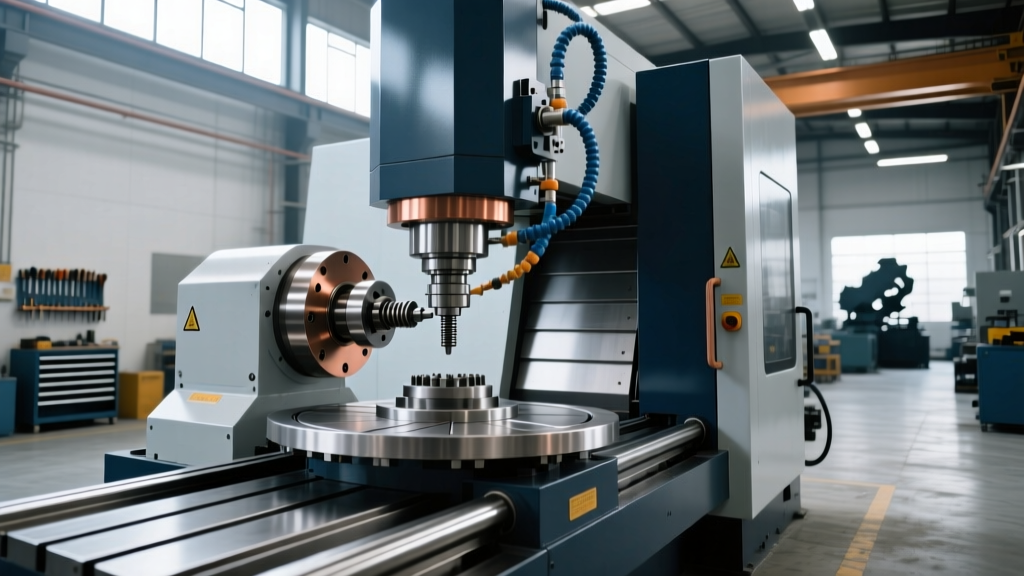
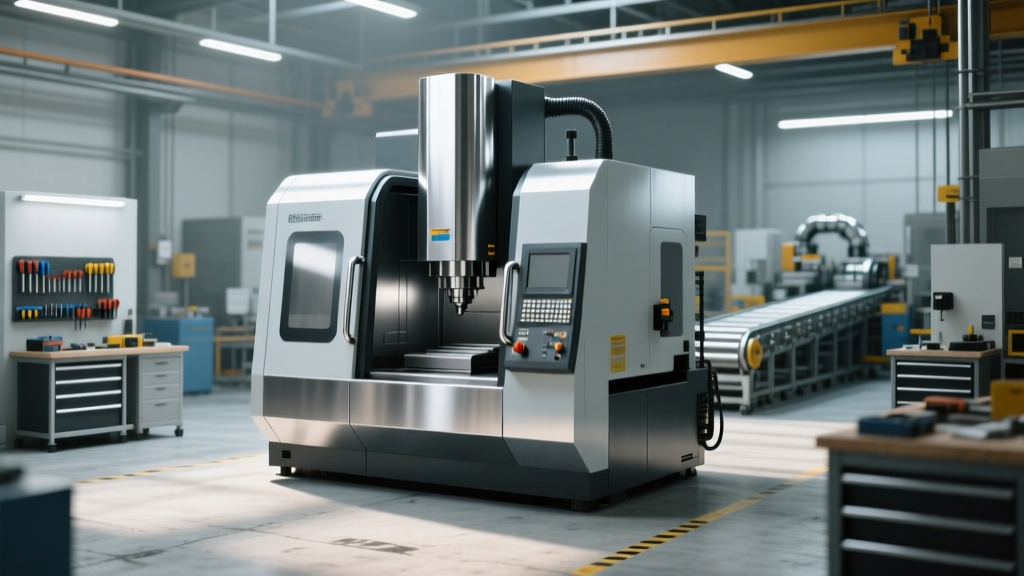
Purchasing cnc vertical machining centers involves a significant capital outlay that extends far beyond the manufacturer's base MSRP. In 2026, supply chain stabilization has normalized lead times for Japanese and German spindle assemblies, but inflationary pressures on cast iron and high-precision linear guideways have kept base prices firm. To build an accurate budget, procurement teams must evaluate the "equipped" price, which includes the chip conveyor, high-pressure coolant pumps, probing systems, and 4th-axis readiness.
| Machine Model | Base MSRP (Approx.) | Production-Ready Equipped Price | Cost Delta |
|---|---|---|---|
| Haas VF-2SS (Super Speed) | $62,900 | $88,500 - $94,000 | +$25,600 to +$31,100 |
| Mazak VCN-530C | $125,000 | $158,000 - $168,000 | +$33,000 to +$43,000 |
| DMG Mori CMX 600V | $115,000 | $145,000 - $155,000 | +$30,000 to +$40,000 |
Operational Expenditure (OpEx): Energy, Tooling, and Coolant
Once the machine is commissioned, the operational burn rate begins. According to data from the NIST Manufacturing Extension Partnership, energy and consumables represent 15% to 22% of a VMC's total lifetime cost of ownership. In 2026, industrial electricity rates in major US manufacturing hubs average between $0.14 and $0.18 per kWh.
Energy Consumption Realities
A standard 40-taper VMC with a 15kW spindle, active chip conveyor, and coolant pump draws approximately 20 to 25 kWh under continuous cutting load. Running two shifts (16 hours a day, 5 days a week) yields a monthly energy cost of roughly $1,100 to $1,400 per machine. Idle power draw (when the machine is on but not cutting) still consumes 4 to 6 kWh to maintain control cabinets, way lube pumps, and hydraulic units.
Workholding and Tooling Budget Matrix
Tooling is the most frequently underestimated budget category. A new VMC requires a complete starter library of CAT40 or BT40 toolholders, retention knobs, and cutting tools. Below is a realistic baseline budget for outfitting a single 3-axis VMC for general aluminum and steel milling.
| Consumable Category | Quantity / Specification | Estimated Unit Cost | Total Budget Required |
|---|---|---|---|
| CAT40 Toolholders (Endmill, Collet, Shell Mill) | 40 holders | $85 - $180 | $3,400 - $7,200 |
| Retention Knobs (Pull Studs) | 40 pieces | $15 - $25 | $600 - $1,000 |
| Carbide Endmills (1/4", 3/8", 1/2" AL-TiCN) | 30 pieces | $45 - $95 | $1,350 - $2,850 |
| Indexable Face Mill & Inserts (3" or 4") | 1 body + 2 boxes inserts | $450 (body) + $180 (inserts) | $630 - $800 |
| Synthetic Coolant Concentrate (e.g., TRIM) | 15 gallons (for 50-gal sump mix) | $45 - $65 / gallon | $675 - $975 |
Initial Tooling CapEx Requirement: $6,655 to $12,825 per machine.
Facility Upgrades: The Hidden Budget Killers
The Association for Manufacturing Technology (AMT) frequently highlights that facility preparation costs can derail equipment ROI timelines if not scoped correctly before the machine arrives. You cannot simply plug a 9,000 lb VMC into a standard wall outlet.
- 480V 3-Phase Power Drop: Running a new 100-amp dedicated line from your main breaker panel to the machine footprint costs between $4,500 and $8,500, depending on the distance and whether trenching or overhead busway installation is required.
- Compressed Air Infrastructure: VMCs require clean, dry air (typically 90-120 PSI) for tool changers, air blasts, and way cover purging. Upgrading a shop's air dryer and adding dedicated drop lines with coalescing filters adds $2,000 to $4,000.
- Coolant Mist Collectors: OSHA and local air quality mandates require mist extraction when running high-pressure TSC. A centrifugal mist collector (e.g., Filtermist) mounted to the VMC enclosure costs $3,500 to $5,000 installed.
- Rigging and Forklift Services: Offloading and placing a 9,000 lb machine requires specialized riggers. Budget $2,500 to $4,500 for a tandem forklift drop or crane rigging, plus $1,500 for precision leveling and epoxy grouting to the concrete pad.
"The most common mistake job shops make is budgeting for the iron, but forgetting the floor. A 10,000-pound VMC requires a minimum 6-inch reinforced concrete slab. If your facility has a 4-inch slab, you will pay $8,000 to $15,000 in concrete coring, rebar tying, and pouring before the machine even ships." — Facilities Planning Director, Mid-West Contract Manufacturing
5-Year ROI and Breakeven Framework
To justify the capital expenditure of cnc vertical machining centers, engineering managers must calculate the true breakeven point based on spindle utilization, not just machine availability. Use this framework to model your 5-year ROI:
- Calculate Fully Burdened Hourly Rate: Add machine depreciation, floor space rent ($1.50–$3.00/sq ft), operator labor ($35–$55/hr), and OpEx (power/coolant). A typical VMC fully burdened rate in 2026 is $95 to $135 per hour.
- Determine Billable Spindle Hours: Assume 70% utilization (factoring in setup, maintenance, and material loading). On a 16-hour/day, 5-day/week schedule, you have 56 billable spindle hours per week.
- Apply Gross Margin: If your shop charges $140/hour and your burdened rate is $110/hour, your gross profit per spindle hour is $30.
- Calculate Breakeven: Divide the Total Equipped CapEx ($94,000 for a Haas VF-2SS + Tooling + Rigging) by the hourly profit ($30). Result: 3,133 spindle hours to break even. At 56 hours/week, the machine pays for itself in roughly 14 months.
Leasing vs. Cash Purchasing in the 2026 Rate Environment
With industrial equipment financing rates fluctuating between 6.5% and 9.5% in early 2026, the decision to lease or buy cash requires careful tax strategy analysis. Under current IRS guidelines, the Section 179 deduction allows businesses to expense the full purchase price of qualifying CNC equipment (up to the annual inflation-adjusted limit, approaching $1.2 million) in the year it is placed in service.
If your shop has the tax liability to absorb a $150,000 deduction, purchasing via a low-interest SBA-backed equipment loan or cash preserves equity and maximizes immediate tax shields. Conversely, if cash flow preservation is critical for raw material inventory, a 60-month Fair Market Value (FMV) lease keeps monthly payments around $2,800 to $3,200 for a mid-tier VMC, allowing the machine to generate revenue that outpaces the lease cost before the balloon payment is due. Always consult a CPA specializing in manufacturing depreciation schedules before executing the purchase order.
For detailed specifications and current configurator pricing on entry-level to mid-range models, reviewing the Haas Automation VMC lineup provides a reliable baseline for North American market benchmarks.