Heavy Part 5-Axis CNC Machining: 2026 Cost Analysis
Analyze the true CAPEX and OPEX of heavy part 5-axis CNC machining in 2026. Compare machine costs, rigging, and cost-per-part frameworks for high-mass loads.
The True CAPEX of Heavy-Duty 5-Axis Platforms
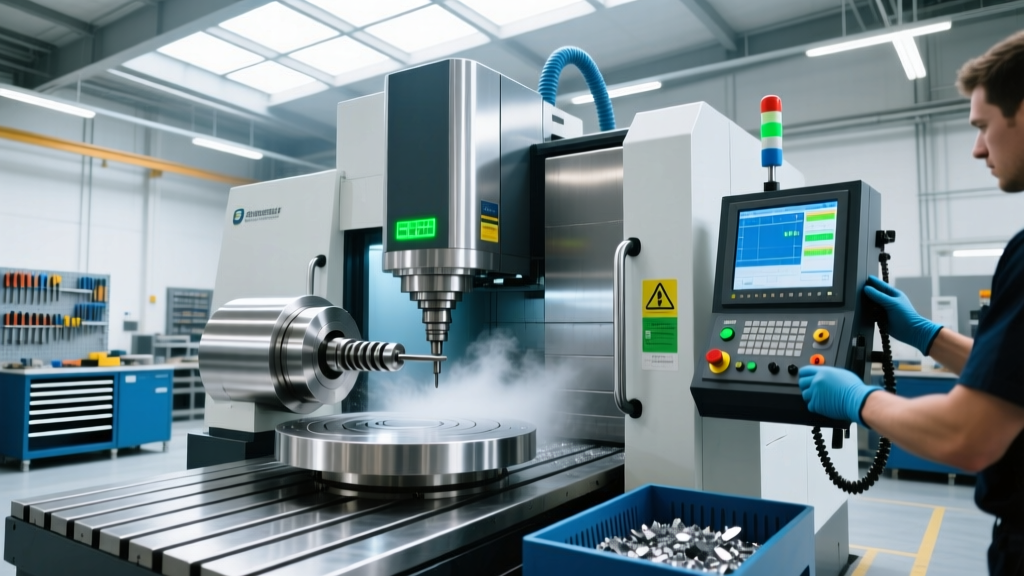
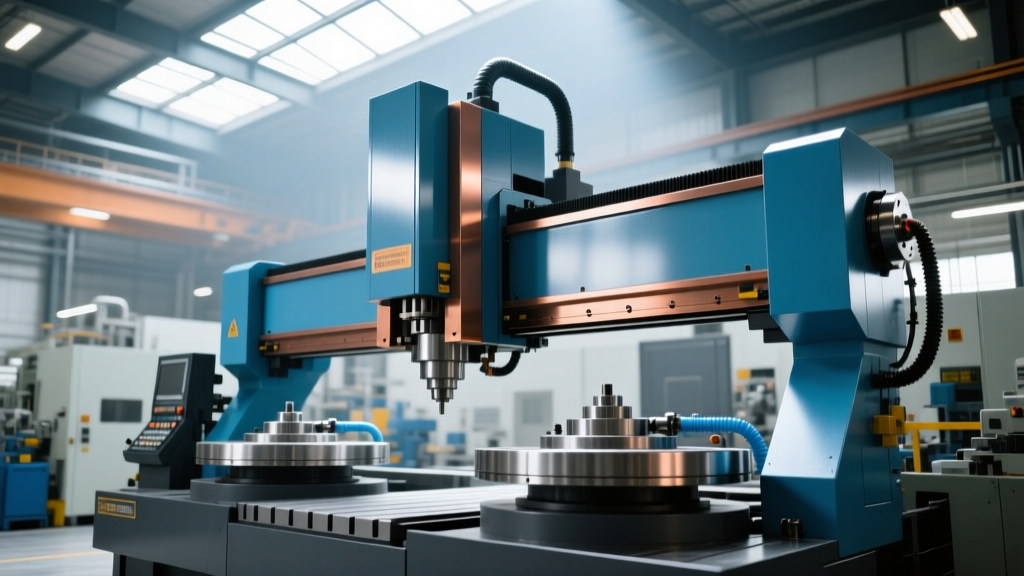
When budgeting for heavy part 5-axis CNC machining, manufacturers frequently underestimate the capital expenditure required to move beyond standard vertical machining centers. In the context of 5-axis machining, a 'heavy part' typically refers to workpieces ranging from 2,000 kg (4,400 lbs) to over 10,000 kg (22,000 lbs), commonly found in aerospace structural monoliths, energy sector valve bodies, and heavy equipment drivetrains. As of 2026, the market for heavy-duty 5-axis platforms has consolidated around a few key manufacturers capable of delivering the necessary table load capacities without sacrificing dynamic contouring accuracy.
| Machine Model | Max Table Load | Spindle Taper | Est. 2026 CAPEX (USD) |
|---|---|---|---|
| Mazak Vortex 1400/160-II | 4,000 kg (8,818 lbs) | CAT50 / HSK-A100 | $1,450,000 - $1,850,000 |
| SNK Neo-5M | 5,000 kg (11,023 lbs) | CAT50 / HSK-A100 | $1,900,000 - $2,400,000 |
| Fives Giddings & Lewis VMC 5-Axis | 10,000+ kg (22,000+ lbs) | HSK-A100 / HSK-A125 | $2,800,000 - $3,500,000+ |
These base prices rarely reflect the final capitalized cost. Options mandatory for heavy-part machining—such as high-pressure coolant (HPC) systems at 1,000 PSI, automated pallet changers rated for 4,000 kg, and extended Z-axis columns for deep cavity milling—can easily add $150,000 to $300,000 to the final invoice.
Facility Preparation: The Hidden Capital Sink
Heavy part 5-axis CNC machining requires a facility infrastructure that standard VMCs do not. The combined mass of a 40,000 lb machine and an 11,000 lb workpiece generates immense static and dynamic loads that will crack standard 4-inch industrial concrete slabs.
⚠️ Warning: Foundation & Rigging Budget OverrunsDo not allocate less than $80,000 for site preparation. A proper heavy-duty foundation requires an 18-inch to 24-inch reinforced concrete pad, isolated from the rest of the shop floor with expansion joints to prevent vibration transfer from nearby stamping presses or heavy turning lathes. Furthermore, the machine must be leveled using precision epoxy grout (such as MasterFlow 647), which adds $35,000 to $60,000 in materials and specialized labor. Rigging a 5-axis machine of this size requires dual-crane lifts and heavy-duty machinery skates, typically costing $45,000 to $85,000 depending on facility access and crane reach requirements.
Electrical infrastructure is another major line item. These machines require dedicated 480V/3-phase power drops, often necessitating a new dedicated transformer to ensure voltage stability during heavy roughing cycles when spindle and axis drives draw peak amperage simultaneously. Budget $20,000 to $35,000 for electrical upgrades and surge protection systems.
OPEX and Tooling for High-Mass Loads
Operational expenditure in heavy part 5-axis CNC machining is dominated by tooling, workholding, and the cost of raw material removal. When machining high-strength alloys like Ti-6Al-4V or Inconel 718, tool wear accelerates exponentially under the high radial forces generated by long-reach tool assemblies.
The HSK-A100 Advantage and Tooling Costs
For parts exceeding 3,000 kg, CAT50 tapers often lack the radial stiffness required for aggressive 5-axis simultaneous milling, leading to tool deflection, chatter, and premature insert failure. Upgrading to an HSK-A100 taper is highly recommended. HSK-A100 toolholders provide superior face-and-taper contact, ensuring repeatability under heavy cutting loads. However, this comes at a premium: a single high-quality HSK-A100 hydraulic or shrink-fit holder costs between $800 and $1,400. A complete heavy-roughing and finishing tooling package for a new 5-axis cell will require an initial investment of $40,000 to $65,000.
According to Sandvik Coromant's milling strategy guidelines, utilizing specialized heavy-duty roughing cutters with variable helix angles and unequal index spacing is critical for dampening harmonics when removing massive volumes of titanium or steel. Budgeting for premium indexable inserts—often costing $25 to $45 per edge—is mandatory to maintain predictable cost-per-part metrics.
The Cost of the 'Flip': 3-Axis vs. 5-Axis ROI
The most compelling financial argument for heavy part 5-axis CNC machining is the elimination of the 'flip.' In a traditional 3-axis or 3+2 workflow, machining a complex aerospace structural component requires multiple setups. The part must be removed from the machine, flipped using an overhead crane, re-indicated, and re-zeroed.
'When dealing with a 3,000 lb titanium aerospace forging, the raw material alone can cost upwards of $85,000. A single setup error, a dropped load during a crane flip, or an indication mistake on the second operation doesn't just result in lost machine time—it results in an $85,000 scrap event. True 5-axis single-setup machining reduces this catastrophic scrap risk to near zero after first-article inspection.' — Manufacturing Engineering Lead, Tier 1 Aerospace Supplier
To quantify this, consider the NIST Manufacturing Extension Partnership (MEP) frameworks for calculating total cost of ownership and scrap reduction. A 3-axis multi-setup process for a large valve body might require 40 hours of machining, plus 6 hours of crane time, rigging, and re-indicating. A 5-axis machine can complete the part in 32 hours of continuous cutting with zero crane intervention. At a fully burdened shop rate of $250/hour, the 5-axis machine saves $2,000 in direct labor and machine time per part, while entirely eliminating the $85,000 scrap risk associated with manual handling of high-mass workpieces.
Software, Labor, and Chip Management
Heavy part 5-axis CNC machining demands advanced CAM software capable of generating collision-free, optimized toolpaths for massive work envelopes. Standard 3-axis CAM packages are insufficient. Licenses for advanced 5-axis modules in software like HyperMill or Mastercam range from $25,000 to $35,000 per seat. Furthermore, programming a 4,000 kg part requires senior-level programmers who understand tool vector management, machine kinematics, and singularity avoidance. In 2026, the salary premium for a verified 5-axis heavy-part programmer over a standard 3-axis VMC programmer is approximately 25% to 35%.
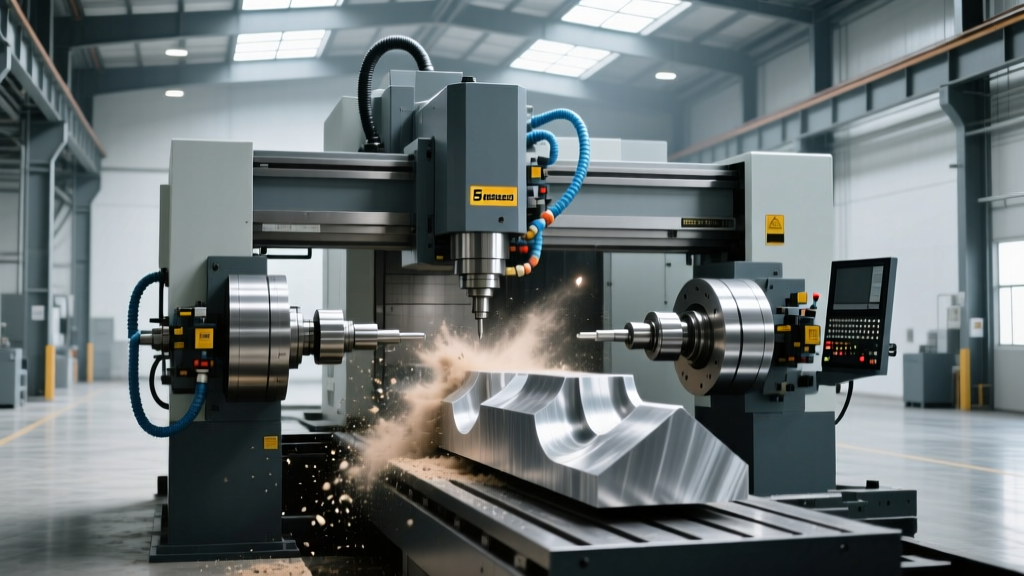
💡 Pro-Tip: Chip Evacuation in Deep CavitiesHeavy roughing of deep pockets in large aluminum or titanium monoliths generates massive volumes of chips. If chips are not evacuated instantly, they recut, destroying $1,200 endmills and ruining the surface finish of an $85,000 part. Ensure your 5-axis machine is equipped with a high-volume chip conveyor system featuring auto-clean cycles and targeted coolant nozzles aimed directly at the cutting zone to flush chips out of deep cavities before they can accumulate.
Strategic Budgeting Summary
Entering the heavy part 5-axis CNC machining market requires a realistic capital allocation strategy. Shops must look beyond the base price of the machine tool and account for the total ecosystem: reinforced foundations, specialized rigging, HSK-A100 tooling inventories, high-pressure coolant infrastructure, and advanced CAM software. By focusing on the elimination of manual part handling, the reduction of catastrophic scrap risk, and the ability to command premium margins on complex, monolithic components, manufacturers can achieve a compelling ROI on these multi-million-dollar investments within 36 to 48 months of full production deployment.