CNC Vertical Machining Equipment: Essential Safety Compliance
Ensure your shop meets OSHA and ISO standards. Explore essential safety compliance requirements for CNC vertical machining equipment and VMCs.
The Regulatory Baseline for CNC Vertical Machining Equipment
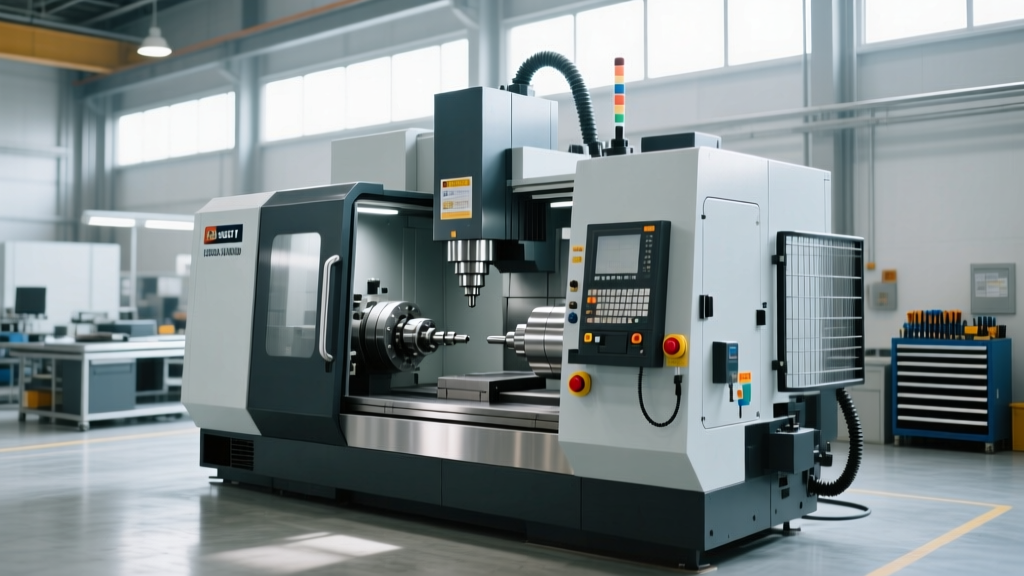
Operating CNC vertical machining equipment introduces severe kinetic, electrical, and chemical hazards into the manufacturing environment. A standard vertical machining center (VMC) spindle rotating at 12,000 RPM generates immense kinetic energy, while high-pressure through-tool coolant systems (often exceeding 1,000 PSI) create hazardous aerosolized mists. Compliance is not merely a bureaucratic exercise; it is a critical engineering requirement to prevent catastrophic operator injury and avoid severe regulatory penalties.
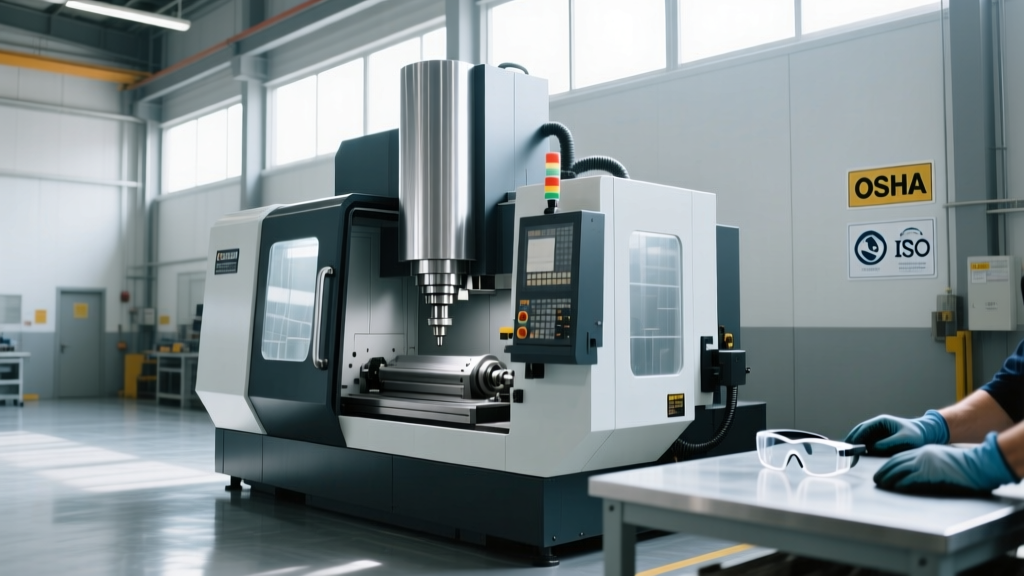
In the United States, the foundational requirement for machine guarding is codified in OSHA 1910.212(a)(1), which mandates that one or more methods of machine guarding shall be provided to protect the operator and other employees in the machine area from hazards such as those created by point of operation, ingoing nip points, rotating parts, flying chips, and sparks. Furthermore, the ANSI B11.0-2020 standard provides the comprehensive framework for risk assessment and risk reduction for all machine tools, including vertical milling and drilling equipment.
WARNING: The Cost of Non-ComplianceAs of 2026, OSHA maximum penalties for willful or repeated machine guarding violations exceed $160,000 per instance. Beyond fines, a single unguarded VMC accident resulting in a workplace amputation triggers a comprehensive facility-wide audit, frequently halting production for weeks and increasing workers' compensation premiums by up to 300%.
Enclosure Integrity and Polycarbonate Degradation
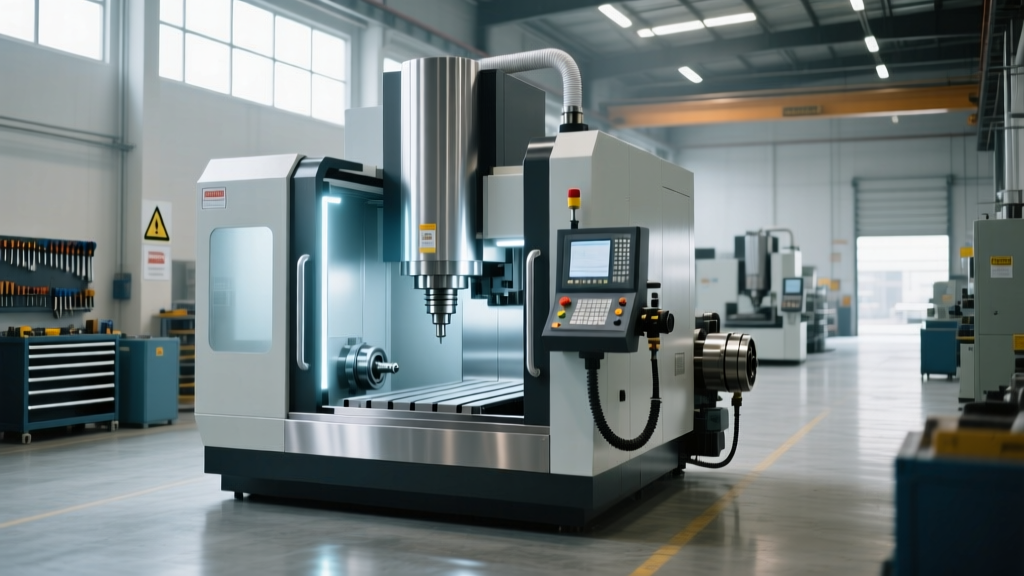
The primary physical barrier on modern CNC vertical machining equipment is the polycarbonate (PC) enclosure window. While polycarbonate offers exceptional impact resistance against flying carbide tooling and heavy workpieces, it is highly susceptible to chemical stress cracking when exposed to alkaline synthetic and semi-synthetic metalworking fluids (MWFs).
The Coolant-Window Interaction Failure Mode
Many machine shop managers are unaware that standard polycarbonate degrades rapidly when exposed to coolants with a pH above 9.0. Over a period of 18 to 36 months, the chemical interaction causes micro-crazing (a network of fine cracks) on the interior surface of the window. When a tool shatters during a high-speed milling operation, a micro-crazed window may fail to contain the projectile, leading to severe operator injury.
- Inspection Protocol: Use a UV flashlight to inspect VMC windows quarterly for early-stage crazing.
- Material Upgrade: If your shop utilizes high-alkaline synthetics (e.g., Trim MicroSol 685XT), specify PETG (Polyethylene Terephthalate Glycol) or chemically hard-coated polycarbonate (such as Makrolon AR) for replacement windows.
- Thickness Requirements: ANSI B11.19 dictates that enclosure thickness must correlate to the mass and velocity of the largest potential projectile. For a standard 40-taper VMC, a minimum thickness of 6mm (0.236 inches) is required; for 50-taper machines machining heavy titanium or Inconel parts, 8mm to 10mm is recommended.
E-Stop Circuit Architecture and NFPA 79 Compliance
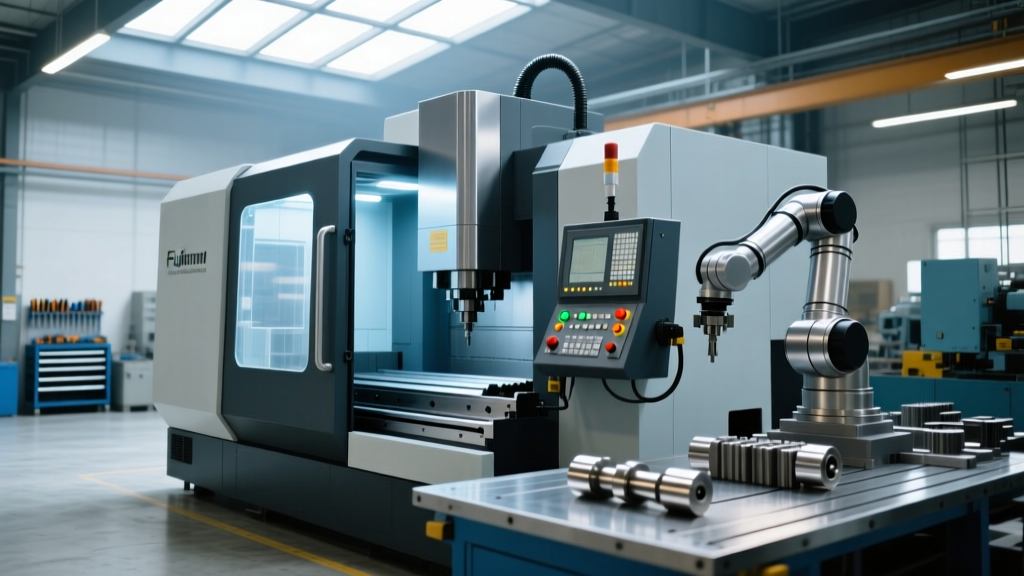
The electrical safety of CNC vertical machining equipment is governed by NFPA 79 (Electrical Standard for Industrial Machinery). A critical area of frequent compliance failure is the improper configuration of Emergency Stop (E-Stop) circuits.
An E-Stop must never be routed solely through a standard Programmable Logic Controller (PLC) or software interface. NFPA 79 requires E-Stop functions to be hardwired and categorized by their stopping performance:
| Stop Category | Mechanism | Application in VMCs |
|---|---|---|
| Category 0 | Immediate removal of power to the machine actuators (uncontrolled stop). | Required for main electrical disconnect and E-Stop circuits. Spindle and axis drives lose power instantly, relying on mechanical brakes to hold the Z-axis. |
| Category 1 | Controlled stop with power available to achieve the stop, then power is removed. | Used for feed-hold or cycle-stop buttons. Drives decelerate the spindle and axes smoothly before cutting power. |
| Category 2 | Controlled stop with power left available to the machine actuators. | Not permitted for E-Stop functions. Used for temporary pause states where holding torque is required without full shutdown. |
Modern compliance requires dual-channel redundancy for E-Stop circuits. Utilizing safety relays (such as the Pilz PNOZ series or Allen-Bradley Guardmaster) ensures that if one contactor welds shut, the secondary channel will still break the circuit, triggering a safe shutdown and alerting the control system to the fault.
Airborne Contaminants and Mist Extraction
Vertical machining centers are particularly prone to generating high volumes of coolant mist due to the open vertical column design and the upward trajectory of chip evacuation. According to NIOSH guidelines on metalworking fluids, prolonged exposure to aerosolized MWFs is linked to occupational asthma, hypersensitivity pneumonitis, and respiratory irritation.
The OSHA Permissible Exposure Limit (PEL) for mineral oil mist is 5 mg/m³ over an 8-hour Time-Weighted Average (TWA). However, modern best practices and state-level regulations (such as Cal/OSHA) often push facilities toward much lower internal limits.
Engineering Control Specification:For CNC vertical machining equipment running high-pressure coolant (70+ bar / 1,000+ PSI), standard electrostatic precipitators are frequently insufficient. Facilities must deploy HEPA-filtered mist collectors capable of capturing 99.97% of particulates at 0.3 microns. Ensure the collector provides a minimum of 4 to 6 air changes per minute within the VMC enclosure to maintain negative pressure and prevent mist from escaping when the operator opens the load door.
Lockout/Tagout (LOTO) and the Z-Axis Drop Hazard
While standard Lockout/Tagout (LOTO) procedures focus on electrical isolation via the main disconnect switch, CNC vertical machining equipment presents a unique stored-energy hazard: gravity. The Z-axis assembly (spindle head, tool changer, and motor) on a standard VMC can weigh between 1,500 and 4,000 lbs.
When electrical power is removed during a LOTO procedure, the Z-axis servo motor's electromagnetic holding brake engages. However, if the machine is older, or if the brake mechanism is worn, the Z-axis can slowly bleed down or drop entirely, crushing maintenance personnel working on the table below.
Mandatory Z-Axis Safety Protocols
- Physical Blocking: Before any maintenance requiring personnel to place their head or upper body inside the machining envelope, a physical Z-axis safety block (a precision-machined steel or high-density polyurethane strut) must be installed between the spindle nose and the machine table or vise.
- Pneumatic Isolation: VMCs utilize compressed air for tool clamping (drawbar mechanisms) and way covers. This pneumatic energy must be isolated, bled, and locked out via a lockable dump valve, as trapped air can cause the tool retention knob to eject violently when the collet is manually released.
- Counterweight Systems: On older box-way VMCs utilizing physical counterweights, technicians must verify the integrity of the counterweight chains and guides, as these represent a secondary drop hazard independent of the servo brake.
Retrofitting Legacy CNC Vertical Machining Equipment
Shops operating VMCs manufactured prior to 2015 often face a compliance gap. Older machines frequently lack modern safety door interlocks, relying instead on simple limit switches that can be easily defeated by operators using tape or zip-ties to bypass the door during setup.
Upgrading a legacy VMC (such as an early 2000s Haas VF-3 or Fadal VMC-40) to modern safety standards requires installing RFID-coded, non-contact safety interlocks (e.g., Euchner NZ or Schmersal AZM series). These devices cannot be defeated by simple magnets or physical manipulation.
"Retrofitting a legacy VMC with a modern safety PLC, dual-channel E-stop architecture, and RFID door interlocks typically costs between $4,200 and $7,500 per machine, including integration labor. While this represents a significant capital outlay, it is a fraction of the cost of a single OSHA willful violation or a localized insurance premium spike following a near-miss incident."
Frequently Asked Questions (VMC Safety)
Can I use standard acrylic (PMMA) for replacement VMC windows?
No. Acrylic is highly brittle and lacks the impact strength required to contain flying carbide inserts or broken endmills. Furthermore, acrylic degrades almost instantly when exposed to most metalworking fluids. Only polycarbonate (PC), PETG, or specialized safety glass laminates should be used for CNC vertical machining equipment enclosures.
Are light curtains acceptable for operator guarding on a VMC?
Light curtains (Type 4, per IEC 61496) are generally not suitable as the primary guarding method for the point of operation on a VMC. Because the milling process generates high-velocity flying chips and coolant, the optical sensors will experience frequent nuisance trips or fail to detect transparent hazards. Physical, interlocked polycarbonate enclosures remain the required standard for VMCs.
How often should the Z-axis holding brake be tested?
The Z-axis electromagnetic brake should be tested annually under maximum load conditions. This involves commanding the machine to hold the heaviest allowable tool assembly at the top of the Z-travel, cutting power to the servo drive, and measuring any axis drift over a 10-minute period. Any measurable drop indicates brake wear requiring immediate spindle motor replacement or brake refurbishment.