CNC Five Axis Machine vs 3+2 Axis: 2026 Cost & Capability
Compare full CNC five axis machine configurations against 3+2 indexing. Analyze trunnion vs swivel head kinematics, TCO, and 2026 procurement frameworks.
Kinematic Configurations: Trunnion Table vs. Swivel Head
The architecture of a CNC five axis machine fundamentally dictates its payload capacity, undercut accessibility, and susceptibility to thermal drift. The market is dominated by two primary kinematic designs, each serving distinct part envelopes.
Trunnion Table Design (A-Axis / C-Axis)
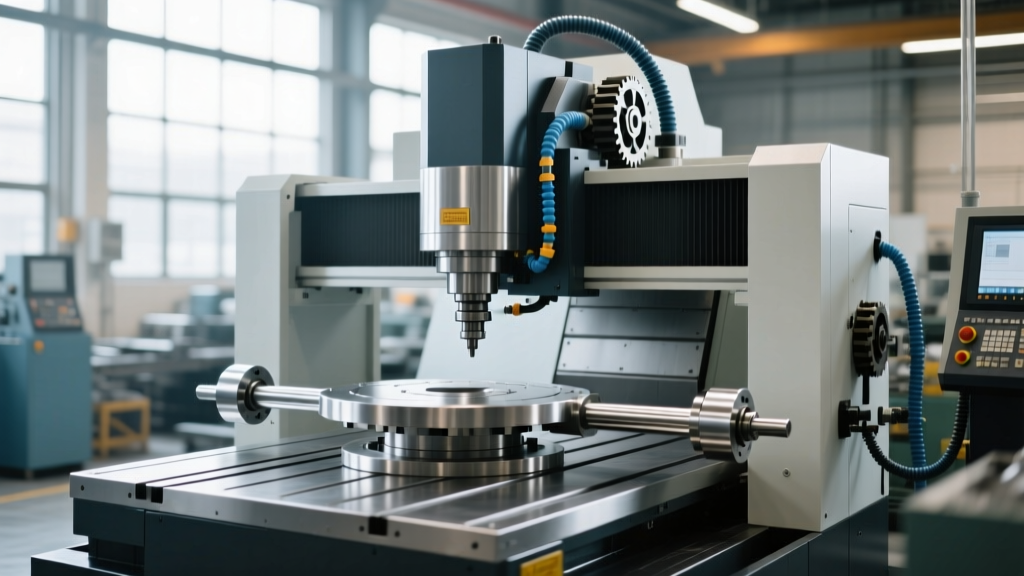
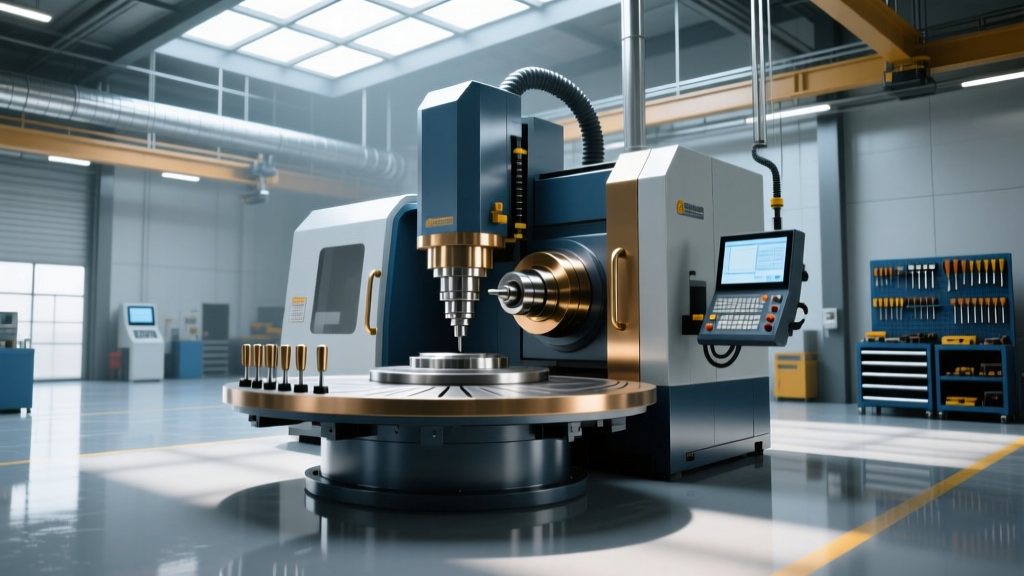
Trunnion machines integrate the rotary and tilt axes directly into the worktable. The Haas UMC-750SS exemplifies this category, utilizing an integrated 500mm platter with a 300 kg (660 lb) load capacity. Because the spindle remains strictly vertical (Z-axis only), trunnion designs maintain high Z-axis rigidity and allow for standard tooling setups. However, the tilt mechanism consumes significant Z-axis travel, and heavy workloads induce torque limitations on the A-axis drive. Trunnion tables are optimal for parts under 250mm in diameter, such as titanium orthopedic implants and aluminum impellers.
Swivel Head Design (B-Axis / C-Axis)
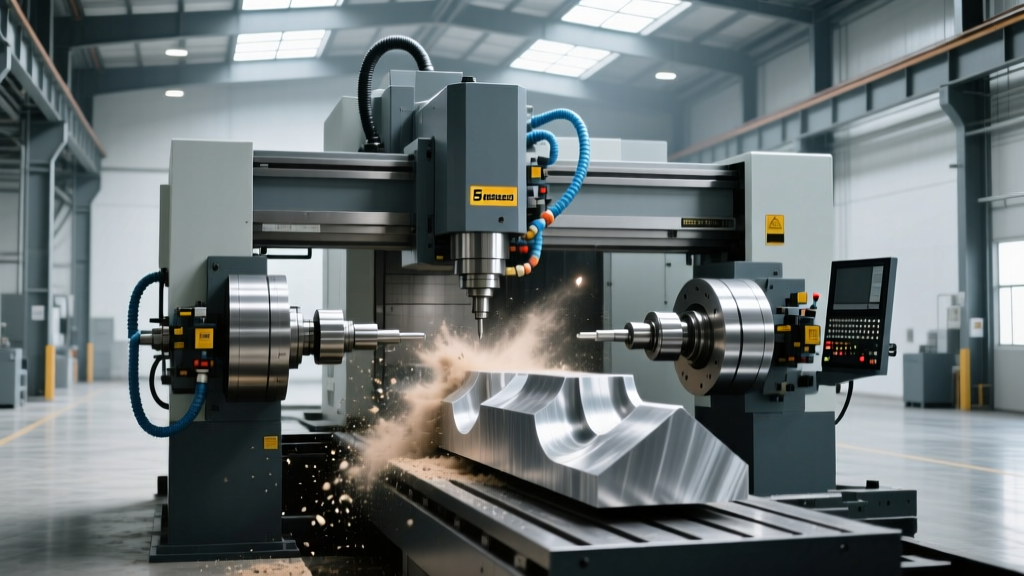
Swivel-head configurations mount the rotary and tilt mechanisms on the spindle carriage, leaving a massive, stationary worktable. The DMG MORI DMU 50 3rd Generation utilizes a swivel head with a 600 kg table load capacity. This design excels at machining heavy, bulky components like aerospace structural brackets because the table does not tilt under load. The trade-off is Z-axis clearance: the physical footprint of the swivel head reduces maximum Z-travel by 150mm to 250mm compared to a standard VMC, requiring longer tool extensions that introduce harmonic chatter during heavy roughing passes.
| Specification | Trunnion (e.g., Haas UMC-750SS) | Swivel Head (e.g., DMG MORI DMU 50) | 3+2 VMC + Rotary (e.g., Haas VF-4SS + TR210) |
|---|---|---|---|
| Base Capital Cost (2026 Est.) | $185,000 - $215,000 | $320,000 - $410,000 | $105,000 - $125,000 |
| Max Table Payload | 300 kg (Tilted) | 600 kg (Stationary) | 45 kg (Rotary Faceplate) |
| Undercut Capability | Restricted by table geometry | Excellent (120°+ tilt) | None (Requires manual re-fixturing) |
| RTCP Required | Yes (Mandatory) | Yes (Mandatory) | No (Indexed positioning only) |
The Primary Alternative: 3+2 Indexed Machining
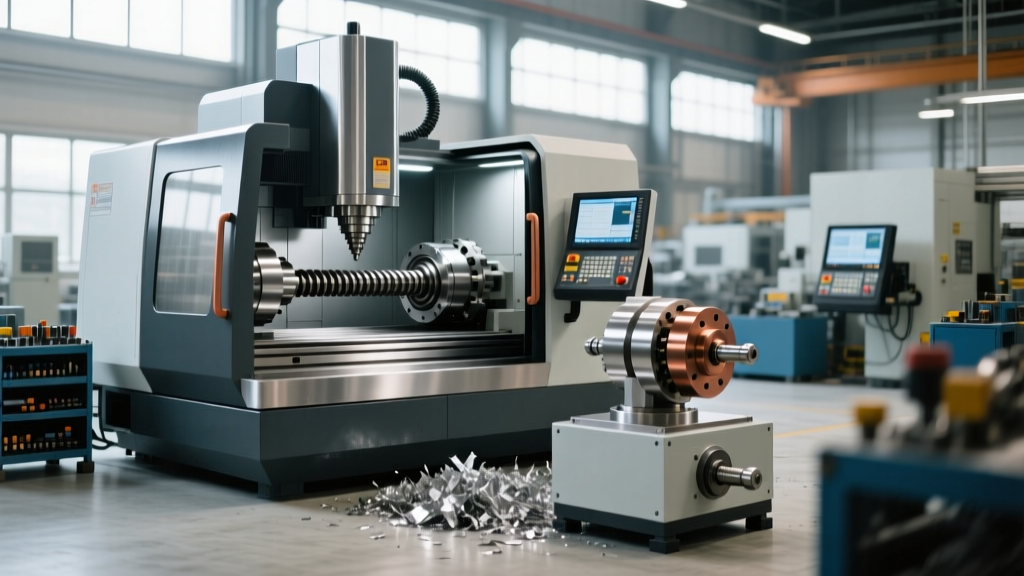
Before committing to the premium of a full CNC five axis machine, shops must evaluate if simultaneous contouring is actually required. 3+2 axis machining (often called indexed 5-axis) locks the rotary table at a specific compound angle, allowing the machine to execute standard 3-axis milling cycles.
Engineering Caveat: 3+2 machining cannot maintain the tool normal to a complex contoured surface. If your part features aerodynamic turbine blades, variable-angle draft walls, or continuous compound curves, 3+2 will leave scallop marks that require manual benching, destroying cycle time economics.For prismatic parts with features on multiple planes (e.g., hydraulic valve bodies, gearbox housings), a standard VMC equipped with a high-precision rotary table like the Haas TR210 ($22,000) delivers 90% of the utility of a 5-axis machine at 40% of the cost. The primary advantage of 3+2 indexing is the elimination of the RTCP (Rotary Tool Center Point) dynamic error. Because the axes lock before cutting begins, the machine behaves like a rigid 3-axis mill, drastically reducing the risk of catastrophic gouging during aggressive roughing operations.
Hidden Costs: CAM, Tooling, and Metrology
The invoice for the machine tool is only the entry fee. Operating a CNC five axis machine introduces mandatory secondary expenditures that do not apply to 3+2 alternatives.
- CAM Software Modules: Generating collision-free simultaneous toolpaths requires specialized software. Upgrading to Mastercam's Multiaxis module adds approximately $7,500 to $9,000 per seat. For high-end aerospace surfacing, hyperMILL 5AXIS licenses routinely exceed $18,000 per seat, alongside the cost of dedicated post-processor generation ($2,000 - $4,000).
- Tool Holding & Retention: Standard ER collets lack the radial runout accuracy required for 5-axis finishing. Shops must invest in hydraulic or shrink-fit tool holders (e.g., Haimer Duo-SHRINK) to maintain under 3-micron TIR (Total Indicator Reading). A full complement of 50 shrink-fit holders and the induction heating unit adds $12,000 to the startup budget.
- On-Machine Metrology: Workpiece setup on a tilted trunnion table is highly susceptible to human error. Integrating a Renishaw OMP600 spindle probe with 5-axis probing cycles is non-negotiable for automated datum setting, adding roughly $14,000 to the machine configuration.
Real-World Failure Modes & Edge Cases
Theoretical accuracy rarely survives the shop floor environment without rigorous compensation protocols. When auditing 5-axis capabilities, buyers must account for the following physical failure modes.
Thermal Drift and the RTCP Breakdown
As the spindle and rotary drives heat up during a 10-hour shift, the physical center point of the tool shifts relative to the workpiece. According to the ISO 10791-7:2020 testing standard, 5-axis machines must be evaluated for RTCP accuracy under varying thermal loads. A machine lacking active thermal compensation sensors in the rotary axis castings will experience Z-axis drift of up to 40 microns after four hours of heavy cutting, ruining tight-tolerance aerospace profiles. Always mandate that the OEM provides documented RTCP drift data over a 24-hour thermal cycle.
The Collision Envelope Reality
"The most expensive component on a 5-axis machine is not the spindle; it is the crash bill. A simultaneous 5-axis toolpath verification error in the CAM software will drive a 40-taper spindle directly into the trunnion base at 1,200 mm/min, resulting in $60,000+ in alignment and bearing repairs."
To mitigate this, modern setups require machine simulation software (like Vericut or NCSIMUL) that reads the exact G-code post-processed output, not just the CAM toolpath. Relying solely on the CAM system's internal kinematic model is a primary cause of multi-axis crashes.
Final Procurement Decision Framework
Execute the following logic gate to determine the optimal configuration for your specific production environment:
- Does the part require continuous tool-normal contact with a compound curved surface?
- No: Halt 5-axis evaluation. Procure a 3+2 VMC + Rotary setup. Reallocate the $100k savings toward automated pallet loaders.
- Yes: Proceed to Step 2.
- Is the raw material stock heavier than 250 kg, or does the footprint exceed 400mm x 400mm?
- No: Select a Trunnion-style CNC five axis machine for superior Z-axis rigidity and lower CapEx.
- Yes: Select a Swivel-head configuration to maintain table load capacity and prevent A-axis drive stalling.
- Are tolerances tighter than ±15 microns on contoured profiles?
- Yes: Mandate direct-drive torque motors on the rotary axes (eliminating worm-gear backlash) and integrate in-cycle Renishaw probing for continuous thermal offset updates.
For advanced multi-axis milling strategies and toolpath optimization, refer to the Sandvik Coromant Milling Knowledge Hub to align your cutting tool geometries with your selected kinematic platform.