Underground Mining: Heavy Equipment Names and Images Guide
Explore essential underground mining machinery. Discover heavy equipment names and images, specs, and real-world case studies for subterranean extraction.
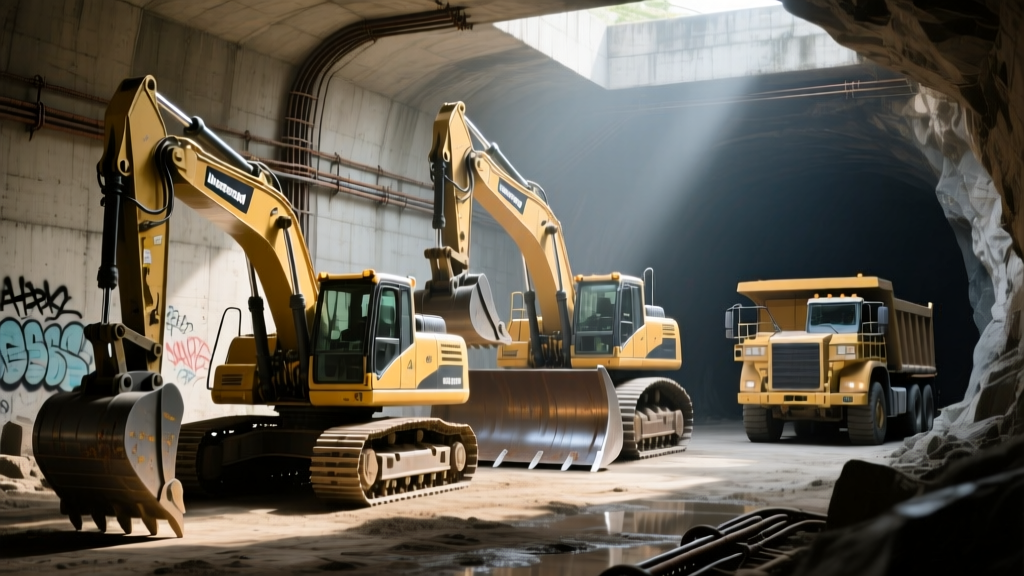
Subterranean extraction operates in an environment defined by extreme spatial constraints, high humidity, and zero natural light. Selecting, operating, and maintaining the correct machinery for these conditions requires a precise understanding of subterranean engineering. When training new operators or drafting emergency response protocols, safety manuals rely heavily on accurate heavy equipment names and images to ensure rapid visual identification and correct operational procedures in low-light environments.
This guide dissects the primary classes of underground mining equipment, providing exact model specifications, 2026 procurement costs, and real-world automation case studies to illustrate how these machines perform below the surface.
The Core Fleet: Subterranean Loaders and Haul Trucks
The backbone of any underground hard rock mine is the Load, Haul, and Dump (LHD) loader, paired with specialized underground haul trucks. Unlike surface mining equipment, underground loaders feature a center-articulated chassis to navigate tight drift radii (often as tight as 15 meters) and a rear-mounted dump box that allows the operator to face forward during both loading and dumping phases.
Modern LHDs are transitioning from purely mechanical drivetrains to advanced telematics-enabled platforms. For instance, the Sandvik TH663i underground truck utilizes an onboard weighing system that measures payload within a 1% margin of error, transmitting real-time tonnage data to the surface dispatch server via underground 5G LTE networks.
| Equipment Class | Model Example | Payload / Capacity | Est. CapEx (2026) | Primary Application |
|---|---|---|---|---|
| Underground Truck | Sandvik TH663i | 63 Tonnes | $2.8M - $3.2M | High-volume ore haulage in main declines |
| Large LHD Loader | Epiroc ST14 Battery | 14 Tonnes | $1.9M - $2.2M | Zero-emission mucking in poorly ventilated zones |
| Scalper / Grader | MacLean RD3 | N/A (Blade width 3.6m) | $850K - $1.1M | Drift maintenance and road leveling |
In high-tonnage LHDs, the oscillating hitch and center articulation joint endure massive torsional stress. Failure to execute automated daily greasing cycles leads to micro-fractures in the hitch casting. Inspect the pivot pins for axial play exceeding 2.5mm; any deviation requires immediate shimming or pin replacement to prevent catastrophic chassis separation during loaded tramming.
Drilling and Ground Support: Precision in the Dark
Development drilling requires hydraulic jumbo rigs capable of drilling 4-meter to 6-meter blast holes with sub-degree angular accuracy. The Epiroc Boomer S2 represents the current standard for face drilling, featuring two booms and a rig control system (RCS) that automatically adjusts percussion pressure based on the rock hardness feedback from the drill string.
Following the blast, ground support is installed using specialized roof bolters. The Sandvik DS422-V V-cut bolter is engineered to install cable bolts in low-headroom drifts (minimum 3.5m x 3.5m profiles).
Common Hydraulic Failure Modes in Drill Rigs
- Percussive Hose Degradation: High-frequency pressure spikes (up to 350 bar) cause internal hose lining to flake. These micro-particulates bypass standard 10-micron filters, scoring the percussion pump swashplate. Solution: Upgrade to multi-spiral wire hoses and implement 5-micron offline kidney-loop filtration.
- Feed Beam Skid Wear: Abrasive rock dust mixes with grease to form a lapping compound on the feed beam rails. Operators must flush the feed beam with high-pressure water weekly to prevent accelerated wear on the slide pads.
Case Study: Automation at Boliden Garpenberg
The Boliden Garpenberg mine in Sweden serves as a benchmark for subterranean automation. By integrating tele-remote LHDs and autonomous drilling fleets, the mine achieved a 15% increase in equipment utilization rates. Operators sitting in surface-level control rooms manage multiple LHDs simultaneously via low-latency 5G networks and high-definition camera feeds.
'Transitioning to tele-remote mucking eliminated the operator's exposure to unsupported ground and silica dust at the drawpoint. We found that machine utilization increased because the LHDs could continue operating during shift changes and blasting clearance windows, effectively adding two hours of productive tramming per day.' — Mine Operations Director, Subterranean Automation Report
This case study highlights a critical ROI factor: the initial $450,000 premium for tele-remote readiness on a 63-tonne truck is typically recouped within 14 months through increased utilization and reduced operator fatigue-related downtime.
Visual Identification Matrix: Heavy Equipment Names and Images
For safety officers and procurement teams, matching heavy equipment names and images in field manuals to actual machinery is critical. Subterranean equipment shares similar yellow or orange paint schemes, making silhouette and structural identification necessary. Use this matrix to distinguish core classes visually:
- LHD Loaders: Identify by the single, integrated chassis with a center-hinge pivot. The dump bucket is mounted at the extreme rear, and the operator sits sideways or forward-facing near the front axle. Profile is low and elongated.
- Underground Haul Trucks: Distinguishable by a distinct separation between the front tractor unit (cab and engine) and the rear dump body. They resemble scaled-down surface articulated trucks but have heavily reinforced, low-profile canopies (ROPS/FOPS) over the cab.
- Jumbo Drill Rigs: Characterized by a central carrier chassis with one to three articulated hydraulic booms extending forward. The feed beams (drill rails) are visibly longer than the carrier itself. Look for heavy cable reels mounted on the rear frame.
- Roof Bolters: Look similar to drill rigs but feature shorter, heavier booms equipped with rotary heads and resin/cartridge feeding mechanisms rather than percussive drill strings. Often equipped with integrated mesh-lifting platforms.
The 2026 BEV Transition: CapEx vs. Ventilation OpEx
The most significant shift in underground equipment procurement is the transition from Tier 4 Final diesel engines to Battery Electric Vehicles (BEVs). While the upfront capital expenditure for a BEV LHD is approximately 25% to 35% higher than its diesel counterpart, the total cost of ownership (TCO) heavily favors electrification when factoring in ventilation infrastructure.
📊 Data Highlight: Ventilation Cost Savings
Underground diesel equipment requires massive volumes of fresh air to dilute particulate matter and exhaust gases (typically 0.06 m³/s per kW of engine power). A standard 14-tonne diesel LHD requires approximately 250 kW of ventilation capacity.
- Cost to ventilate one diesel LHD (Annual): $180,000 - $240,000 (based on 2026 energy costs for primary surface fans and cooling infrastructure).
- BEV Fleet Premium (CapEx): +$450,000 per unit.
- Break-even Point: 2.2 years per unit, assuming continuous operation in a deep-level, high-heat mine requiring active cooling.
Furthermore, BEVs eliminate the need for diesel particulate filters (DPFs) and exhaust scrubbers, reducing daily maintenance downtime by an average of 45 minutes per machine.
Procurement teams must evaluate their mine plan's remaining life and depth. For shallow, short-life mines (under 5 years), the CapEx premium of BEVs may not be justified. However, for deep-level operations extending beyond 2030, electrifying the haulage and loading fleet is no longer an environmental initiative—it is a fundamental economic necessity to control escalating ventilation and cooling OpEx.
Sourcing and Safety Standards
When procuring underground machinery, ensure all equipment complies with ISO 3450 (braking systems) and ISO 3471 (ROPS) standards. For operations in North America, cross-reference equipment certifications with the NIOSH Mining Program guidelines to ensure operator cabins meet the latest silica dust isolation and pressurization requirements.