Decoding Heavy Equipment Pictures: Earthmoving Site Applications
Identify earthmoving machinery from heavy equipment pictures. Explore real-world case studies, specs, and applications for excavators, dozers, and scrapers.
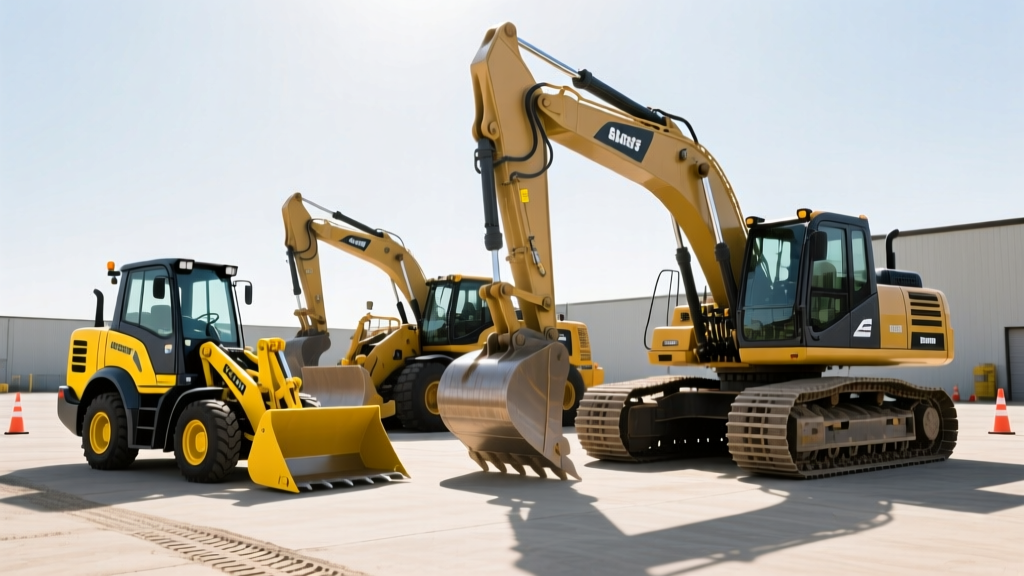
When project estimators and site superintendents review heavy equipment pictures from preliminary site surveys, they are looking for more than just yellow iron. Visual identification of earthmoving machinery provides immediate clues about a contractor's capabilities, but true operational success depends on matching specific machine configurations to soil mechanics and cut-and-fill volumes.
Visual Identification vs. Operational Reality
Relying solely on heavy equipment pictures to assess a fleet's capability is a common pitfall in heavy civil bidding. A standard crawler dozer and a Low Ground Pressure (LGP) variant may look nearly identical in a wide-angle site photo, but their performance in expansive clay or saturated peat differs drastically.
Case Study: Highway Grading in Expansive Clay
During a recent 12-mile highway expansion in the Gulf Coast region, the prime contractor mobilized standard Caterpillar D8T dozers. Despite the D8T's impressive 354-horsepower output and 84,000-pound operating weight, the standard 22-inch track shoes generated roughly 10.3 psi of ground pressure. In saturated clay, this caused excessive track slip, increasing fuel burn to over 18 gallons per hour and reducing push-loading efficiency by 22%.
The Fix: The fleet was rotated, swapping standard shoes for 34-inch LGP tracks, dropping ground pressure to 6.1 psi. Production rates normalized within 48 hours, proving that visual identification must be paired with undercarriage specification analysis.
⚠️ Undercarriage Warning: Abrasive environments like decomposed granite can reduce undercarriage life from 6,000 hours to under 2,500 hours. When inspecting heavy equipment pictures for used machinery acquisitions, always look for 'roaching' (center-bowed track links) and measure the track shoe grouser height. Replacement costs for a D8-class dozer undercarriage range from $35,000 to $48,000.Earthmoving Equipment Matrix: Specs and Site Matching
To move beyond surface-level visual identification, estimators must map machine specifications to site-specific earthwork demands. The following matrix outlines optimal applications for primary earthmoving assets.
| Equipment Type | Representative Model | Heaped Capacity / Blade Size | Optimal Application | Hourly Fuel Burn (Est.) |
|---|---|---|---|---|
| Motor Scraper | John Deere 460E | 34 cu yd (26 m³) | Long-haul cut and fill (up to 3,000 ft) | 14 - 18 gal/hr |
| Hydraulic Excavator | Komatsu PC360LC-11 | 1.9 - 2.5 cu yd bucket | Mass excavation, trenching, shot rock | 12 - 15 gal/hr |
| Wheel Loader | Cat 966M | 5.5 cu yd (4.2 m³) bucket | Load-out, stockpile management, hopper feed | 8 - 11 gal/hr |
| Crawler Dozer | Cat D8T | 10.3 cu yd (U-blade) | Push-loading scrapers, dozing, site clearing | 13 - 17 gal/hr |
Hydraulic Excavators: Matching Geometry to the Trench
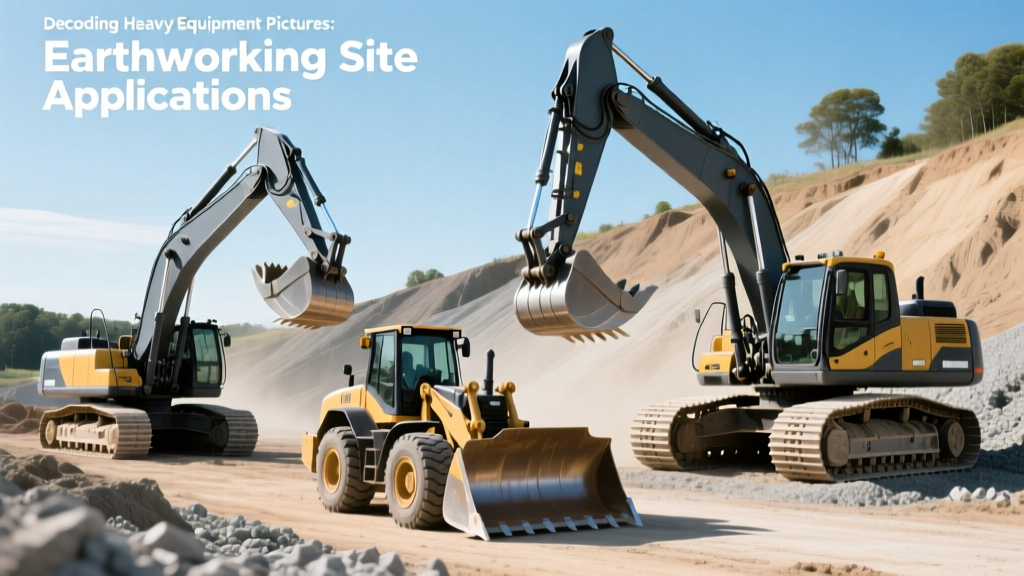
When reviewing heavy equipment pictures of excavation sites, the untrained eye sees a generic digging machine. The experienced project manager looks at the boom and stick geometry relative to the trench depth.
For deep utility trenching (15+ feet), a Mass Excavation (ME) boom is a liability. The ME boom is shorter and thicker, designed for high breakout force in shot rock or hardpan, but it lacks the reach and dump clearance needed for deep, narrow pipe beds. Conversely, using a standard reach boom in abrasive, high-impact rock will lead to premature structural cracking near the boom foot.
Calculating Excavator Cycle Times for Bidding
Accurate bidding requires moving past generic production charts. Calculate actual cycle times using this field-tested framework:
- Load Time: 6-8 seconds per bucket pass in sandy loam; 10-14 seconds in blasted shale.
- Swing Time: Add 0.5 seconds for every 15 degrees of swing past 90 degrees.
- Dump Time: 3-4 seconds for standard soil; 6+ seconds for cohesive clay that requires manual bucket curling to release.
- Return Swing: Match loaded swing time minus 0.5 seconds (empty bucket is lighter, allowing faster hydraulic acceleration).
'A machine's photo might show a massive rock bucket, but if the hydraulic pump flow hasn't been upgraded to match the increased cylinder demand, you're just looking at a slow, expensive bottleneck.' — Senior Earthwork Estimator, Kiewit Corporation
Motor Scrapers: The Economics of High-Volume Cut and Fill
Motor scrapers remain the undisputed champions of high-volume, medium-haul earthmoving. While GPS-guided dozers and articulated dump trucks (ADTs) dominate modern site photos, scrapers offer a significantly lower cost per cubic yard when haul distances fall between 1,000 and 3,000 feet.
Case Study: Airport Runway Expansion
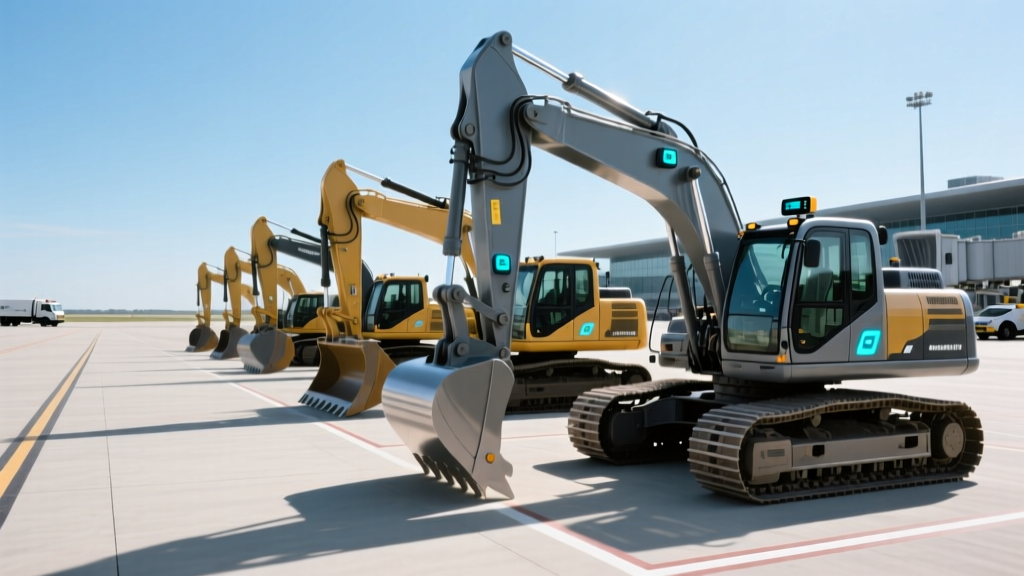
On a recent 400,000-cubic-yard airport grading project, the contractor utilized three twin-engine John Deere 460E scrapers. By employing a push-pull configuration, the machines eliminated the need for dedicated push dozers, saving $185 per hour in equipment and operator costs.
The 460E's 34-cubic-yard heaped capacity allowed each machine to move roughly 220 cubic yards per hour. Over a 10-hour shift, the three-scraper fleet moved 6,600 bank cubic yards (BCY), achieving a direct cost of $0.42 per BCY, compared to the $0.68 per BCY estimated for an ADT fleet.
💡 Scraper Economics Tip: Scrapers require a dedicated water truck and motor grader for haul road maintenance. If your project lacks the spatial footprint to maintain a 40-foot-wide, heavily compacted haul road, scraper tire wear and rim damage will obliterate your cost-per-yard savings.Bridging the Gap: Telematics and the Digital Twin
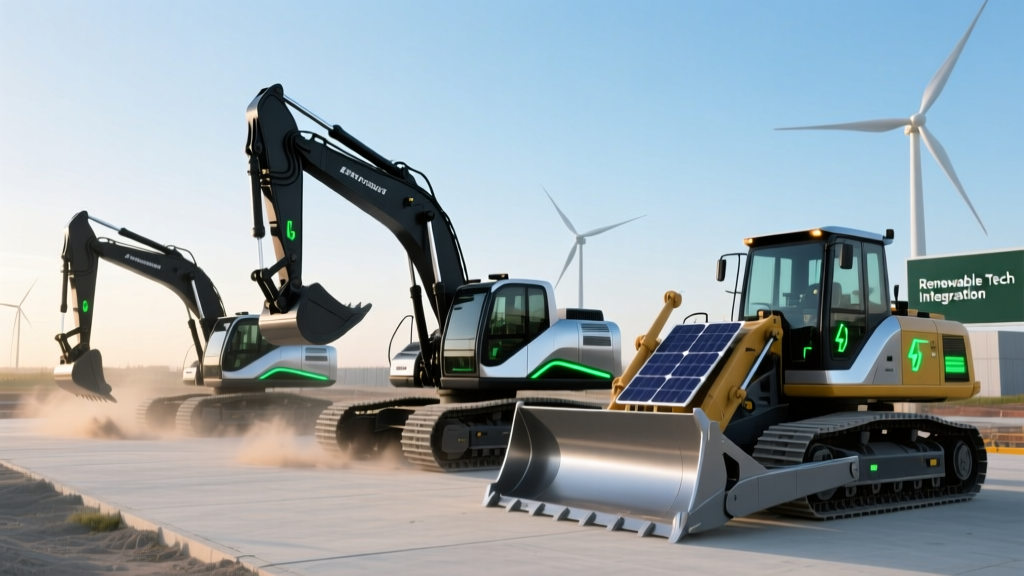
In 2026, relying purely on static heavy equipment pictures for fleet verification is becoming obsolete. Top-tier heavy civil contractors now integrate visual site captures with real-time telematics to create a 'digital twin' of the earthmoving operation.
Systems like Cat Connect and Komatsu KOMTRAX transmit live payload data, idle times, and hydraulic pressure metrics directly to the site trailer. When a project manager reviews drone-captured site imagery alongside a telematics dashboard, they can instantly correlate visual bottlenecks—such as an excavator waiting on trucks—with hard data showing a 14% drop in hourly fuel efficiency. This synthesis of visual evidence and machine data allows for mid-shift adjustments, such as repositioning a haul road curve or swapping an excavator bucket to reduce swing-cycle drag.
Verifying Fleet Compliance and Safety Standards
Beyond production metrics, analyzing site imagery is critical for verifying safety compliance before machines are allowed on regulated job sites. According to the Occupational Safety and Health Administration (OSHA), heavy and highway construction sites require rigorous daily inspections of earthmoving assets.
When auditing a subcontractor's fleet via site imagery, verify the presence of:
- ROPS/FOPS Canopies: Roll-Over and Falling Object Protective Structures must be visibly intact, without unauthorized welding or drilling into the structural pillars.
- Backup Alarms and Cameras: Modern earthmoving sites mandate audible alarms (minimum 85 dBA) and rear-view cameras, especially on large wheel loaders and scrapers where blind spots exceed 30 feet.
- Hydraulic Lockouts: Boom and blade lockout sleeves must be visible on excavators and dozers parked on site, preventing accidental dropping of attachments during maintenance.
For comprehensive earthwork guidelines and constructability standards, project engineers frequently reference the Federal Highway Administration (FHWA) earthwork specifications, which dictate compaction testing, moisture control, and equipment weight limits to prevent subgrade rutting.
Final Takeaways for Equipment Selection
Visual identification is merely the starting point of equipment mobilization. While visual audits help verify that the right class of machine has arrived on site, it is the granular understanding of track configurations, hydraulic geometries, and cycle-time economics that determines project profitability. Always pair visual site surveys with telematics data and daily undercarriage inspections to ensure your earthmoving fleet operates at peak efficiency.