Diagnosing Track Sag: Heavy Equipment Pipeline Repair
Learn how to diagnose and fix track sag on heavy equipment like pipelayers and sidebooms. Includes tolerances, adjustment steps, and repair costs.
The Hidden Cost of Improper Track Sag on Pipelayers
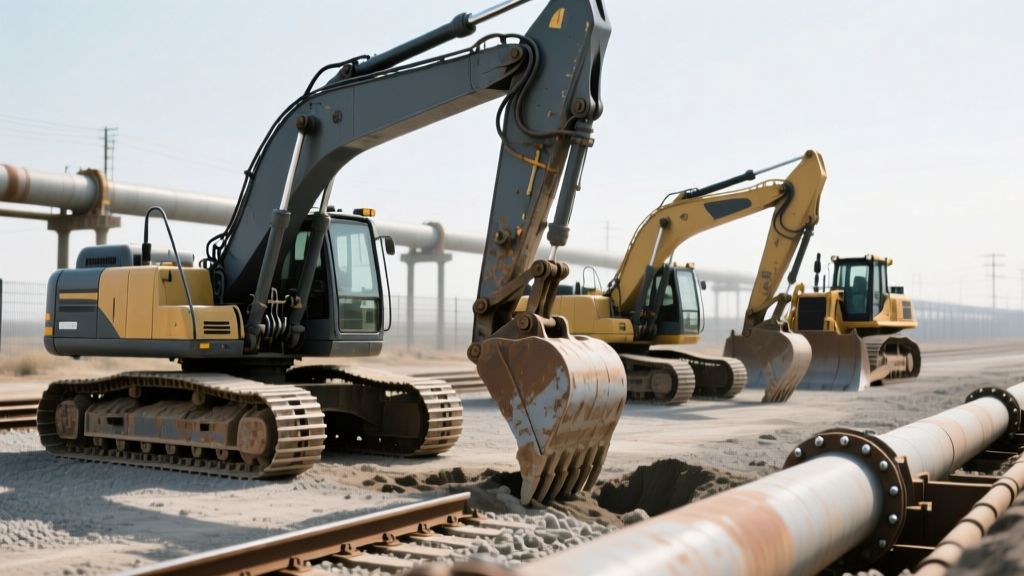
Pipeline right-of-way (ROW) construction demands extreme precision from tracked machinery. Pipelayers and sidebooms, such as the Caterpillar 583, 587, and Liebherr PR 776, routinely operate on the unstable lip of open trenches. In this environment, undercarriage stability is not just a maintenance metric; it is a critical safety variable. When addressing track sag, heavy equipment mechanics must prioritize exact tolerances to prevent catastrophic derailments and premature component failure.
Improper track tension directly alters the machine's center of gravity and load distribution across the track shoes. In 2026, replacing a complete undercarriage on a large-diameter pipelayer costs between $22,000 and $35,000 per side, while unplanned downtime on a major transmission pipeline spread can exceed $8,500 per hour. Understanding the mechanics of track deflection is essential for minimizing these operational losses.
⚠️ TRENCH-SIDE SAFETY WARNING: According to OSHA trenching and excavation standards, equipment operating near trench edges must maintain maximum stability. A derailed track on a pipelayer carrying a 4,000-lb joint of coated steel pipe can trigger a trench wall collapse, creating a severe strike-and-crush hazard for ground personnel.Field Diagnostics: Measuring Deflection Accurately
Visual estimation of track tension is entirely unreliable, especially when machines are caked in ROW mud or clay. Accurate diagnosis requires a standardized field measurement protocol.
Step-by-Step Measurement Procedure
- Position the Machine: Park the pipelayer on a level, compacted surface. Ensure the track is free of large rocks or packed debris between the sprocket and idler.
- Establish the Baseline: Place a rigid straightedge (a 4-foot steel level or specialized track bar) across the top of the track shoes, spanning from the front idler to the first track roller.
- Measure Deflection: Measure the vertical distance from the bottom of the straightedge to the top of the track shoe at the exact midpoint between the idler and the first roller.
- Rotate and Re-measure: Move the machine forward three feet to expose a different section of the track chain. Repeat the measurement. Track chains wear unevenly; a single measurement may hide a stiff, seized link.
OEM Track Sag Tolerances (2026 Specifications)
| Machine Model | Application Class | Target Sag (Inches) | Target Sag (mm) | Adjuster Sensitivity |
|---|---|---|---|---|
| Caterpillar 583 | Mid-size Pipelayer | 1.0" - 1.5" | 25 - 38 mm | 1 grease turn ≈ 0.25" |
| Caterpillar 587 | Large Pipelayer | 1.2" - 1.7" | 30 - 43 mm | 1 grease turn ≈ 0.30" |
| Caterpillar 589 | Heavy Transmission | 1.5" - 2.0" | 38 - 50 mm | 1 grease turn ≈ 0.35" |
| Liebherr PR 776 | Heavy Sideboom | 1.4" - 1.9" | 35 - 48 mm | Hydraulic tensioner specific |
Hydraulic Adjuster Calibration Procedure
Most modern pipelayers utilize hydraulic grease adjusters to manipulate the front idler position. Over-greasing is the most common cause of undercarriage destruction on pipeline spreads.
💡 PRO TIP: Never use an impact wrench or pneumatic grease gun on a track adjuster valve. Use a manual, high-pressure grease gun loaded with NLGI #2 moly-fortified grease. Pump exactly 3 to 5 strokes, then wait 2 minutes. Grease must migrate past the yoke seals and equalize pressure before you take your next measurement.Releasing Tension Safely: If the track is too tight (less than 1.0 inch of sag), you must bleed the adjuster. Never stand directly in front of the track shoe or the grease valve when loosening it. Track adjuster cylinders can hold internal pressures exceeding 10,000 PSI. A sudden release can eject the valve stem or inject grease directly into the skin, causing severe medical emergencies. Loosen the valve exactly one-half turn, allow the pressure to bleed, and gently push the front idler backward using the machine's blade or a secondary dozer.
Troubleshooting Persistent Sag Failures
When a track will not hold tension, or continues to exhibit excessive sag despite adding grease, mechanics must investigate secondary failure modes.
1. Blown Yoke Seals or Scored Cylinders
Symptom: Grease purges from the weep hole behind the adjuster cylinder, or the track loses tension overnight.
Cause: The primary O-ring or polyurethane yoke seal has failed, often due to abrasive silica dust bypassing the wiper seal.
Repair: Drop the track, pull the idler yoke, and install a seal rebuild kit. Parts cost approximately $800 to $1,400 per side. Labor requires a crane and 4-6 hours per track.
2. Bentonite and Clay Packing
Symptom: The track measures correct static sag, but exhibits severe dynamic sag (slapping) during travel, or the machine pulls heavily to one side.
Cause: Pipeline ROW operations frequently cross Horizontal Directional Drilling (HDD) sites. Bentonite slurry dries into a concrete-like mass inside the roller frames, locking the track links and preventing proper articulation over the idler.
Repair: High-pressure hydroblasting (3,000+ PSI) of the roller frames. Implement daily washdowns when operating within 2 miles of an HDD crossing.
3. Collapsed Recoil Springs
Symptom: The front idler does not retract when the track hits an obstruction (like a rock or root ball), transferring the shock load directly to the final drive and causing sprocket tooth shear.
Cause: The recoil spring inside the idler yoke has fatigued, collapsed, or shattered due to high-cycle shock loading in rocky trench-backfill conditions.
Repair: Complete yoke teardown. Replace the recoil spring and wear plates. This is a major repair requiring shop facilities and specialized hydraulic presses.
'On pipeline spreads, the mud isn't just dirt; it's a highly abrasive slurry of topsoil, clay, and drilling fluids. If you don't physically clean the idler and sprocket daily, your track sag measurements are useless because the chain cannot physically articulate to show you the true tension.' — Senior Undercarriage Specialist, Major North American Pipeline Contractor
Undercarriage Wear Matrix: Tension vs. Sag
Understanding the wear patterns associated with improper tension allows fleet managers to diagnose operator habits and adjust maintenance intervals. The Pipeline and Hazardous Materials Safety Administration (PHMSA) emphasizes equipment reliability to prevent right-of-way incidents; undercarriage failure is a leading cause of dropped loads.
| Condition | Primary Wear Component | Secondary Damage | Operational Impact |
|---|---|---|---|
| Over-Tightened (< 1.0" sag) | Idler bearings, track link bushings | Final drive seal blowouts, increased fuel burn | 15-20% reduction in undercarriage life; high heat generation. |
| Correct Sag (1.2" - 1.7") | Even wear across shoes and rollers | None (normal lifecycle degradation) | Optimal fuel efficiency; maximum traction on trench lip. |
| Excessive Sag (> 2.5" sag) | Track guides, roller flanges, sprockets | Derailment, track chain whipping, shoe bolt shearing | Severe derailment risk; high impact loads on carrier rollers. |
Preventative Maintenance Schedule for 2026 Pipeline Spreads
To maintain optimal track sag and extend undercarriage life, implement the following mandatory maintenance protocol for all tracked pipeline equipment:
- Daily (Pre-Shift): Visual inspection for track chain whipping. Check for missing track shoe bolts. Knock packed mud from the front idler and sprocket guards.
- Weekly (or every 50 hours): Perform the straightedge deflection test on both sides. Log measurements in the fleet management telematics system.
- Post-HDD Crossing: Mandatory 3,000 PSI hydroblast of the entire undercarriage to remove bentonite slurry before it cures.
- Quarterly: Ultrasonic thickness testing of track shoe grousers and idler tread surfaces to project remaining lifecycle and schedule replacements during planned weather delays.
By treating track sag as a precise, measurable engineering variable rather than a subjective visual check, pipeline contractors can drastically reduce undercarriage expenditures and maintain the rigorous safety standards required for modern trench-side operations.