Heavy Equipment Appraisal: Snow Removal Fleet Maintenance Schedules
Learn how strict maintenance schedules for snow removal heavy equipment types directly impact your heavy equipment appraisal values and resale ROI.
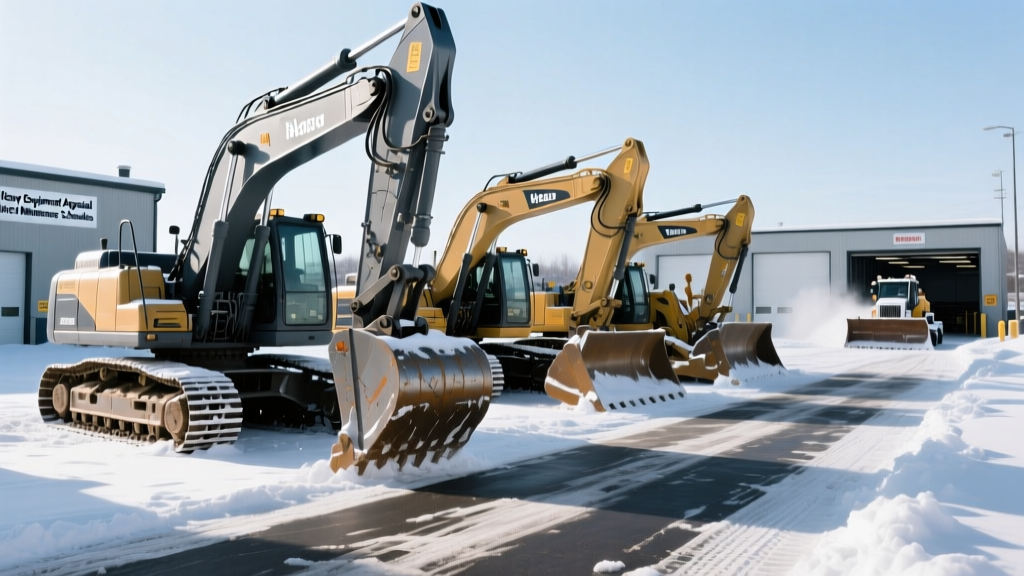
Snow removal heavy equipment types occupy a highly specific niche in the secondary machinery market. Unlike earthmoving assets that accumulate hours in abrasive dirt, municipal and contractor snow fleets endure low-hour, high-torque, and highly corrosive operating conditions. When it comes time for a heavy equipment appraisal, certified valuators do not simply look at the hour meter. They evaluate the chemical and mechanical toll of winter operations, making your maintenance and service schedules the primary driver of your asset's residual value.
As of 2026, the secondary market for winter maintenance assets is highly scrutinized. The residual value of wheel loaders, motor graders, and rotary snowblowers is heavily dictated by the rigor of their off-season and mid-winter maintenance schedules. A documented, proactive service history can mean the difference between a premium Fair Market Value (FMV) and a forced liquidation valuation.
The Appraiser’s Lens: Effective Age vs. Chronological Age
According to valuation standards referenced by the American Society of Appraisers, machinery valuation relies heavily on the concept of "effective age." A 2021 Caterpillar 950 GC wheel loader with 3,000 hours might chronologically be five years old. However, if its Z-bar linkage pins are scored by magnesium chloride brine and its hydraulic cylinders show pitting, its effective age could be assessed at eight years. Appraisers deduct the cost to cure these defects directly from the Replacement Cost New (RCN), severely depressing the final appraisal figure.
Core Snow Removal Equipment Types & Critical Service Intervals
Different snow removal heavy equipment types require distinct maintenance protocols to preserve their appraisal value. Below are the specific service intervals that valuators look for when inspecting winter fleets.
1. Wheel Loaders with Snow Pushers (e.g., Cat 950 GC, Volvo L90H)
Loaders equipped with 12-to-16-foot containment pushers experience massive shock loading when clearing packed snowbanks. The primary appraisal focal point is the tilt cylinder and lift arm bushings. Deferred maintenance here results in visible "dog-boning" of the pivot holes.
- Mid-Season (250 Hours): Purge and re-grease all pivot points using a moly-fortified lithium complex grease (NLGI #2) to displace moisture and salt. Appraisers will check for grease weeping at the seals as proof of compliance.
- Off-Season (Spring): Flush hydraulic systems. Road salt accelerates the degradation of standard AW46 hydraulic fluid. Transitioning to and documenting the use of high-VI (Viscosity Index) fluids prevents internal pump cavitation and varnishing during summer storage.
2. Motor Graders with Wing Plows (e.g., John Deere 872, Cat 140)
Graders running underbody scrapers and wing plows face continuous lateral stress. The circle drive and moldboard slide rails are critical appraisal checkpoints.
- Pre-Season (Fall): Inspect circle drive teeth and replace wear shoes. Appraisers will measure circle gear backlash; excessive play indicates a $15,000+ rebuild liability that will be deducted from the FMV.
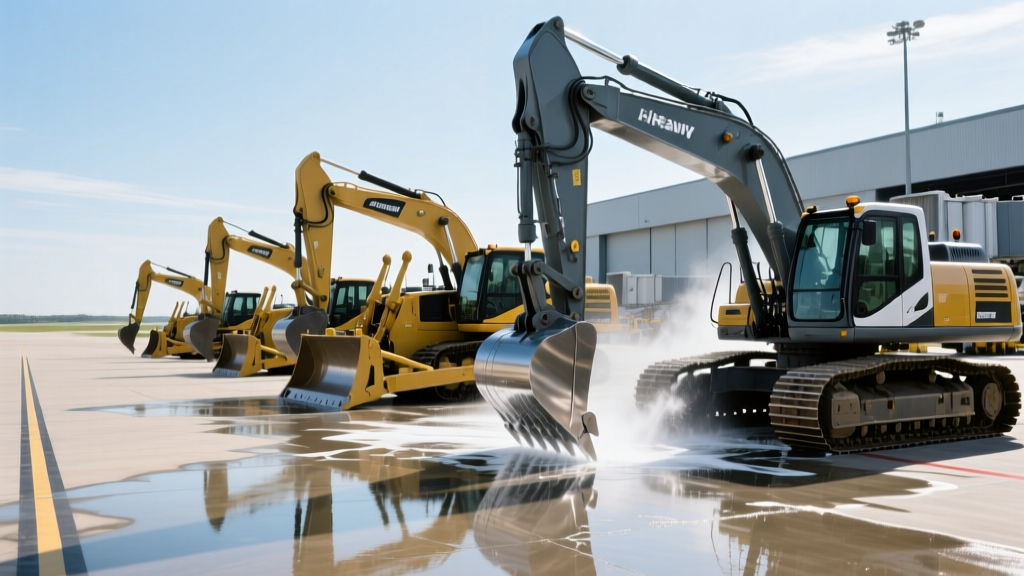
- Post-Storm (Weekly): Pressure wash the drawbar and circle assembly to remove packed ice and de-icing chemicals. Failure to do so leads to seized slide rails, a major red flag during physical inspections.
3. High-Capacity Rotary Snowblowers (e.g., Wausau 1200 Series)
Dedicated snowblowers operate at maximum PTO RPMs in sub-zero temperatures. Gearbox and impeller wear dictate the appraisal value.
- Annual: Perform spectrographic oil analysis on the main gearbox. The presence of iron or copper particulates drops the appraisal value by the exact cost of a gearbox replacement (often $25,000 to $40,000).
Maintenance Matrix & Appraisal Deductions
The following matrix illustrates how specific maintenance failures directly translate to financial deductions during a formal heavy equipment appraisal.
| Equipment Type | Critical Sub-System | Required Winter Service Interval | Appraisal Deduction if Deferred |
|---|---|---|---|
| Wheel Loader (Pusher) | Tilt Cylinders & Z-Bar Pins | Grease purge every 50 hours | $8,500 - $12,000 (Pin boring & resealing) |
| Motor Grader (Wing Plow) | Circle Drive & Moldboard | Weekly brine wash & backlash check | $15,000 - $22,000 (Circle rebuild) |
| Rotary Snowblower | Main Impeller Gearbox | Annual spectrographic oil analysis | $25,000 - $40,000 (Gearbox replacement) |
| Skid Steer / CTL | Auxiliary Hydraulic Couplers | Daily cleaning & cap installation | $2,500 - $4,000 (Pump & valve replacement) |
The Magnesium Chloride Factor: Corrosion and Hydraulics
Modern winter maintenance relies heavily on liquid brines, particularly magnesium chloride. The Federal Highway Administration (FHWA) notes that while these chemicals are highly effective for ice melting, they are aggressively corrosive to heavy machinery. When brine dries on exposed hydraulic cylinder rods, it creates a micro-crystalline structure that shreds rod wipers and seals upon retraction.
Appraiser Warning: The "Low Hour" TrapDo not assume low hours guarantee a high appraisal. A 2022 wheel loader with only 800 hours that was stored outdoors without cylinder rod protection will appraise significantly lower than a 4,000-hour machine stored indoors with proper hydraulic preservation. Appraisers penalize environmental degradation far heavier than mechanical wear in snow removal fleets.
Preparing the Digital Trail for the Appraiser
To maximize your heavy equipment appraisal value, you must provide the valuator with an organized, verifiable digital service trail. Appraisers utilize the Uniform Standards of Professional Appraisal Practice (USPAP), which requires them to base adjustments on verifiable data, not assumptions. Follow this framework to prepare your documentation:
- Compile Fluid Analysis Reports: Invoices for oil changes are insufficient. Provide 3 consecutive years of SOS (Scheduled Oil Sampling) or equivalent lab reports showing normal wear metal baselines.
- Document Attachment Swaps: If a machine was used with a snow pusher in winter and a pallet fork in summer, document the quick-attach carriage inspections. Worn quick-attach wedges reduce the base machine appraisal by $1,500 to $3,000.
- Prove DEF System Winterization: Diesel Exhaust Fluid (DEF) crystallizes at 12°F (-11°C). Provide records showing the DEF tank and injector lines were flushed and winterized before summer storage to prevent injector pump scoring.
- Photograph Undercarriage and Linkage: Pre-appraisal, steam clean the undercarriage and Z-bar linkages. Appraisers cannot accurately measure wear on pins and bushings if they are caked in frozen, salt-laden mud.
Frequently Asked Questions (FAQ)
How do aftermarket snow attachments affect the base machine appraisal?
Heavy equipment appraisers typically value the base machine and the attachment separately. A specialized 14-foot Sno-Way pusher or a front-mounted Wausau blower will be appraised on its own residual value schedule. However, if the attachment caused structural damage to the base machine's front frame or overloaded the hydraulic system, the base machine's FMV will be penalized.
Does the use of cold-weather hydraulic fluids increase appraisal value?
It prevents value loss. Standard AW46 hydraulic fluid thickens in sub-zero temperatures, causing cavitation in the main hydraulic pump during cold starts. Documenting the seasonal switch to ISO 32 or synthetic arctic-grade hydraulic fluids proves to the appraiser that the main hydraulic pump has not suffered internal scoring, preserving the machine's mechanical rating.
What is the ROI on fluid analysis before an appraisal?
The return on investment is massive. A comprehensive hydraulic and powertrain fluid analysis panel costs approximately $150 to $250 per machine. If an appraiser finds no documentation of internal component health, they may apply a "risk discount" of 5% to 10% to the overall valuation to account for potential hidden failures. On a $150,000 wheel loader, a 5% risk discount costs you $7,500 in lost appraisal value.