Marine Port Diesel and Heavy Equipment: Fleet Applications & ROI
Analyze marine port diesel and heavy equipment applications, comparing Tier 4 reach stackers, harbor cranes, and yard tractors with real-world ROI data.
The Operational Reality of Marine Port Diesel and Heavy Equipment
Modern marine terminals operate on razor-thin margins where equipment downtime costs upwards of $15,000 per hour in delayed vessel fees and demurrage charges. The transition to ultra-low sulfur diesel (ULSD) and strict EPA Tier 4 Final and IMO Tier III emissions standards has fundamentally altered the procurement, maintenance, and deployment strategies for marine port diesel and heavy equipment. As of 2026, the push toward zero-emission terminals is accelerating, yet high-capacity diesel machinery remains the backbone of heavy-lift and deep-water cargo operations where battery-electric alternatives cannot yet meet continuous 24/7 duty cycles.
Terminal operators must now balance the massive capital expenditure (CapEx) of Tier 4 compliant machinery against the operational expenditure (OpEx) of complex aftertreatment systems. Understanding the specific applications, failure modes, and ROI timelines of this equipment is critical for fleet managers and port authorities.
2026 Fleet Benchmark: A standard mid-sized container terminal (handling 1.5M TEUs annually) typically deploys 45 yard tractors, 12 reach stackers, 8 empty container handlers, and 4 mobile harbor cranes, representing a diesel asset value exceeding $55 million.Core Diesel Equipment Categories in Marine Terminals
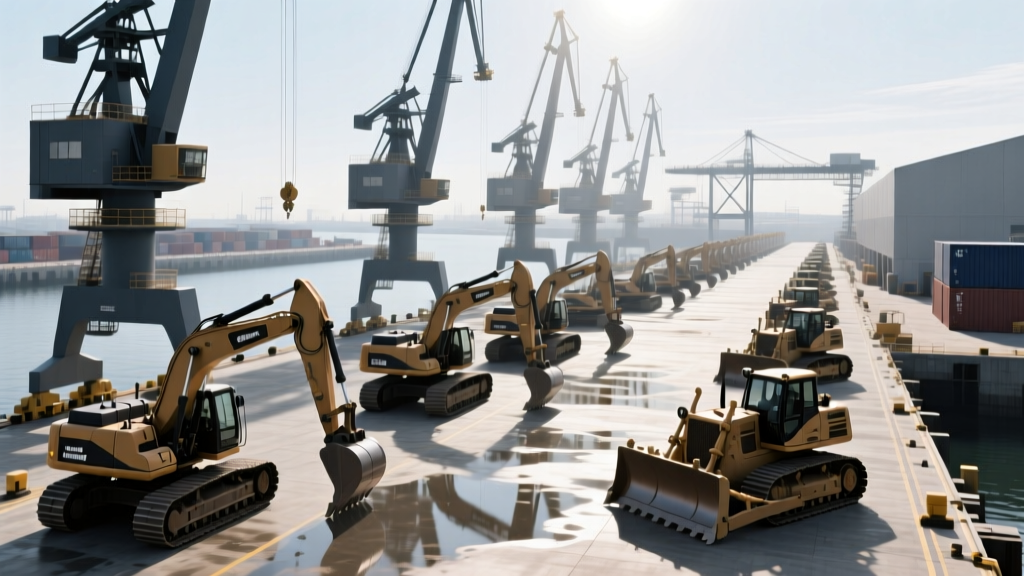
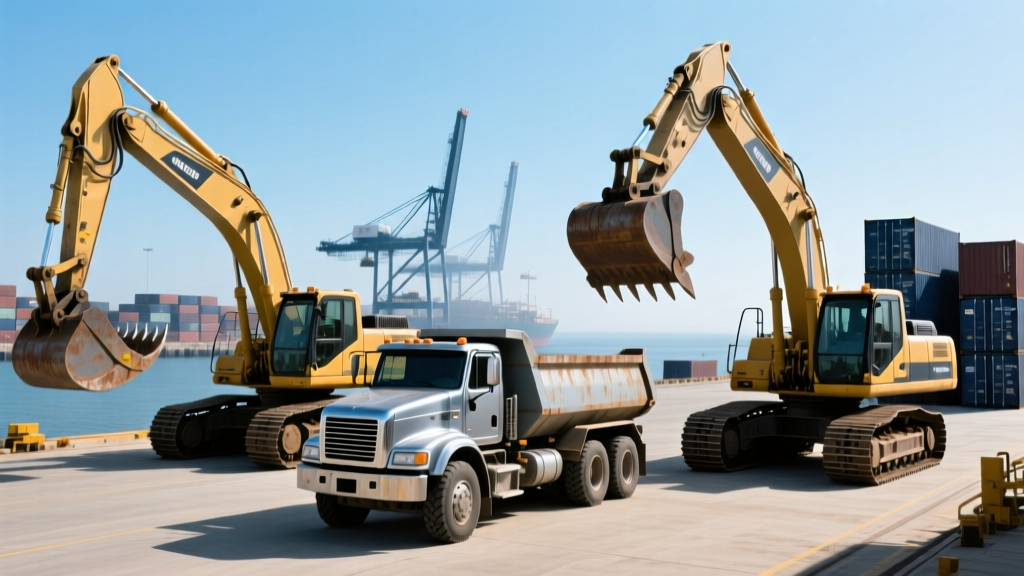
Marine port environments subject machinery to extreme high-cycle loading, corrosive salt aerosols, and continuous multi-shift operations. The following equipment classes dominate the diesel-heavy landscape.
1. Reach Stackers and Empty Container Handlers
Reach stackers are the primary mobile lifting assets for intermodal rail yards and container storage blocks. The Kalmar DRF450-70C5X and Konecranes SMV 4531 dominate this space. These machines utilize 11-liter to 13-liter diesel engines (such as the Volvo D11 or Cummins L9) producing 360-400 hp, paired with heavy-duty Selective Catalytic Reduction (SCR) and Diesel Particulate Filter (DPF) systems.
- Lift Capacity: 45 metric tons (first row), 27 metric tons (third row).
- Capital Cost: $720,000 to $850,000 per unit (2026 pricing).
- Fuel Burn: 4.5 to 6.2 gallons per hour under loaded cycling.
- DEF Consumption: Approximately 3.5% of diesel volume.
2. Terminal Yard Tractors
Often called yard jockeys or shunt trucks, these units move chassis between the quay cranes and the container stacks. The Ottawa Kalmar T2 and Capacity TJ9000 are industry standards. Unlike over-the-road trucks, yard tractors feature a short wheelbase, a reinforced fifth-wheel sliding plate, and a cab positioned for extreme rearward visibility.
- Engine Spec: Cummins L9 (210 hp) Tier 4 Final.
- Capital Cost: $175,000 to $195,000.
- Operating Profile: High idle, low average speed (8-12 mph), frequent PTO engagement.
3. Mobile Harbor Cranes (MHC)
For terminals lacking fixed ship-to-shore (STS) gantry cranes, MHCs provide versatile heavy lifting. The Liebherr LHM 550 features a diesel-electric drive system where a massive Tier 4 diesel generator powers electric hoist motors. This setup allows for precise load control and significant fuel savings during the lowering phase via regenerative braking.
- Max Capacity: 144 metric tons.
- Capital Cost: $3.8M to $4.5M.
- Powerplant: Dual Tier 4 diesel generators (approx. 1,200 kW total output).
Case Study: Tier 3 vs. Tier 4 Fleet Modernization ROI
Data aggregated from West Coast port modernization initiatives, supported by the EPA Clean Ports Program, illustrates the financial and environmental impact of replacing legacy Tier 3 marine port diesel and heavy equipment with Tier 4 Final equivalents. The following matrix tracks a 50-unit yard tractor fleet transition over a 36-month period.
| Metric | Legacy Tier 3 Fleet (50 Units) | Modern Tier 4 Final Fleet (50 Units) | Variance / Impact |
|---|---|---|---|
| Annual Fuel Cost ($4.10/gal ULSD) | $3,840,000 | $3,150,000 | -$690,000 (18% efficiency gain) |
| Annual DEF Cost ($2.80/gal) | $0 | $110,250 | +$110,250 OpEx |
| Aftertreatment Maintenance | $15,000 | $185,000 | +$170,000 (DPF/SCR servicing) |
| NOx Emissions (Tons/Year) | 142 Tons | 11.3 Tons | 92% Reduction |
| Unplanned Downtime (Hours/Year) | 4,200 Hours | 1,850 Hours | 56% Improvement in Uptime |
While the Tier 4 fleet introduces new OpEx lines (DEF and aftertreatment maintenance), the 18% fuel efficiency gain and massive reduction in unplanned downtime yield a net positive ROI within 4.2 years, offsetting the 15% higher initial CapEx of the new units.
Critical Failure Modes in Marine Diesel Applications
Marine environments introduce unique failure vectors that standard construction or mining equipment do not face. Fleet managers must implement specific preventative maintenance (PM) protocols to address these edge cases.
Warning: Salt Aerosol and DEF CrystallizationMarine air is heavily laden with sodium chloride. When salt aerosols mix with microscopic Diesel Exhaust Fluid (DEF) leaks around the SCR dosing injector, it forms a highly corrosive biuret crystal matrix. This matrix eats through stainless steel injector tips and wiring harnesses within months.
DPF Ash Loading from Low-Speed Yard Ops
Yard tractors operate in a low-load, high-idle state. Exhaust gas temperatures (EGT) rarely exceed the 450°C threshold required for passive DPF regeneration. Consequently, the engine control module (ECM) must initiate active regeneration, injecting raw fuel into the exhaust stream. If a yard tractor is shut down mid-regeneration—a common occurrence during shift changes—unburned soot hardens into ash plugs. This requires off-chassis ultrasonic baking, costing $1,200 per incident and taking the unit out of service for 12 hours.
Solution: Implement forced parked-regeneration protocols at the end of every shift and utilize telematics to flag units with >75% soot load before they are dispatched.
Marine Corrosion on Turbocharger Wastegates
The high humidity and salt content in port air accelerate galvanic corrosion on the pneumatic and electronic wastegate actuators of turbochargers. A seized wastegate on a reach stacker's Volvo D11 engine results in severe turbo lag during loaded container lifts, increasing cycle times by 15-20 seconds per move. Quarterly application of high-temp marine-grade anti-seize and dielectric grease to actuator linkages is mandatory.
Procurement Framework: Navigating Port Equipment Acquisitions
Acquiring marine port diesel and heavy equipment requires navigating complex regulatory frameworks and funding mechanisms. According to the Clean Air Action Plan enforced by major coastal ports, terminals are increasingly penalized for operating older diesel assets.
'Terminal operators can no longer view heavy equipment procurement purely as a capital asset decision. The integration of emissions compliance, grant funding eligibility, and telematics-driven maintenance dictates the true lifecycle cost of marine diesel assets.' — Director of Equipment Engineering, Major West Coast Terminal
Decision Matrix: Outright Purchase vs. Full-Service Leasing
When sourcing Tier 4 equipment like the Liebherr LHM 550 or Kalmar reach stackers, operators must choose between CapEx-heavy purchasing and OpEx-focused leasing.
- Outright Purchase: Best for high-utilization assets (operating >4,000 hours/year). Allows the terminal to claim depreciation and leverage state/federal grants (such as EPA or CARB vouchers) which often cover 40-60% of the unit cost. Requires in-house master technicians certified in SCR/DPF diagnostics.
- Full-Service Lease (FSL): Best for seasonal surge capacity or terminals lacking advanced diagnostic tooling. The OEM (e.g., Konecranes) guarantees 95% uptime and absorbs the risk of catastrophic aftertreatment failures. Lease rates for a Tier 4 reach stacker average $14,500 to $16,000 per month.
Future-Proofing the Diesel Fleet
While the maritime industry explores hydrogen fuel cells and high-capacity battery-electric yard tractors, the energy density required for deep-water mobile harbor cranes and heavy-lift reach stackers ensures that diesel will remain relevant through the next decade. To comply with IMO Air Pollution Regulations and local port authority mandates, terminals must spec their new diesel equipment with modular exhaust architectures. This allows for the future retrofitting of diesel oxidation catalysts (DOC) and advanced particulate sensors without requiring complete powertrain replacements, safeguarding the ROI of marine port diesel and heavy equipment investments well into the 2030s.