Snow Removal Heavy Equipment: Craigslist Austin Texas Cost Guide
Analyze 2026 costs for snow removal heavy equipment on Craigslist Austin Texas. Compare skid steers, loaders, and ROI for rare Central Texas freezes.
The Austin Anomaly: Secondary Market Volatility During Freeze Events
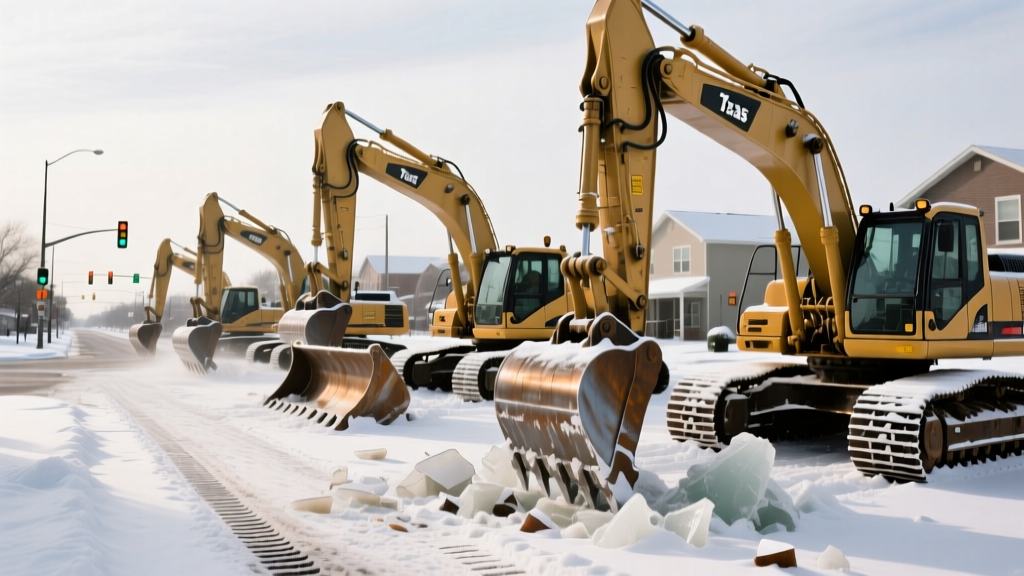
Central Texas occupies a unique position in the heavy equipment market. While municipalities in the Midwest or Northeast maintain dedicated, year-round snow removal fleets, Austin contractors and property management firms typically rely on multi-purpose machinery. However, when the National Weather Service issues severe winter storm warnings, the sudden demand for dedicated snow clearance machinery creates extreme secondary market volatility. When browsing craigslist austin texas heavy equipment listings during a cold front, buyers routinely encounter price gouging, opportunistic resellers, and severely limited inventory.
According to NWS Austin/San Antonio winter weather data, the region experiences significant freezing precipitation and snow accumulation events roughly every three to five years, with historical anomalies causing catastrophic infrastructural strain. For commercial property managers overseeing large retail centers like The Domain or Barton Creek Square, waiting for a storm to hit before sourcing equipment is a guaranteed path to budget overruns. This guide breaks down the true cost of acquiring snow removal heavy equipment in the Austin secondary market, providing a 2026 budget framework for fleet managers and commercial contractors.
⚠️ Market Warning: The "Panic Premium"Local classifieds and peer-to-peer marketplaces in Travis and Williamson counties frequently see a 40% to 65% price markup on snow-specific attachments and compact loaders within 48 hours of a published freeze warning. Budget planning must account for acquiring assets during off-season months (July–September) when northern fleets liquidate older inventory, rather than buying reactively in January.
2026 Equipment Cost Matrix: New MSRP vs. Austin Secondary Market
The following matrix outlines the capital expenditure required for primary snow removal machinery. "Normal Used" reflects standard depreciation curves, while "Panic Pricing" reflects the inflated asking prices commonly found on local Austin classifieds during active winter storm alerts.
| Equipment Category | Recommended Models (2026) | New MSRP (Approx.) | Normal Used Price | Austin "Panic" Price |
|---|---|---|---|---|
| Compact Track Loaders (CTL) | CAT 259D3, Bobcat T770 | $85,000 - $95,000 | $55,000 - $65,000 | $80,000+ |
| Skid Steer Loaders (SSL) | Bobcat S650, John Deere 332G | $65,000 - $75,000 | $35,000 - $45,000 | $55,000+ |
| Wheel Loaders (Mid-Size) | CAT 924M, John Deere 544L | $180,000 - $220,000 | $120,000 - $140,000 | $175,000+ |
| Motor Graders | CAT 140, John Deere 772G | $350,000 - $450,000 | $200,000 - $250,000 | N/A (Rarely sold on peer-to-peer) |
| Heavy-Duty Push Boxes | SnowWolf 14ft, Pro-Tech 12ft | $12,000 - $18,000 | $6,000 - $9,000 | $14,000+ |
Deep Dive: Selecting the Right Prime Mover for Central Texas
Compact Track Loaders (CTLs) vs. Skid Steers on Ice
For parking lot clearance and sidewalk expansion, skid steers have historically been the default. However, Central Texas ice events (freezing rain coating asphalt) render standard skid steer tires nearly useless, even with chains. In 2026, fleet managers are heavily favoring Compact Track Loaders (CTLs) like the CAT 259D3. The rubber track system provides a significantly larger footprint, distributing the machine's weight and offering superior traction on black ice compared to pneumatic tires. While a CTL commands a 15% premium on the used market over an equivalent SSL, the reduction in property damage liability (from sliding into curbs or parked vehicles) justifies the capital outlay.
Wheel Loaders for High-Volume Commercial Corridors
For large-scale logistics hubs near the Austin-Bergstrom International Airport or expansive retail corridors, pushing snow with a skid steer is mathematically inefficient. A mid-size wheel loader like the John Deere 544L paired with a 14-foot SnowWolf push box can clear a standard 400-space parking lot in under 45 minutes. When sourcing these on the secondary market, prioritize models equipped with a high-flow hydraulic package if you plan to attach front-mounted snowblowers (like the Erskine 84-inch heavy-duty model) for windrow removal, as standard flow systems will stall under heavy, wet Texas snow loads.
The "Texas Sitting" Inspection Checklist
Buying used snow equipment in Austin presents a unique mechanical paradox. Unlike northern machines that suffer from road-salt corrosion and frozen block damage, equipment sitting in Texas often degrades due to extreme UV exposure and heat cycling during the 4-year gaps between major snow events. Before transferring funds for a used loader, mandate the following inspections:
- Hydraulic Hose Dry-Rot: Inspect all auxiliary hydraulic lines routing to the attachment coupler. Texas UV exposure degrades the outer rubber jacket, leading to micro-fractures that will burst under the high-pressure load of pushing dense, wet snow.
- DEF Fluid Crystallization: If the machine uses a Tier 4 Final diesel engine (standard on most 2018+ models), check the Diesel Exhaust Fluid (DEF) tank. Machines left sitting in 100°F+ summer heat without climate-controlled storage often experience DEF degradation and crystallization, which will destroy the $4,000+ SCR catalytic converter upon startup.
- Attachment Pivot Pin Wear: Many Texas contractors use snow push boxes as makeshift dirt scrapers during the summer. Check the lower cutting edge and pivot pins for asymmetric wear, which indicates the box was dragged across abrasive limestone rather than smooth asphalt.
- Cab Seals and HVAC: OSHA snow removal safety guidelines emphasize operator visibility and temperature regulation. Ensure the cab pressurization seals are intact; degraded door seals will allow carbon monoxide from the rear-mounted engine to enter the cab during heavy pushing operations.
Budget Framework: Buy, Rent, or Subcontract?
Determining whether to allocate capital for secondary market purchases requires a strict ROI analysis based on your property portfolio's liability exposure.
The 72-Hour Decision Matrix
- Subcontract (Under 100,000 sq. ft.): Rely on local landscaping firms that pivot to snow removal. Your cost is purely operational (per-push or per-inch billing). No capital expenditure required.
- Rent (100,000 - 500,000 sq. ft.): Establish a priority-lease agreement with major local dealers (e.g., Sunbelt Rentals or United Rentals in Pflugerville). You will pay a premium during a storm, but avoid maintenance, storage, and depreciation costs.
- Buy Used / Secondary Market (Over 500,000 sq. ft. or Municipal Contracts): The liability of slip-and-fall lawsuits and the contractual penalties for failing to clear logistics routes outweigh the $60,000+ cost of a used CTL. Purchase the equipment in August, store it indoors, and maintain an in-house operator roster.
Strategic Sourcing Beyond Local Classifieds
While local peer-to-peer platforms offer proximity, they lack buyer protection and mechanical warranties. For 2026 budget planning, serious fleet operators should pivot toward national liquidation auctions that ship to Central Texas. Purchasing a well-maintained CAT 924M from a municipal liquidation auction in Ohio and paying $3,500 for low-boy transport to Austin will often yield a higher-quality machine with verifiable maintenance records than a cash-only, as-is transaction from a local reseller. Always demand the machine's ECM (Engine Control Module) data dump before purchase to verify actual engine hours and idle times, ensuring you are not buying a machine that has spent 90% of its life idling on a Texas dirt lot waiting for a storm that never arrived.