Forestry Machinery Specs: Design Factors in Heavy Equipment Logistics
Explore how forestry machinery technical specs, from bogie width to boom hydraulics, dictate heavy equipment logistics and transport planning.
The Engineering Conflict: Off-Road Traction vs. Highway Transport
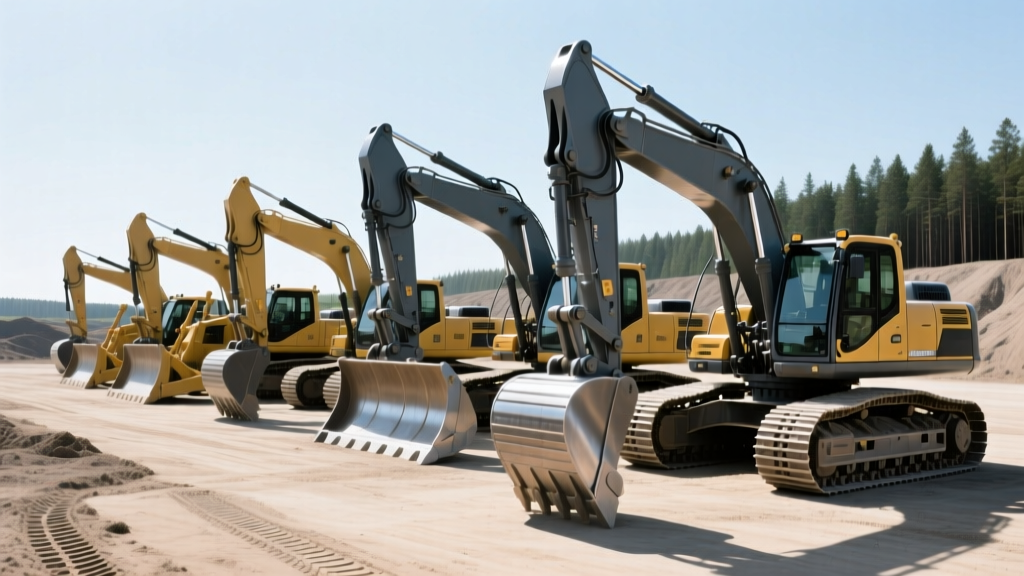
Forestry and logging machinery represents an extreme engineering paradox. Harvesters, forwarders, and feller bunchers are designed for maximum ground clearance, aggressive traction, and wide stances to navigate steep, uneven timberlands. However, these exact technical specifications directly complicate heavy equipment logistics when moving the fleet between cutting sites. Transporting a 75,000-pound feller buncher over public highways requires navigating strict dimensional limits, bridge weight formulas, and center-of-gravity (CG) management. Understanding the technical anatomy of these machines is mandatory for logistics planners to avoid catastrophic transit failures, permit violations, and trailer deck damage.
⚠️ Logistics Warning: Wide-Track Harvester PermitsStandard highway lane widths in the US are 12 feet (3.66m). Harvesters equipped with 700mm or 800mm bogie tracks frequently exceed 11.5 feet in transport width when factoring in track tensioners and outer guards. As of 2026, state DOTs are increasingly utilizing automated width-enforcement cameras on logging corridors. Always verify the exact outer-flange-to-flange measurement, not just the manufacturer's base chassis width, before applying for oversize permits.
Core Forestry Machines: Weight, Dimensions, and Transport Profiles
Heavy equipment logistics in the timber industry relies on matching the machine's operating weight and footprint to the correct trailer configuration. Using a standard multi-axle lowboy for a machine that requires a Removable Gooseneck (RGN) or Jeep/Booster setup will result in axle weight violations under the Federal Highway Administration Bridge Formula.
| Model (Current Gen) | Machine Type | Operating Weight | Max Transport Width | Required Trailer Setup |
|---|---|---|---|---|
| John Deere 1470G | Harvester | 21,500 kg (47,400 lbs) | 3.3m (600mm tracks) | 4-Axle Lowboy |
| Tigercat H855D | Feller Buncher | 34,500 kg (76,000 lbs) | 3.6m (700mm tracks) | RGN + Booster Axle |
| Ponsse Buffalo | Forwarder | 19,000 kg (41,800 lbs) | 3.1m (700mm tires) | Standard Multi-Axle |
Undercarriage and Bogie Systems: Securing the Suspension
The most common point of failure in forestry heavy equipment logistics is improper securement of the bogie suspension system. Modern forwarders and harvesters utilize hydraulic leveling bogies designed to articulate over stumps and rocks. If these axles are not mechanically pinned before loading, the suspension will continue to articulate as the trailer flexes over highway expansion joints.
The Chain Slack Phenomenon
When a bogie axle articulates upward during transit, the distance between the chassis tie-down point and the trailer deck decreases. This creates instant slack in 3/4-inch Grade 70 transport chains. When the trailer hits a dip and the axle slams back down, the sudden kinetic shockload can exceed the 23,600 lb breaking strength of the chain, causing a snap that endangers trailing motorists. Actionable Spec: Always engage the mechanical bogie lock pins (usually located near the oscillation cylinder) and bleed the hydraulic suspension pressure to zero before applying tie-downs.
Hydraulic Boom Stowage and Center of Gravity Shifts
Feller bunchers and harvesters feature massive hydraulic booms, often extending over 9 meters. During transport, the boom is folded into a stowage position, but thermal dynamics and hydraulic drift pose severe logistics risks.
"Relying solely on hydraulic check valves to hold a 4,000-pound boom head during a 400-mile summer transit is a critical error. Thermal expansion of the hydraulic fluid inside the sun-baked cylinders will cause micro-drift, shifting the machine's center of gravity laterally and overloading the off-side trailer axles."
— Heavy Haul Safety Directive, Pacific Northwest Logging Consortium
Technical Fix: Logistics crews must ensure the boom is resting on its designated mechanical transport cradle. If the machine lacks a cradle, the boom cylinders must be mechanically strapped using secondary ratchet binders rated for 15,000 lbs WLL (Working Load Limit) to prevent thermal drift. Furthermore, operators must bleed the hydraulic accumulators completely. A charged accumulator can release stored pressure if a valve is bumped during transit, causing the boom to deploy off the trailer deck.
Routing and Permitting: The Logistics Framework
Routing forestry equipment requires navigating both state highway weight limits and national forest road restrictions. The Oregon Department of Transportation Motor Carrier Permit system, for example, utilizes specific 'Green Light' routes for logging transport, but heavy haulers must still calculate axle spacing.
Decision Matrix: Trailer Selection Based on Ground Pressure
- Scenario A: Paved Highway to Gravel Forest Road (High CBR Subgrade)
Use a standard 4-axle lowboy with a 48-inch deck height. The machine's tracks can be driven off directly onto the compacted gravel without requiring ramps, minimizing the risk of track de-tracking under load. - Scenario B: Deep Mud / Soft Clay Landing Zones (Low CBR Subgrade)
Use an RGN (Removable Gooseneck) trailer with a ground-level loading angle. Feller bunchers weighing over 30,000 kg will sink standard lowboy ramps into soft clay, causing the machine to high-center its belly pan on the trailer deck edge, potentially crushing the lower hydraulic rotary manifold.
Real-World Edge Cases: Protecting the Pilot Lines
A frequent and expensive mistake in heavy equipment logistics for forestry machines is the crushing of pilot hydraulic lines during tie-down. On models like the Tigercat H-series, the main boom pivot houses exposed pilot lines and electrical harnesses for the harvesting head. When logistics crews place standard steel edge-protectors over the boom base to prevent chain abrasion, the downward tension of the 5/8-inch binders crushes these lines against the steel chassis.
💡 Expert Logistics Tip:Never place tie-down chains directly over the boom pivot joint. Route chains through the designated chassis D-rings located behind the cab, and use nylon soft-ties (rated to 20,000 lbs) over the boom base to distribute pressure without damaging the hydraulic harnesses.
Quick Reference: Pre-Transit Technical Checklist
Before a forestry machine leaves the landing zone for highway transport, the logistics crew must verify the following technical specifications and mechanical states:
- Track Tension: Grease tensioners must be bled back to the 'transport' specification (usually 1.5 to 2.0 inches of sag at the mid-roller). Over-tensioned tracks will stretch and snap when the steel tracks cool down during high-speed highway transit in winter conditions.
- Swing Brake Engagement: The upper carriage swing brake must be manually engaged via the cab console, and the mechanical swing lock pin must be dropped into the slew ring gear.
- Fluid Levels: Check the hydraulic tank sight glass. Forestry machines operating on steep inclines often overfill their tanks to prevent pump cavitation. When leveled on a trailer, this overfilled fluid will vent out of the breather cap onto the trailer deck and highway.
- Chain Angle Verification: Ensure all tie-down chains create an angle between 45° and 60° relative to the trailer deck. Angles steeper than 60° provide inadequate lateral restraint, allowing the 20-ton machine to shift sideways during cornering.
Mastering the intersection of forestry machine engineering and transport regulations is what separates standard freight hauling from specialized heavy equipment logistics. By respecting the hydraulic, dimensional, and suspension specifications of these machines, logistics managers ensure safe, legal, and efficient fleet mobilization.