Heavy Equipment Wash Rack Guide for Landscaping Fleets
Select the right heavy equipment wash rack for landscaping fleets. Compare closed-loop systems, EPA compliance, and sizing for skid steers and CTLs.
The Operational Cost of Unwashed Landscaping Iron
Landscaping fleets operate in high-debris, high-moisture environments where soil, sap, and mulch rapidly accumulate on machinery. Mud buildup on a compact track loader (CTL) like the Caterpillar 299D3 XE or a skid steer like the Bobcat S770 adds hundreds of pounds of dead weight. This parasitic load increases fuel consumption by up to 8% and accelerates undercarriage wear. More critically, transporting unwashed equipment between job sites is the primary vector for spreading invasive noxious weeds and soil-borne pathogens like Phytophthora ramorum (Sudden Oak Death).
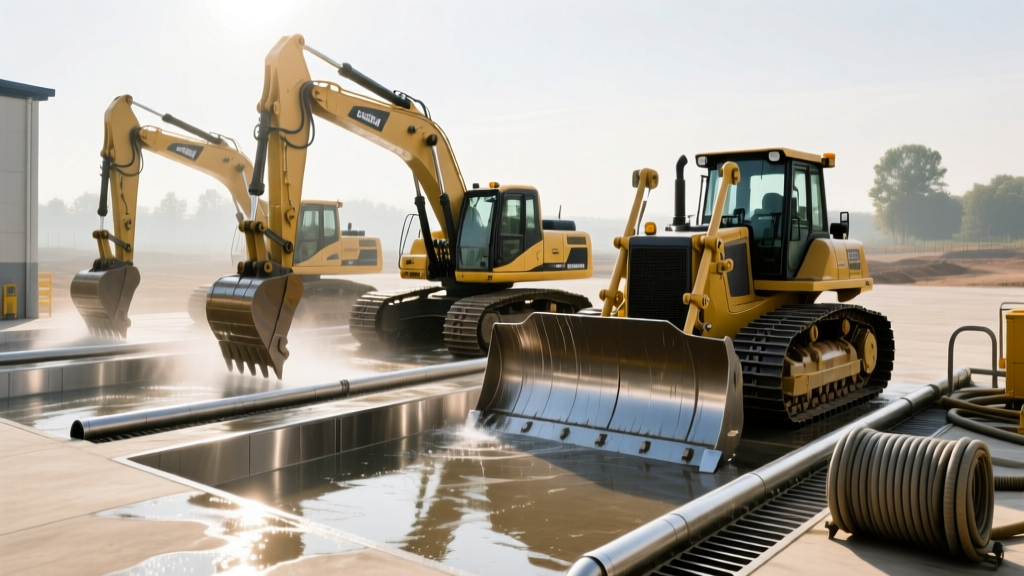
Procuring a dedicated heavy equipment wash rack is no longer just an aesthetic choice for landscaping contractors; it is a strict biosecurity and environmental compliance necessity. This guide details the exact specifications, sizing matrices, and filtration requirements for selecting a wash system tailored to compact and mid-sized landscaping equipment in 2026.
EPA SWPPP Compliance Warning: Under the EPA's Construction General Permit (CGP) and local Municipal Separate Storm Sewer System (MS4) regulations, allowing wash water containing sediment, hydrocarbons, or fertilizers to enter storm drains is a federal violation. Landscaping fleets must utilize contained wash pads with proper sediment traps or closed-loop reclamation systems. Review the EPA NPDES Stormwater Guidelines before discharging any wash runoff.System Configurations: Portable vs. Modular Closed-Loop
Landscaping operations range from single-crew residential maintenance to multi-state commercial contracts. Your equipment footprint and site permanence dictate the ideal heavy equipment wash rack configuration. Below is a decision matrix comparing the three primary systems available for landscaping fleets.
| System Type | Best For | 2026 Cost Range | Pros & Cons |
|---|---|---|---|
| Portable Poly Berms | Transient crews, rural estate landscaping | $3,500 - $6,500 | Pros: Deploy in 20 mins, no permits. Cons: Manual water removal, low capacity. |
| Modular Steel Grating | Mid-sized fleets, regional commercial ops | $14,000 - $24,000 | Pros: High load capacity, integrates with OWS. Cons: Requires forklift to move. |
| Permanent Concrete Pit | Large HQ yards, municipal contracts | $35,000 - $60,000+ | Pros: Zero- discharge closed-loop. Cons: High upfront cost, fixed location. |
Sizing the Rack for Compact Landscaping Machinery
A common procurement error is sizing the wash rack based solely on the machine's physical dimensions, ignoring the operational swing radius and the spray trajectory required to clean tall booms or vertical masts. Landscaping equipment requires specific clearance metrics to ensure wash water is captured by the containment berm rather than splashing onto the yard.
Footprint Requirements by Machine Class
- Mini Excavators (e.g., Takeuchi TB216, Kubota KX040-4): Minimum pad size of 10 ft x 14 ft. While the machine footprint is small, the boom and dipper stick extend vertically and horizontally. A 12-inch high berm is mandatory to catch high-pressure spray deflection.
- Skid Steers & CTLs (e.g., Bobcat T770, John Deere 333G): Minimum pad size of 12 ft x 16 ft. CTLs require wider turning radii to prevent track tearing on steel grating. Ensure the grating cross-bars run perpendicular to the tracks to maximize grip and minimize rubber track degradation.
- Compact Wheel Loaders (e.g., Caterpillar 906, Volvo L25): Minimum pad size of 14 ft x 20 ft. Articulated steering requires a wider pad to accommodate the machine's pivot angle during 360-degree washdowns.
'Transporting soil and plant debris on heavy machinery is the leading human-caused vector for invasive species migration. A high-pressure wash protocol at the yard boundary is the single most effective biosecurity measure a landscaping firm can implement.'
— National Invasive Species Information Center (NISIC), USDA
High-Pressure Washdown & Filtration Specifications
Landscaping mud is uniquely challenging. It often contains high clay content, mixed with sticky tree sap and fine mulch dust. Standard garden hoses or low-pressure pumps will not dislodge caked clay from a CTL undercarriage. Furthermore, the runoff water requires aggressive filtration before it can be reused or discharged.
Pressure & Flow Rate Targets
Specify a pressure washer system that delivers a minimum of 3,000 PSI at 5 to 8 Gallons Per Minute (GPM). High flow rate (GPM) is more critical than extreme pressure (PSI) for washing heavy equipment. A 5 GPM flow physically pushes the heavy slurry off the tracks and into the wash rack's drainage troughs, whereas high-PSI/low-GPM systems merely atomize the mud, creating a messy mist that settles back onto the machine.
The 3-Stage Reclamation Process
If opting for a closed-loop heavy equipment wash rack, the water reclamation system must include three distinct filtration stages to prevent pump cavitation and meet environmental standards:
- Stage 1: Solids Settling & Hydrocyclone. Heavy clay, rocks, and mulch drop into a primary sump. A hydrocyclone separator spins the water to eject dense particulates into a dewatering bag. This removes 80% of solids down to 50 microns.
- Stage 2: Coalescing Oil/Water Separator (OWS). Landscaping equipment frequently leaks hydraulic fluid and engine oil. The OWS uses gravity and specialized media to separate free-floating hydrocarbons. The system must be rated to achieve an effluent of less than 15 parts per million (PPM) of oil to comply with municipal sewer discharge limits.
- Stage 3: Biological & Chemical Neutralization. Landscaping runoff often contains residual fertilizers, herbicides, and pesticides. Advanced 2026 systems utilize activated carbon filters or UV-ozone treatment to break down these chemicals before the water is recirculated through the pressure washer.
Winterization for Northern Climate Operations
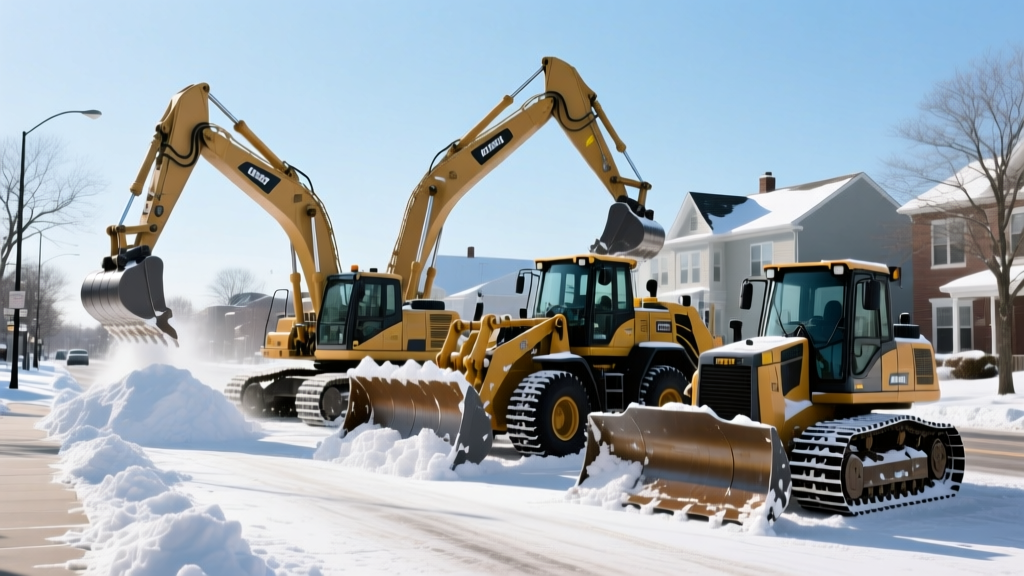
For landscaping fleets operating in freezing climates, a standard wash rack becomes a liability in November. Ice buildup on steel grating creates severe slip hazards for operators, and frozen discharge lines can crack cast-iron pump housings. When selecting a system for northern operations, mandate the following winter-ready specifications:
Pro-Tip: Grating Selection for Ice. Avoid standard flat-bar steel grating. Specify serrated or grit-coated fiberglass grating for your wash rack deck. Fiberglass does not conduct cold like steel, preventing ice from bonding as aggressively, and the grit surface maintains traction even when coated in freezing mud.4-Step Winter Setup Checklist
- Trace Heating Installation: Wrap all above-ground PVC and steel discharge pipes with self-regulating heat trace cables and insulate with closed-cell foam.
- Sump Heater Integration: Install a 240V immersion heater in the primary settling tank to maintain water temperature at a minimum of 45°F (7°C), preventing surface ice formation.
- Blow-Out Valves: Ensure the pressure washer pump and all high-pressure hoses are equipped with quick-connect air blow-out valves to purge standing water at the end of every shift.
- OWS Bypass Protocol: Coalescing media inside the Oil/Water Separator can freeze and fracture. Install a bypass loop to route water directly to a heated indoor holding tank during sub-zero weeks.
Final Procurement Advice
When issuing an RFP for a heavy equipment wash rack, do not accept generic 'equipment washing' proposals. Require the vendor to provide a site-specific hydraulic profile that accounts for the exact GPM output of your pressure washers, the square footage of your CTL and skid steer fleet, and the specific clay-to-sand ratio of your local soil. A properly engineered wash rack pays for itself within 18 months through extended undercarriage life, reduced fuel burn, and the elimination of cross-site contamination fines.