Smart Heavy Equipment Fleet Management in Renewable Construction
Optimize heavy equipment fleet management for solar and wind projects using 2026 telematics, 3D grading, and electric machinery strategies.
The Unique Terrain of Renewable Construction
Utility-scale renewable energy projects present logistical extremes that standard commercial construction sites rarely encounter. A 500-megawatt solar farm spans thousands of acres of often uneven, undeveloped desert or agricultural land, requiring mass earthmoving with millimeter precision. Conversely, onshore wind farms demand the transport and erection of 150-ton nacelles atop 300-foot towers in remote, high-wind corridors. As the U.S. Department of Energy continues to accelerate grid modernization and renewable deployment targets through 2026, contractors are realizing that legacy operational models are insufficient. Modern heavy equipment fleet management in this sector requires a synthesis of satellite-backed telematics, 3D machine control, and strategic electrification to maintain margins in low-bid, high-volume environments.
Equipment Profiles: Wind vs. Solar Earthworks
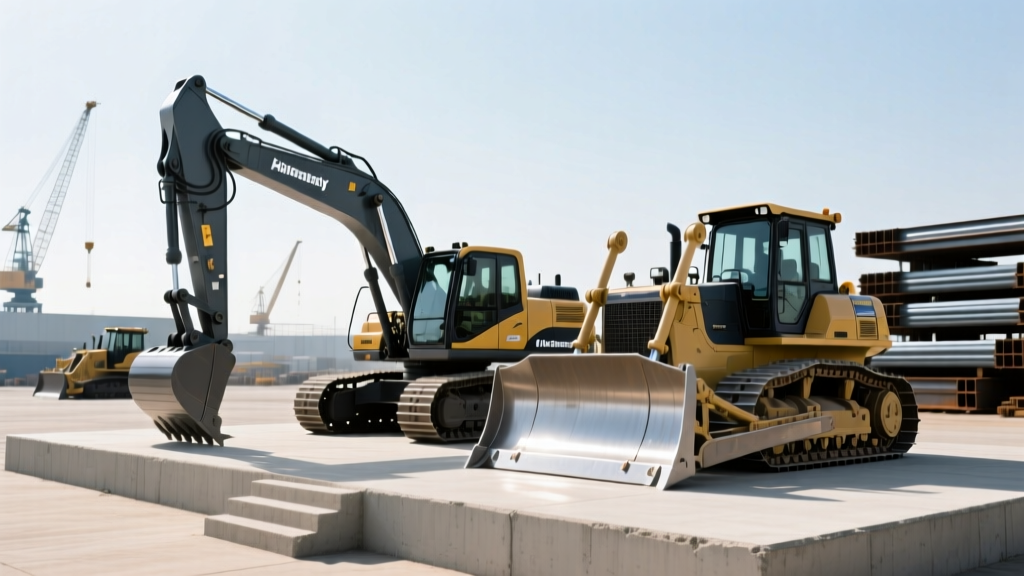
The machinery required for wind and solar diverges sharply after the initial site clearing phase. Wind projects are heavy-lift and deep-foundation centric, while solar projects are dominated by high-speed grading and material distribution. Below is a breakdown of core fleet assets, their specific renewable applications, and current market rental rates for 2026.
| Machine Model | Primary Renewable Application | Critical Specification | Est. Daily Rental (2026) |
|---|---|---|---|
| Liebherr LR 11350 | Wind turbine nacelle & rotor lift | 350-ton max capacity, 450ft boom | $18,500 / day |
| Caterpillar 966 GC | Solar panel pallet distribution | 4.5 yd³ bucket, high-flotation tires | $950 / day |
| Komatsu D65PX-18 | Solar array pad grading | Factory-integrated 3D GPS machine control | $1,600 / day |
| Volvo EC230 Electric | Battery energy storage (BESS) trenching | Zero-emission, 252 kWh battery capacity | $1,450 / day |
Overcoming Dead Zones: Satellite-Backed Telematics
Renewable energy sites are inherently located in remote areas—deserts, plains, and coastal ridges—where cellular coverage is unreliable or non-existent. Traditional heavy equipment fleet management systems that rely on 4G/LTE cellular gateways fail in these environments, creating blind spots in fuel tracking, idle time, and preventive maintenance scheduling.
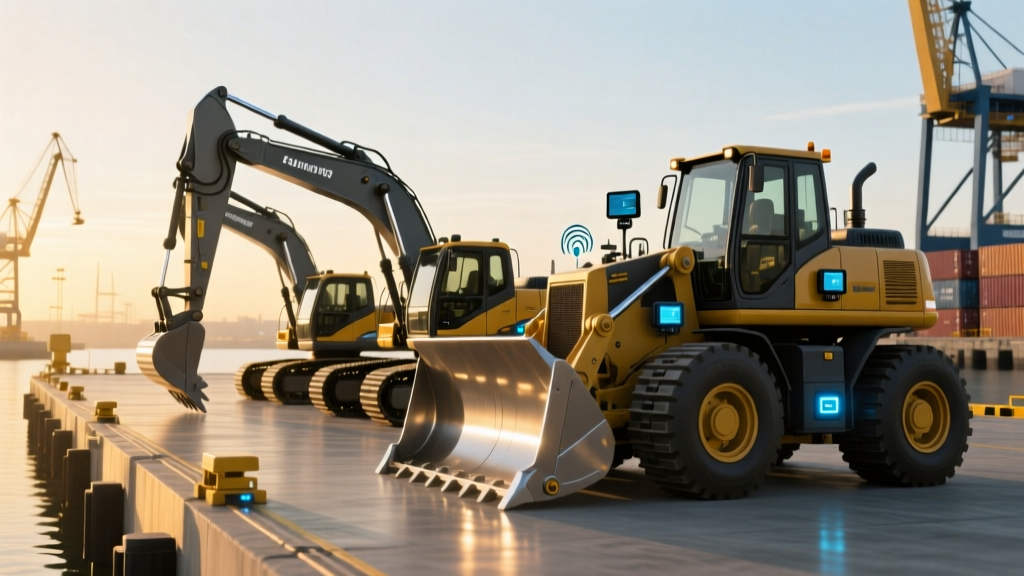
The 2026 standard for remote fleet oversight integrates Low Earth Orbit (LEO) satellite internet directly into machine telematics. Hardware like the Samsara VG55 gateway, when paired with Starlink Mini mobile terminals mounted on site command trailers, ensures continuous data transmission regardless of cell tower proximity.
Key Telematics Metrics for Renewable Sites
- Geofence Breach Alerts: Critical for solar sites bordering protected environmental habitats or agricultural zones. Immediate alerts prevent costly EPA compliance violations.
- Hydraulic Pressure Degradation: Wind farm foundation drilling rigs operate under extreme continuous load. Monitoring hydraulic pressure trends predicts pump failures 40-60 hours before catastrophic seizure.
- True Idle vs. PTO Idle: Differentiating between a machine left running with no load versus a machine running to power a hydraulic attachment (e.g., a vibro-hammer for solar pile driving) ensures accurate fuel burn calculations.
The Electrification Mandate: Building Green with Green Iron
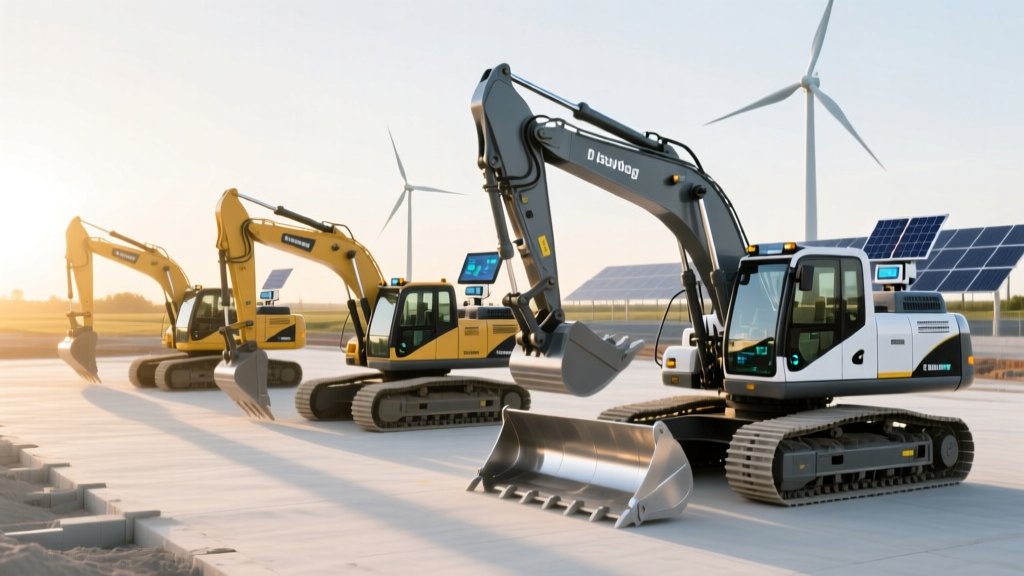
A growing requirement from utility developers and government-backed renewable projects is the reduction of Scope 1 emissions during construction. This has catalyzed the adoption of battery-electric heavy machinery, particularly in confined spaces like Battery Energy Storage System (BESS) facilities and trenching for subterranean transmission lines.
Deploying electric excavators and compact track loaders requires a fundamental shift in heavy equipment fleet management, moving from fuel logistics to mobile charging infrastructure.
Total Cost of Ownership (TCO): Electric vs. Diesel Excavator (5-Year Projection)
Diesel (e.g., Cat 320): $145,000/day fuel cost (avg) + $12,000 annual fluid/filter maintenance.
Electric (e.g., Volvo EC230 Electric): $22,000/day charging cost (industrial grid rate) + $2,500 annual grease/coolant maintenance.
Net 5-Year Savings: ~$185,000 per machine, offsetting the initial $160,000 purchase premium by year four. Data sourced from Volvo Construction Equipment field trials.
Mobile Charging Logistics
On sprawling solar sites, returning an excavator to a central yard for charging is impossible without losing 2 hours of billable time. Fleet managers are now deploying mobile BESS (Battery Energy Storage Systems) mounted on gooseneck trailers. These 500kWh mobile chargers are replenished overnight via temporary grid tie-ins or portable solar arrays, allowing electric machines to charge during operator lunch breaks directly on the trench line.
3D Machine Control: The Solar Grading Imperative
Utility-scale solar trackers require extreme grading tolerances. If the terrain deviates beyond ±2 inches over a 100-foot span, the single-axis trackers will bind, causing motor burnout and voiding the manufacturer warranty. Achieving this tolerance across 2,000 acres using traditional survey stakes and laser receivers is economically unviable.
Modern fleet management mandates the integration of 3D GNSS (Global Navigation Satellite System) machine control directly into the cab. Systems like the Topcon LN-150 or Trimble Earthworks load site-specific digital terrain models (DTMs) directly to the dozer and motor grader blade hydraulics.
- Elimination of Staking: Removes the need for survey crews to re-stake grade hubs after every dozer pass, saving $2,500+ per week in surveyor labor.
- Overcut Prevention: Automated blade lift prevents operators from over-excavating, which would otherwise require importing expensive select fill material to stabilize solar pile foundations.
- As-Built Verification: The machine control system automatically generates as-built topographical maps, providing instant proof of compliance to the project's civil engineering firm.
Decision Framework: Upgrading Your Renewable Fleet Tech Stack
Transitioning a traditional earthmoving fleet into a tech-enabled renewable construction force requires a phased approach. Use this framework to prioritize capital expenditures for the upcoming fiscal year.
Phase 1: Visibility and Baseline (Months 1-3)
Audit current fleet utilization. Install satellite-backed telematics gateways on all Tier 4 Final and newer machines. Establish baseline metrics for fuel burn per cubic yard of earth moved and track idle times in remote zones.
Phase 2: Precision Integration (Months 4-8)
Retrofit primary grading assets (dozers, motor graders) with 3D machine control. Train operators not just on the hardware, but on reading digital terrain models and managing GNSS base station coordinates on-site.
Phase 3: Electrification Pilot (Months 9-12)
Identify high-usage, low-mobility tasks (e.g., BESS trenching, substation pad prep) to pilot battery-electric machines. Invest in mobile charging trailers before deploying the electric iron to ensure operational continuity.
Effective heavy equipment fleet management in the renewable sector is no longer just about maintaining diesel engines and tracking hourly utilization. It is about managing data, electrons, and millimeter-accurate spatial coordinates to deliver gigawatt-scale infrastructure on time and under budget.