2026 Cost Guide: Heavy Duty Truck Diagnostic Equipment for Quarries
Analyze 2026 costs for heavy duty truck diagnostic equipment in quarry fleets. Compare OEM vs. aftermarket tools to optimize aggregate hauling budgets.
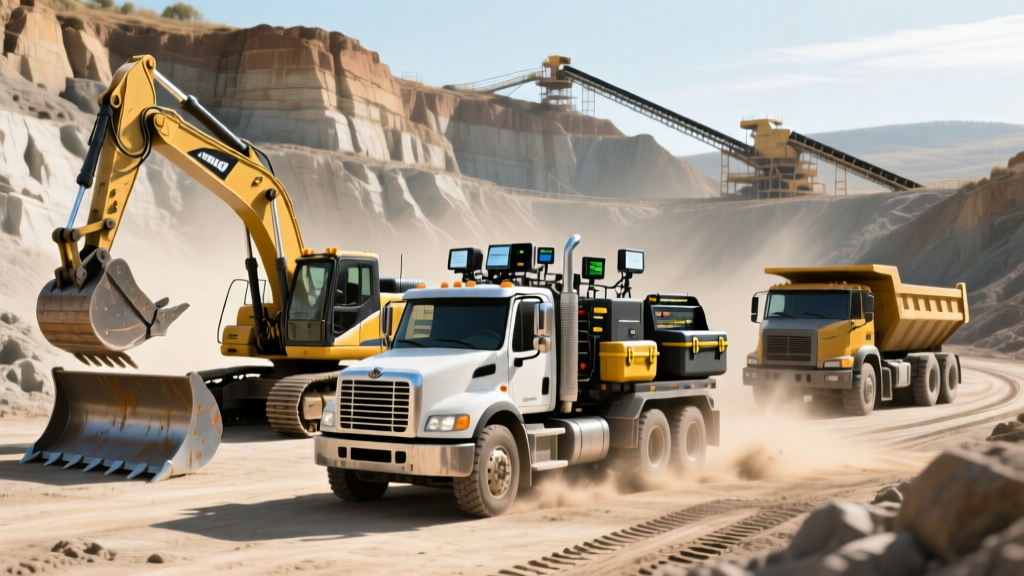
Quarry operations and aggregate processing plants live and die by the cost-per-ton metric. Moving blasted rock from the pit to the primary jaw crusher—such as a Metso C120 or Sandvik CJ412—relies on a synchronized fleet of off-highway haul trucks. When a 40-ton articulated dump truck (ADT) or rigid frame hauler goes down on a steep quarry ramp, the crusher starves, bleeding up to $250 per hour in lost throughput and idle labor. To prevent these cascading failures, fleet maintenance managers must budget for advanced heavy duty truck diagnostic equipment. This 2026 cost analysis breaks down the capital and operational expenditures required to equip quarry maintenance bays with the right telemetry, fault-reading, and recalibration tools.
Data Highlight: The True Cost of Haul Truck Downtime
Based on 2026 aggregate industry benchmarks, a single unscheduled downtime event for a Class 8 off-highway haul truck averages 4.2 hours. At an estimated lost production value of $225/hour, plus $350 for emergency mobile mechanic dispatch, a single un-diagnosed failure costs the quarry $1,295. Investing in comprehensive diagnostic tooling typically yields a positive ROI within the first 1.8 prevented breakdowns.
The Hidden Line Item: Diagnostic Tool ROI in Aggregate Hauling
Historically, quarry maintenance budgets focused heavily on mechanical wear parts: ground engaging tools (GET), crusher liners, and conveyor belting. Electronic diagnostics were treated as an afterthought. However, modern Tier 4 Final and Stage V quarry haulers—like the Volvo A60H, Bell B50E, and Komatsu HM400-5—are essentially rolling data centers. They utilize complex J1939 CAN bus networks to manage engine derates, diesel exhaust fluid (DEF) dosing, and transmission retarder temperatures.
Without heavy duty truck diagnostic equipment, a simple clogged differential pressure sensor in the diesel particulate filter (DPF) system forces the engine control module (ECM) into a severe limp mode, restricting the truck to 5 mph. What should be a $140 sensor swap and a 10-minute software reset turns into a $2,000 tow and a day of lost production. Budgeting for these tools is no longer optional; it is a critical component of modern aggregate processing cost control.
Cost Matrix: OEM vs. Multi-Brand Diagnostic Tools
When planning your 2026 maintenance CapEx, you must choose between proprietary Original Equipment Manufacturer (OEM) software and universal multi-brand aftermarket scanners. Below is a comparative cost matrix for the most prevalent tools used in quarry environments.
| Diagnostic Platform | Target Fleet Profile | 2026 Hardware Cost | Annual Software/Update Fee | Best Quarry Application |
|---|---|---|---|---|
| Caterpillar Electronic Technician (ET) | Cat 745, 777, and specialized off-highway mining trucks | $3,500 (Adapter + Cable) | $1,500 / year | Deep ECM flashing and proprietary transmission recalibration |
| Noregon JPRO Professional | Mixed fleets (Volvo, Mack, Peterbilt, Kenworth) | $3,895 (Kit) | $1,095 / year | Triaging multi-brand ADT fleets and trailer/wet-line faults |
| Nexiq USB-Link 3 | Light to medium support trucks, water bowsers, lube trucks | $1,250 (Hardware) | $800 / year (Software) | Cost-effective baseline J1939/J1708 code reading for support vehicles |
| Jaltest Off-Highway | Specialized quarry dumpers, dump trailers, and loader scales | $4,200 (Kit) | $950 / year | Testing hydraulic valves, onboard weighing systems, and retarders |
Budgeting for Off-Highway Quarry Haulers: CapEx vs. OpEx
A common mistake in quarry financial planning is treating diagnostic tools purely as a one-time Capital Expenditure (CapEx). In 2026, the software ecosystem dictates that heavy duty truck diagnostic equipment is a recurring Operational Expenditure (OpEx).
The Subscription Trap
Most modern diagnostic suites require active subscriptions to access OEM fault code libraries and perform forced DPF regenerations or DEF pump priming. If a quarry maintenance manager purchases a Noregon JPRO kit in 2024 and fails to budget for the 2026 renewal, the tool becomes a glorified, limited-function code reader. It will read generic SAE J1939 codes (e.g., SPN 100 - Engine Oil Pressure), but it will not allow the technician to access the manufacturer-specific multiplexed data required to diagnose a Volvo I-Shift transmission fault on an A60H.
⚠️ Financial Warning: The Cost of 'Gray Market' Software
To avoid $1,000+ annual subscription fees, some quarry shops resort to pirated or outdated OEM software clones purchased online. This is a severe liability. Inaccurate fuel injector coding or incorrect transmission clutch pressure calibration via cracked software can destroy a $35,000 powertrain in hours. Always allocate line-item OpEx for legitimate, encrypted OEM licensing.
Step-by-Step Capital Allocation for Fleet Maintenance
To properly integrate diagnostic budgeting into your aggregate processing operation, follow this allocation framework:
- Baseline Hardware Allocation ($5,000 - $8,000): Purchase ruggedized Panasonic Toughbooks or Dell Rugged tablets. Standard shop laptops will not survive the vibration, silica dust, and moisture of a quarry maintenance bay. Pair these with Nexiq or Noregon VCI (Vehicle Communication Interfaces).
- OEM Licensing Allocation ($3,000 - $6,000 annually): Secure active subscriptions for the primary truck brand making up 60% or more of your haul fleet, plus a universal tool like JPRO for the support fleet.
- Breakout Box & Harness Budget ($1,200): Quarry environments degrade electrical connectors rapidly due to mud and washdowns. Budget for OEM-specific diagnostic breakout boxes to test wiring harness continuity between the cab and the chassis ECM without piercing wires.
- Training & Certification ($2,500 per tech): Diagnostics hardware is useless without interpretation. Budget for annual J1939 CAN bus network training and advanced aftertreatment system troubleshooting.
Real-World Failure Modes Caught by Diagnostics in Quarries
Understanding why you are budgeting for this equipment requires looking at the specific failure modes inherent to aggregate hauling. Here are three scenarios where heavy duty truck diagnostic equipment prevents catastrophic financial loss:
- Scenario A: Silicate Contamination in the SCR System. Quarry dust contains high levels of silica. When haul trucks operate on dry, unpaved ramps, silica dust bypasses degraded intake seals and coats the Selective Catalytic Reduction (SCR) catalyst. The ECM detects low NOx conversion efficiency (SPN 4364). Without a bidirectional diagnostic tool to view the upstream and downstream NOx sensor PPM (parts per million) in real-time, a mechanic might replace the $4,500 SCR module. With diagnostics, they can see the sensor data, realize it's a dust contamination issue, and schedule a targeted chemical wash or intake reseal for $400.
- Scenario B: Transmission Retarder Overheating on 12% Grades. Rigid haulers descending into the pit rely on hydraulic or electronic transmission retarders to prevent brake fade. If the retarder control valve sticks, the transmission oil temperature spikes. Advanced diagnostic tools allow mechanics to graph the retarder engagement percentage against oil temperature in real-time, identifying a failing solenoid before it melts the internal clutch packs.
- Scenario C: Aftertreatment Derates from High-Sulfur Fuel. If a quarry's bulk fuel storage is contaminated or sourced from a high-sulfur batch, the DPF will ash-load prematurely. Diagnostics allow the technician to read the calculated ash mass (in grams) versus the soot mass, dictating whether a parked regeneration will suffice, or if the $2,800 DPF must be removed for a pneumatic bake-and-clean.
Frequently Asked Questions: Quarry Diagnostics Budgeting
Can we rely on telematics instead of handheld diagnostic tools?
Telematics (like Cat VisionLink or Volvo Co-Pilot) are excellent for monitoring fleet utilization, tracking fuel burn, and receiving basic fault code alerts. However, telematics cannot perform bidirectional controls. You cannot command a fuel injector cut-out test, force a DPF regen, or calibrate a new steering angle sensor via a cloud dashboard. Handheld heavy duty truck diagnostic equipment remains mandatory for physical repairs.
How often should diagnostic hardware be replaced?
The VCI (Vehicle Communication Interface) adapters, such as the Nexiq USB-Link or Noregon DLA+, should be evaluated for replacement every 4 to 5 years. The physical pins, J1939 data link connectors, and internal Bluetooth/Wi-Fi radios degrade in the harsh, high-vibration, and high-moisture environment of a quarry wash bay and maintenance shop.
Is Wi-Fi or Bluetooth connectivity viable in a quarry pit?
Do not rely on wireless diagnostic connections in the pit. Deep quarry walls block Wi-Fi and cellular signals, causing data dropouts during critical ECM flashing procedures, which can brick an engine control module. Always budget for and use the physical USB or heavy-duty shielded serial cables when performing software updates or bidirectional actuator tests in the field.