Budgeting Heavy Equipment Hydraulic Fluid for Quarry Fleets
Analyze heavy equipment hydraulic fluid costs for quarry fleets. Master budget planning for ISO VG 46/68 fluids, filtration, and crusher maintenance.
The Hidden Economics of Quarry Hydraulics
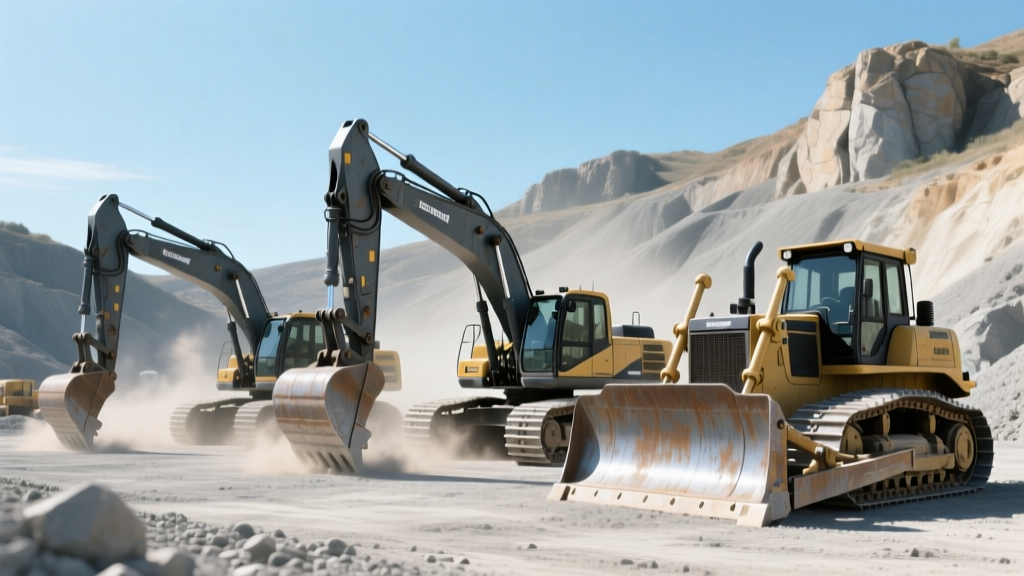
Operating a quarry or aggregate processing plant subjects machinery to some of the most punishing conditions in the industrial sector. Between the relentless vibration of vibrating screeners, the extreme shock loads of jaw crushers, and the omnipresent abrasive silica dust, the hydraulic systems powering your fleet are under constant siege. When procurement teams evaluate heavy equipment hydraulic fluid, the initial instinct is often to minimize the upfront cost per gallon. However, in aggregate processing, a myopic focus on fluid price inevitably leads to catastrophic component failure and exponential maintenance costs.
A single cubic centimeter of contaminated fluid can destroy a $25,000 axial piston pump in a matter of weeks. Therefore, budgeting for hydraulic fluids in a quarry environment requires a Total Cost of Ownership (TCO) model that factors in fluid longevity, filtration infrastructure, component wear rates, and unscheduled downtime. This guide provides a comprehensive cost analysis and budget planning framework tailored specifically for quarry and aggregate processing fleets in 2026.
⚠️ The 'Cheap Fluid' Fallacy in Cone Crushers:Purchasing off-spec or unbranded ISO VG 68 fluid to save $3 per gallon on a 200-gallon Metso HP400 cone crusher reservoir saves $600 upfront. However, if that fluid lacks adequate zinc dialkyldithiophosphate (ZDDP) anti-wear additives or possesses poor shear stability, the resulting wear on the crusher's hydraulic adjustment and release cylinders can lead to a $15,000+ rebuild long before the next scheduled drain interval.
Fluid Selection Matrix for Aggregate Processing
Not all heavy equipment hydraulic fluid formulations survive the quarry environment. The selection must align with the specific machinery, ambient temperature swings, and operating pressures. Below is a 2026 benchmark matrix comparing the primary fluid categories used in aggregate fleets.
| Fluid Category | ISO Grade | 2026 Est. Cost (Bulk) | Target Drain Interval | Best Quarry Application |
|---|---|---|---|---|
| Premium Mineral AW | ISO VG 68 | $14.00 - $17.50 / gal | 2,000 - 2,500 Hours | Wheel loaders, standard conveyors |
| High Viscosity Index (HVI) | ISO VG 46/68 | $22.00 - $28.00 / gal | 3,000 - 4,000 Hours | Mobile track-mounted crushers |
| Full Synthetic PAO | ISO VG 68 | $40.00 - $48.00 / gal | 6,000+ Hours | High-pressure cone crushers, extreme temp zones |
| Ashless / Zinc-Free | ISO VG 46 | $18.00 - $22.00 / gal | 2,500 Hours | Systems with silver-plated components |
Note: Pricing reflects 2026 bulk procurement rates (330-gallon totes or bulk delivery). Costs fluctuate based on base oil market indices and regional freight surcharges.
Combating the Silica Threat: Budgeting for Contamination Control
The most significant variable in quarry hydraulic budgeting is contamination control. Quartz dust, the primary byproduct of crushing limestone, granite, and trap rock, registers a 7 on the Mohs hardness scale. By comparison, the hardened steel used in hydraulic pump pistons and valve spools typically registers between 5 and 6. When silica dust breaches the hydraulic reservoir, it acts as an aggressive lapping compound, accelerating wear exponentially.
According to the ISO 4406:2021 standard for fluid cleanliness, high-pressure hydraulic systems in aggregate processing should target a cleanliness code of 18/16/13 or better. Achieving and maintaining this code requires a dedicated capital and operational budget for filtration.
Calculating the ROI of Offline Filtration
Relying solely on inline return filters is insufficient for heavy dust environments. Budget planners must allocate funds for offline kidney-loop filtration systems. A typical offline filter unit (e.g., Parker or Hy-Pro) capable of servicing a 150-gallon crusher reservoir costs between $3,500 and $5,500 upfront.
- Consumable Budget: Cellulose/glass-fiber filter elements (3-micron absolute rating) cost $85 to $140 each and require replacement every 1,000 to 1,500 hours in high-dust zones.
- Desiccant Breathers: Standard J-breathers must be replaced with high-capacity desiccant breathers (e.g., Donaldson or Des-Case). Budget $150 to $250 per breather, with a replacement cycle of 3 to 6 months depending on ambient humidity and dust loads.
- ROI Metric: For every $1 spent on proactive contamination control (breathers and offline filtration), aggregate plants typically save $8 to $12 in avoided component replacements and fluid top-offs, as validated by industry tribology studies referenced by the National Stone, Sand & Gravel Association (NSSGA).
Equipment operating near aggregate wash plants faces severe water ingress risks. Water in hydraulic fluid reduces the lubricating film strength by up to 75% and promotes additive depletion. If your fleet operates in wet zones, budget for vacuum dehydrators or water-absorbing filter media, and specify fluids with superior demulsibility characteristics (meeting ASTM D6158 specifications for water separation).
Strategic Oil Analysis Budgeting
You cannot manage what you do not measure. A robust oil analysis program is non-negotiable for quarry fleets. Rather than changing heavy equipment hydraulic fluid based on arbitrary calendar dates or hour meters, condition-based monitoring allows you to run fluids to their true functional limit.
Annual Oil Analysis Budget Formula:
For a mid-sized quarry operating 15 major hydraulic assets (crushers, screeners, stackers, and large wheel loaders):
- Test Kits: $35 per comprehensive test (viscosity, elemental spectroscopy, particle count, water content, FTIR).
- Frequency: Every 250 hours for critical crushers; every 500 hours for loaders and conveyors.
- Estimated Annual Volume: ~250 samples per fleet.
- Total Lab Budget: $8,750 annually.
While $8,750 may seem like a distinct line-item expense, identifying a single failing hydraulic pump via rising iron and copper particle counts before it disintegrates saves upwards of $30,000 in secondary system flushing, downtime, and replacement parts.
Procurement Strategies and Supply Chain Realities
How you buy is just as critical as what you buy. The logistics of delivering fluid to a remote quarry site can inflate your effective cost per gallon by 15% to 20% if managed poorly.
- Drums vs. Totes: Transitioning from 55-gallon drums to 330-gallon intermediate bulk containers (IBC totes) reduces packaging waste and handling labor. Expect a 6% to 9% discount on the per-gallon fluid price when switching to totes.
- Bulk Tank Installations: For high-volume sites, investing in a 2,000-gallon double-walled bulk storage tank with a dedicated dispensing reel and integrated filtration costs approximately $12,000 to $18,000 installed. The ROI is typically realized within 14 months through bulk pricing discounts and the elimination of drum disposal fees.
- Vendor Managed Inventory (VMI): Partner with a lubricant distributor who utilizes telemetry on your bulk tanks to automate deliveries. This prevents the costly emergency freight charges associated with running a primary crusher dry because a fluid delivery was missed.
Frequently Asked Questions
Can we mix different brands of ISO VG 68 AW hydraulic fluids to save money?
Mixing fluids from different manufacturers is highly discouraged. Even if both meet the same baseline OEM specifications, the specific additive packages (detergents, dispersants, anti-foam agents) can react negatively when combined. This can lead to sludge formation, filter plugging, and accelerated oxidation. If a fluid changeover is necessary, budget for a complete system flush.
Why is our hydraulic fluid turning milky, and how does it impact the budget?
A milky appearance indicates water emulsification. In a quarry, this usually stems from condensation due to extreme day/night temperature swings or direct water ingress from wash-down procedures. Water accelerates fluid oxidation and strips ZDDP anti-wear additives from the fluid. Budget for a portable vacuum dehydrator (approx. $8,000) to reclaim the fluid rather than dumping it, which incurs both replacement and environmental disposal costs.
Do synthetic fluids justify the 3x price premium in aggregate processing?
Yes, but only in specific applications. For mobile track-mounted crushers that experience extreme ambient temperature swings (e.g., freezing winter mornings to high-heat afternoon operations), the high viscosity index of synthetics prevents cold-start cavitation and high-temperature thinning. For stationary plant equipment operating in climate-controlled or stable environments, premium mineral AW fluids paired with rigorous filtration offer a better financial return.