What Must Happen Before You Can Drive Heavy Equipment? (Guide)
Wondering what must happen before you can drive heavy equipment? Learn the critical pre-drive protocols for construction and ag machinery to ensure safety.
Before turning the ignition on any multi-ton machine, a strict sequence of safety and mechanical verifications is mandatory. If you are wondering what must happen before you can drive heavy equipment, the short answer is a comprehensive pre-operational inspection, fluid verification, and cab safety check. However, the exact protocol diverges significantly depending on whether you are operating agricultural tractors or earthmoving construction machinery. Understanding these nuances is critical for minimizing downtime, preventing catastrophic mechanical failures, and maintaining compliance with 2026 OSHA and EPA regulations.
What Must Happen Before You Can Drive Heavy Equipment? (The Core Protocol)
Regardless of the industry, the foundational requirement for heavy machinery operation is the 360-degree walk-around inspection. According to the Occupational Safety and Health Administration (OSHA), operators must verify the structural and mechanical integrity of the machine before taking the seat. Understanding what must happen before you can drive heavy equipment requires breaking the inspection down into four non-negotiable phases:
1. The Undercarriage and Ground-Up Inspection
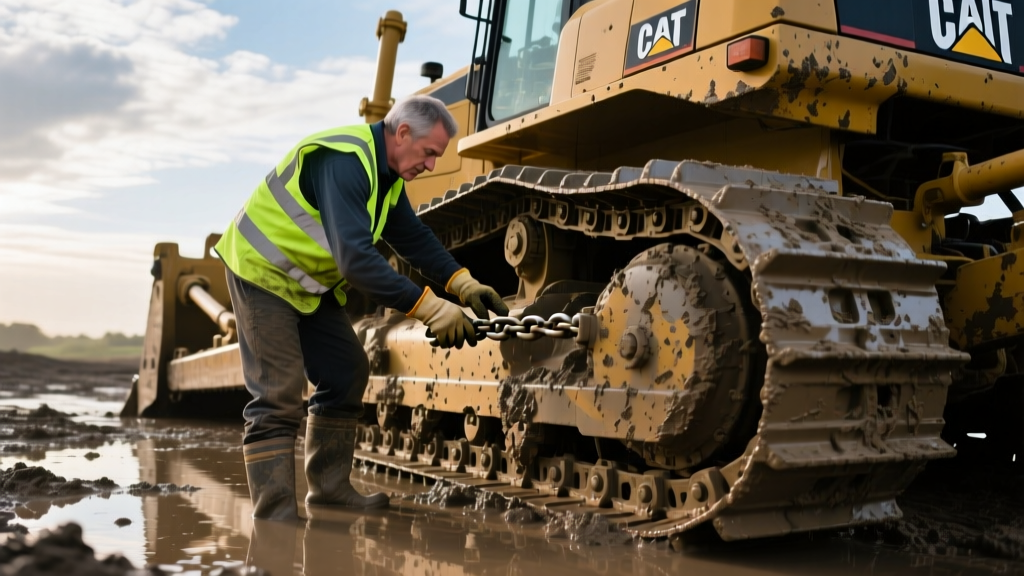
Operators must check for fluid pooling beneath the machine. A puddle of ISO 46 hydraulic fluid or 15W-40 CK-4 diesel engine oil indicates a blown seal or cracked line. For tracked vehicles, track tension must be measured; a standard sag of 1 to 2 inches between the front idler and the first carrier roller is optimal. Excessive tension accelerates sprocket wear, while loose tracks risk de-tracking during high-torque maneuvers.
2. Fluid Levels and Grease Points
Diesel Exhaust Fluid (DEF), coolant, and hydraulic reservoirs must be checked via sight glasses or dipsticks. Equally important is the application of lithium-complex grease to high-friction pivot points, bucket linkages, and articulation joints. Dry pins cause rapid bore elongation, leading to thousands of dollars in line-boring repairs.
3. Structural and Attachment Integrity
Bucket teeth, cutting edges, and hitch pins must be secured. Retainer pins and keepers should be visually inspected for shear stress or missing locking clips. Hydraulic hoses must be examined for weeping, abrasion, or bubble formation, which indicates impending failure under high pressure (often exceeding 3,500 PSI in modern implements).
4. Cab Entry and Safety Systems
Operators must use three points of contact to enter the cab. Once inside, the seatbelt must be inspected for fraying, and the Roll-Over Protective Structure (ROPS) must be free of unauthorized welds or cracks. The parking brake, hydraulic lockout lever, and horn must be tested immediately upon startup.
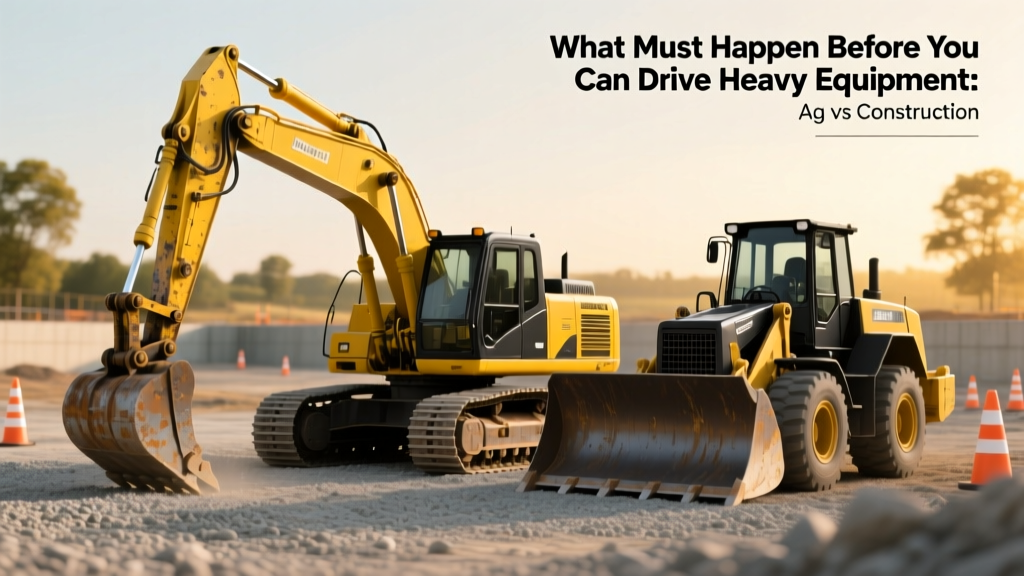
Agricultural vs. Construction Equipment: Key Pre-Drive Differences
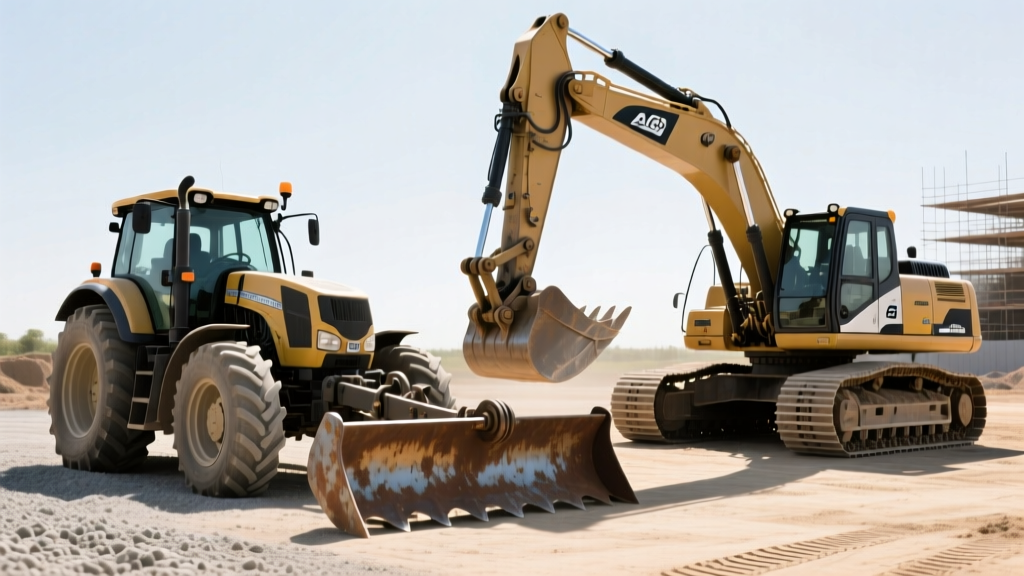
When site managers audit what must happen before you can drive heavy equipment, they quickly realize that a John Deere 8R 410 tractor and a Caterpillar D6 Dozer require entirely different focal points during the pre-start walk-around. The operational environment dictates the hazard profile.
| Inspection Category | Agricultural Equipment (e.g., Tractors, Combines) | Construction Equipment (e.g., Excavators, Dozers) |
|---|---|---|
| Primary Hazard Focus | Power Take-Off (PTO) entanglement, hitch detachment, rollover on uneven terrain. | Swing radius crushing, trench collapse, high-pressure hydraulic injection. |
| Drive System Check | Radial tire pressure (typically 12-15 PSI for R1W ag tires), wheel ballast, and lug nut torque. | Track tension, idler wear, sprocket bolt torque, and undercarriage rock packing. |
| Attachment Verification | PTO master shield integrity, drawbar pin locks, hydraulic remote coupler cleanliness. | Quick coupler engagement locks, bucket tooth retention, ripper shank pins. |
| Cab & Safety Tech | Lighting arrays for road transit, slow-moving vehicle (SMV) emblems, GPS guidance calibration. | Swing alarm, rear-view camera clarity, hydraulic lockout lever, articulation lock pin. |
Agricultural Specifics: The PTO and Ballast Factor
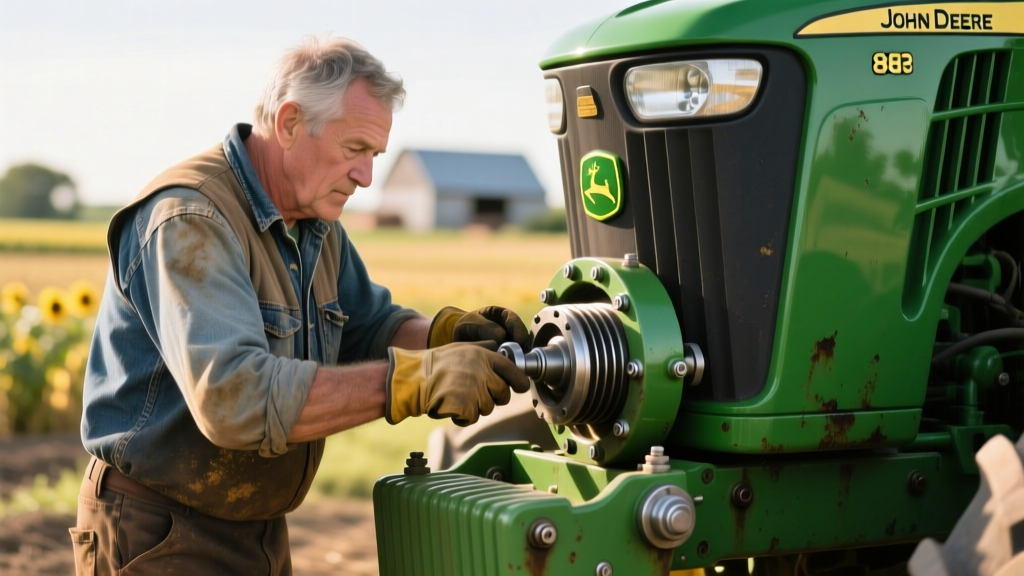
In agriculture, the Power Take-Off (PTO) shaft is one of the most lethal components on the farm. Before driving, the operator must ensure the master PTO shield is intact, rotates freely, and is not zip-tied or painted over. Additionally, heavy front-end loaders require rear ballast (often liquid-filled rear tires or cast-iron suitcase weights) to maintain a safe center of gravity. Driving an unballasted tractor with a raised front loader is a primary cause of fatal rearward tip-overs.
Construction Specifics: Swing Radius and Stored Energy
For construction machinery like the Komatsu PC210LC-11 excavator, the pre-drive protocol heavily emphasizes the swing radius and stored energy. Operators must verify that the swing alarm and beacon are functional to protect ground workers. Furthermore, articulated machines like wheel loaders require the physical installation of the articulation lock pin before any maintenance is performed, and the operator must verify its removal and secure stowage before driving. Hydraulic accumulators must also be bled down according to manufacturer specs if the machine lost power during the previous shift.
The Role of Telematics and AI in 2026 Pre-Operational Checks
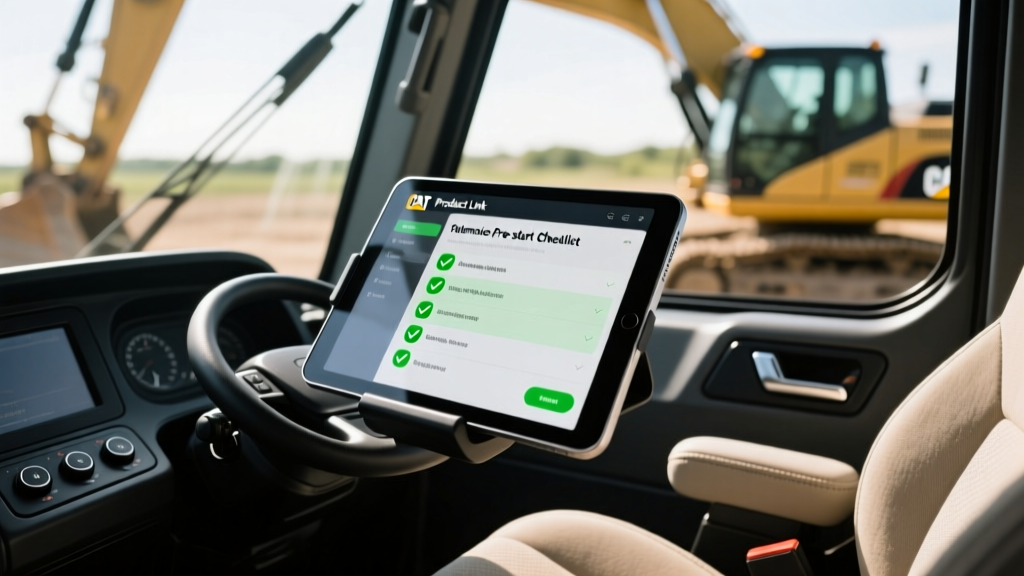
The landscape of heavy equipment safety has evolved dramatically. In 2026, determining what must happen before you can drive heavy equipment involves interfacing with advanced telematics and AI-driven diagnostics. Systems like CAT Product Link and John Deere JDLink now perform automated pre-start sequence checks.
When the operator turns the key to the 'ON' position (without cranking), the machine's ECU cycles through sensor arrays, checking for active fault codes, DEF quality, and battery voltage. If a critical fault (e.g., low coolant pressure or a failed steering solenoid) is detected, the telematics system will immobilize the drivetrain and push an alert to the fleet manager's dashboard. However, the National Institute for Occupational Safety and Health (NIOSH) warns that automated systems do not replace the physical walk-around. Telematics cannot detect a cracked weld on a boom cylinder or a missing bucket tooth retainer. Human verification remains the final, indispensable layer of the pre-drive protocol.
Critical Pre-Drive Failures and How to Avoid Them
Skipping the pre-drive inspection leads to predictable, expensive, and dangerous failure modes. Here are the most common issues caught during a proper walk-around:
- Hydraulic Injection Injuries: A pinhole leak in a hydraulic hose can release fluid at 4,000 PSI. If an operator uses their bare hand to check for leaks during the pre-drive inspection, the fluid can pierce the skin, causing severe tissue necrosis. Protocol: Always use a piece of cardboard or wood to check for hydraulic weeping.
- De-tracking on Slopes: Failing to clear packed mud and debris from the undercarriage of a dozer or excavator before starting a shift can cause the track to seize or snap when the machine encounters a side-slope. Protocol: Use a pressure washer or pry bar to clear the sprocket and idler during the morning walk-around.
- Brake Fade on Ag Transit: Agricultural tractors frequently travel on public roads between fields. If the operator fails to check the air-over-hydraulic brake system or towed implement brakes, the added momentum can lead to catastrophic intersection collisions. Protocol: Perform a dynamic brake test at 5 MPH in a clear area before entering public roadways.
FAQ: Heavy Equipment Pre-Drive Questions
What must happen before you can drive heavy equipment?
Before driving heavy equipment, the operator must complete a documented 360-degree walk-around inspection. This includes checking undercarriage components for wear or damage, verifying all fluid levels (oil, coolant, DEF, hydraulic), inspecting hoses and wiring for abrasions, testing all lights and backup alarms, and ensuring the cab is clean with functioning seatbelts and ROPS integrity. Finally, the operator must test the service and parking brakes in a controlled area before commencing work.
Do agricultural tractors require the same pre-drive checks as construction dozers?
No. While both require fluid and structural checks, agricultural tractors demand specific focus on PTO shielding, rear ballast distribution, and tire pressure for field traction and road transit. Construction dozers and excavators require rigorous undercarriage track tension checks, swing radius alarm verification, and hydraulic lockout lever testing. The operational hazards dictate the specific inspection criteria.
What are the OSHA requirements for heavy equipment inspections?
OSHA mandates that heavy equipment must be inspected prior to each shift. According to OSHA Standard 1926.1412 (which applies heavily to lifting and earthmoving equipment), inspections must be conducted by a competent person. Any deficiency identified during the pre-shift walk-around must be evaluated, and if it constitutes a safety hazard, the machine must be tagged out and removed from service until repaired.
How long should a pre-operational walk-around take?
A thorough pre-operational walk-around should take between 10 to 15 minutes for standard machinery like a wheel loader or agricultural tractor. For larger, more complex equipment such as a mining haul truck or a large crawler crane, the inspection can take 30 to 45 minutes. Rushing this process is a leading indicator of poor site safety culture and significantly increases the risk of mid-shift mechanical failure.