Critical Heavy Equipment Safety Topics for Pipeline Construction
Compare utility and pipeline machinery safety protocols. Explore critical heavy equipment safety topics, alternative tech, and risk mitigation strategies.
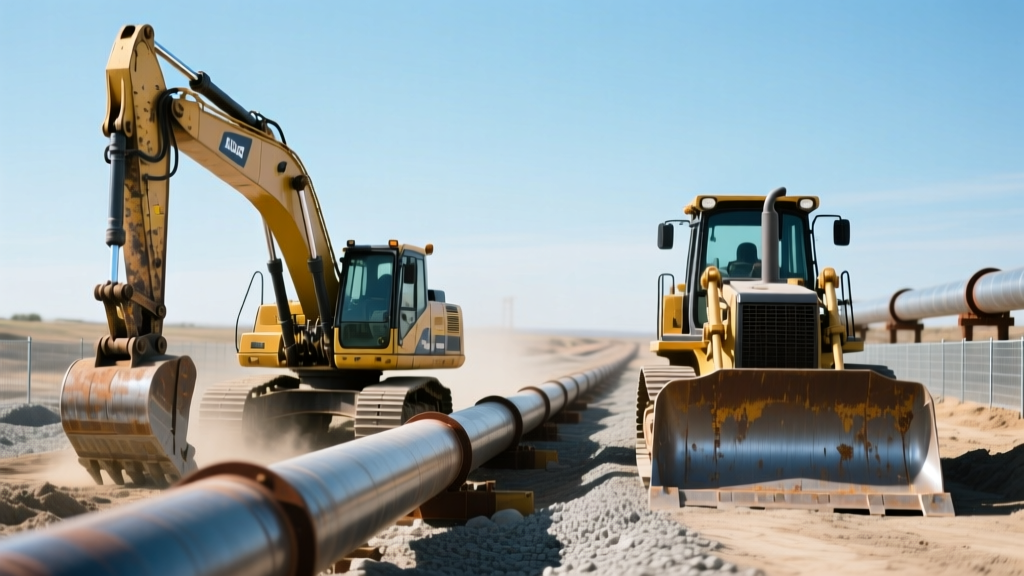
Pipeline and utility construction environments operate under a unique set of physical constraints. Moving 4,000-pound joints of steel pipe into 8-foot-deep trenches while navigating congested right-of-way (ROW) corridors requires heavy machinery operating inches from ground personnel. When safety directors audit heavy equipment safety topics, pipeline sites consistently rank among the highest risk due to the intersection of deep excavation, heavy lifting, and subterranean utility hazards.
This analysis compares the primary equipment choices and safety technologies deployed in modern utility construction, providing actionable alternatives to mitigate the most severe jobsite risks.
⚠️ OSHA Enforcement Alert: Trenching and excavation violations remain a top priority for OSHA. Under 29 CFR 1926 Subpart P, a cubic yard of soil can weigh up to 3,000 pounds. A trench collapse leaves virtually zero time for reaction, making proactive equipment and shoring selection a matter of immediate survival, not just compliance.Pipelayers vs. Large Excavators: Lowering-In Safety Profiles
The 'lowering-in' phase—where the welded pipeline is lowered into the trench—is the most critical lift in pipeline construction. Contractors typically choose between dedicated sideboom pipelayers and large hydraulic excavators. Each presents distinct heavy equipment safety topics regarding load stability and swing-radius hazards.
Equipment Comparison Matrix
| Feature | Sideboom Pipelayer (e.g., Cat 583) | Large Excavator (e.g., Cat 390) |
|---|---|---|
| Center of Gravity | Extremely low; designed for lateral loads on grades. | Higher; requires strict adherence to load charts when lifting. |
| Swing Radius Hazard | None (fixed boom). Eliminates caught-in-between risks. | High. Requires physical barricades and 360-degree awareness. |
| Trench Proximity | Can travel parallel to the trench edge safely. | Track placement must be calculated to prevent soil shear. |
| Estimated Unit Cost | $650,000 - $850,000+ | $550,000 - $700,000 |
The Verdict: While excavators offer versatility for general utility work, dedicated sideboom pipelayers drastically reduce the 'struck-by' and 'caught-in-between' hazards associated with the upper structure swing of an excavator. For mainline pipe exceeding 24 inches in diameter, the sideboom remains the safest alternative.
Blind Spot Mitigation: Camera Systems vs. Proximity Radar
Utility sites are notoriously congested with ground workers, water trucks, and welding rigs. Addressing operator blind spots is one of the most frequently cited heavy equipment safety topics in incident reports. According to NIOSH investigations, heavy equipment blind spots extend up to 50 feet directly behind and alongside large machines.
Alternative 1: 360-Degree Camera Systems (e.g., Brigade VBV-770)
- Pros: Provides high-definition visual confirmation; records footage for post-incident liability analysis; relatively low cost ($2,500 - $4,000 installed).
- Cons: Useless in heavy dust, mud, or dense fog; requires the operator to actively look at the monitor, causing cognitive distraction.
Alternative 2: Solid-State Proximity Radar (e.g., PreView Side Defender II)
- Pros: Penetrates dust, rain, and mud; provides audible and visual in-cab alerts only when a human-sized object is in the danger zone; reduces monitor fatigue.
- Cons: Higher upfront cost ($5,000 - $8,500 per machine); cannot distinguish between a human and a large static object like a concrete barrier without AI filtering.
Automated Trench Shoring: Alternatives to Manual Trench Boxes
Traditional steel trench boxes require an excavator to lower them into place, exposing riggers to suspended loads and trench-edge collapse risks. Modern utility construction is shifting toward alternative shoring methods that prioritize worker safety during installation.
Hydraulic Shoring vs. Slide Rail Systems
For utility vaults and deep tie-in pits (10 to 20 feet deep), the choice between hydraulic aluminum shoring and steel slide rail systems dictates both safety and efficiency.
| Metric | Hydraulic Aluminum Shoring | Steel Slide Rail System |
|---|---|---|
| Installation Method | Lowered via crane/excavator; expanded hydraulically from above. | Driven into place using a vibratory hammer; panels slide down rails. |
| Max Safe Depth | Typically up to 20 feet (requires engineering stamp beyond). | Easily exceeds 30 feet with intermediate bracing. |
| Soil Disruption | Low; fits snugly against trench walls. | Moderate; driving rails can cause minor vibration to adjacent utilities. |
| Rental Cost Estimate | $150 - $250 / day | $400 - $800 / day |
Addressing the Top 3 Heavy Equipment Safety Topics in Utility Work
Beyond trench collapse and blind spots, utility contractors must navigate subterranean hazards and uneven terrain. Here is how leading contractors are addressing the remaining critical heavy equipment safety topics.
1. Subterranean Utility Strikes
Striking a high-pressure gas line or a high-voltage duct bank results in catastrophic equipment damage and fatalities. Relying solely on 811 'Call Before You Dig' markings is insufficient, as locates are often inaccurate by several feet.
'The Common Ground Alliance's annual DIRt report consistently shows that excavation damage to underground utilities remains a multi-billion-dollar problem, with failure to use private locators being a leading root cause.' — Common Ground Alliance (CGA)
The Alternative: Deploy Ground Penetrating Radar (GPR) such as the Subsite 2550GR prior to any mechanical excavation. While traditional electromagnetic (EM) locators only find conductive metals, GPR identifies non-conductive hazards like PVC water mains and concrete duct banks. Budget $1,500 to $2,500 per day for professional GPR scanning services on complex urban utility sites.
2. Swing Radius Crush Zones
When using excavators for pipe lowering or placing concrete manhole rings, the counterweight swing radius is a lethal zone. Standard caution tape is routinely ignored or destroyed by wind and equipment traffic.
The Alternative: Implement physical, weighted barricades (e.g., water-filled barriers or heavy-duty steel delineators) placed exactly at the maximum swing radius plus a 3-foot buffer. Furthermore, equip excavators with electronic swing-limiters (available on newer models like the John Deere 550 P-Tier) that physically restrict the upper carriage from rotating into designated pedestrian or traffic zones.
3. Rollover Protection on Uneven Grades
Pipeline ROWs frequently cross steep, uneven terrain where traditional wheeled utility tractors are prone to lateral rollovers.
The Alternative: Mandate the use of continuous-track carriers (e.g., Morooka MST-2200VD) for transporting pipe and fittings on slopes exceeding 15 degrees. Tracks distribute the machine's weight over a larger surface area, lowering ground pressure to under 4 PSI and drastically increasing the lateral tipping threshold compared to rubber-tired alternatives. Ensure all Roll-Over Protective Structures (ROPS) are inspected annually for micro-fractures, a frequent failure point in older fleet equipment.
Final Action Plan for Site Managers
Mitigating risk in utility construction requires moving beyond basic compliance. Evaluate your current fleet and site protocols against these alternatives:
- Audit your lifting plan: Replace excavator pipe-lowering with sideboom pipelayers wherever ROW width and budget permit.
- Upgrade blind-spot tech: Transition from camera-only systems to 77GHz radar with AI human detection for dusty environments.
- Verify subterranean data: Mandate GPR scanning for all excavations within 10 feet of known utility corridors, regardless of 811 markings.
By treating these heavy equipment safety topics as engineering challenges rather than mere compliance checklists, utility contractors can eliminate the root causes of the industry's most severe incidents.