Underground Mining Troubleshooting: Heavy Equipment and Machinery Accidents Lawyer NYC
Diagnose critical failures in underground mining equipment like LHD loaders and jumbos, and understand the legal liability when maintenance negligence causes accidents.
The High-Stakes Intersection of Mechanical Failure and Legal Liability
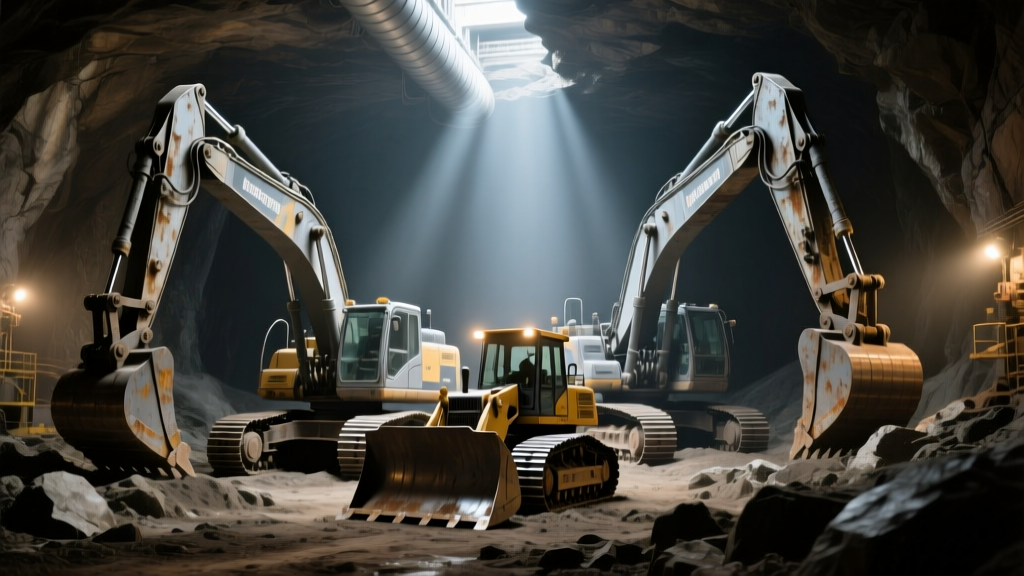
Underground mining and urban tunneling environments subject heavy machinery to extreme thermal cycling, abrasive particulate ingress, and immense mechanical shock. When a 50-ton Load-Haul-Dump (LHD) loader experiences hydrostatic transmission loss on a 1:7 decline ramp, or a drilling jumbo suffers a high-pressure hydraulic injection, the result is frequently catastrophic. As of 2026, the integration of autonomous and semi-autonomous systems in hard-rock mining and urban subterranean infrastructure projects has reduced operator exposure, but it has exponentially increased the complexity of forensic mechanical troubleshooting.
When root-cause analysis reveals that a catastrophic breakdown stemmed from deferred maintenance, OEM design defects, or negligent third-party leasing practices, the incident transitions from a mechanical failure to a complex legal battle. Because major equipment manufacturers, corporate insurers, and large-scale urban tunneling syndicates often operate through or are headquartered in major commercial hubs, retaining a specialized heavy equipment and machinery accidents lawyer NYC is frequently necessary to navigate the intersection of MSHA/OSHA regulations, forensic engineering data, and corporate liability.
⚠️ CRITICAL SAFETY WARNING: Never bypass hydrostatic brake interlocks or ROPS (Roll-Over Protective Structures) limit switches to maintain production quotas. Forensic engineers routinely extract ECM (Electronic Control Module) data showing bypassed safety circuits, which immediately shifts liability from the manufacturer to the site operator and maintenance contractors.Diagnostic Troubleshooting: Sandvik LH517 LHD Loaders
The Sandvik LH517 is a staple in hard-rock underground mining, prized for its 17-ton payload capacity and STIC (Steering and Transmission Integrated Control) system. However, the harsh subterranean environment frequently triggers specific failure modes that require immediate, precise troubleshooting.
STIC Steering and Transmission Desynchronization
A common failure mode in high-hour LH517 units is the desynchronization between the steering input and the transmission response, often manifesting as a 400-800 millisecond lag during articulation. This is rarely a mechanical pump failure; it is typically an issue with the main controller's CAN-bus communication or a degraded articulation angle sensor.
- Verify Sensor Calibration: Connect the Sandvik diagnostic interface and check the articulation angle sensor voltage. It must read exactly 0.5V at the hard left stop and 4.5V at the hard right stop. Any deviation indicates sensor track wear from silica dust ingress.
- Inspect CAN-bus Terminators: Check the 120-ohm terminating resistors at both ends of the J1939 CAN-bus backbone. Moisture in the underground environment frequently corrodes these connections, causing intermittent packet loss that the ECM interprets as a steering fault, triggering a limp-mode default.
- Hydraulic Pilot Pressure Check: If electrical diagnostics are clean, measure pilot pressure at the STIC valve block. It must maintain a minimum of 350 psi (24 bar) at idle. A drop below 300 psi indicates internal leakage in the pilot spool, requiring immediate valve replacement (Part # 118-554-221).
Drilling Jumbo Hydraulic Leaks: Fire Risks and Injection Injuries
Hydraulic drilling jumbos, such as the Epiroc Boomer E2, operate with axial piston pumps generating system pressures up to 4,060 psi (280 bar). A pinhole leak in a deteriorated SAE 100R13 hose does not merely result in fluid loss; it creates an aerosolized mist of highly flammable hydraulic fluid that can ignite upon contact with the turbocharger or electrical solenoids, leading to underground fires.
| Failure Symptom | Root Cause Analysis | Corrective Action & Specifications | Estimated Downtime / Cost |
|---|---|---|---|
| Boom drift exceeding 50mm/min | Internal seal bypass in the boom holding valve or cylinder piston seal extrusion. | Replace holding valve spool seals (Viton compound required for high-temp). Torque cylinder gland to 450 Nm. | 4 hours / $850 |
| Aerosolized fluid mist near feed beam | Hose chafing against the steel feed beam due to missing anti-abrasion guards. | Replace with SAE 100R13 spiral-wire hose. Install UHMW polyethylene wear pads on the beam. | 2 hours / $420 |
| Percussion pump cavitation noise | Suction line restriction or degraded hydraulic fluid viscosity (below 32 cSt at 40°C). | Flush system, replace with ISO VG 46 ashless anti-wear fluid. Check suction strainer for brass particulates. | 8 hours / $1,200 |
The Liability Intersection: Maintenance Logs and Legal Scrutiny
When a hydraulic fire or brake failure results in severe injury or fatality, the immediate aftermath involves MSHA Mobile Equipment Safety Initiatives or OSHA investigations. However, the civil litigation phase is where mechanical data meets legal strategy.
Urban tunneling projects—such as subway expansions or deep-water infrastructure in metropolitan areas—utilize the exact same underground mining equipment profiles as hard-rock mines. When a catastrophic failure occurs on these high-profile urban projects due to negligent third-party maintenance or defective OEM components, the litigation is often filed in major commercial jurisdictions. This is precisely when a heavy equipment and machinery accidents lawyer NYC becomes a critical asset. These specialized legal professionals utilize forensic engineering reports to prove that a site operator ignored ECM fault codes, or that a leasing company failed to perform mandatory 1,000-hour hydrostatic transmission overhauls, thereby piercing the corporate veil to secure compensation for injured operators.
"In heavy machinery litigation, the ECM data is the ultimate witness. If the machine's computer logged a low-brake-pressure warning for 40 consecutive shifts and the maintenance log shows no corrective action, the negligence is undeniable. We use this telemetry data to reconstruct the exact moment the mechanical failure became a legal liability." — Forensic Engineering Expert Testimony, 2025 Heavy Machinery Litigation Symposium.
Continuous Miners: Cutter Head Gearbox Diagnostics
Continuous miners like the Komatsu 12CM12 are subjected to immense torsional shock when the cutter head encounters hard rock inclusions (such as pyrite bands in coal seams). The planetary gearboxes driving the cutter motors are highly susceptible to catastrophic tooth shear if lubrication fails.
Vibration Analysis Protocol
Relying on acoustic noise to diagnose gearbox health is obsolete. Maintenance teams must utilize tri-axial accelerometers mounted directly to the gearbox casing to detect sub-surface bearing spalling before it leads to planetary gear seizure.
- Baseline Measurement: Establish a baseline vibration velocity (mm/s RMS) when the gearbox is newly rebuilt. A healthy 12CM12 cutter gearbox typically operates between 2.5 and 4.0 mm/s RMS under load.
- Warning Threshold: If overall vibration velocity exceeds 11.2 mm/s RMS (per ISO 10816-3 standards for heavy industrial machinery), schedule an immediate oil debris analysis.
- Ferrography Check: Extract a 100ml oil sample. The presence of large, plate-like ferrous particles (>50 microns) indicates severe planetary gear wear. The presence of fine, spherical particles indicates bearing fatigue. If large plates are detected, the gearbox must be pulled from the face immediately; a rebuild costs upwards of $65,000, but a catastrophic seizure underground can trap the machine and halt production for weeks.
ROPS/FOPS Integrity: Post-Impact Inspection Protocols
The Roll-Over Protective Structures (ROPS) and Falling Object Protective Structures (FOPS) on underground equipment are engineered to absorb massive kinetic energy. According to NIOSH Mining Safety Research, a ROPS cab is designed to withstand a 1:15 side-tilt overturn without encroaching on the operator's deflection-limiting volume (DLV).
However, once a ROPS structure absorbs a significant impact—such as a localized roof fall or a minor wall collision—the steel's yield point is permanently altered. The structure becomes work-hardened and brittle.
Mandatory Post-Impact ROPS Inspection Checklist
- Visual Yield Inspection: Check all mounting brackets and cab welds for micro-fractures or flaking paint, which indicates steel stretching.
- Ultrasonic Thickness Testing (UTT): Perform UTT on the main vertical pillars. Any reduction in wall thickness greater than 5% from the OEM baseline requires immediate cab replacement.
- Mounting Pin Shear Check: Remove the ROPS mounting pins. Inspect for shear deformation or galling. Replace all pins with OEM-specified high-tensile steel (Grade 8 or equivalent); never substitute with standard hardware store bolts.
- Tag-Out Protocol: If any deformation is found, the machine must be immediately locked out. A collapsed ROPS during a secondary incident is a primary focal point for heavy machinery accident litigation.
Proactive Maintenance as a Legal Shield
Troubleshooting underground mining equipment is not merely about maintaining production uptime; it is about creating an unimpeachable record of mechanical diligence. In an era where ECM telemetry records every throttle input, brake application, and hydraulic pressure anomaly, the maintenance log is your primary legal defense. Whether you are managing a fleet of LHD loaders in a deep-shaft hard-rock mine or operating drilling jumbos in a metropolitan tunneling project, adhering strictly to OEM diagnostic protocols ensures that when mechanical failures inevitably occur, the root cause is traced to unavoidable material fatigue, rather than actionable negligence.