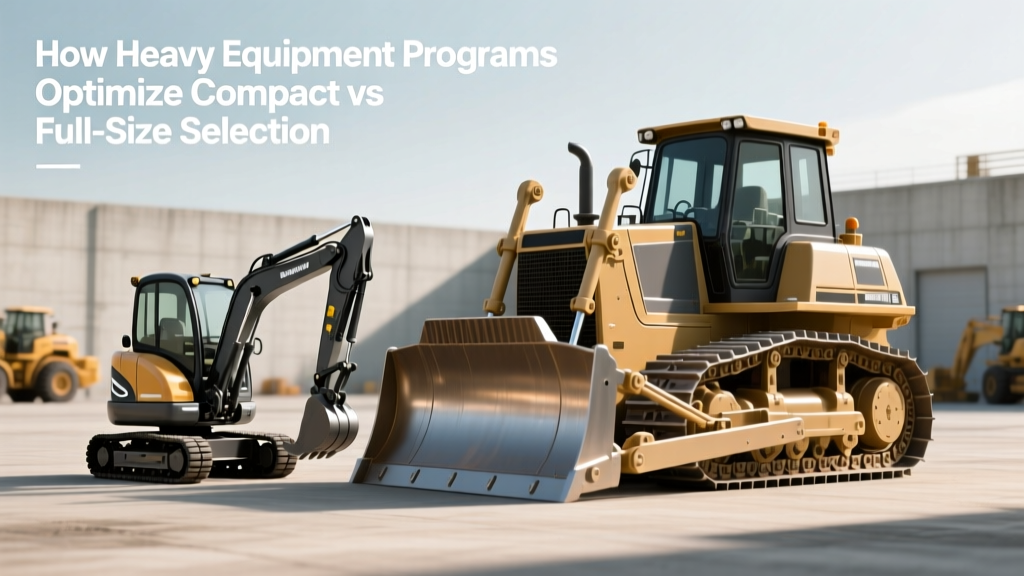
How Heavy Equipment Programs Optimize Compact vs Full-Size Selection
Discover how heavy equipment programs use telematics and technical specs to optimize compact vs full-size construction equipment selection for maximum ROI.
Selecting between compact and full-size construction machinery is no longer a matter of contractor intuition. Modern fleet managers rely on heavy equipment programs—advanced telematics suites, utilization algorithms, and predictive maintenance software—to quantify the exact technical thresholds where a compact machine fails and a full-size unit becomes economically mandatory. This analysis breaks down the hydraulic, structural, and logistical specifications that dictate this crossover point, utilizing 2026 fleet data to inform right-sizing decisions.
The Technical Divide: Hydraulic Flow and Breakout Force
The most critical differentiator between compact (typically 13- to 15-ton class) and full-size (20- to 25-ton class) excavators is hydraulic capacity. While bucket breakout force often scales linearly with machine weight, auxiliary hydraulic flow dictates attachment viability. When evaluating Caterpillar's track excavator specifications, the gap between a 13-ton compact radius model (like the Cat 313) and a standard 20-ton model (like the Cat 320) reveals strict operational boundaries.
A 13-ton class machine typically maxes out at 230 L/min (61 gpm) of total hydraulic flow. This is sufficient for tilt rotators, light grading buckets, and intermittent hydraulic thumb use. However, continuous-duty attachments like heavy hydraulic shears, large rippers, or high-flow mulching heads require the 429 L/min (113 gpm) flow and higher system pressure (up to 5,076 PSI) found in the 20-ton class. Pushing a compact machine beyond its auxiliary flow limits results in immediate pressure relief valve dumping, which generates excessive heat and accelerates hydraulic fluid degradation.
⚠️ Thermal Derating Warning: Running a continuous-duty hydraulic hammer on a 13-ton compact excavator in ambient temperatures exceeding 90°F (32°C) will typically trigger ECU thermal derating within 45 minutes. The compact cooling package lacks the hydraulic oil radiator surface area to dissipate continuous 3,500 PSI relief heat, forcing the engine to drop RPMs and effectively halting production.How Heavy Equipment Programs Calculate the Crossover Point
Telematics and fleet optimization software ingest CAN bus data directly from the machine’s electronic control modules (ECMs). By analyzing this data, heavy equipment programs identify when a machine is operating outside its optimal efficiency band. According to benchmarks tracked by the Associated Equipment Distributors (AED), right-sizing equipment based on telematics can reduce fuel burn and maintenance costs by up to 18% annually.
Here is the step-by-step logic modern fleet programs use to flag an undersized compact machine:
- Hydraulic Pressure Spikes: The software logs the frequency of high-pressure relief events. If the main pump hits relief pressure (>3,500 PSI) for more than 15% of the active work cycle, the attachment is mismatched to the machine's flow capacity.
- Thermal Load Monitoring: Algorithms track hydraulic oil temperature relative to ambient air temperature. A consistent delta exceeding 40°F indicates the cooling system is overwhelmed by the duty cycle.
- Slew Torque Strain: When lifting heavy pipes or concrete barriers, the software monitors swing motor pressure. Frequent stall events during slew operations indicate the machine lacks the necessary counterweight and hydraulic torque for the load.
- Automated Right-Sizing Recommendation: The program cross-references these strain metrics with the fleet's utilization database, automatically suggesting a migration to a 20-ton or 25-ton class machine for that specific application.
Decision Matrix: Spatial Constraints vs. Duty Cycles
The primary advantage of compact equipment is its footprint and tail-swing geometry. Compact radius (CR) machines feature a rear counterweight that stays within the track width, allowing them to operate in single-lane traffic or against existing foundations without striking obstacles. However, this geometry sacrifices lifting capacity and stability. Use the following matrix to determine the correct class based on site parameters:
| Operational Parameter | Compact (13-15 Ton CR) | Full-Size (20-25 Ton Standard) |
|---|---|---|
| Tail Swing Clearance | Zero/Minimal (Fits single lane) | Requires 8-10 ft rear clearance |
| Max Lift Capacity (Over Front) | ~8,500 lbs at 10 ft radius | ~14,500 lbs at 10 ft radius |
| Continuous Hydraulic Attachments | Not recommended (Thermal limits) | Optimal (Dedicated cooling circuits) |
| Trenching Depth (Max) | ~18 ft (Standard stick) | ~22 ft (Standard stick) |
| Ground Pressure (PSI) | Higher (Concentrated weight) | Lower (Wider track footprint) |
Transport Logistics and Permitting Thresholds
A frequently overlooked factor in equipment selection is the logistical cost of mobilization. The Federal Motor Carrier Safety Administration (FMCSA) strictly regulates commercial vehicle weights, and crossing the 26,000 lbs Gross Vehicle Weight Rating (GVWR) threshold drastically alters transport requirements.
A 13-ton compact excavator paired with a 15-ton capacity equipment trailer and a heavy-duty dual-rear-wheel pickup truck can often be configured to stay under specific commercial licensing thresholds, or at least avoid oversize load permits. Conversely, a 20-ton full-size excavator weighing approximately 44,000 lbs requires a lowboy trailer and a Class 8 semi-tractor. This combination easily exceeds 80,000 lbs GVWR, mandating a CDL Class A driver, specialized heavy-haul insurance, and potentially oversize permits depending on state routing. For contractors performing daily or weekly mobilizations across urban zones, the 40% premium in transport costs associated with full-size machines can erase the productivity gains they offer on-site.
Hidden Failure Modes in Undersized Equipment
When project managers force compact machines into full-size applications to save on initial rental or purchase costs, heavy equipment programs quickly detect the resulting mechanical degradation. The most common failure modes include:
- Undercarriage Accelerated Wear: Compact machines have shorter track frames and fewer bottom rollers. When used in heavy rock or abrasive trenching, the localized ground pressure exceeds 12 PSI, causing premature link and sprocket wear compared to the 8 PSI average of a full-size machine.
- Slew Ring Fatigue: Lifting loads near the machine's maximum rated capacity on uneven terrain places asymmetric stress on the swing bearing. Over time, this leads to raceway spalling and catastrophic slew ring failure, a repair that often totals a compact machine.
- Hydraulic Cavitation: Attempting to cycle full-size attachments too quickly on a compact machine starves the hydraulic pump of oil, leading to cavitation, micro-pitting on the pump pistons, and eventual main pump seizure.
Actionable Selection Framework
To finalize your fleet strategy, apply this binary decision tree before authorizing equipment procurement:
Step 1: Does the site require zero-tail-swing operation due to live traffic or structural constraints? If yes, select a Compact Radius machine, but restrict attachments to mechanical or low-flow hydraulic tools.
Step 2: Will the machine run a hydraulic hammer, shear, or mulcher for more than 3 continuous hours per shift? If yes, a full-size machine with a dedicated auxiliary cooling circuit is mandatory.
Step 3: Is daily mobilization required? If yes, calculate the transport delta. If the daily transport savings of a compact machine exceeds $150, deploy the compact unit and supplement with a dedicated full-size machine stationed permanently on-site for heavy lifting and deep trenching.