Heavy Equipment Pictures and Names: Earthmoving Types Compared
Identify earthmoving machinery with our visual guide to heavy equipment pictures and names. Compare excavators, dozers, and graders with 2026 pricing.
Visual Identification Guide: Core Earthmoving Machinery
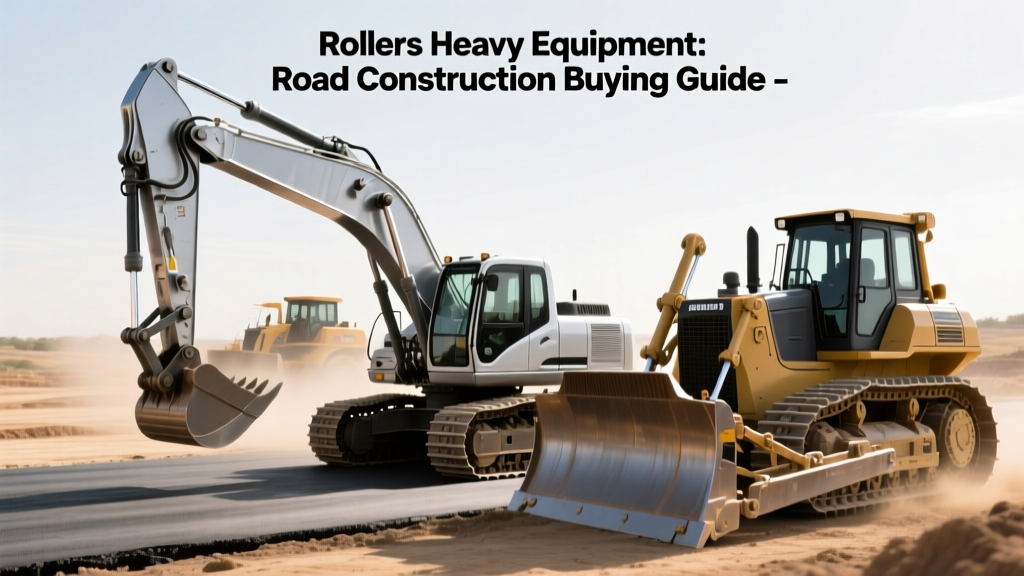
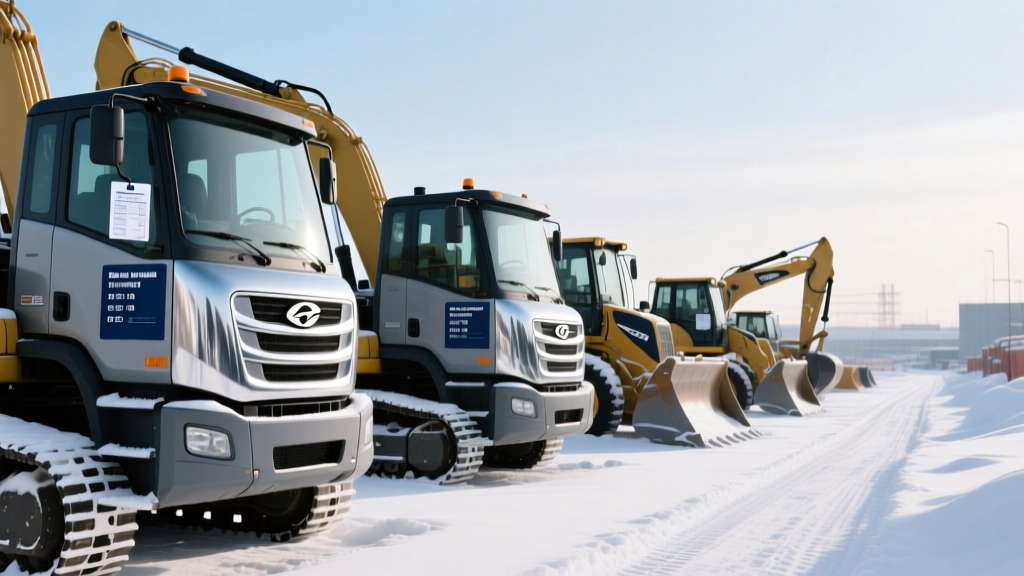
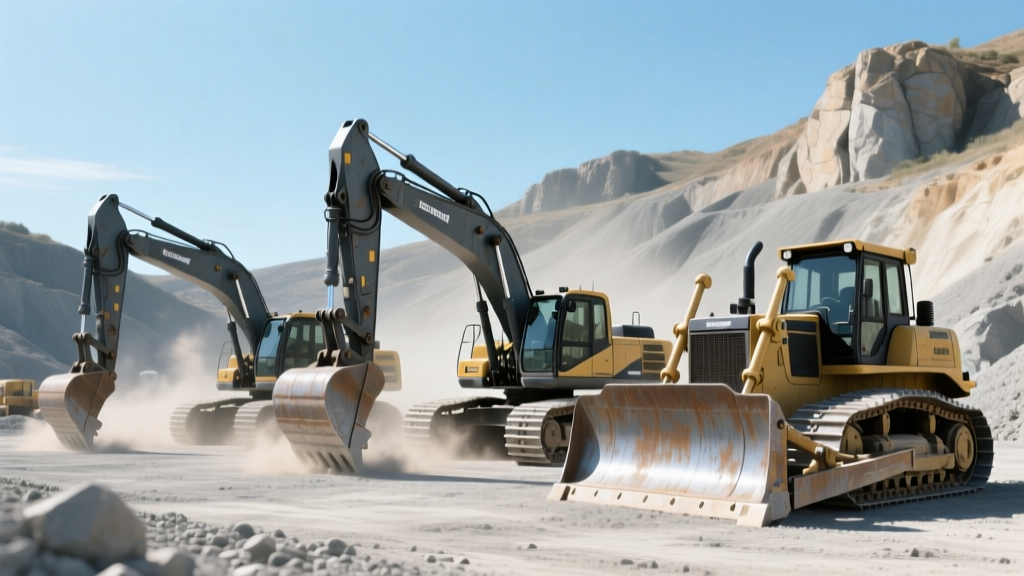
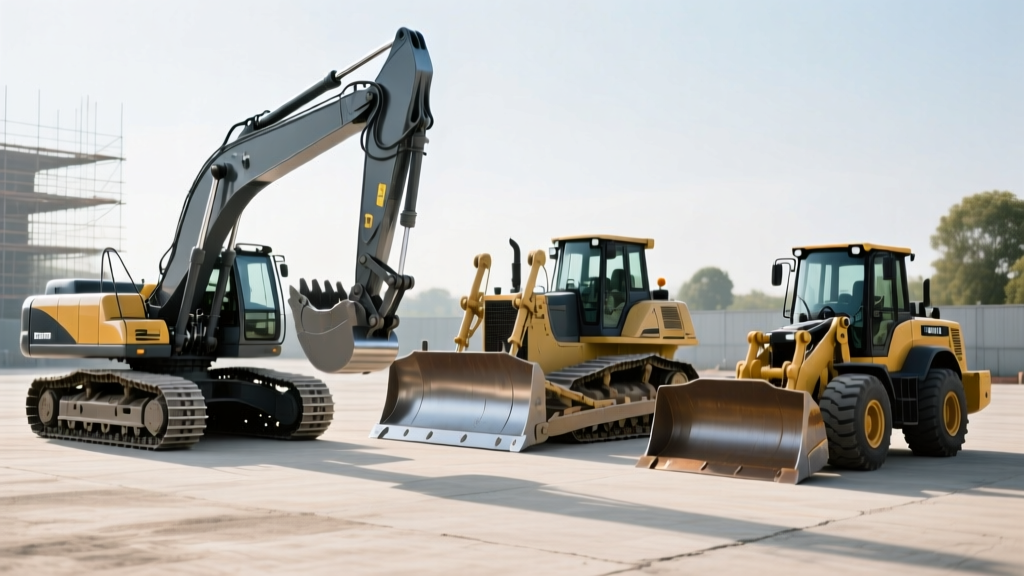
When searching for heavy equipment pictures and names, the most common point of confusion lies in distinguishing between similar-looking earthmovers. Accurately identifying machinery on a job site is not just about terminology; it dictates site logistics, safety perimeters, and operational efficiency. Below is a visual breakdown of the primary earthmoving categories, focusing on the structural hallmarks that differentiate them.
Excavators vs. Backhoes: The Boom and House Test
While both machines dig, their visual anatomy and operational geometry are entirely different. An excavator features a 360-degree rotating upper structure (the 'house') mounted on a tracked or wheeled undercarriage. The boom swings independently of the chassis. In contrast, a backhoe loader resembles a standard agricultural tractor with a front-mounted loader bucket and a rear digging attachment. The backhoe's digging arm is fixed to the rear chassis and cannot swing 360 degrees; it relies on outriggers for stability and is limited to a roughly 200-degree swing arc.
Bulldozers vs. Motor Graders: Blade and Chassis Profiles
A crawler dozer is visually dominated by its continuous steel tracks and a massive, front-mounted heavy blade designed for pushing high volumes of soil. The operator cabin sits directly behind the blade. A motor grader, however, features a long, multi-axle wheelbase with an articulation joint in the middle. Its blade is mounted mid-chassis between the front and rear axles, allowing for precision grading and sloping rather than brute-force pushing.
2026 Earthmoving Equipment Comparison Matrix
The following matrix correlates machine names with their visual identifiers, primary applications, and current market pricing for standard configurations.
| Machine Name | Visual Hallmarks | Primary Application | 2026 Avg. Base Price | Top Model Example |
|---|---|---|---|---|
| Crawler Excavator | 360° rotating house, articulated boom/stick, tracks | Deep trenching, mass excavation, lifting | $350,000 - $450,000 | Cat 336 |
| Backhoe Loader | Tractor body, front loader bucket, rear dig arm, outriggers | Utility trenching, backfilling, light material handling | $120,000 - $160,000 | John Deere 310SL |
| Crawler Dozer | Continuous tracks, heavy front blade, rear ripper shank | Site clearing, rough grading, pushing scrapers | $320,000 - $420,000 | Komatsu D65EX-18 |
| Motor Grader | Long wheelbase, mid-mounted blade, articulation joint | Fine grading, road maintenance, snow removal | $450,000 - $550,000 | Cat 14M3 |
| Wheel Loader | Four large wheels, front-mounted bucket, rear engine | Loading trucks, stockpiling, short-distance carrying | $280,000 - $380,000 | Volvo L120H |
Application-Specific Alternatives Analysis
Selecting the correct earthmover requires analyzing ground conditions, spatial constraints, and material density. Here is a decision framework for common equipment substitutions.
Decision Framework: Wet Soil and Low Ground Pressure
Scenario: You need to clear and grade a site with high water tables or soft clay (bearing capacity below 2,000 PSF).
- Standard Choice: Standard Track Skid Steer or Wheeled Loader.
- The Problem: Standard tracks exert 5.5 to 7.0 psi, causing the machine to sink, rut the subgrade, and require expensive tow-outs.
- The Alternative: Compact Track Loader (CTL) with Low Ground Pressure (LGP) tracks or a Swamp Dozer. LGP tracks widen the shoe surface area, dropping ground pressure to 3.2 psi. For example, the Cat 953 LGP dozer operates at roughly 4.1 psi, allowing it to float over peat and mud where a standard D5 would immediately bog down.
Trenching for Utilities: Mini Excavator vs. Backhoe
For municipal water and fiber-optic trenching in confined urban easements, the backhoe loader is increasingly being replaced by the compact excavator (e.g., Bobcat E85 or Kubota KX040-4). While the backhoe offers the advantage of driving between sites without a trailer, its rear-swing radius requires a wider safety perimeter. According to OSHA trenching and excavation standards, maintaining a safe spoil pile distance (minimum 2 feet from the edge) is critical. A zero-tail-swing mini excavator can operate in a single lane of traffic while maintaining precise trench walls, reducing the need for trench boxes in shallower digs.
Hidden Costs and Edge Cases in Earthmoving Selection
When evaluating heavy equipment pictures and names for procurement, visual appeal and base specs often mask severe operational edge cases. Factor these into your total cost of ownership (TCO) models:
1. Undercarriage Wear and Track Tensioning
Tracked earthmovers (dozers and excavators) consume roughly 50% of their lifetime maintenance budget in the undercarriage. Operating a Cat D8 dozer in highly abrasive granite quarry conditions can wear out standard track chains and sprockets in under 4,000 hours. Replacement costs for a heavy dozer undercarriage routinely exceed $25,000. Alternative mitigation: Specify sealed and lubricated track (SALT) systems or polyurethane track pads for urban asphalt work to prevent surface scarring and reduce vibration-induced roller failure.
2. Transport Logistics and CDL Thresholds
A machine's physical size dictates its transport cost. A mid-size excavator like the Komatsu PC210LC-11 weighs approximately 48,000 lbs. Moving this requires a lowboy trailer and a Commercial Driver's License (CDL). If your operation consists of scattered, short-duration residential jobs, the $1,500+ per-day cost of heavy haul trucking destroys margins. In these cases, downsizing to a multi-terrain loader or a rubber-tracked compact excavator (under 10,000 lbs) allows transport via standard bumper-pull trailers and heavy-duty pickup trucks, bypassing CDL and oversize permit requirements entirely.
'Matching the machine's footprint to the soil's bearing capacity is the most overlooked variable in earthmoving. A 40-ton excavator on un-compacted fill doesn't just risk getting stuck; the vibration and static load can compromise adjacent retaining walls or newly laid utilities.' — Geotechnical Site Preparation Guidelines
Frequently Asked Questions
What is the difference between a wheel loader and a skid steer?
Visually, a wheel loader has a front-mounted bucket and steers via articulated frame joints (the middle of the machine bends). It is designed for high-volume loading and higher travel speeds. A skid steer has a rigid frame and steers by skidding its left and right wheels/tracks at different speeds. Skid steers excel in zero-radius turning and tight indoor demolition but suffer from severe ground tearing and lower travel speeds.
How do I identify an articulated dump truck (ADT) vs. a rigid haul truck?
When reviewing heavy equipment pictures and names, look at the chassis. An ADT (like the Bell B30E) has a visible pivot joint between the front tractor unit (cab and engine) and the rear trailer (dump body). This allows it to navigate extreme off-road mud and steep, uneven grades. A rigid haul truck (like the Cat 775) has a single, solid frame connecting the cab and the massive rear dump bed, designed strictly for high-speed, high-volume hauling on maintained, hard-packed quarry roads.
Are motor graders being replaced by dozers with GPS?
Not entirely. While 3D machine control GPS (like Topcon or Trimble systems) allows crawler dozers to achieve rough-to-medium grading tolerances of +/- 0.1 feet, motor graders remain irreplaceable for final subgrade preparation, road crowning, and asphalt base leveling. The grader's mid-mounted blade and long wheelbase provide a leveling index that a short-tracked dozer cannot physically replicate, ensuring water runoff slopes are perfectly executed without undulations.
For further specifications on machine configurations and attachment compatibilities, consult the manufacturer portals such as Caterpillar's current excavator lineup to verify exact operating weights and hydraulic flow rates for your specific 2026 project requirements.