What Heavy Equipment Pics Reveal About 2026 Forestry Tech
Analyze heavy equipment pics to spot 2026 forestry tech trends. Discover LiDAR, hybrid hydraulics, and AI vision in modern harvesters and forwarders.
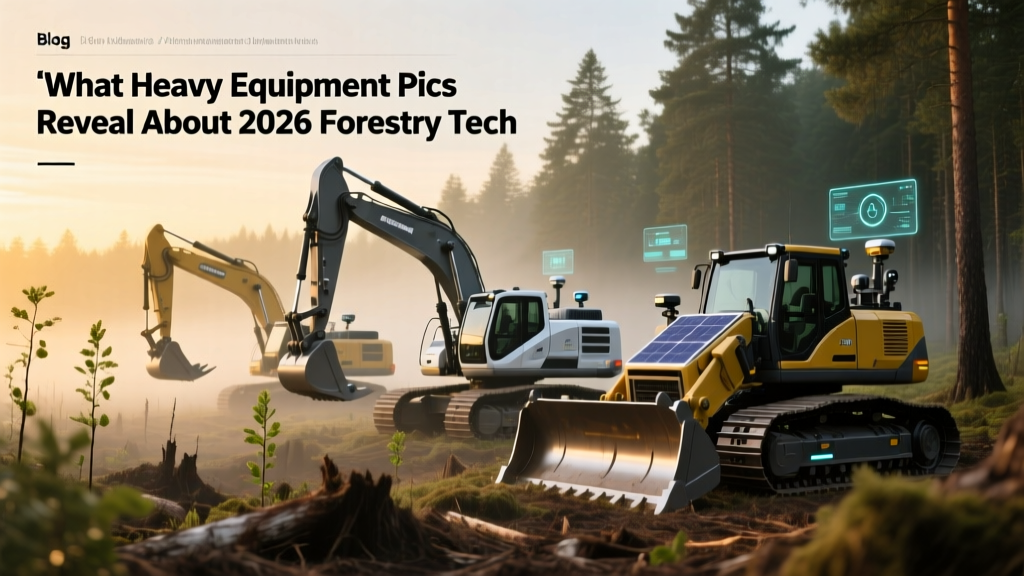
The physical profile of forestry and logging machinery has undergone a radical transformation over the last five years. While spec sheets and OEM press releases detail the software and horsepower updates, the most immediate way to gauge the integration of next-generation logging technology is through visual analysis. When industry analysts and fleet managers review high-resolution heavy equipment pics from active cut blocks and trade show floors, a distinct new silhouette emerges—one defined by LiDAR domes, reinforced hybrid bays, and advanced sensor clusters.
Understanding these visual cues is no longer just an exercise in equipment identification; it is a critical component of fleet procurement, resale valuation, and operational efficiency. Below, we decode the physical manifestations of 2026 forestry tech trends across harvesters, forwarders, and skidders, providing actionable insights for heavy equipment buyers and operators.
2026 Forestry Tech Adoption Snapshot:Over 68% of new Tier-4 Final/Stage V harvesters delivered in North America and Scandinavia now feature factory-installed LiDAR or 3D point-cloud mapping sensors, up from just 22% in 2021. Furthermore, hydraulic Energy Recovery Systems (ERS) are now standard on 85% of forwarders rated above 18-ton capacity.
The Visual Evidence: Spotting Tech Upgrades in Heavy Equipment Pics
If you compare archival photos of a 2015-era feller buncher with drone-captured heavy equipment pics of a 2026 model, the roofline and boom geometry tell a story of massive computational integration. The most obvious visual indicator of modern logging tech is the proliferation of roof-mounted sensor arrays. These are not merely GPS domes; they house multi-spectral cameras and solid-state LiDAR units designed to map stump heights, calculate log volume in real-time, and detect overhead canopy hazards.
Additionally, the chassis of modern forwarders now feature asymmetrical battery and capacitor enclosures. These housings protect the high-voltage components required for hybrid hydraulic systems, which capture kinetic energy during the braking and boom-lowering phases of the logging cycle. Recognizing these visual markers allows buyers to instantly verify if a used machine possesses the hardware necessary for modern telematics and automated boom control, long before they boot up the onboard diagnostic screen.
Sensor Clusters and LiDAR Domes: The New Silhouette of Harvesters
The harvester head and crane boom are the primary focal points of modern forestry innovation. Take the John Deere 909MH Tracked Harvester as a benchmark for 2026 visual and functional integration. Powered by a 324 hp FT4 9.0L engine, the 909MH features a distinct sensor cluster mounted near the crane pivot and the harvester head feed rollers.
Decoding the John Deere TimberMatic H-16 Integration
Visually, the 909MH is characterized by the protective steel cages surrounding its optical sensors. These sensors feed data directly into the TimberMatic H-16 computer system. The practical application of this hardware is profound:
- Automated Bucking Optimization: The LiDAR scans the stem diameter and curvature in milliseconds, adjusting the feed rollers and saw chain speed to maximize board-foot yield based on real-time mill pricing data downloaded via satellite.
- Stump Mapping: Rear-facing optical sensors capture stump height and geolocation, automatically generating compliance reports for sustainable forestry audits without requiring manual data entry from the operator.
- Canopy Avoidance: Upward-facing sensors detect overhead snags and deadwood, automatically restricting the crane's swing radius to prevent catastrophic cab strikes.
When inspecting a used 909MH, buyers must look closely at the sensor housings in site photos. Scratches, misalignments, or aftermarket welding near these cages indicate potential calibration issues that can cost upwards of $12,000 to rectify.
Hydraulic Energy Recovery: Visible Changes in Forwarder Chassis
Forwarders and skidders operate in brutal stop-and-go cycles, making them prime candidates for energy recovery technologies. The physical footprint of these machines has widened slightly to accommodate the thermal management systems required for advanced hydraulics.
The Ponsse Elephant King, boasting a massive 20-ton load capacity, utilizes a dual-circuit hydraulic system with an active suspension crane. Visually, the Elephant King features oversized hydraulic accumulators mounted low on the chassis to improve the center of gravity. These accumulators store pressurized fluid during the crane's inward swing, releasing it to assist the outward reach, thereby reducing fuel consumption by up to 18% in high-yield thinning operations.
Comparing 2026 Energy Recovery and Drivetrain Specs
| Feature | John Deere 909MH (Harvester) | Ponsse Elephant King (Forwarder) | Tigercat 880D (Skidder) |
|---|---|---|---|
| Base Price (Est.) | $850,000 | $780,000 | $720,000 |
| Engine Output | 324 hp (FT4 9.0L) | 279 hp (Mercedes OM936) | 340 hp (Mercedes OM471) |
| Key Visual Tech Marker | LiDAR Stump Mapping Domes | Low-Mount Hydraulic Accumulators | ERS Capacitor Banks & Wide-Track |
| Primary Efficiency System | SmartBoom Automation | Active Suspension Crane | Energy Recovery System (ERS) |
The Tigercat 880D Skidder approaches efficiency through its proprietary Energy Recovery System (ERS). In visual inspections, the 880D is identifiable by its heavily armored, wide-track undercarriage and the distinct thermal exhaust routing designed to cool the high-pressure hydraulic capacitors. The ERS captures energy when the winch brakes and the boom lowers, storing it to assist in the next grapple cycle. This reduces peak horsepower demands, allowing the 340 hp engine to operate in a lower, more fuel-efficient RPM band during continuous winching.
Computer Vision: How AI Analyzes Heavy Equipment Pics for Fleet Health
The term heavy equipment pics has evolved from simple documentation to a vital data stream for predictive maintenance. In 2026, large-scale logging operations routinely deploy autonomous drones to fly over landing zones and cut blocks daily. The images captured are fed into machine learning models trained specifically on forestry machinery wear patterns.
"We no longer send mechanics into the bush with calipers to measure track pad wear on skidders. The drone captures high-res imagery, and our AI calculates the remaining undercarriage life to within 2 millimeters of accuracy, automatically scheduling the replacement before a catastrophic track throw occurs."
— Fleet Reliability Engineer, Pacific Northwest Logging Co-op
What AI Looks For in Forestry Imagery
- Undercarriage Degradation: Measuring the flange height on idler rollers and the depth of track grouser pads on skidders and harvesters.
- Hydraulic Leak Detection: Using thermal and high-contrast visual imaging to spot micro-leaks in boom hoses before they result in environmental contamination or system failure.
- Crane Geometry Stress: Identifying micro-fractures or paint flaking near the slew ring and boom pivot points, which indicate excessive torsional stress from operating on steep, uneven grades.
Actionable Framework: Evaluating Forestry Fleet Upgrades
When procuring new or evaluating used forestry machinery, rely on this visual and technical checklist to ensure you are acquiring equipment capable of meeting 2026 productivity and compliance standards.
Procurement Decision Matrix:- If operating in steep-slope terrain (>35% grade): Prioritize tethered assist systems and active suspension cranes (e.g., Ponsse Elephant King). Verify the presence of reinforced winch-mounting points on the chassis.
- If managing large-scale clearcut compliance: Mandate factory-installed LiDAR and automated stump-mapping (e.g., John Deere 909MH). Ensure the machine has an active satellite uplink module for real-time mill data integration.
- If running high-cycle landing operations: Require hydraulic Energy Recovery Systems (e.g., Tigercat 880D). Inspect the thermal management routing for the capacitors to ensure they are shielded from debris and log impacts.
Frequently Asked Questions
Can older forestry machines be retrofitted with 2026 LiDAR and sensor tech?
Yes, but with significant limitations. Aftermarket 3D point-cloud sensors and GPS-guided bucking computers can be installed on older harvesters (typically 2018-2021 models). However, older hydraulic systems often lack the electronic proportional valves required to interface with automated boom-control software. Expect to spend between $45,000 and $70,000 for a comprehensive retrofit, and anticipate a 15% latency in automated boom response compared to factory-native systems.
How does the Energy Recovery System (ERS) impact daily fuel costs?
In high-cycle skidding and forwarding operations, ERS and hybrid hydraulic systems reduce fuel consumption by 12% to 18%. For a skidder consuming roughly 18 gallons of diesel per hour, an ERS-equipped machine saves approximately 2.5 gallons per hour. At current off-road diesel pricing, this equates to roughly $400 to $500 in daily fuel savings per machine, easily justifying the premium purchase price over a standard hydraulic setup.
What is the most critical visual check when buying a used harvester?
Inspect the harvester head feed roller arms and the tilt cylinder pins. In high-abrasion environments (like pine with heavy bark), these components suffer accelerated wear. Look for uneven wear patterns on the feed roller spikes and check for hydraulic weeping around the tilt cylinder seals. Replacement of a complete harvester head feed mechanism can exceed $35,000, making visual verification of these components non-negotiable.