I Operate Heavy Equipment: Quarry Crushers vs. Screeners
When I operate heavy equipment in quarries, choosing between jaw crushers and mobile screeners dictates profit. Compare specs, costs, and failure modes.
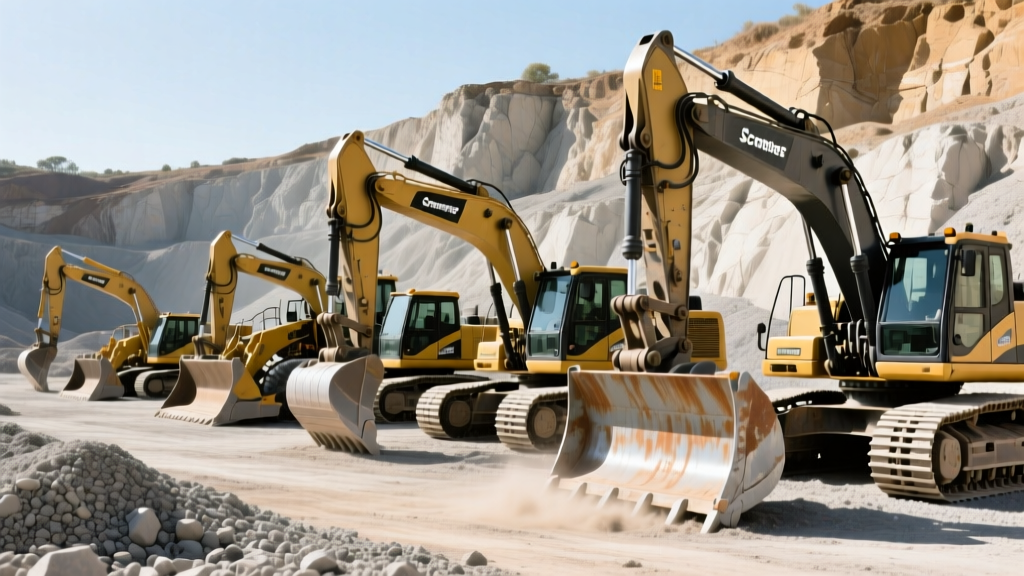
When a fleet manager or lead operator states, 'I operate heavy equipment in a hard-rock quarry,' the immediate assumption is that they are running 50-ton articulated haul trucks or hydraulic excavators at the face. However, the true margin in aggregate production is dictated by the processing circuit. Selecting the right combination of primary crushers and screening alternatives separates high-yield operations from those bleeding capital through excessive wear costs and downtime.
This analysis breaks down the technical specifications, failure modes, and 2026 economic realities of mobile quarry processing equipment, specifically comparing jaw crushers, horizontal shaft impactors (HSIs), and mobile screening alternatives.
Quick Decision Matrix: Crusher Selection
- Abrasive, high-silica material (e.g., granite, basalt): Choose a Jaw Crusher. Compression crushing minimizes wear part consumption.
- Soft to medium rock with high clay content (e.g., limestone, recycled concrete): Choose an HSI. Impact crushing handles sticky materials better and produces a more cubical product.
- High-volume, multi-stage sizing required on-site: Pair a track-mounted jaw with a mobile incline screener rather than relying on a single closed-circuit impactor.
Primary Crushing Alternatives: Jaw vs. Horizontal Shaft Impactors
The debate between compression (jaw) and impact (HSI) crushing hinges on material abrasiveness and the desired product shape. If you frequently state 'I operate heavy equipment' on job sites, transitioning to mobile aggregate processing requires a shift in mindset from simple extraction to continuous material flow management.
Jaw Crushers: The Compression Standard
Track-mounted jaw crushers like the Metso Lokotrack LT106 or Kleemann MOBICAT MC 110i EVO2 utilize a fixed and a moving jaw plate to compress rock until it fractures. The primary advantage is the low cost per ton in highly abrasive applications. The Closed Side Setting (CSS) typically ranges from 40mm to 150mm, allowing operators to dial in the exact discharge size.
Failure Mode Gotcha: The most common catastrophic failure in mobile jaws is not the motor, but the toggle plate snapping due to uncrushable material (tramp iron) entering the chamber. Modern units use hydraulic overload relief, but operators must still ensure excavator-mounted thumb attachments or grapple rakes are used at the face to pull out steel debris before it hits the hopper.
Horizontal Shaft Impactors: The Cubical Alternative
HSIs, such as the Kleemann MOBIREX MR 130 Zi EVO2, use high-speed rotors with blow bars to smash rock against impact aprons. This yields a highly cubical product, which is critical for asphalt and concrete aggregate specs. However, blow bar wear in high-silica rock can drive operating costs up by 300% compared to jaw dies.
Metallurgy Insight: Do not use standard martensitic steel blow bars for granite. Specify high-chrome (25%+ Cr) or ceramic-insert blow bars. While the upfront cost is roughly $8,500 to $12,000 per set, the lifespan increases from 40 hours to over 120 hours in abrasive rock.
| Equipment Model | Type | Capacity (TPH) | Est. 2026 CapEx | Wear Cost/Ton |
|---|---|---|---|---|
| Metso LT106 | Mobile Jaw | 250 - 350 | $680,000 - $750,000 | $0.12 - $0.18 |
| Kleemann MC 110i EVO2 | Mobile Jaw | 200 - 330 | $650,000 - $720,000 | $0.14 - $0.20 |
| Kleemann MR 130 Zi EVO2 | Mobile HSI | 350 - 450 | $780,000 - $890,000 | $0.45 - $0.85* |
*Wear cost/ton for HSI assumes high-silica abrasive rock; drops to $0.15 in soft limestone.
Screening Alternatives: Incline Decks vs. Horizontal Decks
Once material is crushed, it must be sized. The choice between incline and horizontal screeners fundamentally alters your circuit's footprint and efficiency.
Incline Screeners (e.g., Sandvik QA442)
Incline screens operate at a 20- to 25-degree angle. Gravity assists material flow, allowing for higher throughput rates and requiring less horsepower. The Sandvik QA442 features a patented Doublescreen design with two independent screen decks, allowing you to produce three distinct fractions simultaneously.
Best for: High-volume scalping and final product sizing where space is not severely restricted.
Horizontal Screeners (e.g., Keestrack K6e)
Horizontal screens operate flat (0 to 5 degrees) and use a high-stroke, aggressive triple-shaft mechanism to force material through the apertures.
Best for: Wet, sticky materials, and recycled asphalt/concrete. The aggressive stroke prevents 'blinding' (where wet fines smear across the screen media, blocking the holes).
Warning: Screen Media Selection
Using woven wire mesh in a mobile quarry application is a false economy. Wire mesh suffers from 'pegging' (near-size rocks wedging into the apertures) and requires frequent tensioning. Upgrade to polyurethane (PU) modular panels with tapered openings. PU panels cost roughly 3x more upfront ($1,200 per deck vs $400 for wire) but last 4 to 6 times longer and self-clean due to the flexibility of the polyurethane during the vibratory stroke.
Real-World Failure Modes and Maintenance Gotchas
Operators who manage these circuits know that theoretical TPH rarely matches actual TPH due to micro-stoppages. Addressing these specific failure modes is critical for maintaining uptime.
- Hydraulic Hose Burst (Crusher Adjustments): Mobile crushers use high-pressure hydraulics (up to 5,000 PSI) to adjust the CSS. Hoses routed near the crushing chamber degrade rapidly due to rock dust and heat. Replace standard rubber hoses with thermoplastic twin-line hoses rated for 5,800 PSI, and install spiral wrap guards to prevent abrasive rock dust from cutting through the outer jacket.
- Bearing Contamination in Screeners: The vibrator mechanism on a screener operates at 900-1,000 RPM. If the labyrinth seals fail, silica dust enters the bearing housing, causing catastrophic seizure within 48 hours. Mandate weekly greasing using a lithium-complex EP2 grease, and ensure operators purge exactly 120 grams per bearing—over-greasing blows out the seals just as surely as under-greasing starves them.
- Hopper Wall Build-up: In limestone or recycled concrete operations, material sticks to the hopper walls, reducing capacity and causing uneven feed to the crusher. Install UHMW (Ultra-High Molecular Weight) polyethylene liners on the hopper walls. These cost roughly $3,500 to install but eliminate daily manual scaling with excavator buckets.
2026 Regulatory Realities: Silica Dust and Emissions
Processing aggregate generates respirable crystalline silica (RCS). According to OSHA's respirable crystalline silica standard, the Permissible Exposure Limit (PEL) is strictly capped at 50 micrograms per cubic meter of air (µg/m³) as an 8-hour time-weighted average. The National Stone, Sand & Gravel Association (NSSGA) continuously advocates for practical compliance frameworks, but the enforcement reality on the ground is strict.
Mobile crushers and screeners must be equipped with integrated water suppression systems. However, water alone is insufficient for the screening phase. Modern 2026 setups utilize dry fog dust suppression systems at the screen deck feed points. These systems use ultrasonic nozzles to create water droplets (1-10 microns in size) that agglomerate with silica dust particles without adding enough moisture to blind the screen decks. A retrofit dry fog system costs between $18,000 and $25,000 but prevents OSHA citations that can exceed $15,000 per violation.
Furthermore, Tier 4 Final and Stage V diesel engines are now standard. If your operation is near residential zones, consider hybrid or fully electric-drive alternatives (like the Keestrack e-drive series), which can plug into the local grid, eliminating diesel costs (saving roughly $22 per hour in fuel) and reducing noise emissions by 40%.
Economic Breakdown: CapEx vs. OpEx
Industry Insight: According to Pit & Quarry industry reports, the total cost of ownership (TCO) for mobile aggregate equipment is shifting. While capital expenditure for track-mounted units has risen 14% since 2022 due to steel and component costs, the operational savings in site preparation and material haulage offset this within 18 months. Eliminating the need to haul raw shot-rock to a stationary plant saves an average of $1.15 per ton in articulated dump truck fuel and tire wear.
The Final Verdict for Fleet Managers
If your quarry processes hard, abrasive igneous rock and requires high-volume base course production, a mobile jaw crusher paired with an incline screener remains the undisputed champion of low OpEx. Conversely, if you are processing soft sedimentary rock, recycling concrete, or require strict cubical specs for asphalt chips, the HSI and horizontal screener combination is mandatory, provided you budget for the higher metallurgical wear costs. Understanding these mechanical and economic trade-offs is what separates those who merely run machines from those who engineer profitable material processing circuits.