Dingo Heavy Equipment Tech: Agriculture vs Construction
Compare Dingo heavy equipment technology across agriculture and construction. Analyze powertrains, smart implements, and 2026 telematics for compact loaders.
The Convergence of Compact Utility Loaders
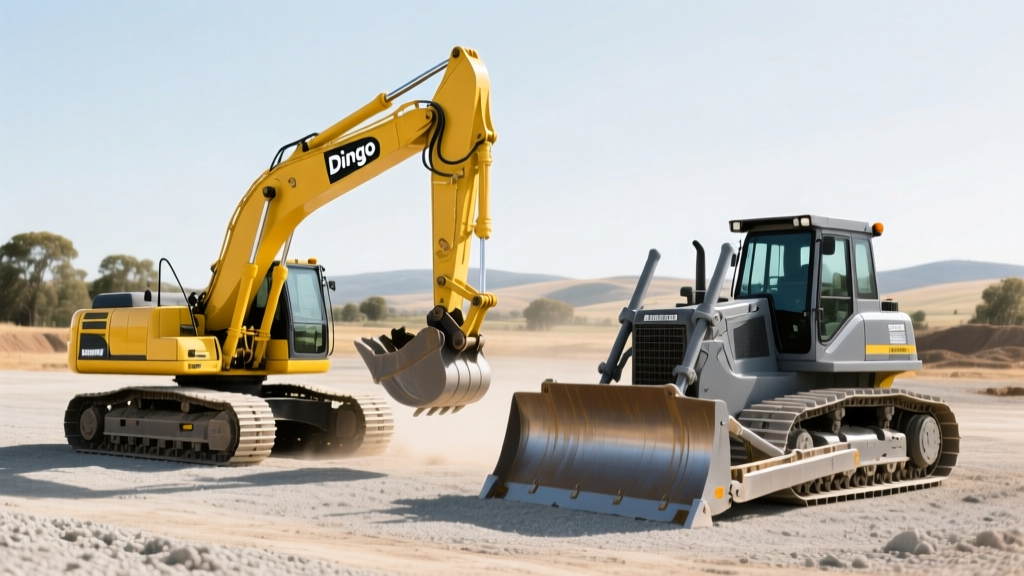
The term 'dingo heavy equipment' has evolved from a niche Australian colloquialism into a global industry standard for Compact Utility Loaders (CULs). Originally designed as simple motorized wheelbarrows, modern CULs are now highly sophisticated, computer-controlled platforms. As we navigate 2026, the technological divergence between agricultural and construction configurations has become stark. While the base chassis may share DNA, the powertrains, hydraulic architectures, and telematics suites are now hyper-specialized to meet the distinct regulatory, environmental, and operational demands of each sector.
Understanding these technological nuances is critical for fleet managers and owner-operators. Specifying a construction-grade diesel CUL for indoor agricultural use, or an ag-spec narrow-track electric loader for heavy trenching, results in catastrophic inefficiencies and premature component failure. This analysis breaks down the exact engineering differences driving the Dingo heavy equipment market today.
Quick Spec Matrix: Construction vs. Agriculture CULs
| Feature | Construction Spec (e.g., Toro TX 1000) | Agriculture Spec (e.g., Toro TX 427 / Electric CUL) |
|---|---|---|
| Primary Powertrain | Tier 4 Final Diesel (Kohler KDI 2504) | 48V/80V LiFePO4 Electric or Narrow-Track Gas |
| Hydraulic Flow | 18.3 gpm (High-Flow Option) | 8.5 - 11.5 gpm (Standard Flow) |
| Track Width / PSI | Wide (10-12") / 4.5 - 6.0 PSI | Narrow (6-8") / 2.5 - 3.5 PSI |
| Tech Integration | Auto-grade lasers, heavy-duty telematics | Geofencing, zero-emission barn sensors |
| Average Base Price (2026) | $48,000 - $58,000 | $42,000 (Gas) / $65,000+ (Electric) |
Powertrain Divergence: High-Torque Diesel vs. High-Voltage Electric
The most significant technological schism in dingo heavy equipment lies beneath the engine bay. Construction environments demand continuous high-breakout force and sustained hydraulic flow for running augers, breakers, and trenchers. Consequently, construction CULs rely on liquid-cooled, turbocharged diesel engines. The Toro Compact Utility Loaders lineup, specifically the TX 1000, utilizes advanced common-rail diesel systems that maintain peak torque at low RPMs, reducing fuel consumption by up to 14% compared to older mechanical injection models.
The Agricultural Shift to Electrification
Agriculture, particularly livestock handling, greenhouse management, and indoor equestrian facility maintenance, has aggressively adopted electric drivetrains. The introduction of 80V lithium-iron-phosphate (LiFePO4) battery architectures has eliminated the compromise between runtime and power. Electric CULs produce zero localized emissions and operate at under 75 decibels. This acoustic profile is not merely a comfort feature; it is a biological necessity in dairy and poultry operations where combustion engine noise and exhaust fumes trigger severe stress responses and reduce yield.
Furthermore, electric CULs utilize independent wheel-motor drives rather than traditional hydraulic traction pumps. This allows for software-defined steering ratios, enabling zero-radius turns without tearing up delicate topsoil or turf, a common failure mode when using diesel skid-steer mechanics in soft agricultural loam.
Hydraulic Architectures and Smart Implement Ecosystems
Hydraulic systems in modern Dingo heavy equipment have transitioned from simple open-center gear pumps to closed-loop, load-sensing piston pumps equipped with electro-hydraulic proportional valves. This shift allows the machine's ECU to match hydraulic flow exactly to the implement's demand, eliminating the heat generation that historically degraded hydraulic fluid in construction applications.
Construction: High-Flow and Auto-Depth
For construction, the 18.3 gpm high-flow option is mandatory for running 36-inch wide trenchers and hydraulic breakers. In 2026, these systems are integrated with 'smart' implements. A modern trencher attachment features built-in down-pressure sensors and auto-depth laser receivers. The CUL's ECU reads the trencher's chain load in real-time; if the chain hits a subterranean rock shelf, the system automatically reduces ground speed and increases hydraulic pressure to prevent chain snap—a failure that historically cost operators $1,200 in parts and three hours of downtime.
Agriculture: Low-Flow Precision and ISO Couplers
Agricultural implements rarely require high flow. Instead, they demand precision. Post-hole diggers and soil aerators used in orchards utilize low-flow (8.5 gpm) systems paired with ISO 5675 quick-disconnect couplers to prevent hydraulic cross-contamination. The technology focus here is on 'soft-start' hydraulics. When engaging a rotary mixer for feed or fertilizer, a sudden hydraulic spike can shatter the mixer's shear pins. Ag-spec CULs feature programmable ramp-up times in their digital displays, allowing the hydraulic flow to smoothly reach operating pressure over a 2.5-second window.
'The biggest mistake we see in cross-sector equipment deployment is running construction-grade high-flow hydraulics on agricultural rotary cutters. The instantaneous torque spike bypasses the mechanical shear pins and twists the implement's main drive shaft. Always verify the implement's maximum GPM rating against the CUL's auxiliary flow settings before engaging the PTO.'
— Field Service Engineering Report, Association of Equipment Manufacturers (AEM)
Telematics, IoT, and Precision Automation
The integration of LTE-M and 5G telematics into dingo heavy equipment has transformed fleet management, but the data parameters tracked vary wildly between sectors.
- Construction Telematics: Focuses on asset utilization, fuel burn rates, hydraulic pressure anomalies, and geofencing to prevent theft on unsecured job sites. The ECU monitors hydraulic oil temperature and automatically derates the engine if the fluid exceeds 180°F (82°C), preventing catastrophic pump cavitation.
- Agricultural Telematics: Focuses on biosecurity and operational boundaries. GPS geofencing is used to create 'no-go zones' around sensitive crop beds, water retention ponds, or livestock pens. If an operator steers the CUL toward a restricted zone, the machine's traction motors are electronically disabled. Additionally, battery-electric ag CULs transmit state-of-health (SoH) data for their battery cells, alerting farm managers to voltage imbalances before they result in a stranded machine during harvest.
Purchasing Framework: Specifying for Your Operation
Selecting the correct Dingo heavy equipment configuration requires moving beyond basic lift capacity charts. Use this decision matrix to align your purchase with your actual operational environment.
Step 1: Analyze the Ground Bearing Pressure
If your primary work surface is wet clay, established turf, or indoor barn flooring, you must specify narrow-track or electric CULs operating under 3.5 PSI. Wide-track construction models will cause severe soil compaction, destroying root aeration in agricultural settings.
Step 2: Calculate the Auxiliary Hydraulic Demand
Audit your top three most-used attachments. If you regularly run hydraulic breakers, cold planers, or large-diameter augers requiring >14 gpm, a construction-spec diesel with a high-flow auxiliary package is non-negotiable. If your attachments are primarily mechanical (buckets, forks, manual grapples) or low-flow (seeders, small mixers), an ag-spec standard-flow machine will save you $6,000 to $10,000 in initial capital and reduce daily fuel/electric costs.
Step 3: Evaluate the Emission and Acoustic Constraints
For operations involving confined animal feeding operations (CAFOs), greenhouses, or indoor arenas, diesel particulate filters (DPFs) and exhaust heat are liabilities. The premium paid for 80V electric CULs (often pushing $65,000) is rapidly offset by the elimination of DPF regeneration downtime, zero fuel costs, and the prevention of livestock stress-induced yield drops. For outdoor earthmoving and foundation trenching, Tier 4 diesel remains the undisputed king of sustained torque.
By treating dingo heavy equipment not as a generic commodity, but as a highly specialized technological platform, operators can drastically reduce attachment wear, minimize soil compaction, and maximize return on investment across both agricultural and construction landscapes. Always consult the manufacturer's exact hydraulic flow charts and ground pressure specifications before finalizing your fleet procurement.