Compare Heavy Equipment Rental Rates for Snow Removal in 2026
Analyze 2026 snow removal heavy equipment types and learn how to compare heavy equipment rental rates for municipal and commercial winter contracts.
The Economics of Winter Fleet Scaling
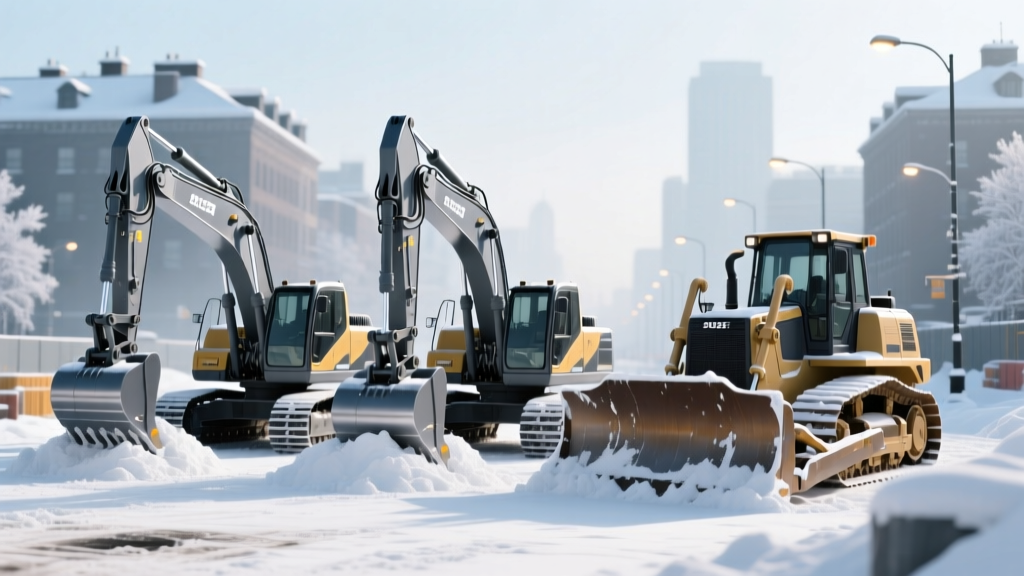
Managing a snow removal operation requires balancing unpredictable weather patterns with rigid contract penalties. For municipalities and commercial contractors, maintaining a year-round fleet sized for peak winter capacity is financially ruinous. The solution lies in strategic short-term leasing. However, when procurement officers compare heavy equipment rental rates, they often focus solely on the base daily or monthly fee, ignoring the operational variables that dictate true cost-per-acre cleared.
This guide breaks down the primary heavy equipment types used in snow removal, provides 2026 rental rate benchmarks, and analyzes real-world case studies to help you structure profitable winter contracts.
2026 Snow Removal Equipment Profiles & Rental Benchmarks
Before signing a seasonal agreement, you must align the machine's physical capabilities with the specific surface type and snow volume of your contract. The following table outlines standard 2026 market rates for core snow removal machinery across North American regional dealerships.
| Equipment Type | Industry Standard Model | Daily Rate | Weekly Rate | Monthly Rate (Seasonal) | Primary Application |
|---|---|---|---|---|---|
| Compact Track Loader (CTL) | Bobcat T86 / Cat 299D3 | $325 - $375 | $950 - $1,100 | $2,400 - $2,800 | Commercial lots, sidewalks, tight urban spaces |
| Skid Steer Loader (SSL) | Bobcat S76 / Cat 262D3 | $225 - $275 | $700 - $850 | $1,700 - $2,100 | Paved surfaces, loading docks, hardpack scraping |
| Wheel Loader (Mid-Size) | Cat 950 GC / Volvo L90H | $800 - $950 | $2,200 - $2,600 | $5,800 - $6,800 | Municipal streets, large logistics hubs, push-plowing |
| Motor Grader | John Deere 872GP / Cat 14M | $1,100 - $1,350 | $3,200 - $3,800 | $8,500 - $10,200 | Highway ice scraping, windrow management, grading |
Case Study 1: Municipal Highway Clearing (Wheel Loaders & Graders)
A mid-sized county public works department in the Great Lakes region faced a critical dilemma: their owned fleet of motor graders was aging, and a severe La Niña forecast predicted 40% above-average snowfall. Rather than purchasing new $650,000 motor graders that would sit idle from April to November, the department opted for a 150-day seasonal rental contract.
The Operational Execution
The county rented four John Deere 872GP motor graders equipped with hardened steel moldboard cutting edges and front-mounted underbody plows. According to the Federal Highway Administration (FHWA) Winter Maintenance Program, maintaining bare pavement on high-speed arterials requires aggressive scraping capabilities that only a grader's downward blade pressure can provide.
The wheel loaders (Cat 950 GC) were utilized exclusively at intersection corners and cul-de-sacs to load accumulated windrows into articulated dump trucks. By renting the loaders with high-lift臂 configurations, the operators could clear 12-foot snowbanks without the machine's front axle leaving the ground.
"When we compare heavy equipment rental rates for municipal graders, the base price is only half the equation. The real savings came from negotiating a 'weather-day clause' in the contract, which paused the daily meter billing during dry weeks where the machines were staged but not deployed." — Fleet Director, Midwest County Public Works
Case Study 2: Commercial Retail Contracts (CTL vs. Skid Steer)
Commercial snow removal contractors operate on much tighter margins than municipalities. A regional contractor managing 45 retail strip malls in New England needed to upgrade their fleet of skid steers to Compact Track Loaders (CTLs) to prevent asphalt damage and improve traction on black ice.
Traction vs. Undercarriage Wear
A standard skid steer with pneumatic tires exerts approximately 35 to 45 psi of ground pressure. When turning on icy asphalt, the tires spin, tearing up the surface and creating liability issues for the property owner. A CTL like the Bobcat T86 distributes its weight across the track footprint, reducing ground pressure to roughly 5.5 psi.
Warning: Hidden Track CostsWhile CTLs offer superior traction, rental agreements often hold the renter liable for track damage. Hidden concrete curbs buried under 18 inches of hardpack snow can easily slice a rubber track. Replacement costs for a set of heavy-duty CTL tracks in 2026 average $2,800 to $3,400. Contractors must mandate that operators use the machine's 'ride control' and avoid high-speed counter-rotation on unseen obstacles.
Hidden Cost Variables When You Compare Heavy Equipment Rental Rates
Novice contractors look at the monthly rate. Veteran operators scrutinize the rental agreement for the following hidden cost multipliers that can destroy a winter contract's profitability.
1. Auxiliary Hydraulic Flow Mismatches
If your contract requires clearing deep, wet lake-effect snow using a rotary snowblower, standard hydraulic flow is insufficient. A standard skid steer produces 18 to 23 gallons per minute (GPM) of auxiliary flow. An 84-inch commercial snowblower requires a High-Flow hydraulic package producing 30 to 40 GPM. Renting a standard-flow machine and attempting to run a high-flow blower will cause continuous hydraulic relief valve blow-offs, overheating the fluid and destroying the machine's main hydraulic pump—a repair bill that will be deducted entirely from your security deposit.
2. Attachment Coupling and Pin Wear
Snow removal is a high-cycle application. An operator might raise, lower, and angle a V-plow hundreds of times per shift. This rapid cycling accelerates wear on the quick-attach coupling pins and the loader arm bushings. When inspecting rental equipment upon delivery, measure the lateral play in the tilt cylinders. If the play exceeds 3/16 of an inch, demand a replacement machine before signing the delivery ticket, or you will be billed for a $1,200 bushing and pin overhaul at the end of the season.
3. DEF Fluid and Cold Weather Consumables
Tier 4 Final engines require Diesel Exhaust Fluid (DEF). In sub-zero temperatures, standard DEF can crystallize and clog the dosing injectors if the machine is shut off improperly. Ensure your rental agreement specifies who is responsible for cold-weather winterization fluids, including arctic-grade hydraulic oil (like Mobil DTE 13M) and block heaters. Running standard hydraulic fluid at -10°F will cause cavitation in the hydraulic pumps during morning = shift startups.
Strategic Sourcing and Utilization Matrices
To determine whether renting or owning is the correct financial move, contractors should utilize a 300-hour threshold matrix. Industry data supported by the American Public Works Association (APWA) suggests that if a specific snow removal asset will be utilized for fewer than 300 hours per year, renting remains the most capital-efficient strategy.
- Under 150 Hours: Strict short-term daily/weekly rentals. Maximum flexibility, highest hourly cost.
- 150 to 300 Hours: Seasonal (4-to-5 month) master0 lease agreements. Negotiate maintenance inclusion for hydraulic hoses and cutting5 .
- Over 300 Hours: Lease-to-own or direct purchase. The depreciation and maintenance costs are offset by the elimination of rental premiums and the ability to use the asset for secondary applications (e.g., landscaping, dirt work) in the off-season.
Ultimately, securing a profitable winter operation requires looking past the sticker price. By matching the exact hydraulic and traction specifications of the machine to the physical demands of the snow contract, and by aggressively negotiating weather-day clauses and wear-and-tear caps, contractors can turn unpredictable winters into highly predictable revenue streams.