Heavy Equipment Buckets: Compact vs Full-Size Selection Guide
Compare compact vs full-size heavy equipment buckets for loaders and excavators. Learn capacity specs, hydraulic limits, and 2026 pricing.
The Engineering Divide: Matching Bucket Scale to Carrier Class
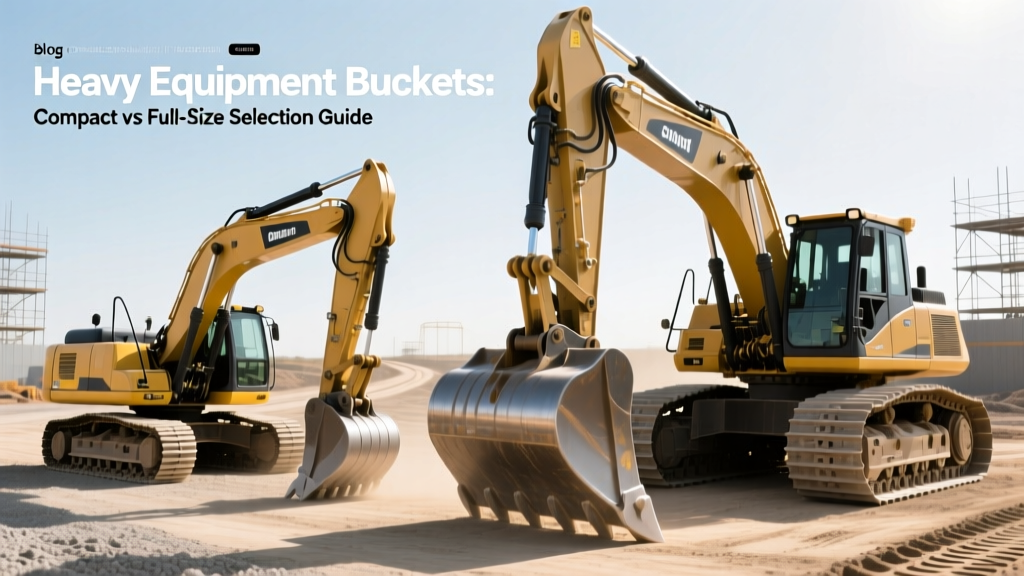
Selecting the correct heavy equipment buckets requires more than matching width to machine weight. The fundamental engineering divide between compact carriers (1.5 to 8 tons) and full-size machines (20 to 50+ tons) dictates entirely different metallurgical requirements, hydraulic flow tolerances, and geometric constraints. As of 2026, misallocating bucket scale—such as over-bucketing a compact track loader (CTL) or under-utilizing a 36-ton excavator's breakout force—results in accelerated pin wear, hydraulic cavitation, and a 15% to 22% drop in hourly production rates.
This guide dissects the technical specifications, procurement frameworks, and total cost of ownership (TCO) metrics required to select the optimal bucket configuration for both compact and full-size construction equipment.
⚠️ CRITICAL WARNING: Over-Bucketing RisksInstalling a bucket that exceeds the OEM's maximum recommended width or weight alters the machine's center of gravity. According to OSHA excavation safety guidelines, this lateral weight shift significantly increases the risk of carrier tip-overs during side-hill trenching and places catastrophic sheer stress on the stick-to-bucket linkage pins.
Compact Equipment Buckets: Hydraulic Limits and Geometric Constraints
Compact excavators (e.g., Cat 301.7 CR, Kubota KX040-4) and CTLs (e.g., Bobcat T770) operate with auxiliary hydraulic flows typically ranging from 15 to 25 GPM. The primary limitation in compact heavy equipment buckets is not just the physical weight of the steel, but the volumetric capacity relative to the machine's lifting capacity.
Pin Geometry and Stick Ratios
Compact carriers utilize pin diameters between 1.5 inches and 2.5 inches. The stick-to-bucket ratio is aggressively short to maximize curl force in tight spaces. When selecting a compact bucket, verify the pin boss width. A standard 24-inch digging bucket for a 4-ton mini excavator features a pin boss width of roughly 8.5 inches. If the bucket's ear spacing exceeds the stick width by more than 0.05 inches, lateral play will destroy the bushings within 200 operating hours.
Compact Bucket Pricing and Applications (2026 Data)
- Standard Trenching (12" - 24"): $850 – $1,400. Ideal for utility lines and irrigation. Typically fabricated from standard A36 mild steel with a bolt-on cutting edge.
- Heavy-Duty Rock (24" - 36"): $1,600 – $2,800. Features AR400 steel wear strips and side cutters. Required for frost-heavy soils and shallow bedrock.
- Hydraulic Tilt/Grading (36" - 60"): $2,500 – $4,200. Incorporates an integrated tilt cylinder. Requires carriers with a minimum of 18 GPM auxiliary flow to maintain responsive grading speeds.
Full-Size Heavy Equipment Buckets: Breakout Force and Wear Packages
Full-size excavators (e.g., Cat 336, Volvo EC300) and large wheel loaders (e.g., John Deere 944) generate immense breakout forces, often exceeding 40,000 lbs. At this scale, heavy equipment buckets must be engineered to absorb high-impact shock loads and resist severe abrasive wear.
Metallurgy and Wear Packages
Full-size buckets abandon mild steel in favor of high-yield strength alloys. According to data from SSAB's Hardox wear plate specifications, modern heavy-duty rock buckets utilize Hardox 450 or 500 Tuf for the base edge and side wings. This material offers a yield strength of up to 1,250 MPa, allowing manufacturers to use thinner steel plates, thereby reducing the bucket's dead weight and increasing its legal payload capacity.
'In full-size quarry and mining applications, the cost of the bucket is secondary to the cost of downtime. A properly spec'd Ground Engaging Tool (GET) system on a 6-yard loader bucket will pay for itself in fuel savings and cycle time reduction within the first 800 hours.'
— Senior Attachment Engineer, Association of Equipment Manufacturers (AEM) Symposium
Full-Size Bucket Pricing and GET Integration
- General Purpose (GP) Excavator (48" - 60"): $4,500 – $6,800. Includes standard teeth and bolt-on edge (BOE). Best for topsoil, clay, and loose aggregate.
- Heavy-Duty Rock (HD) Excavator (48" - 72"): $7,200 – $11,500. Features dual-radius side wings, heel shrouds, and cast lip shrouds to protect the base edge from abrasive muck.
- Wheel Loader Quarry Buckets (96" - 120"): $12,000 – $18,500+. Equipped with modular GET systems (e.g., Cat AdvantEdge or Volvo GET) allowing for rapid tooth replacement without torching or grinding.
Technical Comparison Matrix: Compact vs. Full-Size Specifications
| Specification Metric | Compact Class (1.5 - 8 Tons) | Full-Size Class (20 - 50+ Tons) |
|---|---|---|
| Typical Bucket Width | 12" – 48" | 48" – 120"+ |
| Linkage Pin Diameter | 1.5" – 2.5" | 3.5" – 5.5" |
| Primary Steel Grade | A36 Mild / AR400 Edge | Hardox 450/500 / Domex |
| Hydraulic Flow Req. | 15 – 25 GPM | 70 – 115+ GPM |
| Average Procurement Cost | $900 – $3,500 | $5,000 – $18,000+ |
| Primary Failure Mode | Pin/Bushing sheer from lateral twist | Base edge abrasion and GET loss |
The TCO Framework: OEM vs. Aftermarket Procurement
When sourcing heavy equipment buckets, buyers must navigate the OEM versus aftermarket divide. As tracked by the Association of Equipment Manufacturers (AEM), the aftermarket attachment sector has matured significantly, offering highly specialized geometries that OEMs often overlook in favor of standardized GP designs.
When to Buy OEM
Procure directly from the OEM (Caterpillar, Volvo, John Deere) when purchasing full-size wheel loader buckets or when integrating complex hydraulic quick-coupler systems. OEM buckets are engineered with exact kinematic match data for the specific carrier's linkage, ensuring optimal dump angles and rollback forces. Furthermore, OEM buckets often carry over into the machine's primary warranty coverage regarding hydraulic pump strain.
When to Buy Aftermarket
For compact excavators and specialized trenching applications, aftermarket manufacturers (e.g., Werk-Brau, Geith, Paladin) provide superior ROI. Aftermarket suppliers offer custom-width trenching buckets (e.g., exact 14.5" widths for specific pipe bedding) and specialized V-bottom rock buckets that OEM catalogs rarely stock. For compact machines, the lower hydraulic pressures and simpler linkage geometries make aftermarket integration virtually seamless, often at a 20% to 30% discount compared to OEM pricing.
💡 PROCUREMENT TIP: The Tiltrotator PenaltyIf you are equipping a compact or mid-size excavator with a tiltrotator (e.g., Rototilt, Steelwrist), you must downsize your bucket width by 10% to 15%. The tiltrotator adds 600 to 1,200 lbs of dead weight between the stick and the bucket. Failing to reduce the bucket volume will overtax the machine's lifting capacity and severely degrade cycle times.
Final Procurement and Inspection Checklist
Before signing a purchase order for any heavy equipment bucket, run the attachment through this 5-point verification process:
- Verify Pin and Boss Tolerances: Measure the carrier's stick width and pin diameter with digital calipers. Ensure the bucket's ear spacing allows for a maximum of 1mm lateral play per side.
- Audit the Cutting Edge Configuration: Confirm whether the bucket utilizes a weld-on edge (W/O) or bolt-on edge (BOE). BOEs are mandatory for full-size machines operating in high-abrasion environments to minimize maintenance downtime.
- Check Hydraulic Quick-Coupler Clearance: If using a pin-grabber coupler, ensure the bucket's hanger plate thickness matches the coupler's jaw width. A mismatched hanger plate will cause premature wear on the coupler's locking mechanism.
- Assess the Wear Package: For full-size rock buckets, verify the presence of side wear plates, heel shrouds, and lip shrouds. A bucket lacking these features will require a $4,000+ base edge rebuild within 2,000 hours in abrasive conditions.
- Confirm Weight Ratings: Cross-reference the bucket's bare weight with the carrier's OEM lift chart at maximum reach. The bucket weight plus the maximum payload must not exceed 85% of the machine's rated tipping load.