The New Definition of Heavy Equipment: 2026 Airport GSE Tech
Explore how the 2026 definition of heavy equipment now includes autonomous, electrified airport ground support machinery and GSE fleet trends.
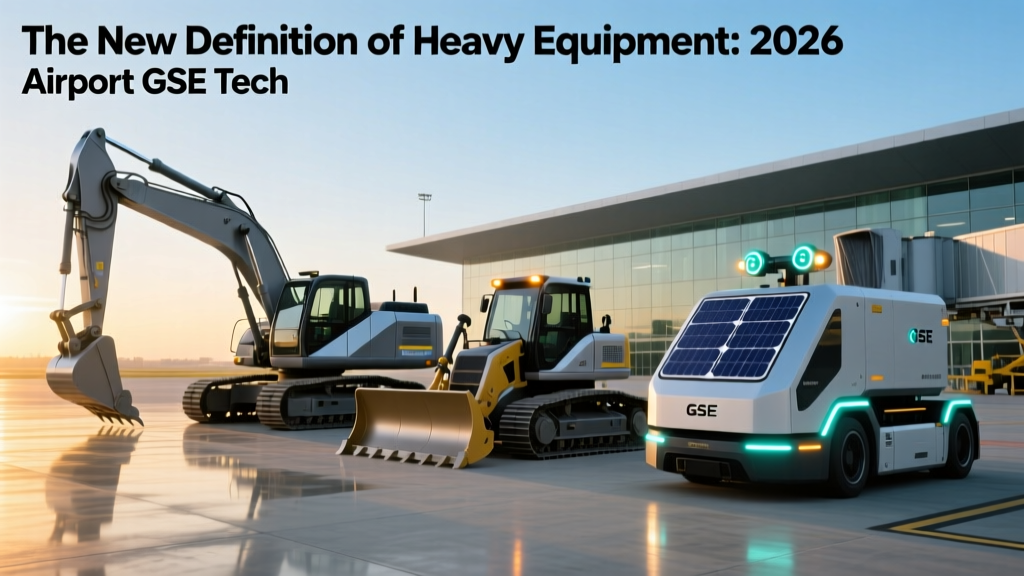
When industry professionals hear the traditional definition of heavy equipment, they typically picture yellow iron: 40-ton excavators, tower cranes, and articulated dump trucks moving earth on sprawling construction sites. However, the 2026 operational reality at major international aviation hubs forces a radical expansion of this definition of heavy equipment. Today, the term encompasses highly specialized, high-torque, electrified, and autonomous Airport Ground Support Equipment (GSE). These machines do not move dirt; they move $200 million aircraft and thousands of tons of cargo with millimeter precision.
The modern tarmac is a high-stakes logistics environment where a single equipment failure can cascade into hundreds of thousands of dollars in delayed flight costs. As airports mandate zero-emission operations and turnaround times shrink, the engineering behind GSE has evolved to rival aerospace standards. Here is a deep dive into the technology trends redefining heavy airport machinery in 2026.
Electrification: The 80V LiFePO4 Standard in Baggage Tractors
The transition from internal combustion engine (ICE) tugs to electric GSE is no longer an environmental experiment; it is an operational mandate driven by total cost of ownership (TCO). The industry has largely standardized on 80-volt Lithium Iron Phosphate (LiFePO4) battery architectures for heavy-duty baggage tractors and belt loaders.
Why LiFePO4 Dominates the Tarmac
Unlike the Nickel Manganese Cobalt (NMC) batteries found in consumer EVs, LiFePO4 chemistry offers superior thermal stability—a critical requirement for GSE operating on sun-baked tarmacs where ambient surface temperatures can exceed 140°F (60°C). The risk of thermal runaway is virtually eliminated. Furthermore, LiFePO4 cells withstand 3,000 to 5,000 deep discharge cycles before degrading to 80% capacity, aligning perfectly with the 7-to-10-year lifecycle of heavy baggage tractors like the Textron TUG E-1044.
Cost Reality Check (2026): An 80V electric baggage tractor carries a CapEx premium, averaging $82,000 compared to $58,000 for a Tier 4 Final diesel equivalent. However, the elimination of diesel fuel ($14,000/year), DEF fluid, and ICE drivetrain maintenance results in a break-even point at month 28. Over a 7-year lifecycle, the electric variant yields a net savings of approximately $41,000 per unit.Autonomous Pushback Tugs and LiDAR Integration
The most significant shift in the modern definition of heavy equipment is the integration of Level 4 autonomy in aircraft pushback tractors. Pushing back a 350-ton Boeing 777 or Airbus A350 requires immense drawbar pull (often exceeding 12,000 lbf) and absolute precision to avoid stressing the aircraft's nose landing gear.
In 2026, autonomous retrofits and OEM-integrated LiDAR systems on tugs like the Eagle Tugs ET-12 allow for driver-assisted or fully remote pushback operations. These systems utilize RTK-GPS (Real-Time Kinematic) combined with 3D solid-state LiDAR to map the apron in real-time. The software calculates the exact tow-barless engagement angle, ensuring the aircraft nose gear is centered within a 2-millimeter tolerance before the heavy-duty hydraulic cradle lifts the gear. This eliminates the human error responsible for the majority of tarmac ground-handling damage claims.
CapEx, OpEx, and Performance Matrix: ICE vs. Electric vs. Autonomous GSE
Fleet managers must weigh the operational nuances of different heavy GSE configurations. The table below outlines the 2026 benchmarks for heavy-duty aircraft tow tractors (10,000+ lb drawbar pull class).
| Metric | Tier 4 Diesel ICE | 80V LiFePO4 Electric | Autonomous Electric |
|---|---|---|---|
| Average CapEx (USD) | $145,000 | $185,000 | $235,000 |
| Energy/Fuel Cost per Hour | $18.50 (Diesel + DEF) | $4.20 (Grid Electric) | $4.50 (Grid + Telematics) |
| Scheduled Maintenance | Every 250 Hours | Every 1,000 Hours | Every 1,000 Hrs + Sensor Cal. |
| Nose Gear Alignment Precision | Operator Dependent | Operator Dependent | ± 2mm (LiDAR Assisted) |
| Tarmac Emissions | High (NOx, PM) | Zero (Point of Use) | Zero (Point of Use) |
High-Power Charging Infrastructure: Pantographs vs. CCS2
Heavy equipment is only as effective as its ability to stay operational. The 2026 definition of heavy GSE includes the infrastructure required to sustain it. Airport operators are currently split between two heavy-duty charging methodologies for continuous-shift baggage tractors and belt loaders:
- CCS2 Plug-In (150kW+): Ideal for decentralized fleet parking. Requires manual connection but allows for opportunistic charging during crew shifts. A 15-minute top-up provides enough range for three additional wide-body aircraft baggage loads.
- Overhead Pantograph (300kW): Deployed directly at the aircraft stand or baggage makeup area. The GSE drives under the gantry, and the charger automatically lowers onto the vehicle's roof rails. This enables 5-minute ultra-rapid charging without the operator ever leaving the cab, maximizing equipment utilization rates.
According to the International Air Transport Association (IATA), standardizing charging infrastructure across global hubs remains a primary focus to prevent fragmented, proprietary charging ecosystems that stall fleet electrification.
"The transition to sustainable ground operations is not merely about swapping diesel engines for batteries. It requires a fundamental redesign of apron energy grids, telematics integration, and heavy equipment utilization models to ensure turnaround times are not compromised." — IATA Ground Operations Environmental Guidelines
Telematics and Predictive Tarmac Maintenance
Modern heavy GSE is essentially a rolling data center. CAN bus architectures in 2026 electric tugs monitor over 400 parameters in real-time, from motor controller junction temperatures to hydraulic cradle pressure variance.
By integrating this telemetry with cloud-based predictive maintenance algorithms, fleet managers can anticipate component failures before they strand an aircraft at the gate. For example, if the telematics system detects a 4% increase in amp draw from the hydraulic steering pump motor during standard left-turn maneuvers, it flags the hydraulic fluid for degradation or filter blockage, scheduling maintenance during the next off-peak window rather than waiting for a catastrophic pump seizure during a holiday travel rush.
Regulatory and Safety Mandates
The Federal Aviation Administration (FAA) and global equivalents are increasingly tying airport improvement grants to verifiable emissions reductions and advanced safety telematics. Heavy equipment that lacks automated collision avoidance and geofencing capabilities (preventing tugs from entering active taxiways without ATC clearance) is rapidly being phased out of Tier 1 hub procurement contracts.
Fleet Transition Framework for 2026
For airport operations directors and ground handling agencies (GHAs) looking to modernize their heavy equipment fleets, a phased, data-driven approach is mandatory:
- Audit Apron Power Capacity: Before ordering electric GSE, commission a load study of the terminal's electrical substations. A fleet of twenty 80V heavy tractors charging simultaneously via CCS2 can draw upwards of 3 megawatts, requiring significant utility upgrades.
- Pilot High-Utilization Routes: Deploy autonomous or electric tugs on the longest, most continuous routes (e.g., remote cargo aprons to terminal baggage makeup) to maximize the ROI on the CapEx premium.
- Mandate Open-Source Telematics: Refuse procurement contracts that lock fleet data behind proprietary OEM paywalls. Ensure the GSE CAN bus data can integrate via API into your existing enterprise asset management (EAM) software.
The definition of heavy equipment has permanently evolved. It is no longer defined solely by gross vehicle weight or bucket capacity, but by technological density, precision payload management, and zero-emission operational endurance. Airport GSE stands at the forefront of this industrial renaissance, proving that the most critical heavy machinery of the 21st century operates not on the open dirt, but on the highly calibrated concrete of the global aviation network.