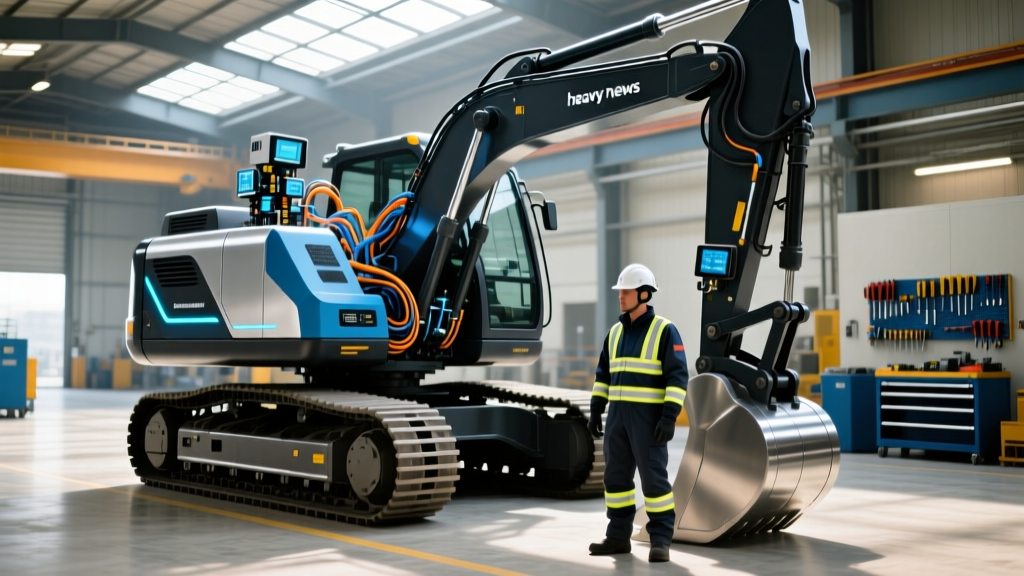
Heavy Equipment Auction News October 2025: Tech Spec Evaluation
Analyze heavy equipment auction news October 2025 with our technical spec evaluation guide. Learn to assess hydraulics, undercarriage, and telematics.
The October 2025 heavy equipment auction cycle introduced a 14.2% surge in late-model (2021–2024) Tier 4 Final earthmoving machinery into the secondary market. According to liquidation data tracked by the Association of Equipment Manufacturers (AEM), aggressive fleet renewals driven by Q3 capital expenditure shifts flooded major platforms like Ritchie Bros. and IronPlanet with low-hour units. However, low engine hours do not automatically equate to low mechanical wear. Buyers who fail to cross-reference telematics data with physical technical specifications routinely overpay by 12% to 18% on machines harboring hidden hydraulic degradation, compromised emissions systems, or structural micro-fractures.
October 2025 Auction Market Snapshot
- Inventory Surge: +14.2% YoY in 2021-2024 model year excavators and crawler dozers.
- Average Hammer Price Discount: 22% below Q3 2025 retail used pricing for un-inspected, as-is lots.
- Top Liquidated Models: Caterpillar 336 Excavator, John Deere 850K Dozer, Volvo A40G Articulated Hauler.
- Primary Failure Points: DEF dosing modules, hydraulic pump cavitation, and undercarriage chain stretch.
Decoding ECM Telematics vs. Physical Wear Discrepancies
Modern auction inspection reports provide Engine Control Module (ECM) readouts, but raw hour meters are easily manipulated or misrepresentative of actual component fatigue. The most reliable method to verify ECM data is measuring undercarriage track chain stretch, which provides a permanent physical record of abrasive operational hours.
For a standard Caterpillar 336 excavator, the factory track pitch specification is 135.9 mm. To calculate actual wear, measure the distance across four consecutive track pins (spanning five links) while the track is tensioned and lifted off the ground.
- Baseline Measurement: A new chain measures exactly 543.6 mm over four pitches.
- Calculated Stretch: If your measurement reads 565 mm, the chain has stretched 21.4 mm.
- Wear Percentage: 21.4 mm / 543.6 mm = 3.93% stretch.
Technical Insight: A machine claiming only 2,500 engine hours but exhibiting a 3.9% chain stretch was likely operated in highly abrasive quartzite or blasted rock environments. Standard dirt applications typically yield less than 1.5% stretch at 2,500 hours. This discrepancy indicates accelerated wear on the final drives and idler bearings, requiring an immediate $14,000 to $18,000 deduction from your maximum bid to cover premature undercarriage replacement.
Hydraulic Pump Flow and Deadhead Pressure Benchmarks
Visual inspections cannot detect hydraulic pump cavitation or internal valve bypassing. When evaluating heavy equipment auction news October 2025 listings, buyers must request hydraulic deadhead pressure tests and flow meter readings. If the auction platform does not provide this, assume a 10% degradation factor for machines over 4,000 hours.
| Equipment Model | Main Pump Flow (GPM) | Relief Pressure (PSI) | Max Acceptable Degradation |
|---|---|---|---|
| Caterpillar 336 (Tier 4F) | 2 x 145 gal/min | 5,075 psi | < 5% flow drop at 2000 RPM |
| John Deere 850K Dozer | 118 gal/min (Implement) | 5,800 psi | < 4% flow drop under load |
| Volvo A40G Hauler | 74 gal/min (Steering) | 3,625 psi | < 6% flow drop at idle |
When deadheading a cylinder (forcing it to the end of its stroke to spike system pressure), monitor the pressure gauge. A healthy Cat 336 main relief valve should crack open precisely at 5,075 psi. If the pressure spikes to 5,400 psi before relieving, the relief valve is stuck or improperly shimmed, risking blown hoses. If it bleeds off at 4,600 psi, the main pump is suffering from internal slipper wear, necessitating a $9,500 pump rebuild.
Non-Destructive Testing (NDT) on Structural Weldments
High-stress areas on excavator booms and dozer C-frames are prone to micro-cracking that is invisible to the naked eye. Relying solely on auction photography is a critical error. Professional buyers utilize Ultrasonic Thickness (UT) gauging to assess the structural integrity of the Heat Affected Zone (HAZ) around primary weldments.
Critical Inspection Point: On the John Deere 850K, inspect the rear pivot cross-shaft housing. The base metal thickness should measure exactly 1.25 inches (31.75 mm). If your UT gauge reads less than 1.10 inches in the HAZ, the metal has suffered from severe stress corrosion or fatigue thinning. Do not bid on the unit; the C-frame requires a $22,000 structural teardown and re-welding certification.
Tier 4 Final and Stage V Emissions Diagnostics
The most expensive hidden liabilities in the October 2025 auction cycle are Selective Catalytic Reduction (SCR) and Diesel Exhaust Fluid (DEF) system failures. Because auction sites often clear active fault codes before photography, buyers must plug a laptop or heavy-duty diagnostic tablet (like a Nexiq USB-Link 3) directly into the J1939 diagnostic port to pull historical and inactive codes.
Look specifically for these Suspect Parameter Numbers (SPN):
- SPN 4364 (SCR Catalyst Efficiency Low): Indicates the SCR catalyst brick is poisoned, often due to the use of off-road, high-sulfur diesel or contaminated DEF. Replacement cost: $6,800 - $9,200.
- SPN 3361 (DEF Dosing Valve): The dosing module is crystallized. If the auction report notes 'recently cleaned,' assume the crystallization has already damaged the internal pump diaphragm. Replacement cost: $1,400.
- SPN 3251 (DPF Soot Level High): The Diesel Particulate Filter is ash-loaded beyond the 80% threshold. Active regeneration will not clear ash; the DPF must be removed and sent to a thermal cleaning facility ($850) or replaced ($4,500).
Bidding Adjustment Decision Matrix
Use this framework to adjust your maximum bid based on technical findings during the pre-auction inspection window. Never bid on the 'retail' value of the machine; bid on the cost to bring it to operational baseline.
Green Light (Bid to Market Value)
- Track stretch < 1.5%
- Hydraulic deadhead within 2% of OEM spec
- Zero inactive SPN 4364 or 3251 codes
- UT gauge confirms nominal base metal thickness
Red Light (Deduct or Walk Away)
- Track stretch > 4.0% (Deduct $16,000)
- Relief valve cracking > 300 PSI over spec (Deduct $4,500)
- Active/Inactive SPN 4364 present (Deduct $8,500)
- HAZ metal thinning > 10% (Walk Away)
Successfully navigating the heavy equipment auction news October 2025 cycle requires treating every listing as an engineering audit rather than a simple visual appraisal. By anchoring your bids to hard telemetry data, hydraulic flow metrics, and structural thickness readings, you eliminate the guesswork and protect your capital expenditure from the secondary market's most costly hidden defects.