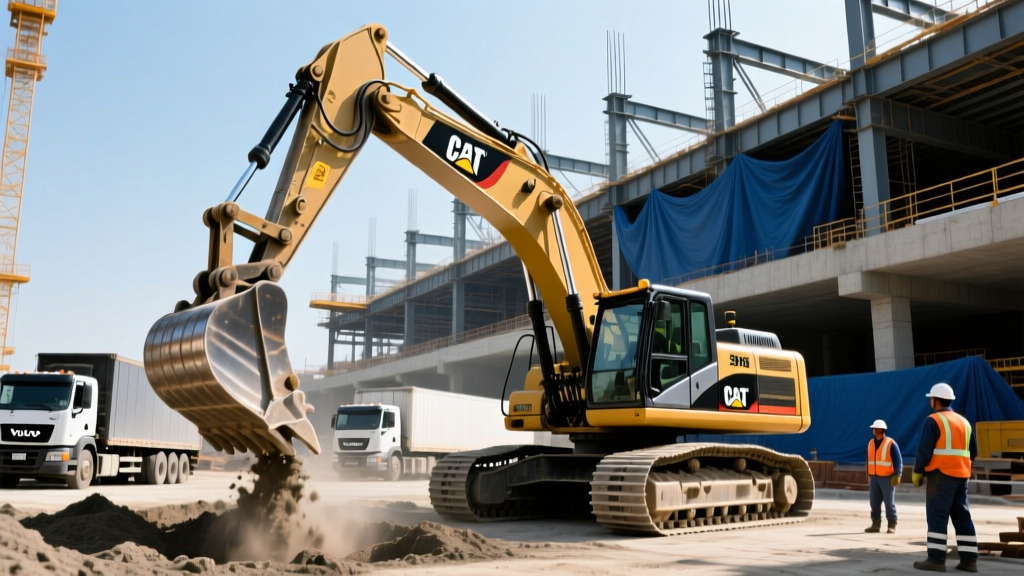
How to Leverage a Heavy Equipment Forum for Operator Training
Learn how fleet managers use a heavy equipment forum to bridge the gap between OEM manuals and real-world operator training with actionable, verified tips.
OEM operator manuals provide the baseline for machine capabilities, maintenance intervals, and safety protocols. However, the dirt tells a different story. Real-world conditions—extreme ambient temperatures, abrasive silica dust, and high-cycle trenching—often expose operational nuances that factory documentation glosses over. For fleet managers and lead operators, bridging this knowledge gap requires tapping into the collective, hard-won experience of the industry's veteran mechanics and operators. This is where a dedicated heavy equipment forum becomes an invaluable, albeit unconventional, training resource.
The Gap Between OEM Manuals and Real-World Dirt
Factory training is essential for understanding machine architecture and baseline safety. Yet, OEM manuals are written for idealized conditions. A manual might dictate a hydraulic filter change every 1,000 hours, but veterans working in high-silt environments know the restriction gauge will spike at 450 hours. Relying solely on the manual in those conditions leads to cavitation, pump scoring, and catastrophic failure.
'The manual tells you how the machine was built. The forum tells you how the machine actually survives the jobsite.' — Fleet Maintenance Director, Midwest Earthmoving
Integrating insights from a heavy equipment forum into your operator training program transforms rigid SOPs into adaptive, field-tested best practices. It shifts training from theoretical compliance to practical machine preservation.
Top Heavy Equipment Forums for Operational Insights
Not all online communities are created equal. When sourcing training material and troubleshooting workflows, fleet managers should focus on highly moderated, veteran-heavy platforms. According to industry safety and training hubs like For Construction Pros, peer-to-peer knowledge sharing is increasingly vital for reducing jobsite incidents.
- Heavy Equipment Forums: The gold standard for deep mechanical diagnostics, hydraulic schematics, and Tier 4 Final/Stage V emission troubleshooting. Best for lead mechanics and advanced operator training.
- TractorByNet: Highly active for compact track loaders (CTLs), skid steers, and ag-crossover equipment. Excellent for attachment-specific workflow tips and ground-engaging tool wear analysis.
- Contractor Talk (Heavy Equipment Subforum): Focuses heavily on the business and workflow side of equipment operation, including fuel-burn optimization, track tensioning best practices for undercarriage longevity, and jobsite logistics.
Framework: Vetting Forum Advice for Fleet Training
Extracting gold from the noise requires a strict vetting protocol. Never implement a forum-sourced operational tip without passing it through this three-step verification framework.
Step 1: Analyze the Source's Digital Pedigree
Ignore advice from newly registered accounts. Look for users with 'Senior Member' status, high post counts (typically 5,000+), and specific badges like 'OEM Tech' or 'Certified Master Mechanic'. Review their post history to ensure they specialize in the specific brand and machine class you operate.
Step 2: Cross-Reference with Proprietary Diagnostics
Before teaching a new technique, cross-reference the forum claim with your OEM's proprietary diagnostic software. If a forum user suggests adjusting the auto-idle timeout on a John Deere 410P to save fuel, verify the exact parameter limits in the John Deere Service Advisor (SA) software to ensure the adjustment won't trigger a derate code.
Step 3: The Controlled Environment Test
Implement the practice on a single, non-critical machine for 250 hours. Monitor telematics data (fuel burn, hydraulic temps, DEF consumption) against your fleet averages before rolling the practice out to the entire operator training curriculum.
⚠️ Warning: The DPF/DEF Red LineNever incorporate forum advice that suggests bypassing, deleting, or 'tuning out' Diesel Particulate Filters (DPF) or Diesel Exhaust Fluid (DEF) systems. Not only does this violate EPA emission standards, but it also immediately voids the OEM powertrain warranty and exposes your company to severe federal fines. Exclude any user suggesting emissions tampering from your trusted source list.
Case Study: Solving the Cat 336 Hydraulic Overheating Issue
To illustrate the value of forum-sourced training, consider a common issue with the Caterpillar 336 excavator during high-ambient summer trenching. Operators were experiencing implement hydraulic overheating, with dashboard alarms triggering at 225°F (107°C).
The OEM Baseline: The manual states normal operating temperature is between 120°F and 180°F, with a maximum allowable limit of 220°F before derate. The standard OEM fix involves flushing the system, replacing the hydraulic oil cooler core, and verifying fan pump pressures.
The Forum Insight: Veteran technicians on heavy equipment forums identified a recurring, non-documented edge case. When operators or local lube shops topped off the system with standard AW46 (Anti-Wear 46) hydraulic fluid instead of the factory-specified Cat HYDO Advanced 10, the viscosity index improvers in the generic AW46 would shear down rapidly under high-cycle shear loads. This caused the cooler bypass valve to stick open prematurely at 190°F, routing hot oil back to the tank instead of the cooler.
The Training Integration: The fleet manager updated the operator and lube-tech training SOP. The new protocol mandated strict fluid segregation, daily visual checks of the hydraulic restriction gauge (not just the dashboard), and a mandatory 500-hour fluid sample analysis specifically checking for viscosity shear. Operating temperatures dropped by an average of 18°F, eliminating the summer derates entirely.
Integrating Community Knowledge into Your SOPs
Translating forum wisdom into formal Standard Operating Procedures requires clear documentation. Below is a matrix demonstrating how to upgrade generic manual directives into forum-enhanced, field-tested training protocols.
| Operational Task | OEM Manual Directive | Forum-Enhanced Best Practice (Training SOP) | Verification Method |
|---|---|---|---|
| Daily Undercarriage Inspection (Excavators) | Visually inspect track tension and roller wear. | Perform the 'sag test' on a flat surface. Target 12-15 inches of sag. Grease idlers only until 2 fingers can fit between the track and the front idler frame to prevent seal blowout in muddy conditions. | Lead operator physical sign-off on daily telematics sheet. |
| Swing Bearing Maintenance | Grease swing circle every 50 hours. | Grease every 50 hours, but manually rotate the upper structure a full 360 degrees during pumping to distribute the moly-EP grease evenly. Wipe old purge from the weep holes to inspect for metal flakes. | Maintenance supervisor weekly spot-check of purge color/texture. |
| Cold Weather Startup (Tier 4 Final Engines) | Allow engine to idle for 5 minutes before applying load. | Idle for 5 minutes, but actively cycle all hydraulic implements to their stroke limits (without relief) to circulate cold, viscous fluid through the charge pump and prevent cavitation whine. | Telematics review of hydraulic pressure spikes during first 10 minutes of shift. |
| DEF Tank Maintenance | Keep DEF tank filled with certified fluid. | Never fill the DEF tank to 100% capacity in freezing climates; leave 10% air space for fluid expansion to prevent cracking the internal sender unit and tank housing. | Visual check during weekly PM walkarounds. |
Warning Signs: When to Ignore Forum Advice
While community knowledge is powerful, it is not infallible. Operator training programs must explicitly teach personnel when to reject forum-sourced advice. Implement the following 'Red Flag' checklist in your safety meetings:
- The 'Hot-Rod' Relief Pressure Fix: If a forum post suggests turning up the main hydraulic relief pressure by 500 PSI to 'get more breakout force,' reject it immediately. This over-pressurizes hoses rated for specific working pressures and accelerates pump swashplate wear.
- Aftermarket Electrical Bypasses: Advice involving splicing into the CAN-bus wiring harness to bypass seat sensors or safety lockout solenoids is a severe OSHA violation and a leading cause of fatal run-over incidents.
- The 'One-Size-Fits-All' Fluid Recommendation: Be highly skeptical of users claiming a single brand of universal tractor transmission oil (UTTO) is perfect for every machine. Modern load-sensing hydraulics and wet-brake systems require highly specific friction modifiers that universal fluids often lack.
Building a Culture of Continuous Field Learning
The most effective heavy equipment fleets do not view training as a one-time onboarding event. By teaching your operators and mechanics how to critically evaluate, test, and implement insights from a heavy equipment forum, you create a culture of continuous field learning. This approach reduces unscheduled downtime, extends component life cycles, and empowers your crew with the deep, practical knowledge that only comes from thousands of hours in the seat and under the hood.