Foreman Training to Boost Local 150 Heavy Equipment Operator Salary
Discover how to transition from the cab to the job trailer. Learn the training, certs, and best practices to maximize your Local 150 foreman salary.
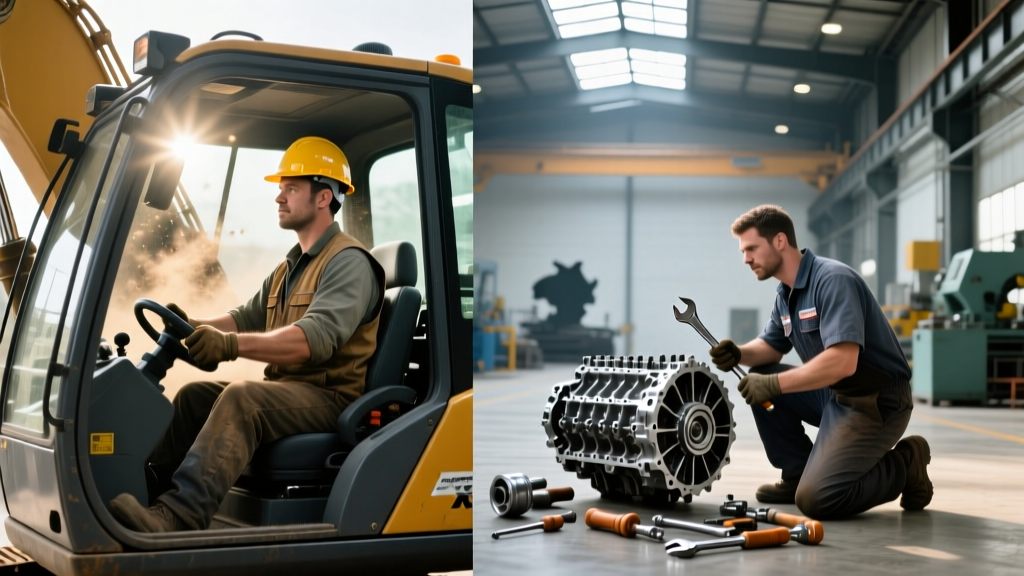
Transitioning from the seat of a Cat 336 excavator or a Komatsu PC210LC to the job trailer requires a fundamental shift in mindset. For union members in Illinois, Indiana, and Iowa, understanding the baseline local 150 heavy equipment operator salary is just the starting point. The leap to a foreman role offers a significant financial premium, but it demands a completely different skill set centered on site logistics, safety compliance, and crew management. This guide outlines the exact training milestones, technical upskilling, and daily best practices required to successfully advance from a senior operator to a heavy equipment foreman.
2026 IUOE Local 150 Wage Snapshot
Based on recent collective bargaining trajectories for the International Union of Operating Engineers Local 150, the financial incentive for leadership is clear:
- Base Heavy Equipment Operator: ~$54.15/hour (approx. $112,600 annualized without overtime)
- General Foreman / Working Foreman: ~$60.50/hour (includes foreman premium, approx. $125,800+ annualized)
- Overtime & Double Time: Foremen frequently manage weekend shutdowns or critical path pours, pushing total compensation well past $145,000 annually.
Note: Exact hourly rates vary by specific contractor agreements and county prevailing wage laws within the IUOE Local 150 jurisdiction.
Operator vs. Foreman: The Scope Shift
The most common mistake senior operators make is assuming that being the fastest or most precise on the sticks automatically qualifies them for leadership. Foremen do not just move dirt; they manage the sequence of work, the maintenance schedules, and the safety documentation. Below is a direct comparison of daily responsibilities.
| Operational Focus (Senior Operator) | Strategic Focus (Foreman) |
|---|---|
| Executing specific trenching or grading tasks per stakeout. | Sequencing equipment moves to minimize idle time and fuel burn. |
| Performing daily walkaround and greasing zerk fittings. | Analyzing fleet telemetry to schedule preventative maintenance. |
| Identifying immediate underground utility conflicts. | Reviewing GPR (Ground Penetrating Radar) and 811 tickets before breaking ground. |
| Communicating via radio with the spotter. | Conducting morning FLRA (Field Level Risk Assessment) huddles. |
Required Certifications and Technical Upskilling
To justify the foreman premium to both your union rep and your general contractor, you must hold specific, verifiable credentials. Relying solely on your apprenticeship hours is insufficient for modern site management.
1. OSHA 30-Hour Construction (29 CFR 1926)
While a 10-hour card is standard for operators, a foreman must hold an OSHA 30 certification. You must deeply understand Subpart P (Excavations) and Subpart CC (Cranes and Derricks in Construction). As a foreman, you are the competent person responsible for classifying soil types (Type A, B, or C) and dictating the required sloping, benching, or trench box configurations. The OSHA Outreach Training Program provides the framework, but you must supplement this with site-specific soil testing training.
2. NCCER Construction Site Supervisor
The National Center for Construction Education and Research (NCCER) offers specialized supervisor training that bridges the gap between technical skill and human resource management. This curriculum covers conflict resolution, productivity tracking, and contract document interpretation—skills rarely learned in the cab of a dozer.
3. Grade Control and Drone Data Software
Modern foremen do not wait for the site surveyor to check grades. You must be proficient in interpreting 3D machine control models (e.g., Trimble Earthworks, Topcon MAGNET) and reviewing drone photogrammetry data. Learning to use software like Trimble Stratus or Bluebeam Revu allows you to calculate cut/fill volumes instantly, verify subgrade tolerances, and prevent costly over-excavation that requires expensive imported fill.
Daily Field Leadership Best Practices
Managing a crew of 5 to 15 operators and laborers requires a rigid daily structure. Implement this step-by-step workflow to maintain site safety and production targets.
- The 6:45 AM FLRA Huddle: Before keys are turned, gather the crew for a Field Level Risk Assessment. Do not just read a generic safety sheet. Discuss the specific hazards of the day's tasks (e.g., 'We are tying into the live 12-inch water main on the east grid today; the trench box must be pinned, and no one enters the box without a ladder tied off').
- Equipment Staging and Walkarounds: Assign specific walkaround duties. Verify that track tension on excavators is correct for the mud conditions, and check DEF (Diesel Exhaust Fluid) levels across the fleet to prevent mid-shift derates.
- Mid-Day Production Audit: At lunch, compare the morning's actual yardage moved against the estimated model data. If the Cat 730 articulated trucks are bottlenecking at the crusher, adjust the haul route or swap to a larger articulated dump truck.
- End-of-Shift Telemetry Review: Review the machine idle times via the OEM telematics portal (e.g., Cat VisionLink or Komatsu KOMTRAX). High idle times indicate poor site logistics or operator inefficiency that must be addressed the next morning.
The fastest way to fail as a new foreman is to jump into the cab to 'help out' when the crew falls behind, leaving the site unmanaged. While a working foreman occasionally operates, your primary value is logistics. If you are running a 336 excavator, no one is managing the truck queue, checking the trench shoring, or coordinating with the grade checker. Delegate the sticks; manage the site.
Frequently Asked Questions
How long does it take to advance from operator to foreman in Local 150?
Typically, it takes 7 to 10 years of continuous field experience. However, operators who proactively acquire their OSHA 30, learn 3D machine control modeling, and demonstrate leadership by running complex, multi-machine lifts or deep trenching operations can accelerate this timeline to 5 years.
Does a foreman still need to maintain their equipment operating hours?
Yes, depending on the contractor. In many 'working foreman' agreements, you must operate heavy equipment for at least 20% to 30% of your weekly hours to maintain your specific equipment classification and journeyman status within the union hall. Always verify the exact percentage with your Local 150 business agent.
What is the biggest reason new foremen get demoted back to operator?
Poor documentation and safety failures. Failing to log daily trench inspections, ignoring daily equipment maintenance logs, or failing to halt work when weather conditions compromise soil stability will result in immediate removal from the leadership role by the general contractor.