How Do You Become a Heavy Equipment Operator in Machinery Transport?
Learn how do you become a heavy equipment operator in transport. Discover CDL Class A requirements, heavy haul tie-down specs, and 2026 salary data.
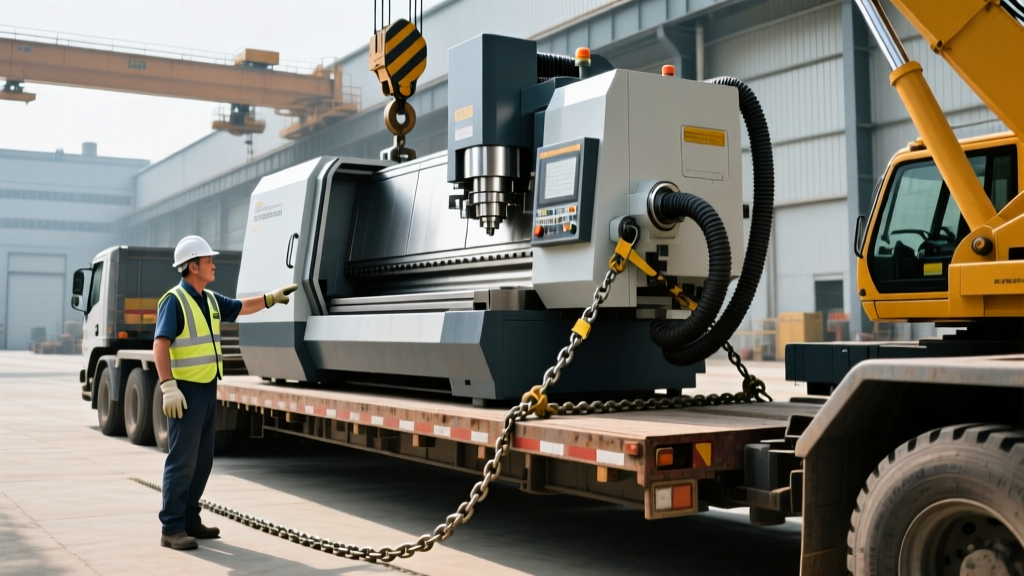
Most people picture trenches and grading when they ask, how do you become a heavy equipment operator? However, a highly lucrative and specialized subset of this career exists on the highway: heavy equipment transport. Hauling a 90,000-pound excavator on a Removable Gooseneck (RGN) trailer requires a Class A Commercial Driver’s License (CDL), advanced load securement engineering, and meticulous route planning. This sector bridges the gap between heavy machinery operation and specialized logistics.
⚠️ The 80,000 lbs Reality Check: A standard skid steer weighs 8,000 lbs and can be hauled on a standard pickup and gooseneck without a CDL. A Cat 336 excavator weighs roughly 81,000 lbs. The moment your Gross Combination Weight Rating (GCWR) exceeds 26,001 lbs, federal law mandates a CDL. Furthermore, if your trailer alone weighs over 10,000 lbs, a Class A CDL is non-negotiable.The CDL Class A Mandate for Equipment Haulers
Transporting heavy construction and mining machinery falls under strict Federal Motor Carrier Safety Administration (FMCSA) regulations. To operate a tractor-trailer combination designed to haul heavy equipment, drivers must possess a Class A CDL. Unlike standard dry van freight, heavy haul operators must also master the physics of high-center-of-gravity loads, hydraulic track systems, and multi-axle weight distribution.
Under the FMCSA’s Entry-Level Driver Training (ELDT) mandate, prospective operators must complete a prescribed theory and behind-the-wheel curriculum from a registered training provider before taking the state skills test. For heavy equipment transport, this training must include extensive practice backing lowboy and step-deck trailers, which react differently than standard 53-foot box trailers due to their drop-deck geometry and shorter wheelbases.
Step-by-Step: How Do You Become a Heavy Equipment Operator in Transport?
Transitioning into heavy machinery logistics requires a specific sequence of certifications and endorsements.
- Pass the DOT Physical (Form MCSA-5875): Heavy haul driving is physically demanding. You will be manually throwing 5/16-inch and 3/8-inch Grade 70 transport chains, which weigh up to 35 lbs each, and operating heavy ratchet binders. A clean medical certificate is mandatory.
- Obtain Your Commercial Learner’s Permit (CLP): Pass the CDL Class A general knowledge, combination vehicles, and air brakes written exams at your state DMV.
- Complete ELDT Theory and Range Training: Focus on lowboy coupling/uncoupling. RGN trailers require you to disconnect the gooseneck, lower the hydraulic ramps, and drive the equipment onto the deck. Improper coupling can result in catastrophic hydraulic line severing.
- Pass the Behind-the-Wheel Skills Test: Execute the pre-trip inspection, backing maneuvers (specifically the offset back and parallel park with a lowboy), and road test.
- Acquire Specialized Endorsements: While not always legally required for the machine itself, hauling equipment often involves transporting diesel fuel in the machine's tanks or the tractor's saddle tanks, making a Hazmat (H) endorsement highly valuable. A Doubles/Triples (T) endorsement is also critical if you are pulling multi-trailer configurations in the mining sector.
Equipment Weight vs. CDL & Trailer Requirements
Understanding the exact specifications of the machinery you are hauling dictates your legal requirements. The table below outlines common equipment profiles and their transport configurations.
| Equipment Model | Operating Weight | Required Trailer Type | CDL Class & Legal Status |
|---|---|---|---|
| Bobcat T770 CTL | 10,300 lbs | Standard Flatbed / Equipment Trailer | Class A or B (Depending on GVWR) |
| Cat 320 Excavator | 50,600 lbs | Step Deck or Standard Lowboy | Class A CDL (Legal Width) |
| Komatsu PC210LC-11 | 50,600 lbs | Step Deck or Standard Lowboy | Class A CDL + Oversize Permits (10'8" wide) |
| Cat D8T Dozer | 85,000 lbs | RGN (Removable Gooseneck) | Class A CDL + Heavy Haul Permits |
| Liebherr LTM 1300 | 240,000+ lbs | Multi-Axle Goldhofer Trailer | Class A CDL + Superload Escorts |
Case Study: Hauling a Komatsu PC210LC-11 Excavator
To understand the technical depth of this career, consider the logistics of hauling a Komatsu PC210LC-11 excavator equipped with 28-inch track pads. The machine weighs 50,600 lbs and measures 10 feet 8 inches wide. Because the legal maximum width on most US highways is 8 feet 6 inches, this load requires state-by-state oversize permits and "Oversize Load" banners.
The Tie-Down Math (49 CFR Part 393)
According to FMCSA cargo securement regulations (49 CFR § 393.110), the aggregate Working Load Limit (WLL) of your tie-downs must equal at least 50% of the cargo's weight if the machine is blocked against forward movement, or 100% if it is not. In heavy haul, relying on friction and blocking is risky; professionals secure 100% of the weight.
- Machine Weight: 50,600 lbs.
- Tie-Down Choice: 3/8-inch Grade 70 transport chain with grab hooks.
- Chain WLL: 6,600 lbs per chain.
- Calculation: 50,600 lbs ÷ 6,600 lbs = 7.66.
You must use a minimum of 8 chains just to meet the base WLL requirement. Furthermore, regulations dictate one tie-down for every 10 feet of cargo length or fraction thereof. Add two additional chains to secure the bucket and boom to prevent hydraulic drift during transit, bringing the total to 10 chains and 10 ratchet binders. Failing to calculate this correctly results in immediate out-of-service (OOS) violations at DOT weigh stations.
Pro Tip: Never secure chains directly over hydraulic hoses or cylinder rods. Always route chains through the machine's designated factory tie-down points or wrap them around the structural steel of the track frame. Wrapping a chain around a hydraulic cylinder under tension will crush the cylinder wall, causing a catastrophic fluid leak and thousands of dollars in damage.
Salary & Career Trajectory for Heavy Haul Operators
The financial compensation for heavy equipment transport operators significantly outpaces standard freight. According to the Bureau of Labor Statistics, the median pay for heavy tractor-trailer drivers hovers around $54,000, but heavy haul and specialized transport operators command a premium due to the extreme risk and skill involved.
- Local Heavy Haul (Home Daily): $65,000 – $85,000 annually. Typically involves moving equipment between local construction sites, quarries, and rental yards.
- Regional OTR Heavy Haul: $85,000 – $110,000 annually. Requires navigating multi-state permitting, pilot cars, and nighttime travel restrictions.
- Specialized Superload Operator: $120,000 – $160,000+ annually. Reserved for operators hauling mining shovels, wind turbine blades, and modular refineries using multi-axle hydraulic trailers.
Edge Cases & Real-World Failure Modes
New operators often fall victim to non-obvious edge cases in heavy machinery transport. One common failure mode is track tension shifting. Rubber-tracked machines (like dozers and compact track loaders) expand and contract with temperature changes. If you tighten your chains in the cold morning and drive into a hot afternoon, the tracks can loosen, causing the chains to go slack and the machine to shift. Operators must stop and re-tension binders 50 miles into the trip.
Another critical edge case is fluid slosh and center of gravity. An excavator's fuel tank and hydraulic reservoir can hold over 100 gallons of fluid. If the machine is not parked perfectly level on the trailer deck, fluid shifts to one side during a highway curve, artificially raising the center of gravity and increasing the risk of a rollover. Always transport machinery with the heaviest components (the counterweight) positioned over the trailer's rear axles, not the drop deck.
Frequently Asked Questions
Do I need a CDL to haul a mini excavator?
If the combined Gross Vehicle Weight Rating (GVWR) of your truck and trailer, plus the actual weight of the mini excavator (typically 3,000 to 8,000 lbs), stays under 26,001 lbs, you do not need a CDL. However, many commercial landscaping companies use trucks that push the GCWR over 26,000 lbs, triggering the CDL requirement regardless of the cargo weight.
Can I transport heavy equipment with the bucket raised?
No. DOT regulations and basic physics require the machine's center of gravity to be as low as possible. The bucket or blade must be rested flat on the trailer deck. Transporting an excavator with the boom raised acts like a sail in crosswinds and drastically increases the rollover risk on highway off-ramps.
Who pays for the oversize permits?
The motor carrier (the trucking company or owner-operator) is legally and financially responsible for purchasing state and municipal oversize/overweight permits before the wheels turn. Hauling a 10-foot-wide excavator without a permit can result in fines exceeding $5,000 per axle violation.